Why are the leaves of frangipani (Plumeria) turning yellow? Pay attention to topdressing and control the amount of watering
Frangipani is a highly ornamental flower, and it can be seen in many gardens in our country. However, with such a beautiful flower, if yellowing occurs, it will also affect its overall beauty. As for why frangipani leaves turn yellow, the editor below will take everyone to learn about it.
Why do frangipani leaves turn yellow?
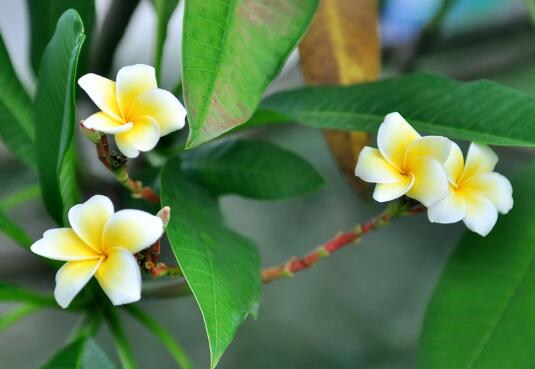
1. Improper fertilization
Fertilizer is one of the main nutrients in the growth process of frangipani. Only sufficient fertilizer can make frangipani grow better. If too little fertilizer is applied, its nutrients will also be insufficient, and this will also cause frangipani leaves to turn yellow.
Note: Although fertilizer is one of the main nutrients for frangipani, when fertilizing, it must first be diluted with water before applying, so that frangipani can absorb it. If it is not diluted, it will burn the plant.
2. Too little watering
During cultivation, if too little watering is given, this is also one of the reasons for frangipani leaves turning yellow. Although frangipani does not have very high water requirements, watering too little is still not acceptable. Generally, during the growing season, it needs to be watered once every 3-4 days.
Note: When watering frangipani, keep the principle of watering when dry. Do not water too little, but do not water too frequently either. Generally, water after the potting soil dries, and water thoroughly. Never cause water accumulation, otherwise root rot is very likely to occur.
3. Long-term exposure to strong sunlight
Although frangipani is a plant that relatively likes light, it cannot be exposed to strong sunlight for a long time, as this will also cause frangipani leaves to turn yellow. Other seasons are fine, but summer is the season with the highest temperature of the year. In this season, light must be controlled, and it must not be left outside in strong sunlight for a long time.
Note: The sunlight in spring and autumn is relatively mild, so we can place frangipani outdoors for cultivation. However, in summer, it is best to move it indoors to a semi-shaded place for cultivation, so as to avoid yellowing caused by direct strong light.
4. Pests and diseases
During the process of cultivating frangipani, if care is improper, pests and diseases may appear. Pests and diseases such as scale insects, whiteflies, and aphids can all cause frangipani leaves to turn yellow, so everyone must pay extra attention during the care process.
Note: During the cultivation of frangipani, if pests and diseases appear, they must be dealt with in time. If delayed for too long, it will not only cause the leaves to turn yellow, but also cause the plant to wither and die. For specific control methods, everyone can refer to the article on pest and disease control of frangipani, which introduces them in detail.
Watermelon growing conditions and cultivation management techniques
Watermelon is a major summer heat-relieving fruit. Its flesh is crisp and tender, sweet and juicy, and rich in mineral salts and multiple vitamins. It is the largest fruit sold in summer and autumn in our country. To improve yield and quality, the watermelon cultivation techniques are introduced as follows:
Biological characteristics
1. Morphological characteristics
① Roots: The roots of watermelon belong to a deep root system. The main root can reach more than 1 m deep, and lateral roots can extend horizontally up to 4-6 m. The main root group is distributed within the 10-40 cm soil layer, and its ability to absorb fertilizer and water is strong. The regeneration ability of the roots is weak, and they are not easy to recover after being injured. In production, direct sowing is often used. If raising seedlings and transplanting, be sure to pay attention to root protection.
② Stems and leaves: The watermelon stem is also called a vine. The main vine grows upright before 5-6 leaves. When it continues to grow beyond 30 cm and reaches a certain length, because the mechanical tissue is not well developed and cannot support its own weight, it grows prostrate on the ground. The branching ability of the stem is very strong, and it can sprout 3-4 levels of lateral branches, but the lateral branches emerging from the leaf axils of the 3rd-5th leaves on the main vine are relatively sturdy. Adventitious roots are very easily produced on the stem nodes of watermelon. Using the method of pressing vines can promote the formation of adventitious roots, increase the absorption area, fix the plant, and prevent the vine from rolling. Leaves are alternate, with types such as deep lobed, shallow lobed, and entire.
③ Flowers, fruits, seeds: Watermelon flowers are small and yellow, monoecious with unisexual flowers, and borne singly in leaf axils. Early-maturing varieties bear the first female flower at the 6th and 7th nodes of the main vine, while middle- and late-maturing varieties produce the first female flower after the 10th node. The interval between female flowers is 7-9 nodes. During the peak flowering period, a small number of bisexual flowers may appear. Flowers open in the early morning and close in the afternoon. The fruit is oval or spherical, and the color can be dark green, light green, or with dark green stripes or markings. The flesh can be red, yellow, white, etc. Seeds can be black, white, red, etc. Watermelon can also be divided by seed size into large-seeded watermelon, small-seeded watermelon, and seedless watermelon. The 1000-seed weight is 100 g-150 g for the large-seeded type, 40 g-60 g for the medium-seeded type, and 20 g-25 g for the small-seeded type.
2. Growth cycle
The whole growth period can be divided into four stages: germination stage, seedling stage, vine-running stage, and fruiting stage.
① Germination stage: From seed germination to cotyledon expansion and true leaf appearance is the germination stage. After the seedlings emerge, excessive vegetative growth should be prevented to promote the development of roots and leaves.
② Seedling stage: From the appearance of true leaves to 5-6 leaves is the seedling stage. The growth amount in this period is small. In cultivation, good conditions should be provided to promote root system and organ differentiation of the seedlings.
③ Vine-running stage: From the beginning of vine running at 5-6 leaves to the opening of the female flower at the fruit-setting node is the vine-running stage. In this period, the growth speed is fast and the growth amount is large. In cultivation, it is necessary to promote stem and leaf growth to form a certain vegetative system, while also controlling excessive growth to ensure flower organ formation.
④ Fruiting stage: From the opening of the female flower at the fruit-setting node to the beginning of rapid fruit growth. It can also be divided into 3 periods: fruit-setting stage, rapid fruit growth stage, and flesh-transformation stage.
⑤ Fruit-setting stage: From the opening of the female flower at the fruit-setting node to the beginning of rapid fruit growth. Photosynthates begin to be transported into the fruit. In cultivation, the main task is to regulate the balance between vegetative growth and fruit development to ensure fruit set.
⑥ Rapid fruit growth stage: From rapid fruit growth to the fruit size being basically fixed. In this period, the fruit growth amount is large and nutrient absorption is the greatest, and it is the key period for yield formation. In cultivation, heavy fertilizer and heavy water should be applied to promote rapid fruit growth.
⑦ Flesh-transformation stage: From the fruit size being basically fixed to the mature stage. In this period, sugar transforms rapidly, and the appearance has the inherent color of the variety. In cultivation, premature senescence of stems and leaves should be prevented to ensure yield and quality.
3. Requirements for environmental conditions
① Temperature: Watermelon likes a warm, dry climate and is not cold-tolerant. The optimal temperature for growth and development is 24-30 degrees, the optimal temperature for root growth and development is 30-32 degrees, and the minimum temperature for root hair occurrence is 14 degrees. During growth and development, watermelon needs a relatively large day-night temperature difference. A relatively large day-night temperature difference can cultivate high-quality watermelon.
② Water: Watermelon is drought-tolerant and not moisture-tolerant. When there are many rainy days and humidity is too high, it is susceptible to disease, with low yield and poor quality.
③ Light: Watermelon likes light. Under conditions of sufficient sunshine, the yield is high and the quality is good.
④ Nutrients: Watermelon has a long growth period and high yield, so it needs a large amount of nutrients. For every 100 kg of watermelon produced, it needs to absorb about 0.19 kg of nitrogen, 0.092 kg of phosphorus, and 0.136 kg of potassium. However, the amount of nutrient absorption varies significantly at different growth stages: 0.01% at the germination stage, 0.54% at the seedling stage, 14.6% at the vine-running stage, and the fruiting stage is the period when watermelon absorbs nutrients most vigorously, accounting for 84.8% of the total nutrients. Therefore, as the plant grows, the fertilizer requirement of watermelon gradually increases, reaching a maximum when the fruit grows vigorously.
⑤ Soil: Watermelon has strong adaptability, and sandy soil with loose texture, deep soil layer, and good drainage is best. It likes weak acidity, PH 5-7.
Suitable sowing period
Open-field cultivation of watermelon is cultivation without protective equipment. Generally, the suitable time for open-field sowing is when the local final frost has passed and the ground temperature is stable at around 15°C. The best sowing time should also be determined according to conditions such as variety, cultivation season, cultivation method, and consumption season. Generally, sowing and raising seedlings are done in mid-to-late March, planting in mid-to-late April, and harvesting for market begins in late June; autumn watermelon is sown in early-to-mid July, and harvesting for market begins in late September.
Land preparation and sufficient base fertilizer
For cultivating watermelon, choose a plot with loose soil, deep soil layer, fertile soil, good drainage, sufficient light, and facing west sun exposure; watermelon fields should not be continuously cropped, and generally require a 4-5 year rotation. Otherwise, fusarium wilt is severe; the best previous crop is gramineous crops such as rice and corn, followed by vegetable crops such as potatoes and cabbage, but if the previous crop is cucurbit vegetables, watermelon diseases are severe, so it should not be chosen.
The watermelon field must be deeply plowed, preferably by turning the soil in winter. In plots that have been deeply plowed or have a deep plowing foundation, open drainage ditches around the field, make beds according to the cultivation row spacing of 2.4-3.0 m including the ditch (ditch width 0.5 m), open a ditch on one side of the bed surface to apply base fertilizer, applying 2500-3000 kg of farmyard manure per mu, plus 15-20 kg of phosphate fertilizer, 20-25 kg of 45% compound fertilizer, 2 kg of borax, and 1 kg of zinc fertilizer. To prevent underground pests, a small amount of crystalline trichlorfon can be mixed into the base fertilizer. Cover the base fertilizer ditch well, shape it into watermelon ridges, and finally cover with plastic film, waiting for sowing or transplanting. When making beds, note that the bed rows should be perpendicular to the spring and summer wind direction, and open the ditch on the bed surface on the side where the wind blows in first to apply base fertilizer, so that after planting the vines are consistent with the wind direction.
Seed soaking and germination acceleration
1. Seed soaking: Before soaking, first sun-dry the seeds for 1 day. Soak the sun-dried seeds in warm water that is not too hot to the touch (about 30°C) for 6-8 hours, then remove them, wrap them in a towel or coarse cloth, and rub off the mucilage on the seed coat. To prevent fusarium wilt, soak again in a 1000-fold solution of thiophanate-methyl for 4 hours. Generally, the soaking time should reach 12 hours. Once the seed coat softens, remove the seeds, rinse them clean with water, and set aside for germination acceleration.
2. Germination acceleration: Place the soaked seeds flat on a wet towel, cover the seeds with another layer of wet towel, and place them in a 30-35 degree environment to accelerate germination. They basically emerge completely within 72 hours. When 85-90% have sprouted and shown white, they can be sown.
Sowing or transplanting
1. Direct sowing after germination acceleration: Open a shallow ditch or hole 8 cm-10 cm deep on the watermelon ridge near the place where base fertilizer was applied, with a plant spacing of 45-50 cm. Sow 1-2 germinated seeds per hole, (after watering thoroughly once in dry conditions) cover with 2 cm-3 cm of soil. For direct sowing after germination acceleration, seedlings can emerge after 2-3 days; generally use 150 g-200 g of seed per mu.
2. Seedling raising and transplanting: The seedling age is 30-35 days. Transplanting begins when the watermelon seedlings have 3 leaves and 1 heart. Plant spacing is 45-50 cm, and about 450-500 plants are planted per mu. After transplanting, water to settle the roots.
Field management
1. Cultivation and drainage: Cultivation begins after sowing and complete seedling emergence or after transplanted seedlings recover. Generally, thinning seedlings, loosening soil, and earthing up are carried out in combination. During the seedling stage, watering should be less, and attention should be paid to "hardening seedlings" to benefit root growth; when the vine is 30 cm long, apply one heavy topdressing and then earth up. Watermelon fruits are large, the yield is high, and the water requirement is large. In dryland cultivation, pay attention to irrigation, while in paddy field cultivation, drainage work is especially important. Emphasize that the bed ditches and the drainage ditches around the field should all be connected, and there should be no water accumulation in the field after rain. This is the foundation for ensuring high and stable watermelon yields. Stop irrigation 6-8 days before fruit maturity to promote sugar transformation and increase sweetness.
2. Topdressing: The basic principle of topdressing in watermelon fields is: lightly apply seedling fertilizer, first promote then control, skillfully apply vine-extension fertilizer, and heavily apply fruit-swelling fertilizer after young fruits are set.
① Seedling-promoting fertilizer: Seedling-promoting fertilizer is generally applied within one week after transplanting watermelon seedlings or at the 4-5 leaf stage of directly sown seedlings. When base fertilizer is insufficient or its effect has not yet appeared, apply a small amount of quick-acting fertilizer. Generally, apply 8-10 g of urea (or 20 g of ammonium sulfate) per plant, open a ditch for fertilization, and then cover with soil.
② Vine-promoting fertilizer: This can be carried out before and after vine extension. Generally, when watermelon seedlings grow to 40-60 cm, apply 10-12 kg of urea, 8 kg of superphosphate, and 13 kg of potassium sulfate per mu, or use 18-22 kg of 45% potassium sulfate-type ternary compound fertilizer per mu. Apply in a ditch 25-30 cm from the watermelon root or between two plants, with a ditch depth of 10-15 cm. After application, cover with soil and water to promote fertilizer absorption.
③ Fruit-swelling fertilizer: The fruit-swelling period is the period of greatest fertilizer demand in the entire life of watermelon. When the watermelon is the size of an egg, the root system covers the whole bed. Many watermelon farmers apply fruit-swelling fertilizer in holes at this time. Because hole application concentrates the fertilizer too much, it will burn the roots around the fertilization point, and it is also not conducive to the rapid decomposition and transformation of the fertilizer, which is very different from the fertilizer requirement characteristics of the watermelon fruit-swelling period, namely heavy fertilizer, heavy water, quick effect, and comprehensiveness; therefore, it is best to use human and animal manure water plus dissolved chemical fertilizer for fruit-swelling fertilizer. When the watermelon is the size of an egg, apply manure water plus compound fertilizer and urea in a ring about 30-45 cm from the base of the watermelon root (focusing on the side where the vines extend). For farmers without manure water, use 8 kg of compound fertilizer, 4.5 kg of urea, and 5 kg of potassium sulfate per mu, dissolve them, mix with water, and pour. The concentration of fruit-swelling fertilizer should be light, and fertilizer should be regulated with water so that the fertilizer quickly takes effect in a short time. Especially when the soil is relatively dry, the fruit-swelling effect is even more immediate. In the later stage, carry out foliar spraying with a 0.4% potassium dihydrogen phosphate solution every 7-10 days, for a total of 2-3 sprays.
3. Pruning: Watermelon vines and leaves are luxuriant. If allowed to grow freely, the vines overlap each other, which not only affects dense planting but also delays fruit setting. Watermelon pruning methods generally include single-vine, double-vine, and triple-vine. Single-vine pruning leaves only one vine per plant. All other lateral vines are removed. The method is simple, and there are many plants per unit area and many fruits set, but each plant has fewer leaves, the fruit is not easy to grow large, and both yield and quality are relatively low. Double-vine or triple-vine pruning generally keeps the main vine, and when the main vine grows to more than 30 cm, double-vine pruning selects and keeps one robust lateral vine at the base, while triple-vine pruning keeps two robust lateral vines as secondary vines or reserve vines, and all other lateral vines are removed; in production, double-vine pruning is mostly used. When pruning watermelon, note first: prune at the right time. Generally start when the main vine is 40-50 cm long and the lateral vines are about 15 cm, then once every 3-5 days afterward; second: no matter which pruning method is used, it is required to be carried out carefully before fruit setting. After fruit setting, generally no more pruning is done, so that more branches and leaves can provide nutrients for fruit growth. When the fruit begins to expand rapidly, to prevent excessive vegetative growth, pinching can be carried out.
4. Vine pressing: When the vine is 30 cm long, the vines should be arranged so that they are evenly distributed, and soil blocks should be used to press the vines at the nodes to promote the production of adventitious roots, fix the leaves and vines, prevent mutual shading and damage to roots and leaves from being broken by wind. Afterward, press once every 5-6 nodes until the vines and leaves cover the bed surface. There are two methods of vine pressing: open pressing and hidden pressing. In rainy areas, soil humidity is high. To prevent vine rot, it is not necessary to bury the entire watermelon vine in the soil; only press soil blocks on the nodes, while the internodes remain exposed on the ground. This is called “open pressing”. In areas with little rain and drought, in order to promote the occurrence of adventitious roots, the watermelon vines should be straightened and entirely buried in the soil, which is called “hidden pressing”. To prevent breaking the crisp and tender watermelon vines, pruning and vine pressing should both be carried out in the afternoon. No matter which pressing method is used, it should be determined according to the plant's growth vigor. Strong-growing plants should be pressed heavily and frequently, while weak-growing plants should be pressed lightly and less often. Generally, press once every 5-6 nodes, with two pressings before and after the fruit. Leave 2-3 leaves before and after the female flower retained for fruit unpressed, to prevent water accumulation from rotting the fruit, or the fruit being restricted after it grows larger.
5. Manual assisted pollination: Watermelon is a cross-pollinated crop that relies on insects as a medium. In rainy weather or when insect activity is low, pollen dispersal will be affected and fruit setting will be difficult. In order to improve the fruit-setting rate and achieve fruit setting and fruit retention at the ideal node position, manual assisted pollination should be carried out.
① Female flower selection: When pollinating, choose female flowers that are well developed on the main vine and lateral vines, with thick bud stalks, enlarged ovaries, normal shape, and tender green and glossy color. After pollination, they are likely to set fruit and grow into high-quality large watermelons. Female flowers on lateral vines serve as backup for fruit retention.
② Pollination time: Watermelon flowers begin to loosen at 5-6 in the early morning, and their physiological activity is most vigorous from 8-10, which is the best pollination time. On cloudy days, pollination time is postponed to 9-11 because flowering is later.
③ Pollination method: Use fresh male flowers that open on the same day and are shedding pollen. Hold the petals with your hand toward the flower stalk, then aim the stamens of the male flower at the stigma of the female flower and gently dab a few times. One male flower can pollinate 2-3 female flowers.
6. Fruit retention: Generally retain the second and third female flowers for fruit setting. For early-maturing varieties, the first to third female flowers can be reserved. After the fruit is set, select and retain one fruit according to the order of “second, first, third”. For middle- and late-maturing varieties, the second to fourth female flowers can be reserved. After the fruit is set, select and retain one fruit according to the order of “third, second, fourth”. If the fruit on the main vine does not set, fruit retention on lateral vines should also follow this order. It is appropriate to retain 1 fruit per plant.
7. Watermelon fruit care: During the flowering, fruit setting, and fruit development stages of watermelon, careful fruit care is also a key link in improving watermelon yield and quality. Care measures include protecting the fruit, cushioning the fruit, turning the fruit, standing the fruit upright, sunning the fruit, and covering the fruit. From female flower opening to around fruit setting, the ovary and young fruit epidermal tissue are very delicate and susceptible to wind, insect bites, and mechanical damage. At this time, paper bags, plastic bags, etc. should be used to cover the young fruit, which is called fruit protection. When the fruit grows to 1-1.5 kg, break and level the soil block under the fruit and cushion it with grass or fine sandy soil, which is fruit cushioning. Turning the fruit means continuously changing the side of the fruit touching the ground so that the fruit surface receives light evenly, the skin color is uniform, and the flesh maturity is uniform. Fruit turning is generally carried out in the middle and late fruit-swelling stages, turning once every 5-6 days, for 2-3 turns. Fruit turning should be carried out on a sunny afternoon when the water content of the fruit stalk has decreased and it is not easy to break. Use both hands, and the angle of each turn should not be too large. It is enough to expose the side that was touching the ground, so as to avoid twisting and breaking the fruit stalk. Each fruit turning should be done in the same direction. A few days before the watermelon matures and is harvested, the fruit can be stood upright to help the fruit shape become round and upright and the rind color well. Otherwise, the side touching the ground cannot see sunlight and becomes yellowish-white, which not only affects the fruit appearance, but also makes the rind thickness uneven, the fruit flavor bland, and the quality poor. For sunning and covering the fruit, the principle is “sun when young, cover when ripe”. In the immature green rind, there is a large amount of chlorophyll, and the photosynthetic products it produces are directly transported to the fruit, promoting sugar accumulation, so it should be sunned when young. When the fruit is about to mature, the chlorophyll in the rind gradually decomposes, photosynthesis declines, and the interior of the fruit is mainly undergoing transformation of organic substances rather than manufacture and accumulation. If directly exposed to strong light, it is prone to sunscald, so when the fruit is about to mature, it should be covered with leaves.
8. Watermelon ripening: When it needs to be marketed earlier, ethephon (dichloroethyl phosphonic acid) can be used for ripening treatment. The treatment method is: when the fruit size has reached full size but is not yet ripe (that is, 25-29 days after flowering), apply 200 mg of ethephon solution per kg of watermelon evenly along the fruit surface once in the evening. A small amount of neutral soap powder can be added to the solution to increase adhesion. It can be harvested and marketed two days later. Treated fruits can be supplied to the market 3-5 days earlier than naturally ripened ones, and the quality is not only not reduced, but somewhat improved.
9. Pest and disease control: The main diseases of watermelon include fusarium wilt, anthracnose, viral disease, powdery mildew, and phytophthora blight. The main pests include small cutworms, aphids, red spiders, yellow melon beetles, melon maggots, and leafminers.
① Disease control: Implement crop rotation of more than 4-5 years, select disease-free seeds, and disinfect seeds by soaking in 100-fold formalin solution for 30 minutes. Main control methods for fungal diseases: promptly pull out and burn diseased plants, and disinfect diseased holes with lime or 400-fold 50% amobam. In the early stage of disease, pour 500-1000-fold 50% amobam solution at the root zone for control. Promote watermelon grafting and root replacement technology. Apply decomposed organic fertilizer and increase phosphorus and potassium fertilizer. During the watermelon growth period from May to July, alternately use 1000-fold 70% thiophanate, 500-700-fold 25% carbendazim, 1000-fold 50% zineb, and 1:1:200 Bordeaux mixture every 7-10 days for control.
② Pest control: For small cutworms, melon maggots, and yellow melon beetles, early spring can be used with more plowing and raking to eliminate eggs, sugar-vinegar moth traps to eliminate adults, and 800-1000-fold 90% trichlorfon solution to water roots or mixed with a small amount of water with fresh grass or stir-fried fragrant cake fertilizer for trapping and killing. For red spiders and leafminers, spray 1000-fold 50% dimethoate solution or 1000-1500-fold 80% dichlorvos solution.
Harvest
After pollination, early-maturing varieties mature in about 28 days, middle-maturing varieties in about 32 days, and late-maturing varieties in about 35 days, varying with temperature. By visual judgment, the tendrils near the fruit turn yellow, and the fruit navel sinks and becomes smaller. Note that when harvesting in high temperatures, harvest 1-2 days earlier to prevent the fruit from being overripe and quality declining if it cannot be sold in time after harvest. The maturity of watermelon can be identified by various methods such as calculating, looking, listening, and measuring.
① Calculating: Watermelon takes more than 80-100 days from sowing to harvest. After fruit setting, early-maturing varieties mature in 30 days, and late-maturing varieties in 35 days.
② Looking: On mature fruit, the tendrils on several nodes near the fruit wither, the fine hairs on the fruit stalk disappear, the stem end sinks inward, the stripes on the fruit surface spread out, the skin is smooth and shiny, and the bloom is gone.
③ Listening: Tap the watermelon with a finger. A mature one gives a dull sound; conversely, a crisp sound indicates an unripe watermelon.
④ Measuring: Determine by specific gravity. The specific gravity of a mature watermelon is 0.9-0.95. One that sinks in clean water is unripe; one with a very large part above the water surface is overripe. A watermelon with appropriate maturity has only a small part floating above the water surface.
Watermelon planting methods
Watermelon is a major summer heat-relieving fruit. Its flesh is crisp and tender, sweet and juicy, and rich in mineral salts and multiple vitamins. It is the largest fruit sold in summer and autumn in our country. To improve yield and quality, let us learn about the current cultivation techniques of watermelon together with the editor below.
Morphological characteristics of watermelon
1. Roots: The roots of watermelon belong to a deep root system. The main root can reach more than 1 m deep, and lateral roots can extend horizontally up to 4-6 m. The main root group is distributed within the 10-40 cm soil layer, and its ability to absorb fertilizer and water is strong. The regeneration ability of the roots is weak, and they are not easy to recover after being injured. In production, direct sowing is often used. If raising seedlings and transplanting, be sure to pay attention to root protection.
2. Stems and leaves: The watermelon stem is also called a vine. The main vine grows upright before 5-6 leaves. When it continues to grow beyond 30 cm and reaches a certain length, because the mechanical tissue is not well developed and cannot support its own weight, it grows prostrate on the ground. The branching ability of the stem is very strong, and it can sprout 3-4 levels of lateral branches, but the lateral branches emerging from the leaf axils of the 3rd-5th leaves on the main vine are relatively sturdy. Adventitious roots are very easily produced on the stem nodes of watermelon. Using the method of pressing vines can promote the formation of adventitious roots, increase the absorption area, fix the plant, and prevent the vine from rolling. Leaves are alternate, with types such as deep lobed, shallow lobed, and entire.
3. Flowers, fruits, seeds: Watermelon flowers are small and yellow, monoecious with unisexual flowers, and borne singly in leaf axils. Early-maturing varieties bear the first female flower at the 6th and 7th nodes of the main vine, while middle- and late-maturing varieties produce the first female flower after the 10th node. The interval between female flowers is 7-9 nodes. During the peak flowering period, a small number of bisexual flowers may appear. Flowers open in the early morning and close in the afternoon.
The fruit is oval or spherical, and the color can be dark green, light green, or with dark green stripes or markings. The flesh can be red, yellow, white, etc. Seeds can be black, white, red, etc. Watermelon can also be divided by seed size into large-seeded watermelon, small-seeded watermelon, and seedless watermelon. The 1000-seed weight is 100 g-150 g for the large-seeded type, 40 g-60 g for the medium-seeded type, and 20 g-25 g for the small-seeded type.
Growth cycle of watermelon
The whole growth period can be divided into four stages: germination stage, seedling stage, vine-running stage, and fruiting stage.
1. Germination stage: From seed germination to cotyledon expansion and true leaf appearance is the germination stage. After the seedlings emerge, excessive vegetative growth should be prevented to promote the development of roots and leaves.
2. Seedling stage: From the appearance of true leaves to 5-6 leaves is the seedling stage. The growth amount in this period is small. In cultivation, good conditions should be provided to promote root system and organ differentiation of the seedlings.
3. Vine-running stage: From the beginning of vine running at 5-6 leaves to the opening of the female flower at the fruit-setting node is the vine-running stage. In this period, the growth speed is fast and the growth amount is large. In cultivation, it is necessary to promote stem and leaf growth to form a certain vegetative system, while also controlling excessive growth to ensure flower organ formation.
4. Fruiting stage: From the opening of the female flower at the fruit-setting node to the beginning of rapid fruit growth. It can also be divided into 3 periods: fruit-setting stage, rapid fruit growth stage, and flesh-transformation stage.
Fruit-setting stage: From the opening of the female flower at the fruit-setting node to the beginning of rapid fruit growth. Photosynthates begin to be transported into the fruit. In cultivation, the main task is to regulate the balance between vegetative growth and fruit development to ensure fruit set.
Rapid fruit growth stage: From rapid fruit growth to the fruit size being basically fixed. In this period, the fruit growth amount is large and nutrient absorption is the greatest, and it is the key period for yield formation. In cultivation, heavy fertilizer and heavy water should be applied to promote rapid fruit growth.
Flesh-transformation stage: From the fruit size being basically fixed to the mature stage. In this period, sugar transforms rapidly, and the appearance has the inherent color of the variety. In cultivation, premature senescence of stems and leaves should be prevented to ensure yield and quality.
Requirements for environmental conditions for planting watermelon
1. Temperature: Watermelon likes a warm, dry climate and is not cold-tolerant. The optimal temperature for growth and development is 24-30 degrees, the optimal temperature for root growth and development is 30-32 degrees, and the minimum temperature for root hair occurrence is 14 degrees. During growth and development, watermelon needs a relatively large day-night temperature difference. A relatively large day-night temperature difference can cultivate high-quality watermelon.
2. Water: Watermelon is drought-tolerant and not moisture-tolerant. When there are many rainy days and humidity is too high, it is susceptible to disease, with low yield and poor quality.
3. Light: Watermelon likes light. Under conditions of sufficient sunshine, the yield is high and the quality is good.
4. Nutrients: Watermelon has a long growth period and high yield, so it needs a large amount of nutrients. For every 100 kg of watermelon produced, it needs to absorb about 0.19 kg of nitrogen, 0.092 kg of phosphorus, and 0.136 kg of potassium. However, the amount of nutrient absorption varies significantly at different growth stages: 0.01% at the germination stage, 0.54% at the seedling stage, 14.6% at the vine-running stage, and the fruiting stage is the period when watermelon absorbs nutrients most vigorously, accounting for 84.8% of the total nutrients. Therefore, as the plant grows, the fertilizer requirement of watermelon gradually increases, reaching a maximum when the fruit grows vigorously.
5. Soil: Watermelon has strong adaptability, and sandy soil with loose texture, deep soil layer, and good drainage is best. It likes weak acidity, PH 5-7.
Cultivation techniques of watermelon
I. Suitable sowing period
Open-field cultivation of watermelon is cultivation without protective equipment. Generally, the suitable time for open-field sowing is when the local final frost has passed and the ground temperature is stable at around 15°C. The best sowing time should also be determined according to conditions such as variety, cultivation season, cultivation method, and consumption season. Generally, sowing and raising seedlings are done in mid-to-late March, planting in mid-to-late April, and harvesting for market begins in late June; autumn watermelon is sown in early-to-mid July, and harvesting for market begins in late September.
II. Land preparation and sufficient base fertilizer
For cultivating watermelon, choose a plot with loose soil, deep soil layer, fertile soil, good drainage, sufficient light, and facing west sun exposure; watermelon fields should not be continuously cropped, and generally require a 4-5 year rotation. Otherwise, fusarium wilt is severe; the best previous crop is gramineous crops such as rice and corn, followed by vegetable crops such as potatoes and cabbage, but if the previous crop is cucurbit vegetables, watermelon diseases are severe, so it should not be chosen.
The watermelon field must be deeply plowed, preferably by turning the soil in winter. In plots that have been deeply plowed or have a deep plowing foundation, open drainage ditches around the field, make beds according to the cultivation row spacing of 2.4-3.0 m including the ditch (ditch width 0.5 m), open a ditch on one side of the bed surface to apply base fertilizer, applying 2500-3000 kg of farmyard manure per mu, plus 15-20 kg of phosphate fertilizer, 20-25 kg of 45% compound fertilizer, 2 kg of borax, and 1 kg of zinc fertilizer. To prevent underground pests, a small amount of crystalline trichlorfon can be mixed into the base fertilizer. Cover the base fertilizer ditch well, shape it into watermelon ridges, and finally cover with plastic film, waiting for sowing or transplanting. When making beds, note that the bed rows should be perpendicular to the spring and summer wind direction, and open the ditch on the bed surface on the side where the wind blows in first to apply base fertilizer, so that after planting the vines are consistent with the wind direction.
III. Seed soaking and germination acceleration
1. Seed soaking: Before soaking, first sun-dry the seeds for 1 day. Soak the sun-dried seeds in warm water that is not too hot to the touch (about 30°C) for 6-8 hours, then remove them, wrap them in a towel or coarse cloth, and rub off the mucilage on the seed coat. To prevent fusarium wilt, soak again in a 1000-fold solution of thiophanate-methyl for 4 hours. Generally, the soaking time should reach 12 hours. Once the seed coat softens, remove the seeds, rinse them clean with water, and set aside for germination acceleration.
2. Germination acceleration: Place the soaked seeds flat on a wet towel, cover the seeds with another layer of wet towel, and place them in a 30-35 degree environment to accelerate germination. They basically emerge completely within 72 hours. When 85-90% have sprouted and shown white, they can be sown.
IV. Sowing or transplanting
1. Direct sowing after germination acceleration: Open a shallow ditch or hole 8 cm-10 cm deep on the watermelon ridge near the place where base fertilizer was applied, with a plant spacing of 45-50 cm. Sow 1-2 germinated seeds per hole, (after watering thoroughly once in dry conditions) cover with 2 cm-3 cm of soil. For direct sowing after germination acceleration, seedlings can emerge after 2-3 days; generally use 150 g-200 g of seed per mu.
2. Seedling raising and transplanting: The seedling age is 30-35 days. Transplanting begins when the watermelon seedlings have 3 leaves and 1 heart. Plant spacing is 45-50 cm, and about 450-500 plants are planted per mu. After transplanting, water to settle the roots.
V. Field management
1. Cultivation and drainage: Cultivation begins after sowing and complete seedling emergence or after transplanted seedlings recover. Generally, thinning seedlings, loosening soil, and earthing up are carried out in combination. During the seedling stage, watering should be less, and attention should be paid to "hardening seedlings" to benefit root growth; when the vine is 30 cm long, apply one heavy topdressing and then earth up. Watermelon fruits are large, the yield is high, and the water requirement is large. In dryland cultivation, pay attention to irrigation, while in paddy field cultivation, drainage work is especially important. Emphasize that the bed ditches and the drainage ditches around the field should all be connected, and there should be no water accumulation in the field after rain. This is the foundation for ensuring high and stable watermelon yields. Stop irrigation 6-8 days before fruit maturity to promote sugar transformation and increase sweetness.
2. Topdressing: The basic principle of topdressing in watermelon fields is: lightly apply seedling fertilizer, first promote then control, skillfully apply vine-extension fertilizer, and heavily apply fruit-swelling fertilizer after young fruits are set.
① Seedling-promoting fertilizer: Seedling-promoting fertilizer is generally applied within one week after transplanting watermelon seedlings or at the 4-5 leaf stage of directly sown seedlings. When base fertilizer is insufficient or its effect has not yet appeared, apply a small amount of quick-acting fertilizer. Generally, apply 8-10 g of urea (or 20 g of ammonium sulfate) per plant, open a ditch for fertilization, and then cover with soil.
② Vine-promoting fertilizer: This can be carried out before and after vine extension. Generally, when watermelon seedlings grow to 40-60 cm, apply 10-12 kg of urea, 8 kg of superphosphate, and 13 kg of potassium sulfate per mu, or use 18-22 kg of 45% potassium sulfate-type ternary compound fertilizer per mu. Apply in a ditch 25-30 cm from the watermelon root or between two plants, with a ditch depth of 10-15 cm. After application, cover with soil and water to promote fertilizer absorption.
③ Fruit-swelling fertilizer: The fruit-swelling period is the period of greatest fertilizer demand in the entire life of watermelon. When the watermelon is the size of an egg, the root system covers the whole bed. Many watermelon farmers apply fruit-swelling fertilizer in holes at this time. Because hole application concentrates the fertilizer too much, it will burn the roots around the fertilization point, and it is also not conducive to the rapid decomposition and transformation of the fertilizer, which is very different from the fertilizer requirement characteristics of the watermelon fruit-swelling period, namely heavy fertilizer, heavy water, quick effect, and comprehensiveness; therefore, it is best to use human and animal manure water plus dissolved chemical fertilizer for fruit-swelling fertilizer. When the watermelon is the size of an egg, apply manure water plus compound fertilizer and urea in a ring about 30-45 cm from the base of the watermelon root (focusing on the side where the vines extend). For farmers without manure water, use 8 kg of compound fertilizer, 4.5 kg of urea, and 5 kg of potassium sulfate per mu, dissolve them, mix with water, and pour. The concentration of fruit-swelling fertilizer should be light, and fertilizer should be regulated with water so that the fertilizer quickly takes effect in a short time. Especially when the soil is relatively dry, the fruit-swelling effect is even more immediate. In the later stage, carry out foliar spraying with a 0.4% potassium dihydrogen phosphate solution every 7-10 days, for a total of 2-3 sprays.
3. Pruning: Watermelon vines and leaves are luxuriant. If allowed to grow freely, the vines overlap each other, which not only affects dense planting but also delays fruit setting. Watermelon pruning methods generally include single-vine, double-vine, and triple-vine. Single-vine pruning leaves only one vine per plant. All other lateral vines are removed. The method is simple, and there are many plants per unit area and many fruits set, but each plant has fewer leaves, the fruit is not easy to grow large, and both yield and quality are relatively low. Double-vine or triple-vine pruning generally keeps the main vine, and when the main vine grows to more than 30 cm, double-vine pruning selects and keeps one robust lateral vine at the base, while triple-vine pruning keeps two robust lateral vines as secondary vines or reserve vines, and all other lateral vines are removed; in production, double-vine pruning is mostly used. When pruning watermelon, note first: prune at the right time. Generally start when the main vine is 40-50 cm long and the lateral vines are about 15 cm, then once every 3-5 days afterward; second: no matter which pruning method is used, it is required to be carried out carefully before fruit setting. After fruit setting, generally no more pruning is done, so that more branches and leaves can provide nutrients for fruit growth. When the fruit begins to expand rapidly, to prevent excessive vegetative growth, pinching can be carried out.
4. Vine pressing: When the vine is 30 cm long, the vines should be arranged so that they are evenly distributed, and soil blocks should be used to press the vines at the nodes to promote the production of adventitious roots, fix the leaves and vines, prevent mutual shading and damage to roots and leaves from being broken by wind. Afterward, press once every 5-6 nodes until the vines and leaves cover the bed surface. There are two methods of vine pressing: open pressing and hidden pressing. In rainy areas, soil humidity is high. To prevent vine rot, it is not necessary to bury the entire watermelon vine in the soil; only press soil blocks on the nodes, while the internodes remain exposed on the ground. This is called “open pressing”. In areas with little rain and drought, in order to promote the occurrence of adventitious roots, the watermelon vines should be straightened and entirely buried in the soil, which is called “hidden pressing”. To prevent breaking the crisp and tender watermelon vines, pruning and vine pressing should both be carried out in the afternoon. No matter which pressing method is used, it should be determined according to the plant's growth vigor. Strong-growing plants should be pressed heavily and frequently, while weak-growing plants should be pressed lightly and less often. Generally, press once every 5-6 nodes, with two pressings before and after the fruit. Leave 2-3 leaves before and after the female flower retained for fruit unpressed, to prevent water accumulation from rotting the fruit, or the fruit being restricted after it grows larger.
5. Manual assisted pollination: Watermelon is a cross-pollinated crop that relies on insects as a medium. In rainy weather or when insect activity is low, pollen dispersal will be affected and fruit setting will be difficult. In order to improve the fruit-setting rate and achieve fruit setting and fruit retention at the ideal node position, manual assisted pollination should be carried out.
① Female flower selection: When pollinating, choose female flowers that are well developed on the main vine and lateral vines, with thick bud stalks, enlarged ovaries, normal shape, and tender green and glossy color. After pollination, they are likely to set fruit and grow into high-quality large watermelons. Female flowers on lateral vines serve as backup for fruit retention
② Pollination time: Watermelon flowers begin to loosen at 5-6 in the early morning, and their physiological activity is most vigorous from 8-10, which is the best pollination time. On cloudy days, pollination time is postponed to 9-11 because flowering is later.
③ Pollination method: Use fresh male flowers that open on the same day and are shedding pollen. Hold the petals with your hand toward the flower stalk, then aim the stamens of the male flower at the stigma of the female flower and gently dab a few times. One male flower can pollinate 2-3 female flowers.
6. Fruit retention: Generally retain the second and third female flowers for fruit setting. For early-maturing varieties, the first to third female flowers can be reserved. After the fruit is set, select and retain one fruit according to the order of “second, first, third”. For middle- and late-maturing varieties, the second to fourth female flowers can be reserved. After the fruit is set, select and retain one fruit according to the order of “third, second, fourth”. If the fruit on the main vine does not set, fruit retention on lateral vines should also follow this order. It is appropriate to retain 1 fruit per plant.
7. Watermelon fruit care. During the flowering, fruit setting and fruit development stages of watermelon, careful fruit care is also a key part of increasing watermelon yield and quality. Care measures include protecting the fruit, cushioning the fruit, turning the fruit, standing the fruit upright, sunning the fruit and covering the fruit.
From the opening of the female flower to around fruit setting, the ovary and the skin tissue of the young fruit are very delicate and vulnerable to wind, insect bites and mechanical damage. At this time, paper bags, plastic bags and the like should be used to cover the young fruit, which is called protecting the fruit. When the fruit grows to 1-1.5 kg, break up and level the clods of soil beneath the fruit and cushion it with grass or fine sandy soil; this is called cushioning the fruit. Turning the fruit means constantly changing the part of the fruit touching the ground so that the rind receives light evenly, the skin color is uniform and the flesh ripens evenly. Turning the fruit is generally done in the middle and late stages of fruit swelling, once every 5-6 days, and can be done 2-3 times. Fruit turning should be done on a sunny afternoon when the moisture in the fruit stalk has decreased and it is not easy to break. Use both hands, and the angle of each turn should not be too large; it is enough to expose the part that was touching the ground, so as to avoid twisting or snapping the fruit stalk. Each turn should be made in the same direction. A few days before the watermelon ripens and is harvested, the fruit can be stood upright to help the fruit shape become round and proper and the rind color well developed. Otherwise, the part touching the ground cannot receive sunlight and turns yellowish white, which not only affects the fruit's appearance, but also makes the rind uneven in thickness, the fruit flavor weak and the quality poor.
For sunning and covering the fruit, the principle is “sun when young, cover when ripe.” In the unripe green rind there is a large amount of chlorophyll, and the photosynthetic products it produces are directly transported to the fruit, promoting the accumulation of sugars, so it should be sunned when young. When the fruit is about to ripen, the chlorophyll in the rind gradually breaks down, photosynthesis declines, and inside the fruit the main process is the transformation of organic matter rather than its production and accumulation. If it is exposed to direct strong light, it is prone to sunscald, so when the fruit is about to ripen it should be covered with leaves.
8. Watermelon ripening. When early marketing is needed, ethephon (2-chloroethylphosphonic acid) can be used for ripening treatment. The treatment method is: when the fruit has reached full size but is not yet ripe (that is, 25-29 days after flower drop), apply 200 mg of ethephon solution per kilogram of watermelon once along the fruit surface around evening; a small amount of neutral soap powder can be added to the solution to increase adhesion. Two days later it can be harvested and marketed. Treated fruit can be supplied to the market 3-5 days earlier than naturally ripened fruit, and its quality is not only not reduced but somewhat improved.
9. Pest and disease control. The main diseases of watermelon include Fusarium wilt, anthracnose, viral disease, powdery mildew and Phytophthora blight. The main insect pests include the black cutworm, aphids, red spider mites, the yellow melon leaf beetle, melon maggots and leaf miners.
① Disease control: implement crop rotation for 4-5 years or more, select disease-free seeds, and soak the seeds in 100-fold formalin solution for 30 minutes to disinfect them. The main control methods for fungal diseases: when diseased plants are found, pull them out promptly and burn them, and disinfect the diseased holes with lime or 50% amobam at 400-fold. In the early stage of disease, 50% amobam at 500-1000-fold can be poured around the root zone for control. Promote watermelon grafting and root replacement technology. Apply decomposed organic fertilizer and increase the application of phosphorus and potassium fertilizers. During the watermelon growing period from May to July, alternately use 70% thiophanate-methyl at 1000-fold, 25% carbendazim at 500-700-fold, 50% zineb at 1000-fold, and Bordeaux mixture at 1:1:200 every 7-10 days for control.
② Pest control. For the black cutworm, melon maggots and yellow melon leaf beetle, early spring deep plowing and harrowing can be used to destroy eggs, sugar-vinegar traps can be used to attract and kill moths, and 90% trichlorfon at 800-1000-fold can be used to drench the roots or mixed with a small amount of water with fresh grass or roasted fragrant cake fertilizer for bait-killing. For red spider mites and leaf miners, spray 50% dimethoate at 1000-fold or 80% dichlorvos at 1000-1500-fold.
VI. Harvesting. After pollination, early-maturing varieties mature in about 28 days, mid-maturing varieties in about 32 days, and late-maturing varieties in about 35 days, with changes depending on temperature. By visual judgment, the tendrils near the fruit turn yellow and the fruit navel becomes sunken and smaller. Note that when harvesting in high temperatures, harvest 1-2 days earlier to prevent the fruit from being overripe and quality declining if it cannot be sold promptly after harvest.
How to identify the ripeness of watermelon
1. Count. From sowing to harvest, watermelon takes 80 to more than 100 days; after fruit set, the fruit of early-maturing varieties is ripe in 30 days and that of late-maturing varieties in 35 days.
2. Look. In a ripe fruit, the tendrils on the several nodes near the fruit wither, the fine hairs on the fruit stalk disappear, the stem end sinks inward, the stripes on the fruit surface spread apart, the rind is smooth and shiny, and the bloom has faded.
3. Listen. Tap the watermelon with a finger; a ripe one gives a dull sound, whereas one with a crisp sound is unripe.
4. Measure. Determine by the specific gravity method; a ripe watermelon has a specific gravity of 0.9-0.95. One that sinks in clear water is unripe; one with a very large portion above the water is overripe. A watermelon with proper ripeness floats with only a small part above the water.
Watermelon cultivation is very particular, and methods matter as well. Learn from the experience and methods of successful growers to avoid detours and grow watermelons with high yield and good quality. The market demand for watermelon is very large, so the prospects for watermelon cultivation are still very broad!