Six Causes of Yellowing and Dropping Leaves in Hibiscus mutabilis and How to Fix Them
The leaves of Hibiscus mutabilis are heart-shaped or round-ovate, with triangular lobes, and the foliage is usually emerald green. However, some gardeners have encountered yellowing and dropping leaves during cultivation, so what causes the leaves of Hibiscus mutabilis to turn yellow? Let's take a closer look.
Causes of Yellowing Leaves in Hibiscus mutabilis
1. Too little fertilizer
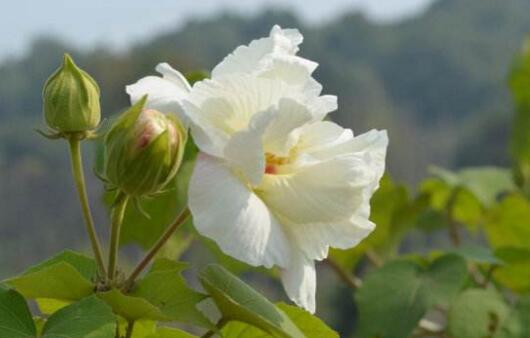
When too little fertilizer is applied, the soil lacks elements such as nitrogen, phosphorus and potassium, and these elements are essential nutrients for the normal growth of Hibiscus mutabilis. A lack of them causes the leaves to become thin and weak and to lose thickness, which leads to yellowing leaves. Therefore, fertilizer should be applied reasonably; for detailed methods, refer to the guide on how to fertilize Hibiscus mutabilis.
2. Water-induced yellowing
Water-induced yellowing is mostly caused by overwatering, or by failing to drain and prevent waterlogging in time during the rainy season, which leads to water accumulating in the soil. When the roots are soaked in water for a long time, the plant cannot absorb nutrients, and the leaves turn pale yellow. In this case, check the drainage of the soil and pay attention to controlling how often you water.
3. Drought-induced yellowing
Overwatering causes water-induced yellowing, while watering too little or even not watering for a long time causes drought-induced yellowing. For example, if each watering only wets the surface, the top becomes moist while the bottom stays dry, and the roots cannot absorb enough water, which in turn causes the leaves of Hibiscus mutabilis to turn yellow. At this point, pay attention to replenishing water, but remember not to water too much at once.
4. Soil compaction
Botanists suggest choosing loose, sandy soil when planting Hibiscus mutabilis, but some gardeners do not pay attention to this and choose soil with poor aeration and drainage, so after a period of planting the soil becomes compacted. The fertilizer applied and the water poured in cannot penetrate into the soil, resulting in a lack of nutrients.
5. Light that is too strong
Hibiscus mutabilis loves light, but if it is exposed to strong sun for too long in summer, its leaves can also turn yellow, showing scorched, withered yellow leaves that then drop off. In this case, move Hibiscus mutabilis to a ventilated, shaded place for care; if it is grown in the open ground, provide appropriate shade.
6. Pests and diseases
Leaf spot, leaf blight and so on can all cause plant leaves to turn yellow, and in severe cases local necrosis occurs, affecting the growth of the whole plant. When you notice strange spots of various shapes on the leaves of Hibiscus mutabilis, check whether there are pests or diseases, and if there are, control them promptly.
Causes of Yellowing Leaves in Hibiscus mutabilis, What to Do When Hibiscus mutabilis Leaves Turn Yellow
The flower language of Hibiscus mutabilis is beautiful, carrying the meaning of slender beauty and purity. Moreover, the hibiscus flower has an elegant columnar form and gorgeous blooms, making it a flowering plant so lovely to look at that people cannot help but take a few extra glances, which is why the hibiscus flower is also highly favored. So what causes the leaves of Hibiscus mutabilis to turn yellow? Below, we introduce what to do when Hibiscus mutabilis leaves turn yellow.
Causes of Yellowing Leaves in Hibiscus, What to Do When Hibiscus Leaves Turn Yellow
(1) Overwatering. When the potting soil stays too wet for a long time, it causes a lack of oxygen in the soil, causing some fibrous roots to rot, hindering normal respiration and the absorption of water and nutrients, and causing leaves to turn yellow and drop. After the damage appears, the young leaves first turn pale yellow, and then the old leaves gradually turn yellow too. Watering should be stopped immediately, fertilization paused, and the soil loosened frequently so that it is well aerated.
(2) Drought and dehydration. Missing waterings or watering only halfway (that is, wet on top and dry below) for a long time affects nutrient absorption and also easily causes the leaves to become dull and lusterless and to wilt and droop. First the lower old leaves age, and gradually the yellowing and dropping spreads from the bottom upward. At this point, water lightly and mist the plant, let it gradually recover, and then return to normal watering.
(3) Long-term lack of fertilizer. If nitrogen fertilizer has not been applied for a long time or the pot and soil have not been changed, the soil lacks nutrients such as nitrogen, causing the branches and leaves to become thin and weak and the leaves to be thin and yellow. The plant should be repotted in time, replaced with fresh loose, fertile potting soil, and gradually given diluted, well-rotted liquid fertilizer or compound flower fertilizer.
(4) Over-fertilization. Applying too much fertilizer causes new leaves to be thick and fleshy with many bumps and unevenness, while old leaves dry at the tips, turn scorched yellow and drop. Fertilization should be stopped immediately, watering increased so the fertilizer flows out through the drainage holes at the bottom of the pot, or the plant should be repotted immediately, the root ball rinsed with water, and then replanted in the pot.
(5) Hot, high temperatures. In summer, if flowers that prefer cool conditions (such as Cyclamen, Fuchsia and Begonia semperflorens) are placed in a hot spot exposed to direct strong sunlight, the tips and edges of young leaves very easily become scorched, or the leaves turn yellow and drop. They should be moved promptly to a well-ventilated, shaded place.
(6) Too much shade. If sun-loving flowers are kept for a long time in a shaded spot or a place with insufficient light, the branches and leaves grow leggy, the leaves are thin and yellow, and the plant does not bloom or blooms very little. Be sure to move the pot to a sunny spot.
(7) Soil or water that is too alkaline. In most areas of the north, the soil and water contain relatively high levels of salt and alkali. When growing acid-loving flowers such as rhododendron, camellia, Michelia figo, gardenia, orchid, Michelia alba and osmanthus, the soil lacks absorbable soluble iron and other elements, so the leaves gradually turn yellow. Use acidic soil when planting, and water regularly with alum fertilizer water during the growing period.
(8) Too dense and poorly ventilated. If too much nitrogen fertilizer is applied, the branches and leaves grow excessively lush, and combined with a long period without pruning, the inner branches and leaves receive insufficient light, which easily causes leaves to turn yellow and drop. Fertilize reasonably and prune more to improve ventilation and light penetration.
(9) Dry air. When indoor air is overly dry, some flowers that love humid conditions, such as spider plant and orchid, often show dried leaf tips or scorched leaf edges. Mist the plants, cover them with plastic film covers and take other measures to increase air humidity.
(10) Improper temperature. If the indoor temperature is too low in winter, flowers that love high temperatures are often susceptible to cold damage, which causes leaves to turn yellow and, in severe cases, to wither and die. If the indoor temperature is too high, the plant transpires excessively, and the roots cannot supply water and nutrients fast enough, which also turns the leaves yellow. Adjust the room temperature promptly.
(11) Soil that is too acidic. Red soil in the south is on the acidic side, and elements such as magnesium leach away easily. When growing trees and shrubs that tolerate alkali or prefer slightly alkaline soil, such as oleander, boxwood and winter jasmine, the old leaves often develop yellowing between the veins. Calcium magnesium phosphate fertilizer can be applied, or a magnesium sulfate solution sprayed.
(12) Damage from pests and diseases. Leaf spot disease caused by infection with fungi and other pathogens easily causes local necrosis of leaves, with yellow spots or patches appearing, and in severe cases the whole leaf withers, turns yellow and drops. After infection by mosaic virus, yellow-green mottled patches appear on the leaves. When attacked by scale insects, red spider mites and other pests, the leaves also become locally yellow and withered, or even the whole leaf yellows, wilts and drops. In all cases, spray promptly for control.
(13) Strong irritation. When preventing and controlling pests and diseases, using pesticide at too high a concentration, or pollution by toxic gases in the air, or suddenly watering with cold water when the temperature is high, can all easily cause the leaf tips or parts of the leaf surface to turn yellow and scorch, or even kill the whole plant. Therefore, use pesticides reasonably and find ways to eliminate sources of air pollution. In midsummer, avoid watering flowers with cold water around midday. Finally, it should also be mentioned that yellow leaves on potted flowers are sometimes caused by a single reason, but are often the result of multiple factors; a correct diagnosis is needed so the right remedy can be applied.
How to Grow Hibiscus mutabilis, Cultivation Methods and Precautions for Hibiscus mutabilis / Fertilize Reasonably
Because Hibiscus mutabilis has so many effects and uses, among which its ornamental value is very high, more and more people are growing it. However, some gardeners do not understand how to grow Hibiscus mutabilis, and sometimes use wrong methods that lead to poor plant growth. Today the editor will introduce the correct cultivation methods and precautions for Hibiscus mutabilis.
How to Grow Hibiscus mutabilis
In winter, the above-ground parts of Hibiscus mutabilis grown by some gardeners often freeze to death, which distresses some gardeners greatly. So how should Hibiscus mutabilis be grown to avoid this? You first need to understand its growth habits.
Growth Habits of Hibiscus mutabilis
Hibiscus mutabilis likes ample light and has only average shade tolerance; it likes a warm and humid climate and has weak cold tolerance, with a suitable growing temperature above 10 degrees; it likes fertile, loose, sandy soil; it grows relatively fast and has strong resistance to harmful substances.
Cultivation Methods and Precautions for Hibiscus mutabilis
1. Sandy soil
Hibiscus mutabilis has average requirements for soil, but whether grown in pots or in the open ground, it is best to use well-drained sandy soil, such as humus-rich garden soil, river sand and so on.
Precautions: After choosing the soil, it should be sterilized. The method is to set the soil out in the sun to dry, or soak the soil in a disinfecting solution; the former method is recommended.
2. Porcelain flower pot
How do you grow potted Hibiscus mutabilis? The choice of container is very important. Generally, a relatively large porcelain flower pot or unglazed clay pot is suitable. Before planting, place a few pieces of broken tile at the bottom of the pot to prevent the drainage holes from being too large and letting water drain away too quickly.
Precautions: The pot should not be too large; it only needs to provide enough space for the plant to grow. In addition, the pot needs to be changed once every 1-2 years, which is very important among the cultivation methods and precautions for Hibiscus mutabilis.
3. Water frequently
Hibiscus mutabilis grows very vigorously in spring, so it should be watered in time then; in summer, when the temperature is relatively hot, it should be watered generously; after the temperature drops in autumn, watering should also be reduced; in winter, water less or not at all depending on temperature changes.
Precautions: No matter the season, follow one principle when watering: do not water until the soil is dry, and when you do water, water thoroughly. Also prevent water from accumulating in the pot.
4. Fertilize reasonably
Many gardeners grow Hibiscus mutabilis to admire its beautiful flowers, and to make the flower color vivid and the blooms full, fertilization is the key step. So how should Hibiscus mutabilis be grown when it comes to fertilizing? Apply phosphorus fertilizer before the flowering period, apply organic fertilizer every 15 days in the other seasons, and stop fertilizing in winter.
Precautions: Fertilizing is meant to promote the growth of Hibiscus mutabilis and provide enough nutrients, but be sure not to apply too much fertilizer, otherwise the leaves become thick and yellow and drop easily, and flowering also becomes difficult.
5. Ample light
Hibiscus mutabilis has a certain shade tolerance, but it prefers an environment with ample light, especially before the flowering period arrives, when sufficient light ensures more vivid flowers. When light is lacking, there are fewer flower buds and they drop easily.
Precautions: Even when it enters dormancy in winter, a certain amount of light should be ensured, which is often overlooked among the cultivation methods and precautions for Hibiscus mutabilis. In summer, if the sunlight is too strong, you can shade Hibiscus mutabilis.
6. Control the temperature well
Hibiscus mutabilis likes a warm environment and has a certain cold tolerance, but in a low-temperature environment its above-ground parts may freeze to death. Although it will sprout new shoots again in spring and can bloom normally, growth will be affected to some extent, so the temperature should be kept at 10-25 degrees, which is more suitable.
Precautions: When the temperature is low in winter, keep Hibiscus mutabilis warm by moving it indoors to avoid cold damage from excessively low temperatures.