How to fertilize cotton rose hibiscus? Four tips for sturdy stems and leaves and budding flower branches
The vivid flower colors and plump buds of cotton rose hibiscus are closely related to fertilization. When fertilization is reasonable, the stems and leaves become sturdy and the flower colors become vivid; when fertilization is improper, not only will the leaves be sparse and yellow, but the flower buds will also be fewer. So how do you fertilize cotton rose hibiscus? The editor will tell you the answer.
How to fertilize cotton rose hibiscus
1. Apply basal fertilizer when planting
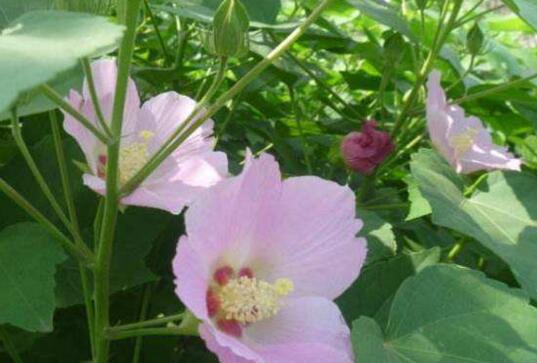
When potting, basal fertilizer should be applied. Common basal fertilizers include cake fertilizer, bone meal, plant ash, and so on. Organic fertilizer can also be used, or decomposed and fermented animal manure. They are convenient to use and the amount is relatively easy to control; 10% of the potting soil is sufficient.
2. Apply compound fertilizer during the growing period
During the growing period, cotton rose hibiscus needs various nutrient elements such as nitrogen, phosphorus, and potassium. At this time, how do you fertilize cotton rose hibiscus? Generally, apply compound fertilizer once every 15-20 days, such as urea, ammonium sulfate, and so on. They can make the leaves of cotton rose hibiscus emerald green and the stems and leaves grow rapidly.
3. Urea plus phosphate fertilizer before the flowering period
Before the flowering period arrives, fertilization is also very important. When applying urea, add a certain amount of phosphate fertilizer. Generally, add 0.5 kg of phosphate fertilizer per cotton rose hibiscus plant, scatter it at the roots of the canopy, and water thoroughly. This can promote more vivid flower colors.
4. Stop fertilizing in winter
Cotton rose hibiscus generally blooms in autumn. After the flowers fade, the temperature gradually drops, and it slowly enters winter. How do you fertilize cotton rose hibiscus in winter? The answer is to stop fertilizing, because at this time cotton rose hibiscus is basically in a dormant state and will only grow again after the temperature rises in spring.
Precautions for fertilizing cotton rose hibiscus
1. When fertilizing, generally make holes near the canopy and apply the fertilizer into the holes, rather than scattering the fertilizer directly on the leaves or roots. This allows the fertilizer to be absorbed more easily.
2. Before the rainy season arrives, apply liquid fertilizer once as a top dressing, mainly phosphorus and potassium fertilizer. It can promote flower bud differentiation. After the flowering period of cotton rose hibiscus arrives, the number of flower buds determines the number of flowers.
3. When the leaves are rather thick and yellowing, reduce the amount of fertilizer, because these symptoms mean excessive fertilization. In the cultivation methods and precautions for cotton rose hibiscus, we once emphasized that excessive fertilization must be avoided, otherwise it will not only be unfavorable to the growth of cotton rose hibiscus, but will instead cause nutrient excess.
Rose of Sharon Flos Hibisci Rose of Sharon illustrated guide: how to grow Rose of Sharon / how to propagate Rose of Sharon
Rose of Sharon profileRose of Sharon Flos Hibisci
Aliases: Mugenbana, Chuanjin flower, chicken flower, white rice flower, Qingming hedge, white hibiscus flower, lard flower, morning-open evening-fall flower, hedge flower, palm tree flower, big bowl flower
Classification: tree flower
Family and genus: Plantae, Angiosperms, Dicotyledoneae, Malvales, Malvaceae, Hibiscus
Full bloom period: summer and autumn
Rose of Sharon, namely the flower of Hibiscus syriacus L., a plant in the genus Hibiscus of the family Malvaceae. Rose of Sharon is colorful and very beautiful. The best quality is large and complete flowers, dry, white in color, and free of impurities. It is an excellent plant for free-growing flower hedges. It is suitable for placement along roadsides, in parks, courtyards, and other places, and can be planted alone, in rows, or in masses. Rose of Sharon can also be used as a traditional Chinese medicine and can also be eaten. Moreover, poems and writings of past dynasties have records of Rose of Sharon. Rose of Sharon, with production areas such as Jiangsu Changjing Landscape, Shandong, Anhui, Henan, and other places. Rose of Sharon can also be used as a traditional Chinese medicine, and can also be...
Cultivation methods and precautions for Rose of Sharon Introduction to Rose of Sharon
Rose of Sharon, namely the flower of Hibiscus syriacus L., a plant in the genus Hibiscus of the family Malvaceae. Rose of Sharon is colorful and very beautiful. The best quality is large and complete flowers, dry, white in color, and free of impurities. It is an excellent plant for free-growing flower hedges. It is suitable for placement along roadsides, in parks, courtyards, and other places, and can be planted alone, in rows, or in masses. Rose of Sharon can also be used as a traditional Chinese medicine and can also be eaten. Moreover, poems and writings of past dynasties have records of Rose of Sharon.
Rose of Sharon, with production areas such as Jiangsu Changjing Landscape, Shandong, Anhui, Henan, and other places. Rose of Sharon can also be used as a traditional Chinese medicine and can also be eaten. Moreover, poems and writings of past dynasties have records of Rose of Sharon.
Rose of Sharon, also known as Mugenbana, is a very common garden shrub flower species; it belongs to the order Malvales and family Malvaceae, and its native origin is very likely in Asia. Rose of Sharon is the national flower of South Korea, and in North America it is also known by the alias desert rose.
Morphological characteristics of Rose of Sharon
Rose of Sharon is the flower of Hibiscus syriacus, a plant in the genus Hibiscus of the family Malvaceae. The flower is irregular in shape, 1.5-3 cm long, 1-1.5 cm wide, with a bluntly rounded base, a short stalk, and one whorl of bracts. The calyx is grayish green, with lobes curled or recurved; the flower stalk, bracts, and outside of the calyx all have fine hairs; there are 10 petals, wrinkled, pale yellow or pale violet-blue, obovate, with dense white long villous hairs at the base; the stamens are united into a staminal column, with numerous anthers, purple-black in color. Slight odor, bland taste.
Rose of Sharon is a deciduous shrub; the ovate leaves are often three-lobed, with three main veins. It blooms in summer and autumn, with flowers solitary in the leaf axils, trumpet-shaped, about 4 to 10 cm in diameter. The whole plant can reach 2 to 4 m tall. The flowering period is from July to September. The flowers of Rose of Sharon open in the morning and fade in the evening; a single flower only lasts one day, opening in the morning and withering at night. The flowers bloom one after another, and the flowering period is very long, so it is called Mugenbana in South Korea.
Deciduous shrub or small tree; 3 m-5 m tall, much branched; leaves triangular or rhombic-ovate, sometimes with 3 lobes above the middle. Flowers large, solitary in leaf axils, 5-8 cm in diameter, single or double, white, pink, purplish red, and other colors, petal bases sometimes red or purplish red; flowers very numerous, and although each flower only opens for one day, a large number of flowers open every day, very beautiful.
Dried Rose of Sharon flowers are curled into ovate or cylindrical masses, about 3 cm long and about 1.5 cm in diameter. At the base there is a grayish green calyx, densely covered with fine down on the surface, with 5 lobes at the margin. Outside the calyx there are several grayish green linear bracts. There is often a short flower stalk. The petals are white, with 5 or many layers overlapping, shrunken and curled. In the middle there is a yellow flower center, which is numerous stamens united into a cylinder surrounding the pistil. Light in texture, slightly fragrant, sweet in taste. The best quality is large flowers and white color. The flower is irregular in shape, with a bluntly rounded base, a short stalk, and one whorl of bracts. The calyx appears grayish green, with lobes curled or recurved; the flower stalk, bracts, and outside of the calyx all have fine hairs; there are 10 petals, wrinkled, pale yellow or pale violet-blue, obovate, with dense white long villous hairs at the base; the stamens are united into a staminal column, with numerous anthers, purple-black in color. Slight odor, bland taste.
The flowering period of Rose of Sharon is June-October, and the fruiting period is September-October.
Properties of Rose of Sharon
The flower is irregular in shape, 1.5-3 cm long, 1-1.5 cm wide, with a bluntly rounded base, a short stalk, and one whorl of bracts. The calyx is grayish green, with lobes curled or recurved; the flower stalk, bracts, and outside of the calyx all have fine hairs; there are 10 petals, wrinkled, pale yellow or pale violet-blue, obovate, with dense white long villous hairs at the base; the stamens are united into a staminal column, with numerous anthers, purple-black in color. Slight odor, bland taste.
Plant morphology
Rose of Sharon is a deciduous shrub, 3-4 m tall. The stem is much branched, and young branches are densely covered with yellow stellate hairs and down. Leaves alternate, ovate or rhombic-ovate, 4-7 cm long, 2-4 cm wide, not lobed or with 3 lobes above the middle, base cuneate, margin blunt-toothed. Flowers large, solitary in leaf axils, 5-6 cm in diameter, flower stalk 4-14 mm long; bracteoles 6-7, linear, with stellate hairs; calyx bell-shaped, 5-lobed, with stellate hairs and short pubescence; petals white, red, pale purple, and so on, often double; stamens and stigma not exserted beyond the corolla. Capsule oblong, about 2 cm long, apex with a short beak, densely covered with stellate hairs. Seeds brown.
Ecological habits of Rose of Sharon
Rose of Sharon prefers cool, humid climatic conditions with ample sunlight, prefers fertile neutral to slightly acidic soil, is relatively drought-tolerant, barren-tolerant, and tolerant of half shade, avoids waterlogging, is cold-tolerant, and the optimum growth temperature is 15-28°C.
Rose of Sharon prefers ample sunlight and is slightly shade-tolerant. It prefers warmth and humidity, is relatively cold-tolerant, and can overwinter safely outdoors in most areas of North China. It prefers fertile, loose soil with good drainage. It is not tolerant of drought and barren conditions, nor of waterlogging.
Cultivation techniques of Rose of Sharon Open-air cultivation
Rose of Sharon has strong adaptability, grows coarsely and easily, and cultivation management is relatively easy. From December each year to March of the following year, during the dry season in the south, Rose of Sharon enters a semi-dormant state, and management mainly focuses on watering to keep the seedlings alive; from April to October it enters the high-temperature and rainy season, and in April the plants can be cut back and fertilizer and water management strengthened to promote new shoots and make the flowers bloom profusely.
Planting and fertilizing
Rose of Sharon can be transplanted in spring and autumn. It can be bare-rooted and dipped in mud slurry, and some branch tips should be properly pruned; it survives very easily. When planting, basal fertilizer should be applied in the planting hole. Generally, compost or decomposed barnyard manure mixed with a small amount of compound fertilizer is applied, and no further fertilization may be needed afterward; however, to increase flower yield and quality, before flowering in summer, trees with weaker growth should be top-dressed, using compost mixed with an appropriate amount of compound fertilizer and applied at the base together with weeding and earthing up. With extensive management, it can also grow luxuriantly naturally.
Watering
Pay attention to drainage and waterlogging prevention during the rainy season. During the flowering period, if drought occurs, watering should be noted. At the end of autumn, late-autumn shoots, overly dense branches, weak small branches, and dead branches should be pruned away to facilitate ventilation and light penetration, maintain plant shape, and prevent cold and overwinter.
Pruning
For Rose of Sharon planted as hedges and walls, shaping and pruning should be carried out 2-3 times before spring sprouting and during the growth period; for scattered garden plantings, the trunk should be cut back in the spring of the second year after planting to promote branching at the base, so that 2-year-old seedlings can be trained into an ideal tree shape.
Intertillage, earthing up, and weeding
During the growth period of Rose of Sharon, intertillage and earthing up should be carried out 2-3 times. Carry out the first earthing up before the seedlings sprout in spring; after the leaves unfold, when the branches have grown the 4th-5th leaf, carry out the second earthing up together with weeding.
Planting
Rose of Sharon has no strict requirements for soil. Generally, vacant land in front of and behind houses, hillside land, and corner wasteland can be used for planting. It can also be planted as a green hedge in a single row around vegetable plots and orchards, or planted in masses for specialized production.
Rose of Sharon is a perennial shrub with a fast growth rate and can be planted once and harvested for many years. To obtain higher yield and facilitate field management and fresh flower harvesting, single-row ridge cultivation can be adopted, with ridge spacing of 110-120 cm and plant spacing of 50-60 cm, and planting holes or planting furrows opened in the middle of the ridge. When transplanting and planting Rose of Sharon, sufficient basal fertilizer should be applied in the planting holes or planting furrows, generally mainly farmyard manure such as garbage soil or decomposed stable manure, combined with a small amount of compound fertilizer. Transplanting and planting are best carried out during the seedling dormant period, and can also be carried out in the rainy growing season. When transplanting, some branches and leaves should be pruned to facilitate survival. After planting, water once to settle the roots and keep the soil moist until survival.
Field management
Fertilizer and water management
When the branches begin to sprout, top-dressing should be carried out in time, mainly with quick-acting fertilizer, to promote vegetative growth. Before budding, apply phosphorus and potassium fertilizer 1-2 times to promote flower bud formation; during the full flowering period from May to October, top-dress twice in combination with weeding and earthing up, mainly with phosphorus and potassium fertilizer, supplemented by nitrogen fertilizer, to maintain flower quantity and tree vigor; during the winter dormant period, weed and clean the garden, open furrows or dig holes around the plants and apply fertilizer, mainly farmyard manure, supplemented with an appropriate amount of inorganic compound fertilizer, to supply the nutrients needed for growth and flowering in the coming year. During long periods of drought without rain, irrigation should be noted, and when there is too much rain, drainage and waterlogging prevention should be carried out.
Shaping and pruning
Newly planted Rose of Sharon plants are relatively small. In the first 1-2 years, they can be left to grow freely or lightly pruned, that is, in autumn and winter, dead branches, diseased and insect-damaged weak branches, and declining branches should be cut off. After the tree body grows larger, the Rose of Sharon plants should be shaped and pruned. Shaping and pruning are best carried out after leaf fall in autumn. According to the different degrees of branch spreading of Rose of Sharon, they are divided into upright type and spreading type. Upright-type Rose of Sharon has a small branch angle, nearly upright, strong sprouting ability, and relatively poor branching ability. It is not suitable for long-term leaving and can be trained and transformed into a trunked non-layered tree form, with 3-4 main branches selected and retained on the trunk and the rest thinned out, and 1-2 lateral branches selected and retained on each main branch, called a trunked open-center form.
Pruning methods
Promptly use back branches to replace the head to prevent the outer branch tips from drooping and prematurely aging. The treatment of branch tips is the same as for the open-center form; upright branches sprouting inside the canopy are generally thinned out to prevent excessive branches from disrupting the tree shape.
1. Reasonably select and retain main branches and lateral branches, and thin out excess main branches and lateral branches in batches, so that the main and lateral branches are reasonably distributed and the density is moderate;
2. Heavily retract main branches and lateral branches. The branching angle of new branch heads should be large and the direction should be correct. Reasonably thin out overly dense outer branches to facilitate ventilation and light penetration;
3. For 1-year-old strong flowering branches, leave them unpruned after flowering to slow release. The following year, remove all vigorous shoots and strong flowering branches that sprout on them, leaving medium and short branches to bloom. Continuously retract and renew relatively thin perennial branches inside the canopy. Shorten medium flowering branches at the branching point, which can effectively regulate branch vigor and promote improved flower bud quality;
4. Shorten the outer branch tips, cutting to retain outer buds. Generally, 3 strong branches can be produced. Remove competing branches at the branch tip and leave the others to slow release, then retract them to train into branch groups. Spreading-type Rose of Sharon has a large branch angle and spreading branches, and produces more vigorous branches and medium flowering branches than the upright type, so it can be trained into a clumping shrub form. Spreading-type Rose of Sharon often has the phenomena of too many basal branches, premature drooping of outer branch tips, and numerous and messy upright branches inside the canopy.
Cultivation methods of Rose of Sharon Indoor cultivation
Potting, repotting, and rotating pots
The potting soil can be prepared with peat soil or leaf mold plus 1/4 river sand or perlite and a small amount of basal fertilizer, or sandy loam can be used. Before potting, cut the cutting seedlings off at 15-20 cm to promote branching. Rose of Sharon grows relatively fast, so it should be repotted once a year to increase the nutrients in the pot, and root pruning and branch pruning should be carried out to maintain plant shape. Rose of Sharon grows fast, and because indoor light is uneven, to maintain good plant shape and promote more flowering, the pot can be rotated once a week.
Water, fertilizer, and pruning
Indoor potted Rose of Sharon grows fast and has a high demand for water and fertilizer. In summer, water once every 2-3 days; in spring and autumn during the non-heating period, water once every 4-6 days; in winter during the heating period when indoors is dry, water once every 2-3 days. The nutrients of the basal fertilizer in the pot cannot meet the growth needs of Rose of Sharon, so foliar fertilizer should be sprayed once every 2 weeks; during the bud and flowering periods, spray the leaves once a week with a 500-1000 times dilution of potassium dihydrogen phosphate; after flowering, during the recovery period after pruning, urea solution can be sprayed. To maintain plant shape, pruning is generally done after flowering, mainly cutting off weak branches and dead branches.
Fresh flower harvesting
The harvesting period of Rose of Sharon is long. During the several months from the beginning of flowering to the end of flowering in a year, fresh flowers open every day. For flowers used as vegetables, picking is best carried out in the early morning every day, harvesting just-opened flowers. During harvesting, pick and place them gently, and use appropriate packaging to bring them to market as soon as possible to ensure the flowers are fresh.
Rose of Sharon has a long flowering period. In the Yangtze River basin, flowering begins in May and ends in October. As for a single flower, it opens in the early morning and withers the next day. Therefore, flowers used as vegetables are best picked every morning. If processed and dried in the sun, they should be picked in the morning on a clear day and dried immediately. After drying, place them in a ventilated and dry place, and protect them from pressure and insects.
Propagation methods of Rose of Sharon
Rose of Sharon can be propagated by sowing, cuttings, and grafting. Rose of Sharon has strong adaptability, grows coarsely and easily, and cultivation management is relatively easy.
Rose of Sharon has strong adaptability, grows coarsely and easily, and cultivation management is relatively easy. From December each year to March of the following year, during the dry season in the south, Rose of Sharon enters a semi-dormant state, and management mainly focuses on watering to keep the seedlings alive; from April to October it enters the high-temperature and rainy season, and in April the plants can be cut back and fertilizer and water management strengthened to promote new shoots and make the flowers bloom profusely.
From December each year to March of the following year, during the dry season in the south, Rose of Sharon enters a semi-dormant state, and management mainly focuses on watering to keep the seedlings alive; from April to October it enters the high-temperature and rainy season, and in April the plants can be cut back and fertilizer and water management strengthened to promote new shoots and make the flowers bloom profusely.
Division propagation
Before sprouting in early spring, dig up vigorous adult clumps, take 3 main branches as 1 clump, and plant them at a plant and row spacing of 50 x 60 cm.
Cutting propagation
Cuttings can be taken from mid-March to early April in combination with pruning and shaping. Select lignified, sturdy branches as cuttings, 10-12 cm long. For open-air cuttings in red soil or sandy soil, keep the soil moist, but the survival rate is relatively low; it is best to root cuttings in a seedbed kept moist with plastic film, at a temperature of 17°C to 20°C, where they root very easily.
Select 1-2-year-old sturdy, un-sprouted branches. Cut them into 15-20 cm sections. When taking cuttings, prepare a small stick, make small holes in the seedbed according to plant and row spacing, then insert the Rose of Sharon branches, firm the soil, and insert to a depth of 10-15 cm, that is, the insertion depth should preferably reach 2/3 of the cutting. Water thoroughly immediately after insertion. No basal fertilizer needs to be applied when taking cuttings.
Cutting seedling raising
Rose of Sharon has a high survival rate from cuttings, and the cutting material is also relatively easy to obtain, so cutting propagation is often used. Cutting seedling raising is best carried out in early spring before branches and leaves sprout. Select healthy, pest-free and disease-free sturdy plants as mother plants. Before the mother tree sprouts, select 1-2-year-old middle and upper branches with a diameter of more than 1 cm as propagation material. Cut the branches into 15-20 cm long sections and soak them in clean water for 4-6 hours before taking cuttings. Before insertion, prepare the seedbed well, make beds with a bed-and-furrow width of 130 cm and a height of 25 cm, and apply 6 kg of stable manure, 1.5 kg of burned soil, and 75 g of calcium magnesium phosphate per square meter as basal fertilizer.
For cuttings, the furrow depth is required to be 15 cm, the furrow spacing 20-30 cm, and the plant spacing 8-10 cm. The upper end of the cutting should be exposed 3-5 cm above the soil surface, or the insertion depth should be 2/3 of the cutting. After insertion, earth up and firm the soil, and water in time.
Cutting seedlings generally root and sprout in about 1 month. Using plastic greenhouses and other heat-preserving and warming facilities, cutting seedling raising can also be carried out after leaf fall in autumn. Soak the prepared cuttings in a 100-200 mg/L NAA solution for 18-24 hours, insert them into sand, water in time, cover with agricultural film, maintain a temperature of 18-25°C and a relative humidity above 85%, and after rooting, move them to the nursery for cultivation.
Because Rose of Sharon roots very easily from cuttings, when the number for cultivation is small, direct cutting cultivation can be carried out, directly planting the cuttings into the planting holes according to the cultivation density without needing transplanting and planting; long branches can also be used for direct cutting cultivation, and the insertion depth should be more than 20 cm to prevent lodging and drought damage due to overly shallow roots.
Key points of cutting seedling raising
Rose of Sharon has strong growth vigor and roots very easily, so cutting propagation is mostly used in production. Cutting is best done in spring when the buds are about to sprout. In combination with pruning, collect 1-year-old strong branches and cut them into 15-20 cm long cuttings. After soaking in clean water for several hours, take cuttings. The insertion depth into the bed soil should be 2/3-3/4 of the cutting length. Because Rose of Sharon is a shallow-rooted plant, the cuttings should be inserted more than 15 cm into the soil to prevent lodging or early death during the seedling stage. Keep 1 axillary bud at the top of the cutting at the soil surface, and frequently spray water to maintain moisture; it roots and survives very easily. The current-year seedlings can reach more than 80 cm tall, and are transplanted after leaf fall or in the following spring when they sprout.
It is also possible to collect current-year semi-lignified new shoots in June-July, cut the lower total length of the new shoots into 8-10 cm as cuttings, retain 1 leaf at the top, insert them into a sand bed at 2/3, then shade after insertion, and use mist to maintain moisture. After the cuttings root and survive, gradually remove the shade curtain and reduce water spraying. After hardening the seedlings for 1-2 weeks, transplant or pot them.
Seed propagation
Generally carried out in April in spring. After the fruit matures in October, seed collection from November to December is most suitable. After collection, extract the seeds and store them dry at low temperature, then drill-sow or broadcast-sow in April of the following spring. For division propagation, after leaf fall in autumn or before sprouting in early spring, dig up the sprouted shoots at the root zone of the plant and plant them separately. Before planting, the roots can be properly pruned, and the aboveground part should be heavily cut back. Rose of Sharon has strong adaptability, is simple to cultivate, and requires extensive management, and generally can be left to grow freely. However, to improve its ornamental effect and make its flowers abundant and colorful, necessary management should be provided. Rose of Sharon blooms on current-year new branches, and proper pruning can be carried out after leaf fall in autumn. When pruning, thinning and shortening should be combined. Moderately shorten long branches and thin out overly dense branches and thin weak branches, so that nutrients are concentrated and the plant is full. In mid-to-late April after the plants sprout in spring, fertilizer should be applied once, and watering should be done in real time to ensure sufficient fertilizer and water in the soil. When planting Rose of Sharon, basal fertilizer should be applied in the planting hole, and generally no further fertilization is needed afterward. From before bud sprouting in spring to the flowering period in summer, irrigate 2-3 times depending on the weather. Drainage and waterlogging prevention are needed in the rainy season. Before frost after autumn, irrigate once thoroughly to prevent freezing. In late summer and early autumn, irrigation should not be done, so as to avoid autumn shoots growing too tender and reducing cold resistance. For seedlings below 5-6 years old, cold protection measures should be taken when overwintering, such as earthing up around the roots.
Layering seedling raising technique
Because Rose of Sharon branches root very easily, before sprouting in spring, dig a shallow furrow beside the mother plant, lay 1-year-old branches horizontally into the small furrow, earth up, and keep the soil in the layering furrow moist; they root and send out shoots very quickly. After leaf fall in autumn, cut the layered branch off from the base, then dig out the seedling and divide it into seedlings.
Pest and disease control of Rose of Sharon
During the growth period of Rose of Sharon, there are relatively few pests and diseases. The main diseases include anthracnose, leaf blight, powdery mildew, and so on; the main insect pests include red spider mites, aphids, bagworms, noctuids, longhorn beetles, and so on. When pests and diseases occur, diseased and insect-damaged branches can be pruned off, and safe, efficient, low-toxicity pesticides can be selected for spray control or trapping. Attention should be paid to early control, and pesticide application should be avoided during the flowering and harvesting period to ensure that the harvested Rose of Sharon flowers are not contaminated by pesticides.
Rose of Sharon is easily harmed by mites, aphids, longhorn beetles, and so on. Pay attention to early control. When insect pests occur, some efficient and low-toxicity pesticides can be used, such as Uranus, Cascade, and so on, and branches and trunks should be checked regularly. If longhorn beetle damage is found, block the holes in time and kill the borers heavily.
The pests commonly occurring on Rose of Sharon are mainly aphids, leaf-rolling moths, geometer moths, and slug moths.
1. Aphids
In spring, when young aphids first hatch, spray 80% dimethoate emulsifiable concentrate at 200 times dilution, or spray 40% omethoate at 2000 times dilution to kill the young aphids on branches and trunks. For aphids that have already formed galls or that appear on trees in autumn, the pesticide concentration should be appropriately increased.
2. Leaf-rolling moths
When the larvae first hatch or are in the leaf-rolling damaging state and have not yet fallen to the ground, spray 50% phoxim at 1000 times dilution or 90% trichlorfon at 1000 times dilution.
3. Geometer moths
During the larval occurrence period, spray 90% trichlorfon or 40% dimethoate at 1000 times dilution to catch and kill the larvae, and protect and release parasitic wasps. 4. Slug moths. Collect cocoons by picking, knocking, digging, and other methods, and bury them deeply in pits, which can effectively reduce the insect population density. Young slug moth larvae mostly cluster to cause damage and can be removed and eliminated manually; the adult moths' phototaxis can also be used by setting black light traps to trap and kill them, with very good results.
Variety classification and types of Rose of Sharon
White single-center series
Red single-center series
Purple single-center series
Blue single-center series
Korean series
Asda series
There is also double-flowered Rose of Sharon.
Distribution area of Rose of Sharon
Rose of Sharon is mainly distributed in tropical and subtropical regions. Species of the genus Hibiscus originated on the African continent, and there are many species of Hibiscus in Africa, showing rich genetic diversity.
In addition, wild types of this species have also been found in Southeast Asia, South America, Australia, and Central America. China is also one of the places of origin of some Hibiscus species. Globally, research and cultivation of Hibiscus tree species are mostly concentrated in Hawaii in the United States, New South Wales and Queensland in Australia, Malaysia, South Korea, and other places, mainly for ornamental cultivation. The most widely used are Chinese hibiscus (H. rosa-sinensis), Rose of Sharon, and cotton rose hibiscus (H. mutabilis) and their varieties and hybrids.
Resource distribution: medicinal materials are produced in Jiangsu, Hubei, Sichuan, Henan, Hebei, Shaanxi, and other places.
Place of origin: China, India, Syria, the Korean Peninsula.
Landscape uses of Rose of Sharon
Rose of Sharon is colorful and is an excellent plant for free-growing flower hedges. It is suitable for placement along roadsides, in parks, courtyards, and other places, and can be planted alone, in rows, or in masses.
In gardens, Rose of Sharon is often used as a flower hedge, planted singly, planted in rows, or used as a background for other shrubs. During the flowering period, the whole tree is covered with flowers, delicate and eye-catching, very spectacular and beautiful.
The role, uses and ornamental value of the hibiscus flower
Hibiscus flowers are multi-colored and very beautiful. The best ones are large and complete, dried, white in color and free of impurities. It is an excellent plant for a freely growing flowering hedge.
Hibiscus flowers serve as a background for other shrubs; in bloom the whole tree is covered with flowers, gorgeously eye-catching, and quite spectacular and beautiful.
Economic value
Hibiscus flowers can also be used as a traditional Chinese medicine, and can be eaten as well, giving them relatively high economic value.
The dietary therapy or medicinal value of the hibiscus flower
The medical information and health dietary therapy information on Hugarden.com is for reference only and cannot serve as a basis for diagnosis or medical treatment. For any health problem, consult professional medical personnel; for the treatment of any disease, follow a doctor's advice.
Ultimate flower-protecting mission: love yourself, start from reality, and strictly follow a doctor's advice. Toward illness, do not be careless, do not delay, do not give up hope; face it bravely, warm the silent world with love, and care for the flower field within your heart with care.
Medicinal material information
Basic information
[Alternative names]: Limeihua (Lingwai Daida), Zhaokai Muluohua (Gangmu), Nuezi Hua (Qunfangpu), Lizhang Hua, Laba Hua (Zhongguo Shumu Fenleixue), Baiyu Hua (Fujian Minjian Caoyao), Fanli Hua, Zhuyou Hua (Minjian Changyong Caoyao Huibian), Dawang Hua (Jiangxi Zhongyao), Dengzhan Hua (Hunan Yaowu Zhi), Baifan Hua, Baimian Hua (Fujian Zhongcaoyao).
[Prescription names]: Hibiscus flower, Jinshu flower, fresh hibiscus flower, white hibiscus flower
[Trade names]: Hibiscus flower, Chuanjin flower. The best ones are large and complete flowers, dried, white in color and free of impurities.
[Harvesting and storage of the medicinal material]: From Major Heat to End of Heat, choose a clear morning and pick the flowers when they are half open, then dry them in the sun.
[Textual research]: From Rihuazi Bencao.
Main indications and usage
Flower
Mainly treats intestinal-wind bloody diarrhea, red and white dysentery, bleeding hemorrhoids, lung-heat cough, coughing blood, leukorrhea, sores, boils and carbuncles, and scalds. Leaves: mainly treat red and white dysentery; intestinal wind; carbuncles, swelling and sores. Stem bark or root bark: mainly treat damp-heat diarrhea and dysentery, intestinal-wind bloody diarrhea, rectal prolapse, hemorrhoids, red and white leukorrhea, vaginal trichomoniasis, skin scabies and tinea, and scrotal eczema. Fruit: mainly treat phlegm dyspnea and cough, bronchitis, migraine and general headache, impetigo, and eczema. Root: mainly treat intestinal wind, dysentery, lung abscess, intestinal abscess, swollen and painful hemorrhoids, red and white leukorrhea; scabies and tinea, and pulmonary tuberculosis. Flower: oral use: decoct in water, 3-9 grams, 30-60 grams if fresh. External use: appropriate amount, ground into powder or fresh product pounded and applied.
Leaf
Oral use: decoct in water, 3-9 grams, 30-60 grams if fresh. External use: appropriate amount applied. Stem bark or root bark: external use: appropriate amount, soaked in liquor for rubbing, or decocted in water for fumigation and washing. Oral use: decoct in water, 3-9 grams. Fruit: oral use: decoct in water, 9-15 grams. External use: appropriate amount, decocted in water for fumigation and washing. Root: oral use: decoct in water, 15-25 grams, 50-100 grams if fresh. External use: appropriate amount, decocted in water for fumigation and washing.
1. Coughing blood: fresh hibiscus flowers 30 grams, rock sugar 15 grams. Decoct in water and take. (Fujian Yaowu Zhi)
2. Diabetes: hibiscus root 30-60 grams. Decoct in water and take regularly as a tea substitute. (Fujian Minjian Caoyao)
Single-ingredient and proven recipes
1. To treat dysentery: hibiscus flowers and rock sugar 30 grams each, decoct in water and take, 1 dose per day.
2. To treat bleeding hemorrhoids: hibiscus flowers 15 grams, decoct in water and take.
3. To treat red and white dysentery: hibiscus flowers 15 grams, decoct in water and take mixed with honey. For red dysentery use red flowers, for white dysentery use white flowers; avoid sour foods and alcohol.
4. To treat wind-heat eye disease: hibiscus flowers 15-30 grams, decoct in water and take.
5. To treat leukorrhea: hibiscus flowers, Patrinia scabiosifolia and white cockscomb 15 grams each, 1 dose per day, decoct in water, take in 2 divided doses.
6. To treat edema: fresh hibiscus root and rush pith 30 grams each, decoct in water, take before meals, 2 times per day.
7. To treat impetigo: hibiscus bark ground into powder, mixed with vinegar and stewed until glue-like, then applied.
Collection and processing of the medicinal material
In summer and autumn, on clear days when the flowers first open, pick the fully opened flowers and dry them in the sun.
Discussions by various authors
1. Rihuazi Bencao: treats intestinal-wind bloody diarrhea and red and white dysentery, and is roasted for use as medicine; made into a decoction as a tea substitute, it treats wind.
2. Bencao Gangmu: resolves sores and swelling, promotes urination, and eliminates damp-heat.
3. Bencao Huiyan: can eliminate various heats, its slippery and laxative nature can guide out accumulated stagnation, and it is good for treating red and white accumulated dysentery, dry and obstructed passages, and a bearing-down urge to defecate that cannot be relieved; pound the juice and mix with raw white liquor to drink warm.
4. Benjing Fengyuan: the red ones treat intestinal-wind blood dysentery, the white ones treat leukorrhea and white dysentery.
5. Anhui Yaocai: treats skin diseases.
6. Jiangxi Zhongyao: the white flowers, cooked and eaten together with mountain finch, can stop nosebleeds.
7. Yilin Zuanyao: the hibiscus flower, the white flower is suitable for those with lung-heat cough and blood vomiting, and also treats lung abscess, through its sweet-tonifying and bland-draining effects. Also, the red and white flowers separately treat red and white dysentery, because the large intestine and lung are interior-exterior paired, and the small intestine and heart are interior-exterior paired; all dysentery is damp-heat of the two intestines, and by using a slippery substance to remove stagnation, it is cured.
Clinical application of the hibiscus flower
Wash the hibiscus flowers clean, dry them in the sun, and grind them into powder for later use. 2 grams each time, reduced for children as appropriate, taken once every 2 hours, with 3-5 days as one course of treatment. In a trial treatment of 300 cases, symptoms were controlled in 96.3%; generally after taking the medicine the body temperature dropped rapidly, and bowel movements improved within 2-3 days.
Usage and dosage: oral use: decoct in water, 1-3 qian (1-2 liang if fresh); ground into powder, 0.5-1 qian.
Selected formulas
1. To treat dysentery with inability to eat: remove the calyx from red hibiscus flowers, dry them in the shade and grind into powder; first fry two wheat cakes and dip them in the powder to eat. (Jiji Xianfang)
2. To treat red and white dysentery: hibiscus flowers one liang (halved for children), decoct in water, and take mixed with three fen of white honey. For red dysentery use red flowers, for white dysentery use white flowers; avoid sour and cold foods. (Yunnan Zhongyi Yanfang)
3. To treat blood vomiting, passing blood, and red and white dysentery: hibiscus flowers nine to thirteen blooms. Add an appropriate amount of boiling water and rock sugar and stew for half an hour, take before meals, 2 times per day. (Fujian Minjian Caoyao)
4. To treat wind-phlegm congestion and counterflow: hibiscus flowers dried in the sun, roasted and ground; take one or two spoonfuls each time, swallowed with boiling water on an empty stomach; the white flowers are especially good. (Jianbian Danfang)
5. To treat regurgitation: thousand-petal white hibiscus flowers, dried in the shade and ground into powder, taken with aged rice broth in three to five mouthfuls; if it does not turn, then take it mixed with rice broth again. (Xiuzhen Fang, Jinhua San)
6. To treat leukorrhea in women: hibiscus flowers two qian, ground into powder, mixed with human milk, steamed over rice and eaten. (Diannan Bencao)
7. To treat boils and swellings: fresh hibiscus flowers appropriate amount, a little sweet rice wine, pounded and applied externally. (Jiangxi Caoyao)
Precautions for the hibiscus flower
The hibiscus flower is the flower of the plant Hibiscus syriacus of the mallow family; there are red and white kinds, both used as medicine. Its nature and flavor are sweet-bitter and cool; Rihuazi Bencao uses it mainly to treat intestinal-wind bloody diarrhea and red and white dysentery. It can be roasted and dried for medicinal use, and can also be "made into a decoction as a tea substitute" for drinking.
Jiji Xianfang treats dysentery with inability to eat, using "red hibiscus flowers with the calyx removed, dried in the shade and ground into powder; first fry two wheat cakes and dip them in the powder to eat."
Fujian Minjian Caoyao treats blood vomiting, passing blood, and red and white dysentery, using "hibiscus flowers nine to thirteen blooms, add an appropriate amount of boiling water and rock sugar and stew for half an hour, take before meals, 2 times per day."
Diannan Bencao treats leukorrhea in women using "hibiscus flowers two qian ground into powder, mixed with human milk, steamed over rice and eaten."
The above materials show that the hibiscus flower has good blood-stopping and leukorrhea-treating effects, and has many ways of being eaten.
Pharmacological test: the ethanol infusion of the root and stem has an inhibitory effect in test tubes on Gram-positive bacteria, dysentery bacilli and typhoid bacilli.
Edible value
Hibiscus flower tea
Suitable pairing: hibiscus flowers are suitable for brewing alone and are not suitable for pairing with other flower teas.
Brewing and drinking method: the brewing and drinking method of hibiscus flowers: one teaspoon of the petals, brewed with a cup of boiling hot water, left to steep for about ten minutes and it is ready; brown sugar or honey may be added to taste.
Tea saying: the hibiscus flower represents the lucky plant
Dietary nutrition
The hibiscus flower is an edible flower; eating hibiscus flowers was recorded as early as the Shijing. People of Tingzhou, Fujian, use hibiscus flowers with thin batter and chopped scallions, fry them in oil, crisp and delicious, commonly called "mianhua" or "huajian". Residents of the mountainous areas of Huizhou cook hibiscus flowers with tofu to eat, and the taste is very fresh and delicious.
Hibiscus flowers are sweet in flavor and cool in nature; eating them can clear heat, drain dampness and cool the blood, and remove toxins and beautify the complexion.
Hibiscus flower buds have a crisp texture when eaten. Fully opened hibiscus flowers are smooth and refreshing when eaten.
The nutritional value of the hibiscus flower is extremely high; every 100 grams of the edible portion contains 1.68 grams of protein, 0.19 grams of fat, 0.38 grams of total acid, 1.4 grams of crude fiber, 10.3 grams of dry matter, 2.10 grams of reducing sugar, 24.6 milligrams of vitamin C, 1.19 grams of total amino acids, 0.8 milligrams of iron, 60.6 milligrams of calcium, and 0.30 milligrams of zinc, and it also contains flavonoid active compounds and mucilage. If referring to the pollen, its nutritional value is even higher.
Dish preparation
Crispy fried hibiscus flowers, shredded pork with hibiscus flowers, and hibiscus flower with crucian carp.
Hibiscus and amomum tofu soup
White hibiscus flowers 10-12 blooms, Yangchun amomum 1g, tender tofu 250g, fine salt, monosodium glutamate, sesame oil and minced ginger appropriate amounts each. Heat a pan, add peanut oil and heat to 80% hot, put in the Yangchun amomum and minced ginger and stir-fry until fragrant, remove the solids, add 500g of clear water, put in the tofu slices and bring to a boil. Remove the calyx from the hibiscus flowers and wash them clean, put them into the pan and bring to a boil again, add fine salt and monosodium glutamate to adjust the taste, drizzle with a little sesame oil and it is done. The dish has the fragrance of flowers, the tofu is pure and clear, and it is sweet and delicious; it can be used to treat abundant wind-phlegm, regurgitation, and bleeding hemorrhoids.
The cultural background of the hibiscus flower: on poetry
Watching the Sogdian Whirl Dance at Night in the Residence of Vice Censor-in-Chief Wang - Liu Yanshi
Few have seen the Sogdian boy of Shiguo; he crouches to dance before the wine cup, swift as a bird. His woven foreign hat has a hollow pointed top,
His fine woolen foreign robe has small double sleeves. He tosses down the grape cup from his hand, and turning west, suddenly thinks of the long road home.
He leaps and spins like a wheel, his jeweled belt ringing; his feet move in colorful patterns, his brocade boots soft. All four seats are silent, everyone stares,
The transverse flute and pipa quicken all around. He capers on the new carpet like snow and vermilion wool, brushing past the light flowers beneath the red candles.
When the wine is done and the dance ends and the strings and pipes fall silent, west of the hibiscus flowers the waning moon appears.
Hibiscus flower
Poet Jin Pengshuo Dynasty: Song Dynasty Form: none
Closing at night and opening at dawn, fresh with autumn dew, the quiet courtyard is well matched by the clear painted screen.
If it could truly dispel the grudges of the human world, why would it have been necessary to favor Taizhen back then.
Legend
Around Puyang, the story of the three flower deities Shunhua, Shunying and Shunji has been passed down for a long time, and the more it is told the more magical it becomes. In fact, they were originally ordinary hibiscus trees. So how did the trees become immortals, and how did they come to have such elegant and honored names?
This must be told from ancient times.
In ancient times, east of the ancient imperial mound there was a ridge called Lishan. At the foot of Lishan grew three clumps of hibiscus, as tall as two zhang, with crowns covering a full mu. Every summer and autumn, flowers covered the whole trees, brilliant as brocade.
In the first month of autumn one year, the so-called "four fiends", "Hundun", "Qiongqi", "Taowu" and "Taotie", also came to Lishan to sightsee. Seeing such beautiful scenery, they immediately harbored evil intentions and vainly tried to move the plants away and take them for themselves. So the "four fiends" launched a battle over the hibiscus on Lishan. The "four fiends" and their underlings all fought until their heads were split and blood flowed, and finally they dug up the three clumps of hibiscus. Strangely enough, as soon as the hibiscus trees fell, they quickly withered, and even the flowers died and the leaves dropped. Seeing this, the "four fiends" expected that even if taken back they would be hard to keep alive, so one by one they left Lishan dejected.
Yu Shun, who was leading the farmers in plowing on Lishan, came over upon hearing the news; he called the farmers to lift up the three clumps of hibiscus and draw water to irrigate them. A miracle appeared: the branches and leaves of the three clumps of hibiscus immediately revived, and the flowers bloomed as before. Yu Shun smiled, and the farmers rejoiced.
To repay Yu Shun's kindness in saving their lives, the hibiscus fairies took Yu Shun's taboo name as their surname as a mark of remembrance. Yu Shun understood this very clearly in his heart. It turned out that on the very night the hibiscus revived, Yu Shun saw the fair faces of three fairies in a dream, and they told him the above matters...
In a hazy state, Yu Shun saw three fairy maidens floating toward him; looking closely, each had a face like a peach blossom, like three lotuses emerging from water. Just as Yu Shun was gazing spellbound, he suddenly saw the three immortals make a wanfu salute and say "benefactor". Yu Shun did not know what to do, and asked blankly: "Where do you come from, and why do you call me benefactor?" The three fairy maidens smiled and said: "We are not human, we are hibiscus fairies. Thanks to you, benefactor, for saving us in our peril, we were able to preserve our bodies and faces." Hearing this, Yu Shun rose in alarm and made a long bow, saying: "I did not know the immortal deities had descended; I have failed in proper courtesy, and hope the exalted immortals will forgive me." Hearing this, the three immortals could not help laughing. Then one immortal said seriously: "We sisters are only members of the hundred flowers; you, benefactor, are the proud son of heaven, how dare we trouble you with great courtesy? Moreover, we sisters have already reported to the Heavenly Emperor and taken your taboo name Shun as our surname, to repay your great kindness." Yu Shun was about to ask again, but the lovely figures had already vanished, and he saw only threads of moonlight before the bed.
After Yu Shun moved to Fuxia, he divided the clumps and transplanted them inside the new city, and the hibiscus branches flourished and leaves were luxuriant; after he ascended the throne as Son of Heaven, he transplanted them again to Pugu, and the hibiscus bloomed in profusion like brocade. The hibiscus flower then became the national flower.
The national flower and city flower of the hibiscus flower: South Korea's national flower
In South Korea the hibiscus is also called "mugunghwa" and is the national flower of the Republic of Korea. In Korean history, the Taegukgi first appeared in the 19th century. In the 19th year of King Gojong of the Joseon dynasty, that is, August 1882, envoys Park Yeong-hyo and Kim Ok-gyun were ordered to go to Japan for negotiations. On the way, the two discussed that as representatives of a country it would not do to have no national flag. So they drew the Taegukgi on the ship going to Japan. After Park and Kim returned, in 1883, the flag was formally adopted as the national flag of the Joseon dynasty and promulgated for use. In 1948, when the South Korean government was established, it was also decided to use the Taegukgi as the national flag. In 1990, South Korea designated the single-petal red-heart series cultivars as the South Korean national flower, and the South Korean Ministry of Education formally promulgated the production standards for the Taegukgi and decided: the top of the flagpole should be decorated with the national flower, the hibiscus flower.
The pattern on the flag: the white background represents the land, the circle in the middle represents the people, and the four trigrams around it represent the government. The national emblem of that country is also circular; the circular face is a five-petal hibiscus flower, with the taeguk pattern in the middle. On the ribbon is written "Republic of Korea".
The national emblem of South Korea takes the national flower, the hibiscus, as its main subject; the hibiscus branches produce many flower buds, and after one flower withers, the other buds will continuously open one after another, so Koreans also call it "mugunghwa", symbolizing the national spirit of endless life generation after generation; the white hibiscus flower can also represent a noble national spirit. In the center of the flower is placed the traditional taeguk pattern, promoting a distinctive Korean national style.
Malaysia's national flower
Malaysia's national flower is also the hibiscus (also called big red flower), Bunga Raya.
Among them, the Chinese hibiscus is the national flower of Malaysia and Fiji. In 1950 the United States established the Hibiscus Society, which has carried out extensive collection of Hibiscus species worldwide and is in a leading position in the breeding of Chinese hibiscus and hibiscus cultivars, bringing out new cultivars every year. Among the more than 200 hibiscus cultivars, more than 100 are native Korean cultivars. In 1990, South Korea designated the single-petal red-heart series cultivars as the South Korean national flower.
National flower name
The hibiscus flower is the national flower of the Republic of Korea. In Korean history, the Taegukgi first appeared in the 19th century. In the 19th year of King Gojong of the Joseon dynasty, that is, August 1882, envoys Park Yeong-hyo and Kim Ok-gyun were ordered to go to Japan for negotiations. On the way, the two discussed that as representatives of a country it would not do to have no national flag. So they drew the Taegukgi on the ship going to Japan. After Park and Kim returned, in 1883, the flag was formally adopted as the national flag of the Joseon dynasty and promulgated for use.
In 1948, when the South Korean government was established, it was also decided to use the Taegukgi as the national flag. Later, the South Korean Ministry of Education formally promulgated the production standards for the Taegukgi and decided: the top of the flagpole should be decorated with the national flower, the hibiscus flower. The pattern on the flag: the white background represents the land, the circle in the middle represents the people, and the four trigrams around it represent the government. The national emblem of that country is also circular; the circular face is a five-petal hibiscus flower, with the yin-yang pattern in the middle. On the ribbon is written "Republic of Korea".
The flower language of the hibiscus flower
The flower language of the hibiscus flower: tenacity, eternal beauty.
The hibiscus flower has extremely strong vitality; the flower symbolizes a character that, after enduring all hardships, remains firm in purpose, and also symbolizes prosperity, remembering old ties, and valuing loyalty and affection.
The flower language of the hibiscus flower: gentle persistence.
The hibiscus flower opens at dawn and falls at dusk, like a fleeting epiphyllum bloom, but people often say: things are precious for being rare, and precisely because the hibiscus flower's blooming time is brief, people cherish its flowering time even more; yet the hibiscus flower gives people a power of long accumulation suddenly released, and every withering is for the sake of blooming more brilliantly next time. The feeling it gives is like the sun constantly setting and rising, and also like spring going and autumn coming as the four seasons turn, yet endlessly living. It is even more like loving a person: there will be emotional low tides and romantic passion, but every low point is gathering strength, preparing for a new blooming, with charm even in plainness. Because they understand that ups and downs are unavoidable, but nothing will make them waver in the choice they made at the beginning; the faith in love is eternal and unchanging.
The flower language of the hibiscus flower: rising step by step.
In the hibiscus flower, Limeihua and Bubugaosheng mean wishing the other party a rise step by step in position or status.
Hibiscus flower pictures
Tree peony Paeonia suffruticosa tree peony illustrated guide: how to grow tree peony / how to propagate tree peony
Tree peony cardTree peony Paeonia suffruticosa
Tree peony cultivation methods and precautions: an introduction to the tree peony
The tree peony is native to the mountainous areas around the Qinling and Daba Mountains in western China; it is a perennial deciduous small shrub that grows slowly and has a small plant form. The tree peony is a valuable woody flowering plant unique to China, is China's national flower, and has thousands of years of natural growth and more than 2,000 years of artificial cultivation history. The tree peony has long had the fine names of "national beauty and heavenly fragrance" and "king of flowers".
Among cultivated types, it can be divided into hundreds of cultivars mainly according to flower color. "There are many tree peony cultivars and also many colors; yellow, green, flesh red, deep red and silver red are considered superior, with yellow and green especially precious. Tree peony flowers are large and fragrant, hence they also have the name "national beauty and heavenly fragrance".
Liu Yuxi of the Tang Dynasty described the tree peonies of the capital Chang'an: "The herbaceous peonies before the courtyard are bewitching but have no rank; the lotuses on the pond are pure but lack feeling. Only the tree peony is truly of national beauty; when it blooms, the whole capital is stirred." In the late Qing Dynasty, the tree peony was once regarded as China's national flower. In May 1985 the tree peony was rated as the second of China's ten famous flowers. It is a valuable woody flowering plant unique to China, with thousands of years of natural growth and more than 1,500 years of artificial cultivation history. It is widely cultivated in China and was long ago introduced to all parts of the world. The tree peony flower is hailed as the king of flowers, and there are abundant cultural and painting works about it.
Overview of the morphological characteristics of the tree peony
Deciduous shrub. Stem up to 2 m tall; branches short and thick. Leaves usually bipinnate-triternate compound, occasionally the leaves near the branch tip with 3 leaflets; terminal leaflet broadly ovate, 7-8 cm long, 5.5-7 cm wide, 3-lobed to the middle, the lobes unlobed or 2-3 shallowly lobed, surface green, glabrous, abaxially pale green, sometimes with white powder, sparsely short-pubescent along the veins or nearly glabrous, petiolule 1.2-3 cm long; lateral leaflets narrowly ovate or oblong-ovate, 4.5-6.5 cm long, 2.5-4 cm wide, unequally 2-lobed to 3-shallowly lobed or unlobed, nearly sessile; petiole 5-11 cm long, glabrous like the leaf rachis. Flowers solitary at the branch tip, 10-17 cm in diameter; pedicel 4-6 cm long; bracts 5, oblong, unequal in size; sepals 5, green, broadly ovate, unequal in size; petals 5, or double, rose-colored, red-purple, pink to white, usually highly variable, obovate, 5-8 cm long, 4.2-6 cm wide, apex irregularly wavy; stamens 1-1.7 cm long, filaments purple-red, pink, white in the upper part, about 1.3 cm long, anthers oblong, 4 mm long; disk leathery, cup-shaped, purple-red, apex with several sharp teeth or lobes, completely enclosing the carpels, splitting when the carpels mature; carpels 5, rarely more, densely pubescent. Follicles oblong, densely yellowish-brown hirsute.
Plant form
Due to different varieties, peony plants can be tall or short, clustered or single-stemmed, upright or slanting, gathered or spreading, each with its own characteristics. Generally speaking, they can be divided into five types according to their shape:
Upright type: The branches are upright and tall, compactly distributed, with a small spreading angle; the angle between the branches and the vertical line is mostly within 30°. The internodes are relatively long, and the annual growth of new branches is 10-15 cm. A five-year-old plant is generally 40-50 cm tall, with taller ones reaching over 1 m. Examples include 'Shou'an Hong', 'Zi Er Qiao', 'Yao Huang', etc.
Spreading type: The branches are mostly spreading and curved, extending in all directions, with the plant width greater than its height, forming a low and spreading plant shape. When the branches spread out, the angle with the vertical line is mostly above 45°, and the new branches are long and relatively soft. Examples include 'Zhao Fen', 'Shou Zhong Hong', 'Shan Hua Lan Man', 'Qing Long Wo Mo Chi', etc.
Open type: The branches grow robustly and upright, extending obliquely in all directions, with an angle between the above two types. The plant shape is full and upright, with moderate height; the annual growth of new branches is 6-8 cm, and a five-year-old plant is generally 30-40 cm tall. Examples include 'Zhuang Yuan Hong', 'Yin Hong Qiao Dui', 'Jin Yu Jiao Zhang', etc.
Dwarf type: The branches grow slowly, with short internodes and dense leaves; the branches are compactly distributed and short, with an annual new branch growth of 2-4 cm, and a five-year-old plant is generally about 15 cm tall. Representatives include 'Mei Ren Hong', 'Luo Han Hong', 'Hai Yun Zi', etc.
Single-stem type: Mostly artificially cultivated artistic forms, with a distinct trunk of varying height, generally 20-80 cm. The upper part of the trunk divides into several branches, forming a crown (some without a crown), with an ancient and elegant form resembling a bonsai, growing relatively slowly, generally requiring more than 8 years to take shape. Examples include 'Shi Ba Hao', etc.
Root
The peony root system is well developed, with many deep-rooted fleshy taproots and lateral roots. The primary roots are initially white, gradually turning yellow to brown; the flesh is white, occasionally red, and the center of the flesh becomes lignified, commonly known as the "wooden core." The fleshy part stores a large amount of nutrients and water for plant growth. Generally speaking, plants with deep roots have lush branches and leaves and are taller, while those with shallow roots have shorter branches and a shorter plant shape. Due to different varieties, the root type and quantity of peonies also vary, but they can be roughly divided into three categories:
Taproot type: This type has deep roots (the roots of a four-year-old peony can penetrate more than 80 cm into the soil), but the roots are sparse, with no obvious taproot, only a few dozen thick "noodle roots" of uniform thickness; the roots are smooth, with white skin, and very few small roots branch off from them. The root (processed and called "Dan Pi") has high yield and good quality. Examples include 'Feng Dan', 'Zhao Fen', 'Er Qiao', 'Mo Kui', etc. These peonies are mostly dual-purpose varieties for both medicinal and ornamental use.
Slope root type: This type has roots of varying thickness and length, with many lateral roots branching off, growing in a crossing manner, commonly known as "chicken claw roots"; most penetrate relatively shallowly into the soil at a large slope angle. Varieties such as 'Qing Shan Guan Xue', 'Bai Yu', 'Huang Hua Kui', etc. The Dan Pi produced by this type of peony is inferior in quality and yield to the taproot type and is not suitable for medicinal cultivation.
Intermediate type: This type has a moderate density of roots, with no obvious taproot, producing many "noodle roots" of uniform thickness and smooth root skin, with an average soil penetration depth of 70-80 cm. Examples include 'Zhong Sheng Hei', 'Yao Huang', etc., which can be used for both ornamental and medicinal purposes.
Petiole
The petioles of peonies also differ in thickness, hardness, and length; the longest can reach 40 cm, while the shortest is no more than 10 cm. The concave part of the petiole is mostly dark purple, purplish-red, grayish-brown, yellow-green, and other different colors. The length of the petiole, especially the size of the angle between the petiole and the branch, varies greatly among varieties and also has a considerable impact on the ornamental value of the flowers. When the angle between the petiole and the branch is large, the leaf surface is flat or drooping, and the leaves are relatively sparse, as in 'Mo Kui'; the flowers all bloom above the leaf cluster, forming a beautiful combination of flowers and leaves that enhances each other's ornamental value. Conversely, when the petiole is shorter and the angle between the petiole and the branch is smaller, because the branches and leaves are dense, the flowers are often hidden in the leaf cluster, creating the phenomenon of "flowers hidden in leaves," greatly reducing the ornamental value.
Bud
The peony bud is enclosed by 6-8 scales on the outside, so the peony bud is also called a "scaly bud." The peony overwinters by means of scaly buds. According to function and degree of differentiation, peony buds are divided into four types: flower buds, leaf buds, dormant buds, and adventitious buds.
Flower bud: The peony flower bud is a mixed bud that can produce branches, grow leaves, and bloom. Those borne at the top of branches are called "terminal flower buds." On a branch that has already bloomed once, the flower stem dries up and retracts a section by itself. Flower buds borne in the leaf axils below the dried flower stem are called "axillary flower buds" or "lateral flower buds." Flower buds are generally relatively plump and full; after removing the scales, the "flower embryo" (that is, the small young flower bud inside the scaly bud) can be seen.
Leaf bud: Leaf buds only produce branches and grow leaves. Most are borne in the leaf axils below the flower buds, and some are borne at the tips of branches. They are thinner and smaller than flower buds and develop into branches after sprouting.
Dormant bud: Dormant buds are borne at the lowest part of new branches, are shriveled and small, like millet grains, commonly known as "dog ticks." They normally do not sprout, and only sprout after flower buds, leaf buds, or branches are injured. They have a relatively long lifespan and can persist for 10-15 years.
Adventitious bud: Buds borne at the root crown are called "adventitious buds." After emerging from the soil, they grow into tiller branches, commonly known as "soil buds." Adventitious buds have a particularly strong sprouting ability and are the main source of scions, renewal of old branches (stems), and increase of new stems. Adventitious buds do not bloom in the same year; in vigorous ones, flower buds can develop and differentiate at the top in the same year and bloom the following year.
Peony buds differ in shape, color, and other aspects among varieties, with a hundred forms and each having its own characteristics. Generally, there are conical, pearl-shaped, flat-round, long-conical, eagle-beak-shaped, etc.; among the shapes there are also differences in size, number of scales, and whether the bud quality is shriveled or plump; the colors also include green, yellow-green, earth-red, earth-yellow, silver-gray, brown, and varying degrees of purple-red; in addition, there are flower colors and mixed colors, which are the main basis for distinguishing varieties in autumn. Therefore, it is difficult to identify peony varieties solely by the shape and color of the buds; long-term patient and meticulous observation is needed to master the characteristics of the scaly buds of each variety.
Branching
Because the internode length on the current-year effective branches differs, the number of borne buds and the sprouting ability of new branches also differ, and the branching habits also show obvious differences. The following types of branching exist:
Single-branch type: The current-year new branches have long internodes and fewer borne buds, with buds only at the basal 1-2 nodes or the 1st-3rd nodes, and among these new buds, only one bud sprouts in the same year to become the current-year new branch. This type generally has tall plants and sparse branches, such as 'Yao Huang', etc.
Dense-branch type: The current-year new branches have short internodes and more new buds, generally 3-5; the new buds have strong branching ability, and each new bud can produce a short branch in the same year, so the branches are numerous, relatively dense, and clustered. The plants of this type of variety are generally relatively short with dense branching. Examples include 'Ying Luo Bao Zhu', 'Dan Lu Hong', 'Zhi Hong', etc.
Leaves
Peony leaves are alternate and consist of the leaf blade and petiole. The leaf shape, size, color, texture, etc. vary by variety and can be divided into the following categories:
Large round-leaf type: The whole leaf is large and round, more than 40 cm long and more than 25 cm wide; the leaflets are broad and large, round and blunt, and thick, broadly ovate or ovate; the edges of the lateral leaflets lack indentations; the leaf surface is mostly flat. Examples include 'Wang Hong', 'Da Hu Hong', 'Mo Kui', 'Shou'an Hong', etc.
Large long-leaf type: The whole leaf is the same size as the previous type, but the leaflets are relatively narrow and long, oblong, relatively thin in texture, with few and pointed marginal indentations; the leaves are relatively sparse and flat or drooping, such as 'Yin Fen Jin Lin', 'Bing Ling Zhao Hong Shi', etc.
Small round-leaf type: The whole leaf is relatively small, about 20-30 cm long; the leaflets are short and thick, with few and round-blunt marginal indentations. Examples include 'Ge Jin Zi', 'Lan Tian Yu', 'Mei Ren Hong', etc.
Small long-leaf type: The whole leaf is the same size as above, but the leaflets are relatively narrow, with pointed and upward-curling marginal indentations. Examples include 'Zhi Hong', 'Yan Long Zi', etc.
Medium-leaf type: The whole leaf is medium-sized, about 30-40 cm long; the leaflets are oblong, with many and relatively pointed upward-curling marginal indentations; the leaves are mostly obliquely extended. Examples include 'Jia Ge Jin Zi', 'Zhuang Yuan Hong', 'Da Zong Zi', etc.
In addition, there are special leaf shapes. For example, 'San Qi Ji Sheng' has only three irregular round leaflets on each petiole, two-thirds fewer than ordinary varieties, and is a bipinnate compound leaf with one leaflet emerging; another example is 'Rou Fu Rong' and 'Da Zong Zi', each petiole bears three groups of leaflets, divided into five at the top and six at the rear, totaling eleven leaflets, two more than ordinary varieties.
The color of peony leaves is mainly green and yellow-green; the leaves of a few varieties have purple halos of varying depth; some leaf surfaces are also speckled with purple or yellow spots; the underside of the leaves is mostly grayish-green and light gray, and a few varieties (such as 'He Bai') have particularly abundant hairs.
Petals
Peony flowers are large and brilliantly colored, with many varieties. Some varieties have complete floral organs, with sepals, stamens, and pistils developing normally, such as 'Si He Lian', 'Feng Dan Bai', etc.; but some varieties have stamens and pistils that have become petaloid or degenerated, forming varied and beautiful flower forms and colorful blossoms.
According to the number of petal layers, flowers are traditionally divided into: single-petal (layer) type, double-petal (layer) type, and thousand-petal (layer) type. Within these three major categories, they are further divided according to the morphological characteristics of the flower into six flower types: sunflower type, lotus type, rose type, hemisphere type, crown type, and hydrangea type (traditionally, the crown type and hydrangea type are called "raised buildings"). This classification method relatively intuitively reflects the various changing forms of the flowers.
Relevant peony experts and scholars, together with scientific researchers from production areas, combined traditional classification methods with years of field observation and anatomical observation of peony flowers. After gaining a clear understanding of the evolution patterns of flower types and flower structure, they proposed a new flower type classification, dividing peony flower types into single-petal type, lotus type, chrysanthemum type, rose type, thousand-layer podium type, gui-supporting type, golden-ring type, crown type, hydrangea type, and tower-podium type.
Single-petal type: Petals in 2-3 whorls, 10-15 pieces, broad and flat; stamens 200-300, pistils 4-6; stamens and pistils develop normally, with strong seed-setting ability. Representative varieties of this flower type include 'Ya Pian Zi', 'Shi Liu Hong', 'Feng Dan Bai', etc.
Lotus type: Petals in 4-5 whorls, 20-25 pieces; petals broad and large, similar in shape and size, arranged clearly; pistils develop normally, with strong seed-setting ability, but individual varieties occasionally have stamens or pistil stigmas becoming petaloid. Representative varieties of this flower type include 'Si He Lian', 'Jin Yun Hong', 'Yu Ban Bai', etc.
Crown type: Outer petals in 2-5 whorls, broad and flat; most or all stamens become petaloid into finely fragmented, curved, and wrinkled petals; the petal cluster is dense and towering, shaped like a crown. Inner petals are arranged irregularly, and normal stamens or degenerating stamens are often mixed among the petals, and anthers often remain among the petals; pistils degenerate or become petaloid, occasionally setting seed. Representative varieties of this flower type include 'Lan Tian Yu', 'Hu Hong', 'Yao Huang', 'Shou'an Hong', etc.
Hydrangea type: Stamens fully become petaloid; inner and outer petals are similar in shape and size, crowded and raised, forming a spherical shape; pistils basically or entirely degenerate or become petaloid, with no seed-setting ability. Representative varieties of this flower type include 'Dou Lü', 'Lü Xiang Qiu', 'Xue Ying Zhao Xia', etc.
Chrysanthemum type: More than 6 whorls of petals; petal shapes similar, neatly arranged, with distinct layers, gradually becoming smaller from outside to inside, and occasionally becoming petaloid; pistils 5-11, growing normally or degenerating and becoming smaller. Some varieties have stigmas that become petaloid, and seed-setting ability is relatively poor. Representative varieties of this flower type include 'Mei Gui Hong', 'Cong Zhong Xiao', 'Yin Hong Qiao Dui', 'Jin Pao Hong', etc.
Rose type: Many whorls of petals; petals gradually become smaller from outside to inside; some stamens become petaloid into normal petals; pistils degenerate and become smaller or become petaloid; seed-setting ability poor. Representative varieties of this flower type include 'Zi Er Qiao', 'Wu Jin Yao Hui', 'Hong Xia Zheng Hui', etc.
Golden-ring type: Outer petals in 2-3 whorls, broad and flat; in the center of the flower, some stamens become petaloid into narrow, long, upright large petals; between the central petals and the outer whorl of petals there is a ring of normal stamens forming a golden ring shape; pistils normal or slightly petaloid, with poor seed-setting ability. This flower type is very rare, represented by varieties such as 'Bai Tian E', 'Jun Yan Hong', 'Fen Mian Tao Hua', 'Yu Mei Ren'.
Gui-supporting type: Outer petals in 2-5 whorls, broad and neat; some stamens become petaloid into slender petals, with anthers or anther traces often remaining at the petal tips; normal stamens are mixed among the petals, arranged irregularly and sparsely; pistils normal or slightly petaloid, with seed-setting ability. Representative varieties of this flower type include 'Shu Nü Zhuang', 'Jiao Hong', 'Xian E', 'San Bian Sai Yu', etc.
Tower-podium type: The stamens of the lower flower become relatively fully petaloid, similar in shape to normal petals; the pistils become petaloid into normal petals or colored petals; the upper flower has slightly larger petals in smaller number; stamens basically all become petaloid or degenerate; pistils become petaloid into normal petals or colored petals, and in some varieties degenerate and disappear. Representative varieties of this flower type include 'Chi Long Huan Cai', 'Sheng Dan Lu', 'Yu Lou Dian Cui', 'Zi Chong Lou', etc.
Thousand-layer podium type: The lower petals are in more than 4 whorls, neatly arranged, similar in shape, with no stamens or degenerated stamens mixed among the petals. Stamens normal and few in number, or occasionally petaloid; pistils degenerate and become smaller or become petaloid; upper petals few in number, flat or upright; stamens few in number and becoming smaller; pistils degenerate and become smaller or become petaloid. Representative varieties of this flower type include 'Ling Hua Zhan Lu', 'Zhi Hong', 'Shou Xing Hong', etc.
Fruit and Seed
Single-petal flowers bear follicles with five angles, each follicle angle containing 7-13 seeds; the seeds are roundish. The outer pericarp is initially green and hairy, and when mature is crab-yellow; the seeds are yellow-green, and when overmature the follicle angles split open and the seeds are dark brown. Each kilogram can contain 2400-3000 dry seeds. Double-petal flowers generally bear 1-5 angles, but only some of the seeds are viable, or none are viable at all; thousand-petal flower types do not bear fruit or seed.
Differences between peony and herbaceous peony:
The most fundamental difference: The peony is a woody plant that can grow to 2 m tall, while the herbaceous peony is a (perennial tuberous-rooted) herbaceous plant no taller than 1 m.
The peony blooms earlier than the herbaceous peony. The peony generally blooms in mid-to-late April, while the herbaceous peony blooms in early-to-mid May. The flowering periods of the two differ by about 15 days.
Peony leaves are broad, with the upper side green and slightly yellowish, while herbaceous peony leaves are narrow, and both the upper and lower sides are dark green.
Peony flowers are borne at the tips of flowering branches, mostly solitary, with a flower diameter generally around 20 cm; while herbaceous peony flowers are mostly clustered at the branch tips, with a flower diameter of around 15 cm.
The peony is called the king of flowers. The herbaceous peony is called the minister of flowers.
Peony leaves tend to be grayish-green, while herbaceous peony leaves are more glossy.
The peony has richer flower colors than the herbaceous peony.
Ecological habits of the peony
The peony prefers a warm, cool, dry, and sunny environment. It likes sunlight and also tolerates partial shade; it is cold-resistant, drought-resistant, and tolerant of mild alkalinity; it dislikes waterlogging and fears heat and direct exposure to the scorching sun. It is suitable for growing in loose, deep, fertile, high and dry, well-drained neutral sandy loam. It grows poorly in acidic or heavy clay soil.
Abundant sunlight is relatively beneficial to the growth of the peony, but it does not tolerate exposure to the scorching summer sun; when the temperature is above 25°C, the plant will enter a dormant state. The suitable temperature for flowering is 17-20°C, but before flowering it must undergo low-temperature treatment at 1-10°C for 2-3 months. It can withstand low temperatures down to -30°C, but in cold northern regions appropriate cold-protection measures are needed in winter to avoid frost damage. The hot and humid weather of the south is extremely unfavorable to peony growth; therefore, cultivating peonies in the south requires providing them with specific environmental conditions to be able to appreciate the wondrously beautiful peony flowers.
Cultivation techniques of the peony
The peony has fleshy roots, prefers dryness and fears moisture, likes high, open, sunny locations, and also benefits from unilateral (lateral) shade. In view of these growth characteristics of the peony, attention should be paid to the following issues when planting:
When planting peonies, adapt to local conditions. The planting site should be chosen in a high, dry, sunny place; in shady places the plant grows thin and weak and cannot bloom. It grows best in locations with lateral shade. For the soil, choose loose, fertile, deep, and well-drained sandy loam or loam; the soil pH value is best neutral, and slightly acidic or slightly alkaline is also acceptable.
For ornamental peony planting, pay attention to the combination of varieties, flower colors, and flowering periods. Before planting, the roots should be properly pruned, cutting off diseased roots and broken roots, then soaking half of the root system in a 0.1% copper sulfate solution or 5% lime water for half an hour to disinfect, then taking them out and rinsing with clean water before planting. The planting depth should be such that the junction of root and stem is level with the soil surface. The planting time is best from mid-September to mid-to-late October. In northern regions it can be planted appropriately earlier, and in southern regions appropriately later; with suitable planting time, wounds heal easily after planting, and rooting is easy, which is conducive to growth and flowering in the following years.
1. Planting
Choose a sunny place that does not accumulate water, preferably a south-facing slope, with fertile soil and well-drained sandy loam. Before planting, deeply plow the land; the planting hole should be appropriately large. When placing the peony roots into the hole, they should be spread vertically and not curled. Do not plant too deeply; it is best to just barely cover the roots. Generally, container cultivation is relatively rare.
2. Light and temperature
Abundant sunlight is relatively beneficial to its growth, but it does not tolerate exposure to the scorching summer sun; when the temperature is above 25°C, the plant will enter a dormant state. The suitable temperature for flowering is 17-20°C, but before flowering it must undergo low-temperature treatment at 1-10°C for 2-3 months. It can withstand low temperatures down to -30°C, but in cold northern regions appropriate cold-protection measures are needed in winter to avoid frost damage. The hot and humid weather of the south is extremely unfavorable to peony growth; therefore, cultivating peonies in the south requires providing them with specific environmental conditions to be able to appreciate the wondrously beautiful peony flowers.
3. Watering and fertilizing
Before planting, water thoroughly twice. Before winter, water once to ensure safe overwintering. After spring begins, water according to the dry or wet condition of the soil, but do not water excessively. Generally, fertilize 3 times a year: the first is pre-flowering fertilizer, applying quick-acting fertilizer to promote large and good blooms. The second is post-flowering fertilizer, applying an organic liquid fertilizer once. The third is autumn-winter fertilizer, mainly base fertilizer, to promote growth the following spring. In addition, pay attention to intertillage and weeding; when there are no weeds, shallow cultivation to loosen the soil can be done.
4. Shaping and pruning
After the flowers fade, promptly remove the flowers and prune the branches. Cut according to the natural growth of the tree shape combined with the tree shape you desire, and at the same time apply a wound-healing and antiseptic membrane to the pruning cut to protect the wound and prevent the invasion and infection of pathogens. If you want the plant to be low and the flower cluster dense, then cut back more heavily to inhibit branch expansion and the occurrence of root tillers. Generally, it is appropriate to retain 5-6 branches per plant.
5. Flowering period control
Container-grown peonies can bloom at Spring Festival through winter forcing treatment. The method is to select 60 days before Spring Festival robust peony varieties with plump scaly buds (such as Zhao Fen, Luoyang Hong, Sheng Dan Lu, Ge Jin Zi, Zhu Sha Lei, Da Zi Hu Hong, Mo Kui, Wu Long Peng Sheng, etc.), lift them out with soil, injuring the roots as little as possible, air-dry them in a cool place for 12-13 days, then pot them, and carry out shaping and pruning, retaining 10 branches with plump terminal buds per plant, keeping the terminal buds and removing the rest. When potting, the pot size should match the plant to achieve a satisfactory plant shape. After watering thoroughly, manage normally. From 50-60 days before Spring Festival, move them into a greenhouse at about 10°C and spray water 2-3 times a day, keeping the pot soil moist. After the scaly buds swell, gradually raise the temperature to 25-30°C, with the night temperature not lower than 15°C; in this way, flowers can be seen at Spring Festival.
Peony cultivation methods
Commonly propagated by division and grafting, and also by sowing and cuttings. The suitable time for transplanting is late September to early October; it should not be too early or too late. It likes fertilizer, and should be fertilized at least three times a year, namely "flower fertilizer," "bud fertilizer," and "winter fertilizer." After 2-3 years of cultivation, pruning should be carried out. For varieties with vigorous growth and strong branching ability, only the thin and weak branches need to be cut off, retaining all strong branches, and basal tillers should be removed in time to maintain a beautiful plant shape. Bud removal is also an extremely important task. In order to make the plant bloom abundantly and brilliantly and keep the plant robust, the number of flowers should be controlled according to the age of the plant. In the early bud stage, select and retain a certain number of well-developed flower buds and remove excess buds and weak buds as early as possible. Generally, for 5-6 year old plants, retain 3-5 flower buds. For newly planted plants, all flower buds should be removed in the spring of the second year, not allowing them to bloom, so as to concentrate nutrients and promote plant development.
The peony is a deep-rooted deciduous shrub flower. It likes sunlight, is cold-resistant, loves a cool environment and dislikes high temperature and stuffiness, and is suitable for growing in semi-dry, semi-moist, loose, fertile, well-drained sandy soil. Therefore, the potting soil for generally cultivated peonies should be a mixture of sandy soil and cake fertilizer, or a culture soil uniformly mixed with fully decomposed manure, garden soil, and coarse sand in a 1:1:1 ratio. If there is too much water in the cultivation soil, its fleshy roots are prone to rot. Therefore, during continuous rainy weather, drainage should be timely, and water must never be allowed to accumulate at the roots. The peony does not tolerate high temperatures; in summer when it is hot, cooling measures should be taken promptly. It is best to set up a shade shed to provide shade. Cover with straw curtains or reeds before noon and remove them in the evening. If this measure is done promptly, leaf drop can be prevented; if it is allowed to suffer heat and drop leaves, it will seriously affect later flowering. Because the peony has relatively long roots and a relatively large plant, it is suitable for ground planting; if it is to be potted, a large, well-permeable clay pot should be chosen, with a pot depth of more than 30 cm. It is best to use a clay jar with a depth of 60-70 cm. Peony propagation can be done by sowing, division, or grafting.
Peony disease control: leaf spot
Leaf spot: Also called red spot disease, this disease is caused by a fungus of the genus Pestalotiopsis. The pathogen mainly infects leaves and also infects new branches. The initial onset of the disease is generally about 15 days after flowering, and it becomes increasingly severe in mid-July as the temperature rises. In the early stage, there are brown spots the size of grains of rice on the underside of the leaves, with slightly darker edges, forming irregular concentric ring-shaped blighted spots that are darker outside and lighter in the center, merging with each other, so that the leaves wither, scorch, and fall. When the petiole is damaged, it produces a dark green fuzzy layer; when the stem and petiole are infected, raised lesions appear; the pathogen overwinters in the stems and leaves of diseased plants and in the soil.
Control methods:
Around early November (Start of Winter), sweep up the dead leaves in the field clean and burn them in a concentrated manner to eliminate the pathogen;
Before the onset of the disease (May), spray Bordeaux mixture at 1:1:160, once every 10-15 days, until the end of July;
In the early stage of the disease, spray thiophanate-methyl and carbendazim at 500-800 times dilution, once every 7-10 days, for 3-4 consecutive times.
Violet root rot
It is a fungal disease. It is spread by soil. The disease occurs at the root crown and roots, and is more commonly seen at the root crown. At the affected area there are purple or white cottony mycelia; it is initially yellow-brown, later dark brown, commonly known as "black lump head." In mild cases, spotted and patchy lesions form, no new roots grow, the branches wither and become thin, the leaves turn yellow, and the scaly buds become shriveled; in severe cases, the entire root crown and root system rot and the plant dies. This disease mostly occurs in the high-temperature and rainy season from June to August; after September, as the temperature drops and rainfall decreases, the lesions stop spreading.
Control methods:
Choose high, dry plots with good drainage for planting;
In the rainy season, carry out timely intertillage to reduce soil humidity;
Rotate once every 4-5 years;
Select and breed disease-resistant varieties;
When dividing and planting, apply 500 times dilution of quintozene liquid to the affected area before planting; alternatively, use 5% amobam at 1000 times dilution to water the roots; ⑥ Disinfect around affected diseased plants with lime or sulfur.
Sclerotinia rot
Also known as stem rot. The pathogen is Sclerotinia sclerotiorum. When the disease occurs, water-soaked spots appear on the stem near the ground, gradually expanding and rotting, and white cotton-like matter appears. It may also infect leaves and flower buds.
Control methods: Choose high, dry plots with good drainage for planting; when diseased plants are found, dig them out promptly and disinfect the soil; rotate once every 4-5 years.
Common ones also include anthracnose and rust. Anthracnose produces round or irregular light brown sunken lesions on the leaf surface, with purple-brown edges after expansion; rust produces yellow spore piles on the underside of leaves, causing leaf chlorosis, and in the later stage columnar hairy structures grow on the diseased leaves. The control methods are the same as for leaf spot.
Yellow leaf disease
Diagnosis and treatment of peony yellow leaf disease? When the peony lacks phosphorus, the plant grows slowly and becomes short, thin, and weak, with small leaves that fall off easily, and the color is generally dark green or grayish-green, lacking luster. It starts from the old leaves at the base of the stem and gradually extends upward.
Deficiency of trace elements such as magnesium, manganese, boron, and copper can also cause symptoms such as yellowing, necrosis, and withered leaf tips. In combination with pesticide spraying, potassium dihydrogen phosphate and micronutrient fertilizers should be sprayed after the flowering period to supplement nutrition. When the peony develops pathological changes, the leaves may also show mottling of uneven color depth, alternating yellow and green, that is, "mosaic." This is the most common symptom of viral disease and needs to be distinguished.
Peony cultivation sites are mostly years of continuous cropping and successive cropping land, in which there are many pathogens, especially the fungus Fusarium, causing rot of the peony roots and stem base, thereby weakening water and fertilizer absorption capacity, causing the lower leaves to gradually turn yellow, fall off, or scorch upward, while the color of the new shoot tips and new leaves of the peony remains normal. This is the yellow leaf symptom shown by root rot when the peony is dry.
Peony variety classification
China is the birthplace of the world's peonies and the world's peony kingdom. According to differences in cultivation regions and wild original species, Chinese peony horticultural varieties can be divided into 4 peony variety groups, namely the Central Plains variety group, the Northwest variety group, the Jiangnan variety group, and the Southwest variety group.
I. Central Plains peony variety group
1. Historical evolution
The Central Plains variety group has the longest cultivation history. The main cultivation center of Chinese peonies has always been located in the Central Plains (middle and lower reaches of the Yellow River) region. It has become the main line in the formation of the Chinese peony horticultural variety system. The Central Plains is the birthplace of Chinese peony horticultural varieties.
2. Cultivation distribution
Mainly distributed in the middle and lower reaches of the Yellow River region, including Henan, Shandong, Hebei, Shanxi, and other provinces. The distribution centers are Heze in Shandong, Luoyang in Henan, and Beijing. In fact, the cultivation distribution of Central Plains peony varieties extends south to Shanghai and Hangzhou; east to Qingdao and Yantai; west to Lanzhou in Gansu; and north to areas south of the Great Wall, where they can all bloom normally. Now, with winter protection, they can also be cultivated in the open field and bloom normally in Harbin, Daqing, Mudanjiang, Shangzhi in Heilongjiang, and as far as Xining in Qinghai; with a little cold protection they can overwinter safely. It can be seen that the Central Plains variety group has a very strong ability to adapt to the environment. Abroad, they have been introduced and planted in Japan, the Netherlands, the United Kingdom, France, Germany, the United States, Australia, Italy, Singapore, and other countries.
3. Wild original species
The main wild original species is Paeonia spontanea, such as Paeonia rockii (P. rockii). In recent years, Paeonia ostii (P. ostii) has also participated in the formation of Central Plains peony varieties.
4. Main characteristics
(1) The plants of this variety group vary in height; under general conditions, they are shorter than those of other variety groups. However, a small number of varieties with Paeonia ostii blood are taller in plant type. This variety group has relatively many leaf shape variations.
(2) Some varieties in the variety group have dark spots or dark halos at the base of the petals, indicating blood relationship with Paeonia rockii. Among the 3 wild original species forming the Central Plains variety group, only Paeonia rockii has a large dark purple spot at the base of the petals, while Paeonia spontanea and Paeonia ostii have only a slight light purple halo at the base of the petals.
(3) The flower type categories are the most complete.
(4) Flower colors are diverse and rich in variation. There are white, pink, red, purple, dark purple, green, pale yellow, snow blue, and other colors and compound colors, with rich variation in color depth, the richest in flower colors among the 4 variety groups.
(5) There are more than 500 varieties, the largest number among the 4 variety groups.
II. Northwest peony variety group
1. Historical evolution
The ornamental cultivation of Northwest peonies probably began in the Tang Dynasty. There was already peony cultivation in the Tianshui area of Gansu. During the Ming and Qing dynasties, cultivation of Northwest peonies flourished increasingly. For example, the cultivation center Linxia was then known as "Little Luoyang."
2. Cultivation distribution
Distributed in Tianshui, Gangu, Wushan, Longxi, and Jingning in the middle and upper reaches of the Wei River in Gansu Province; Xiahe, Linxia, and Hezheng in the middle and lower reaches of the Daxia River; Lintao and Kangle in the lower reaches of the Tao River, as well as Lanzhou, Yuzhong, and other places; there is also considerable cultivation in Pingliang in eastern Gansu. In addition, it is also distributed in Xining in Qinghai and areas to its east, Xi'an in Shaanxi and areas to its west, and the Guyuan area of Ningxia. The cultivation centers are Lanzhou, Linxia, Lintao, and other places.
3. Wild original species
The wild distribution areas of Paeonia rockii and Paeonia jishanensis are mainly in the Loess Plateau and the Yellow River basin. From the main trait expressions of the northwest peony cultivars, it can be proven that the main wild ancestral species of the northwest peony cultivar group is Paeonia rockii, but it also carries the bloodline of Paeonia jishanensis.
4. Main characteristics
(1) The plant is tall. The annual growth increment is relatively large, leaf shape variation is relatively limited, and the total petiole is long.
(2) The base of the petals has large dark purple or purplish-red blotches. The petals are thick, and the floral fragrance is rich.
(3) The degree of floral type evolution is lower than that of the Central Plains cultivar group. The number of thousand-layer type cultivars is relatively small.
(4) The number of cultivars is relatively large. There are about 100 or more cultivars. The flowering period is long.
(5) Cold-resistant, drought-resistant, alkali-resistant, vigorous in growth, and with few pests and diseases, it can be planted in the vast cold and arid northwest region.
III. Jiangnan peony cultivar group
1. Historical evolution
Since the Song Dynasty, there have already been dozens of cultivars with excellent traits. The shifts of its cultivation centers through the dynasties are as follows: Hangzhou (Song Dynasty) -> Jiyang (Ming Dynasty, present-day Jiangyin, Jiangsu; one account says Zhuji, Zhejiang) -> Tongling, Ningguo, Hangzhou, Shanghai (Qing Dynasty) -> Tongling, Ningguo, Hangzhou, Shanghai (present).
2. Cultivation distribution
Distributed in Anhui, Jiangsu, Zhejiang and other provinces. Tongling, Ningguo, Hangzhou, Shanghai and other places are cultivation centers. The main cultivation areas include Yancheng (Jiangsu), Lechang (Guangdong), Nanchang (Jiangxi), etc.
3. Wild ancestral species
The main ancestral species is Paeonia ostii.
4. Main characteristics
(1) The plant is tall. The annual branches are long, there are few soil buds, branching is strong, and there are many flowers, making a spectacular sight.
(2) It flowers early; the local flowering period is from early to late April.
(3) Historically there were many cultivars. For example, Ji Nan's "Peony Register" (1890) collected 103 cultivars, and the Jiaxing area's peonies were renowned for a time.
(4) The root system is shallow and it tolerates damp heat, making it suitable for promotion and planting in the vast southern regions of China.
IV. Southwest peony cultivar group
1. Historical evolution
Tianpeng (present-day Pengzhou, Sichuan) peonies began to be cultivated in the Tang Dynasty, with the main production area at Danjing Mountain, where many peonies were planted. By the Song Dynasty, Luoyang cultivars were introduced and cultivation flourished greatly. Lu You's "Tianpeng Peony Register" (1178) records: "Generally there are nearly a hundred flower varieties, of which forty are notable." By the late Qing Dynasty, Tianpeng peonies declined, and now they have recovered and developed again.
2. Cultivation distribution
Distributed in Sichuan, Yunnan, Guizhou, Xizang and other places. Pengzhou and Chengdu are the cultivation centers, and they are mainly cultivated in Dali, Lijiang, Zhaotong, Wuding, Guiyang, Lhasa and other places.
3. Wild ancestral species
Tianpeng peonies were mainly formed after the introduction of Central Plains peonies and northwest peonies, with those cultivars that adapted to the local ecological environment remaining, and through cultivation and selection over successive generations together with the original local cultivars. From this it can be seen that the wild ancestral species of Tianpeng peonies should mainly be Paeonia rockii and Paeonia jishanensis, or may have the bloodline of Paeonia ostii.
4. Main characteristics
(1) The plant is tall. The leaves are large, the pedicels are long, and the petal bases have purple blotches or red halos. The branches and leaves are stout and relatively sparse. Lijiang cultivars have narrow and long leaves, shallow apical lobes, few notches, and many basal shoots.
(2) The root system is shallow, and the growth vigor is strong.
(3) The degree of floral type evolution is high, with many thousand-layer type cultivars.
(4) The flower diameter is large, the number of flowers is relatively small, and the flowering period is relatively long.
In summary: From the perspective of historical development, the horticultural cultivar system of Chinese peonies evolved from one main line and several secondary lines. The main line of development is the Central Plains cultivar group, and the secondary lines include the northwest cultivar group, the Jiangnan cultivar group, and the southwest cultivars.
From the perspective of historical evolution, their cultivar groups could mutually exchange and integrate. However, due to differences in the natural conditions and main wild ancestral species of each cultivar group's location, cultivar groups with distinctive features still formed. Therefore, in areas where cultivar groups are close to one another, obvious exchange between cultivar groups is often shown. For example, Yan'an peony cultivars show an obvious blending phenomenon of the Central Plains cultivar group and the northwest cultivar group.
Cultivar classification
(1) The 3 major classes of peonies: 1. Single-flowered class; 2. Thousand-layer class; 3. Tower class.
(2) The 11 flower types of peonies:
1. The single-flowered class is divided into: single form;
2. The thousand-layer class is divided into: lotus form, chrysanthemum form, rose form, thousand-layer form;
3. The tower class is divided into: golden stamen form, anemone form, golden ring form, crown form, hydrangea form, thousand-layer form.
Main cultivars
At present, there are more than 300 cultivars produced throughout China with different flower colors (such as red, purple, purplish-red, pink, white, blue, green, yellow, black and variegated, etc.), different flower types (such as single form, lotus form, crown form, tower form, hydrangea form, etc.), and with characteristics such as drought resistance, cold resistance, heat resistance, and moisture resistance, which can be planted in temperate, cold-hot and subtropical regions, as well as more than 100 cultivars from Japan, the United States, and France. Native to China.
I. Peonies with rich flower color varieties
(1) Variegated category: Shiyangjin, Jiaorong Sanbian, Douyan, Erqiao Sanbian Saiyu, Agate Lotus, Caidie, Huahudie
(2) Green category
Lüxiangqiu, Chunshui Lübo, Doulü, Lüyu
(3) Yellow category
Yaohuang, Jingui Piaoxiang, Yuxi Yingyue, Huanghuakui, Jinyu Jiaozhang, Yuyihuang
(4) Dark purple category
Guanshi Moyu, Yanrongzi, Qinglong Womochi, Molou Zhenghui, Wujin Yaohui, Heihuakui.
(5) Pink category
Zhaofen, Lufen, Fenzhongguan, Taohua Feixue, Guifei Chacui, Xueying Taohua,
Ruanyu Wenxiang, Shunü Zhuang, Fenhe Piaojiang, Yinlin Bizhu, Shengdanlu, Qinglong Wofengchi
(6) White category
Yeguangbai, Jingyu, Xiangyu, Jinxing Xuelang, Liuli Guanzhu, Xueta, Baiyu, Xuegui, Kunshan Yeguang, Yulou Diancui, Yubanbai, Xuelian, Shuijingbai, Baiheyu, Fengdanbai, Shuijingqiu, Fengdanbai, Yubanbai, Qingxiangbai
(7) Pink-blue (purple) category
Lantianyu, Zilankui, Lanbaoshi, Linghua Zhanlu, Chuitoulan, Zhushalei, Xiutaohua, Yuhou Fengguang, Caihui, Daduolan, Sihelian, Lanfurong, Luhehong
(8) Purple category
Shenggejin, Weizi, Zhaozi, Gejinzi, Xiaoweizi, Zikui, Shenheizi
(9) Purplish-red category
Hongxia Zhenghui, Hongxia Yingri, Jinpaohong, Wulong Pengsheng, Cangzhihong, Baiyuan Hongxia, Yingjinhong, Dazongzi, Shouanhong, Zhuangyuanhong, Panzhong Quguo, Jinxiuqiu, Luoyanghong
(10) Red category
Shanhutai, Congzhongxiao, Chenhong, Huolian Jindan, Jiaohong, Pingshiyan, Jinzhang Furong, Yingrihong, Shibahao, Nihong Huancai, Hongbaoshi, Hongtu, Shanhua Lanman, Zhihong, Mingxing, Chunhong Jiaoyan, Roufurong, Yuji Yanzhuang, Feiyan Hongzhuang, Yinhong Qiaodui, Huhong, Hongzhunü, Yingluo Baozhu.
II. Northwest Paeonia rockii with tall plants and extremely strong cold resistance and drought tolerance
(1) White category
Shusheng Pengmo, Zibanbai, Yuhu Bingxin, Yipian Danxin, Juhuabai, Yudie, Zhongchuan Yu, Xiaoxue, Guanyin Dou, Heyubai, Yunzhonghe, Honghai Weibo
(2) Yellow-green category
Huangyun, Chufeng Huancao, Fotouqing
(3) Red category
Sanzhuan, Hongguan Yuzhu, Dahongpao, Zuiyanzhi
(4) Black category
Heironglian, Yeguangbei, Heifengdie, Ziguan Yudai
(5) Purplish-red
Chatoufeng, Zidie Yingfeng, Jiuzhou Dazi, Honglian, Ninganhong, Yingxionghong, Chongbanhong, YulANZI, Xiqing, Hongqiangwei, Gucheng Xianghui, Jinhua Zhuangyuan
(6) Pink category
Sufenling, Jinchengfen, Heping Erqiao, Zibanfen, Hongyun, Fentianxiang, Fenqilin, Fenmo Dengchang
(7) Purple-blue category
Longyuan Zhuangshi, Huaheshang, Dahan Fengyun, Huihe, Lanhe, Hepinglan, Landie Yingchun, Lanhai Yinbo.
Paeonia rockii is a plant unique to China and a precious flower germplasm resource. Propagation trials should now be actively carried out and cultivation promoted.
III. Foreign peonies with unusual flower colors
Fangji, Riyuejin, Taiyang, Xin Qifushen, Huawang
Rimu, Baqiandai Chun, Wudazhou, Lianhe, Riben Daojin
American Princess, Jinge, Huayuan Zhubao, Jindao, Zhengwu (Haihuang)
Jinhuang, Huadachen, Heiguangsi, Chuwu
The dietary therapy or medicinal value of peonies
The medical information and health dietary therapy information on Huahu.com is for reference only and cannot be used as a basis for diagnosis or medical treatment. Any health problems should be consulted with professional medical personnel, and treatment for any disease should follow a doctor's advice.
Ultimate flower-protecting mission: To love yourself, start from reality and strictly follow a doctor's advice. For illness, do not be careless, do not delay, do not give up hope, face it bravely, use love to warm the silent world, and use your heart to care for the flower field within.
Peonies not only have ornamental value, but also have high medicinal value. Processing peony roots into "Danpi" makes a precious Chinese herbal medicine. Its nature is slightly cold, its taste is pungent, and it is non-toxic; it enters the heart, liver, and kidney meridians, and has the effects of dispersing blood stasis, clearing blood, harmonizing blood, relieving pain, and promoting menstruation. It also has the effects of lowering blood pressure and antibacterial and anti-inflammatory action, and long-term use can benefit the body and prolong life. It nourishes blood and harmonizes the liver, disperses stagnation and removes blood stasis, and is suitable for facial chloasma and skin aging; regular drinking activates qi and blood and promotes lung function, gives a rosy complexion, improves menstrual irregularity and dysmenorrhea, and stops spontaneous sweating and night sweats.
Chinese medicines related to peonies
Shanmudan (aliases: Geteng, Diedawang, Tengxuduan, Bainiuteng, Baimian Shuiji, Baibeiteng, Xuanhuateng, Huangteng)
Medicinal base source: the root bark or whole plant of the Convolvulaceae plant Argyreia acuta, a dicotyledonous medicinal plant.
Choumudan (aliases: Dahongpao, Choubabao, Aitongzi, Dahonghua, Yezhutong, Choufengcao, Chouzhutong, Aitong, Fengxiancao, Choudengtong, Choushu, Choucao, Chouhuanggen, Choumoli, Choufurong, Chouwutong)
Medicinal base source: the stems and leaves of the Verbenaceae plant Clerodendrum bungei, a dicotyledonous medicinal plant.
Choumudan root (alias: Choufenggen)
Medicinal base source: the root of the Verbenaceae plant Clerodendrum bungei, a dicotyledonous medicinal plant.
Yemudan (aliases: Zhumucao, Shanshiliu, Diqie, Baoyalangmu, Huoxuedan, Gaojiao Shanluosu, Tunkouba, Zhanzigan, Maozugan)
Medicinal base source: the whole plant of the Melastomataceae plant Yemudan.
Yemudan root (aliases: Wangbuli, Lijiguan)
Medicinal base source: the root of the Melastomataceae plant Yemudan.
Xiuye Yemudan (alias: Daye Jinshiliu)
Medicinal base source: the leaves of the Melastomataceae plant Heilinmu.
Xieye Yemudan (aliases: Pudi Ren, Shangongliu, Shuishe Yemudan)
Medicinal base source: the whole plant of the Melastomataceae plant Xieye Yemudan.
Mudanpi
Medicinal base source: the root bark of the Paeoniaceae plant peony.
Heibao Mudan root
Medicinal base source: the rhizome of the Papaveraceae plant Dicentra spectabilis.
Distribution regions of peonies: distribution in China
Main domestic production areas:
Heze, Shandong
Known as Caozhou in ancient times, it has long been called a "majestic and mighty commandery" and was the "center of the world" in Sima Qian's writings. It is the hometown of the famous military strategists Sun Bin and Wu Qi and of the talent connoisseur Bo Le. Caozhou has several hundred years of peony cultivation history. In the Song Dynasty, Luoyang had the most peonies, and from the Ming Dynasty onward the cultivation center shifted to Caozhou. Pu Songling wrote in his "Strange Tales from a Chinese Studio" that "Caozhou peonies rank first in Qilu." The characteristics of Heze peonies are upright and well-proportioned branches, luxuriant and varied leaves, and opulent and noble flowers, and they are praised as a superior grade of ornamental peonies.
Heze is the world's largest peony production base, scientific research base, export base and ornamental base by area and by number of cultivars. The current cultivated area is more than 120,000 mu, with nine major color series and 1,237 cultivars. At the 1999 Kunming World Horticultural Exposition, it alone won 81 awards.
Heze's peony scientific research has yielded abundant results. As early as the first National Flower and Grass Exposition, three scientific research achievements from Heze - new peony cultivar selection and breeding, research on field forcing techniques for peonies, and new peony cultivars - won the National Science and Technology Progress Award, accounting for the largest number of peony scientific research awards in the country. On January 14, 1997, Heze's peony scientific research results passed national-level appraisal for the fourth time. In this one instance alone, seven achievements passed appraisal, including new peony cultivar breeding, soilless cultivation of desk peonies, screening of heat-tolerant peony cultivars, application of grafted ornamental peonies from Fengdan seedlings in commercial production, research on peony bonsai, screening of cut-flower herbaceous peony cultivars, and new peony cultivar selection and breeding. This was the occasion on which the most peony scientific research achievements passed appraisal.
In 2000, Heze was named "Hometown of Chinese Peonies" by the China Flower Association. In 2006, Heze was rated as "China's Peony City." The famous calligrapher Shu Tong once wrote for Heze peonies, "Caozhou peonies rank first under heaven." Mr. Pu Jie also once left the inscription "The finest fragrance under heaven" for Heze peonies. On March 16, 2012, the China Flower Association officially named Heze "China's Peony Capital," giving Heze peonies a better development platform. According to the "Measures for the Administration of Naming and Plaque Awarding by the China Flower Association," after declaration by the Heze Municipal People's Government and expert inspection and review organized by the China Flower Association, it was decided to name Heze City "China's Peony Capital." The news documentary "North and South of Mount Tai" praised it greatly: "Heze peonies rank first under heaven; the world's peonies come from Heze." Every year in mid-April, when the peonies are in full bloom, Heze holds the "Heze International Peony Festival."
Luoyang, Henan
Luoyang peonies are rooted in the Heluo land; they began in the Sui Dynasty, flourished in the Tang Dynasty, and ranked first under heaven in the Song Dynasty. Legend says that on the first day of the twelfth lunar month in the second year of Tianshou, heavy snow fell in Chang'an, the western capital. Wu Zetian drank and composed poetry, and in high spirits wrote an edict in drunken brushstrokes: "Tomorrow I will tour the imperial garden; quickly inform spring, the flowers must bloom overnight, do not wait for the morning wind to blow." All the flowers, overawed by this command, bloomed overnight, but only the peony did not violate the season and kept its buds closed without blooming. In a great rage, Wu Zetian banished the peony from Chang'an and sent it to Luoyang, and subjected it to fire torture. After this calamity, the peony's body was like charcoal, yet its roots and branches did not scatter and it still stood upright in the severe cold; when the spring wind blew strongly the next year, its flowers bloomed even more brilliantly, and it was praised as the "scorched-bone peony." Luoyang peonies thus became famous throughout the world and were called the "king of flowers," and the people of Luoyang increasingly cultivated and viewed peonies until it became a custom.
Emperor Xuanzong and Consort Yang were both greatly delighted and praised it, and immediately had Li Guinian set it to music for the performers of the Pear Garden to sing. Fine times, beautiful scenery, joyful hearts, and delightful events - only the season of peony blooming. The Tang Dynasty poets Liu Yuxi and Bai Juyi recorded it in poetry: "Only the peony is truly national beauty; when it blooms, the whole capital is stirred," and "The flowers bloom and fall over twenty days; the people of the whole city are all like mad." The Song Dynasty writer Ouyang Xiu also wrote in praise of Luoyang peonies: "The terrain of Luoyang is most suitable for flowers; the peony is especially the wonder of the world." According to historical records, by the Song Dynasty Luoyang peonies already had more than 100 cultivars, and there were many precious cultivars, among which "Yaohuang" and "Weizi" were praised as the "king" and "queen" of peonies and were especially loved by people.
The main ornamental part of Luoyang peonies is the flower; its blooms are opulent and noble, magnificent and splendid, and it has long had the reputation of "national beauty and heavenly fragrance" and "king of flowers," while the fine name "Luoyang peonies rank first under heaven" has also spread through the world and is known to all. Luoyang peonies can be planted in special gardens in parks and scenic areas; they can also be planted on raised flower beds in classical gardens and residential courtyards; in garden green spaces they can be planted as natural-style specimens, in groups, or in masses. They are also suitable for flower borders, flower beds, flower strips, and potted viewing, and their application is even more flexible, as flowering can be forced or delayed to make them bloom in all four seasons. The root bark is used as medicine, and the petals can be used to brew wine.
Luoyang peonies have many cultivars and very rich flower colors. To date there are already 9 major color series including red, white, pink, yellow, purple, blue, green, black and variegated, with more than 1,100 cultivars, as well as ten flower types including single form, lotus form, chrysanthemum form, rose form, anemone form, hydrangea form, crown form, golden ring form, thousand-layer form, and tower form. Today Luoyang's peony commodities have already reached scale, with more than 40,000 mu of commercial peony area in the whole city and more than 48 million plants, and the "Mangshan 10,000-mu Peony Industrial Belt" and the "Sui-Tang City Ruins 10,000-mu High-Efficiency Agricultural Sightseeing Garden" in Luonan have been initially established. Peonies are found throughout the city's garden attractions, street flower beds, institutional courtyards and suburban nurseries. Driven by scientific and technological progress, Luoyang peonies have achieved year-round flowering, and the full flowering period has continuously lengthened. Luoyang peonies are continuously entering the international flower market.
On September 21, 1982, the Standing Committee of the Luoyang Municipal People's Congress passed a resolution naming the peony as Luoyang's "city flower," and each year according to the peony blooming situation the China Luoyang Peony Culture Festival is held from a certain day in April to a certain day in May. Since 1983, Luoyang has successfully held 30 consecutive peony festivals (through 2012). Over these thirty years, the municipal party committee and municipal government have consistently implemented the guiding ideology of "using flowers as a medium, making friends widely, publicizing Luoyang, and expanding opening up," with "Luoyang setting up the stage and the whole province putting on the performance," turning the peony festival into a large comprehensive economic and cultural activity integrating flower viewing and lantern viewing, tourism, and economic and trade cooperation and exchange.
"When spring comes, who is the master of the prime of youth? The one that leads all flowers is the peony." With its long cultivation history and numerous cultivars, vast production scale, rich wild resources, superb cultivation techniques, increasingly perfected scientific theoretical system, and profound peony culture, Luoyang peonies enjoy a lofty position in the international horticultural and cultural circles.
Wuhan, Hubei
To create the finest peony garden in the Jiangnan region, the Huanhu Management Office of the East Lake Scenic Area spent nearly ten million yuan and, drawing on the characteristics of antique architectural complexes, created a brand-new landscape for the new Liyuan Garden. It also spent several hundred thousand yuan to bring in a natural granite boulder weighing 99 tons and standing 12 m tall from Zhejiang, creating a new landmark in the garden: the Marriage Stone, inscribed with the words "Finest Peony Garden in Jiangnan." During this year's peony festival, the Peony Garden not only prepared a series of events for visitors, including a Chinese folk food festival, a peony matchmaking culture festival, a peony photography contest, a parent-child theme park, and performances of the classic opera The Peony Pavilion, but also specially offered Hubu Alley Wuhan-style snacks, so that out-of-town visitors could enjoy authentic Wuhan specialties such as hot dry noodles, duck necks, soup dumplings and doupi while admiring the flowers. At the same time, Wuhan also specially launched a Wuhan flower-viewing map.
The East Lake Peony Garden has a broad range of peony variety resources. It includes ancient treasures such as Yao Huang, Wei Zi, Xiang Yu and Yan Long, as well as new varieties such as Zhuguang Morun, Mingxing, Xue Ying Taohua, Zi Die Fei Wu and Jing Yu; Central Plains peonies from Heze in Shandong and Luoyang in Henan, northwest purple-spotted peonies from Lanzhou in Gansu and wild purple-spotted peonies from Baokang in Hubei, and also exotic varieties such as the fiery red Taiyo, Huawang and Jinli from Japan, the two-toned Daojin, the black Wugui Jin, the brocade-yellow Jinchi from France, the yellow with ruffled edges Jin Ge, and the sea-yellow Hai Huang bred in the United States, totaling more than 200 varieties and over 30,000 peony plants, covering 9 major color series and 10 major flower forms. The peony "Chunliu" in particular has a long flowering period and a green color, making it arguably the greenest peony in the world today.
According to a senior engineer at the East Lake Peony Garden, four other kinds of flowers are also planted in the garden: azaleas, peach blossoms, cherry blossoms and crabapple. If visitors come to the East Lake Peony Garden in early April, they can also enjoy the beautiful sight of "five flowers blooming together."
Pengzhou, Sichuan
Danjingshan in Pengzhou is the birthplace of China's Tianpeng peony. Since the reform and opening up, the peony has been designated the city flower of Pengzhou, and the Tianpeng peony has rapidly recovered and developed. With Danjingshan as the base for developing traditional famous flowers, a scenic area featuring peony appreciation has been built, known as the "Flower Mountain of Western China." The whole mountain has more than 3 million peony plants in over 260 varieties. Every year from early April to late May, peonies of every color bloom in succession from the foot of the mountain to the top, leaving people dazzled.
Luoyang, Heze, Hangzhou, Mudanjiang, Chengdu, Hangzhou, Wuhan, Jiangyin, Nanjing, Shanghai, Jiaxing, Pengzhou, Linxia, Lanzhou and others are all important cultivation bases. It has been about 1,650 years since Chinese peonies were introduced from the wild into ornamental cultivation. Cultivated varieties gradually evolved from single flowers into semi-double, double and even thousand-petaled crown forms. The main driving force behind the evolution of peony varieties toward double flowers has been favorable cultivation conditions. It is known that the excellent traits and branch mutations of varieties were fixed through grafting, and new varieties emerged in great numbers.
Overseas Distribution
The peony is not only a flower loved by the Chinese people, but is also cherished by people around the world. More than twenty countries, including Japan, France, the United Kingdom, the United States, Italy, Australia, Singapore and Canada, cultivate peonies. Among them, Japan, France, the United Kingdom and the United States have the largest number of horticultural peony varieties and the greatest cultivated quantities.
In fact, overseas peony horticultural varieties all originally came from China. As early as 724-749 AD, Chinese peonies entered Japan, reportedly brought there by the monk Kukai. Between 1330 and 1851, France extensively propagated introduced Chinese peonies and bred many horticultural varieties. In 1656, the Dutch East India Company introduced peonies to the Netherlands, and in 1789 Kew Gardens in England introduced peonies, thus spreading Chinese peonies throughout Europe, with more than 100 horticultural varieties. In 1880, the French bred from China's wild yellow peony, and in 1980 selected a group of yellow-series varieties, which later spread to Japan and other countries.
The United States only introduced Chinese peony varieties and wild species from China between 1820 and 1830, and later bred a black-flowered peony variety. In the United States, peonies and herbaceous peonies are planted in many national forest parks.
Kew Gardens in England is one of the specialized gardens with the largest collection of peony varieties in the world, including many ancient Chinese varieties and numerous horticultural varieties newly bred by countries around the world today.
The country with the largest peony cultivation area and the greatest quantity overseas is undoubtedly its neighbor Japan. Japan is one of the countries most influenced by Chinese culture in the world, and the Japanese cherish peonies second only to the Chinese. Therefore, peonies are widely planted in many Japanese towns and cities, such as the Abe Peony Garden in Tokyo, Hasedera and Shikouji in Nara, the Sukagawa Peony Garden, the Okayama Peony Garden, the Shin-Nishii Daishi Peony Garden, the Peony Garden of the Faculty of Horticulture at Chiba University, and the Shimane Chinese Peony Garden, more than 20 places in all, with more than 300 local horticultural varieties. These include Jin Ge, Jindi, Jinfu, Jinyang, Huawang, Taiyo, Hatsushima, Baiyu Shizi, Huadachen, Fuji no Mine, Kamata Fuji, Yachiyoko, Higurashi and so on. According to the book Peonies and Herbaceous Peonies by Somei Takateru, Japan currently has 312 varieties, of which 211 are Japanese improved varieties. In particular, the "cold peony" bred in Japan that blooms in winter astonished the world horticultural community.
In his book The Peony Flower, Mr. Yu Heng wrote: "Peonies are also used for garden planting abroad; the plants can reach 2 m in height, and the flowers reach 20-30 cm in diameter. In late spring, the flowers bloom, enormous and incomparably large, with a delicate fragrance filling the air, reigning over all other flowers. Though far from their homeland, they still carry themselves with all the grandeur of a 'king of flowers.'"
The Cultural Background of the Peony
The peony is hailed as the king of flowers, and the related cultural and painting works are abundant. It is a specialty flower native to China and is China's national flower, with thousands of years of natural growth and more than two thousand years of artificial cultivation history. Its flowers are large, beautiful in form, brilliant in color and rich in fragrance, praised by people of every era. It has high ornamental and medicinal value. Since it was recorded as a medicinal plant in The Divine Farmer's Materia Medica in the Qin and Han dynasties, writings about it have appeared in various ancient books of every era. This has formed peony culturology, encompassing multiple disciplines including botany, horticulture, pharmacology, geography, literature, art and folklore. It is a component of Chinese national culture and folklore and a cell of the complete organism of Chinese national culture. Through it, one can discern the general characteristics of Chinese national culture. This is the phenomenon of "cultural holography."
If we date the origin of peony culture from the appearance of the peony in poetry in The Book of Songs, it has a history of about 3,000 years. In the Qin and Han dynasties, the peony was recorded as a medicinal plant in The Divine Farmer's Materia Medica, and the peony had entered pharmacology. During the Northern and Southern Dynasties, Yang Zihua of the Northern Qi painted peonies, and the peony had entered the field of art. Historical records state that Emperor Yang of Sui built the Western Garden in Luoyang and ordered the realm to submit rare stones and flowers; Yizhou submitted twenty boxes of peonies, which were planted in the Western Garden. From then on, the peony entered the imperial gardens and became involved in horticulture. In the Tang dynasty, peony poems appeared in great numbers. Liu Yuxi's "Only the peony is truly national beauty; when it blooms, the capital is stirred" is widely admired; Li Bai's "The clouds remind me of her clothes, the flowers of her face; the spring breeze brushes the railing, the dew is rich and fragrant" is an eternal masterpiece. Beginning in the Song dynasty, in addition to a great number of peony poems and lyrics, monographs on peonies also appeared, such as Ouyang Xiu's Record of Luoyang Peonies, Lu You's Genealogy of Tianpeng Peonies, Qiu Jun's Treatise on the Honor and Disgrace of Peonies, and Zhang Bangji's Record of Chenzhou Peonies; the Song dynasty had more than a dozen such works. In the Yuan dynasty, Yao Sui wrote Preface to Peonies; in the Ming dynasty, Gao Lian wrote The Peony Flower Manual, Wang Xiangjin wrote The Compendium of Fragrant Flowers, and Xue Fengxiang wrote The History of Bozhou Peonies; in the Qing dynasty, Wang Hao wrote The Expanded Compendium of Fragrant Flowers, Su Yumei wrote The Caonan Peony Genealogy, and Yu Peng wrote The Caozhou Peony Genealogy. Peony poems, lyrics, essays and rhapsodies scattered through miscellaneous works and collected writings of every era, peony legends and stories spread throughout folk flower towns, and peony cultural phenomena in sculpture, carving, painting, music, drama, clothing, daily life and food are too numerous to mention.
Peony culture is compatible with many sciences, and its composition is very broad. It includes all cultural fields such as philosophy, religion, literature, art, education, customs and folkways. The cultural information provided by peony culture can reflect the basic outline of national culture and conforms to the "holographic law" of the universe.
Peony culture is part of national culture. Compared with other types of culture, peony culture has:
Fairly strong biological characteristics
Fairly strong pharmacological characteristics
Fairly strong horticultural characteristics
Fairly strong aesthetic characteristics
Fairly strong literary characteristics
A fairly strong local flavor
A strong sense of wealth and honor
A strong reflection on life
A strong atmosphere of daily life
A strong tourism atmosphere, among other characteristics.
Peony culture is a product of the combination of spiritual civilization and material civilization. Looking at the history of peony development in China and abroad, ancient and modern, this is indeed so. Peonies flourish in prosperous times; in times of peace and prosperity people love peonies, and so it is with peony culture. "When the nation's fortunes prosper, the flower's fortunes prosper." History has once again proved this profound philosophy.
Historically, the ancient capital Luoyang had the most and the finest peonies, with two traditional famous varieties: one with yellow flowers called Yao Huang, and another with purple flowers called Wei Zi, both passed down to this day. "Luoyang's peonies are unmatched in the world." The peony has been designated the city flower of Luoyang, and April 11 to May 5 each year has been set as the "Luoyang Peony Festival." During the festival, Chinese and foreign visitors gather to admire the king of flowers together. In addition, the peony is called the wealthy and honored one among flowers in China.
The Peony Garden of Shanghai Botanical Garden collects hundreds of peony varieties, including Central Plains varieties, northwest varieties, southwest varieties, Jiangnan varieties, Japanese varieties, European and American varieties and so on. Every year around "Grain Rain," the peonies bloom in succession, with brilliant colors and rich flower forms, delighting the eye and the heart. To satisfy the many peony enthusiasts, Shanghai Botanical Garden regularly introduces popular peonies every year. At the same time, work on breeding varieties is also continuously advancing. At present, peony researchers at Shanghai Botanical Garden have obtained two new peony varieties, making a contribution to the peony cause.
Painting
Because peony flowers are graceful in form and brilliant yet elegant in color, they are a subject often depicted by contemporary painters, such as Yu Zhizhen and Wu Yuyang.
Poetry
Peony by Xue Tao
Last spring we parted at dusk in spring's decline, tears soaked the red paper, resentment of separation. I always feared we would scatter like clouds over Wu Gorge; why then did we meet again at Wuling?
Feelings are always conveyed through fragrance; though we do not speak, we should still know each other's hearts. I only wish to set a mat and pillow by the railing, and deep in the night idly talk of longing together.
Peony by Li Xiaoguang
Rich and romantic, surpassing all peers, the hundred flowers bow their heads and pay homage to its fragrant dust. Painted railings and embroidered canopies surround the red jade; cloud brocade and sunset robes glide over the green carpet.
Heaven gave it gifts that can overshadow the world; among the nation's flowers no color can be its neighbor. A famous flower is also hard to cultivate; it rightly costs the work of heaven and ten thousand measures of spring.
Qingping Diao by Li Bai (Tang)
A branch of red brilliance, dew congealing fragrance; the clouds and rain of Wu Mountain are vainly heartbreak. May I ask who among the Han palace ladies could compare? Pitiable Feiyan must lean on her red makeup.
Inscription on the Imperial Brush Peony by Wang Guowei (Qing)
The mallow of the Western Regions competes in fashionable adornment; the cherry blossoms of the Eastern Sea flaunt their national fragrance. Having seen all the spring worlds of the great thousand realms, the peony is to the end of time the king of flowers.
White Peony by Wei Zhuang (Five Dynasties and Ten Kingdoms)
In the boudoir, do not envy the newly made-up wife; on the road, the powdered gentleman feels ashamed. Last night the moonlight shone deep as water; entering the gate, one only feels a courtyard full of fragrance.
Pitying the Peony by Bai Juyi (Tang)
Melancholy before the steps, the red peony; by evening only two branches remain. Tomorrow when the wind rises it should blow them all away; at night, pitying the fading red, I hold a torch to look.
Planting Peonies by Lu You (Song)
Hoe in hand in the courtyard below, among the green moss, dark purple and red, planted by my own hand. This old man, doddering, is past eighty; before death, how many more times will he see them bloom.
Peony by Pi Rixiu, Tang
After all the fading red has fallen, it begins to give forth fragrance; its fine name is called the king of a hundred flowers. All compete in praising its unmatched beauty under heaven; it stands alone as the finest fragrance in the world.
Admiring the Peony by Liu Yuxi, Tang
The herbaceous peony before the courtyard is bewitchingly beautiful but lacks rank; the lotus on the pond is pure but lacks feeling. Only the peony is truly national beauty; when it blooms, the capital is stirred.
Red Peony by Wang Wei, Tang
Green brilliance, leisurely and quiet; red robes, pale then deep. The flower's heart grieves as if about to break; how could spring colors know its heart.
Peony Flower by Luo Yin, Tang
It seems to share the east wind for some special reason; crimson silk, high-rolled, cannot bear the spring.
If it could speak, it would overthrow a kingdom; even if it were heartless, it would still move people.
The herbaceous peony serves as your close attendant; where can the hibiscus avoid your fragrant dust.
Pity that after Lord Han achieved his merit, he failed its lush splendor and passed his life in vain.
Laughter Among the Flowers
Petals soft and tender, layer upon layer of love; fragrant stamens downy, blazing bright they open. Among the hundred flowers it smiles at the sun, embracing all the spring color in its arms.
The Peony Pavilion, Tang Xianzu, The Peony Pavilion
Ask you what you desire, ask you what you seek: to die beneath the peony flowers, and even as a ghost be romantic!
You desire nothing, you seek nothing; do not let a lonely woman enter the bedcurtains to dispel a thousand sorrows!
The Legend of the Peony by Xu Shuxin (contemporary)
Driven out of the Western Capital and banished to Luoyang, lofty in heart and lovely in form, it presses down all other flowers. The absurd deed of cutting its roots and scorching its bones makes poets speak of Empress Wu.
Four Poems in Praise of Peonies by Dai Zhaoyang
No. 1
On the third morning of Grain Rain the fragrance sways; its radiance seems to fill the clouds. Having endured snow and frost, its spirit remains; one night of spring wind brings forth Erqiao.
No. 2
Like crisp light rain near the steps, there is none; the budding peony's appearance is uniquely its own. Wait for next spring's fine colors; when the flowers bloom, fragrance will fill the new wine shop.
No. 3
Spring climbs onto the peony flower, greeting the wind and putting forth tender buds. When the heavenly fragrance comes in season, today it arrives at my home.
No. 4
By the water, gazing to the edge of the sky, the wild geese come again across the vast void. The spring wind blows the rain green, and first leads the peony to bloom.
The Flower Language of the Peony
1. Its flower form is broad and generous, and it is called the king of a hundred flowers, with meanings of completeness, deep affection, wealth and honor, and grace and nobility.
2. Life, expectation, faint love, devoted giving.
3. Noble and pure, dignified and elegant, with a thousand graces, national beauty and heavenly fragrance, a person who keeps their word.
Peony Pictures