How to grow globe amaranth? Cultivation methods and precautions, light must be sufficient
Among the effects and functions of globe amaranth, its ornamental value is the most widely known. This flower has very high ornamental value, so many people want to grow it, but cultivation requires proper methods. How do you grow globe amaranth? What are the cultivation methods and precautions for globe amaranth? Let's take a look below.
I. How to grow globe amaranth
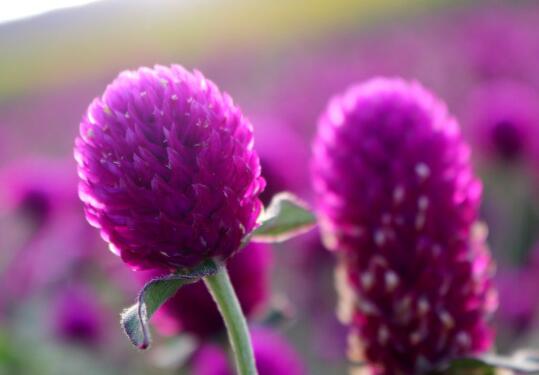
If you want to know how to grow globe amaranth, you first need to understand its growth habits. Globe amaranth is a light-loving plant, so during cultivation you must maintain sufficient light. However, there are also many other points to note, which are described in detail in the cultivation methods and precautions for globe amaranth below. You can take a look.
II. Cultivation methods and precautions for globe amaranth
1. Soil requirements
Although globe amaranth does not have very high soil requirements, different soils still have a certain effect on its growth. When growing globe amaranth, it is best to choose relatively fertile humus soil. This kind of soil has good drainage and air permeability, allowing globe amaranth to absorb nutrients better.
2. Fertilization requirements
Among the cultivation methods and precautions for globe amaranth, fertilization is a very important part. Globe amaranth has relatively high fertilizer needs during growth. Generally, it needs to be fertilized once every half month, and everyone must remember that before fertilizing, it must first be diluted with water before application. Only then can globe amaranth absorb it better. For fertilizer, phosphorus and potassium fertilizer is generally chosen.
3. Watering requirements
During the cultivation of globe amaranth, watering is also a point that requires relatively more attention. When watering, it must be watered thoroughly, but remember not to cause waterlogging, otherwise it can easily cause root rot in globe amaranth. When watering, also remember to maintain the principle of watering when dry, and do not water too frequently.
4. Light management
Globe amaranth is a light-loving plant, so during cultivation you must maintain sufficient light. Only then can globe amaranth grow healthily and quickly. It can thus be seen that among the cultivation methods and precautions for globe amaranth, light is very important.
5. Proper pruning
During the growth of globe amaranth, if some yellowing or withered leaves or branches appear, they must be pruned in time. This can not only maintain the plant's appearance, but also promote branching in globe amaranth.
6. Pest and disease control
Among the cultivation methods and precautions for globe amaranth, pests and diseases are also a point to note. This phenomenon is mainly caused by improper care. When it appears, it must be dealt with in time. If left unchecked, it will cause the plant to wither and die. As for specific treatment methods, you can refer to the article on pest and disease control for globe amaranth.
How to grow globe amaranth? Cultivation methods and precautions for globe amaranth
How do you grow globe amaranth? What are the cultivation methods and precautions for globe amaranth? Today we will describe the planting and cultivation techniques for globe amaranth. Globe amaranth is also known as yuanzaihua, zhirihong, and fireball flower. It is native to Brazil, but it is now commonly planted in areas south of the Yangtze River in China. Globe amaranth is a very good medicinal plant and has the effect of relieving cough and calming asthma.
Cultivation methods for globe amaranth
Globe amaranth likes sunlight and does not have very high environmental requirements. It is strong by nature, early-growing, tolerant of dry heat and drought, not cold-tolerant, and suitable for loose and fertile soil. Its flowering period is from July to October.
Light: The seedbed for globe amaranth should be set up in a covered place. In summer, the shading rate should reach 80% to 90%, and in spring and autumn, a shading rate of about 70% to 80% is sufficient.
Temperature: The optimum temperature for rooting of globe amaranth cuttings is between 20°C and 25°C. If the temperature is lower than 18°C, rooting will be affected to a certain extent, and the survival rate will be low. When the temperature is lower than 10°C, the cuttings will suffer frost damage.
Watering: When growing globe amaranth, water at the right time, in the right amount, and reasonably, according to changes in the weather. Generally, water less or not at all on cloudy and rainy days. When the temperature is high and evaporation is large, water more; otherwise, water less. When watering, water thoroughly. Usually pay attention to whether there is water accumulation in the pot. If water accumulation is found in the pot, deal with it in time, otherwise it will cause root rot and yellowing leaves, leading to plant death.
Fertilization: About 7 to 10 days after globe amaranth is planted, the first fertilization can be done with a 0.5% concentration urea solution. After that, fertilize once a week, and the concentration can gradually increase or add 0.6% to 1.0% compound fertilizer. After fertilizing, immediately sprinkle water lightly on the leaf surface to avoid fertilizer damage to the leaves. During the growing period, apply less nitrogen fertilizer and more fertilizer based mainly on phosphorus and potassium fertilizer, such as chicken manure and peanut meal.
Precautions for globe amaranth
Globe amaranth is relatively sensitive to water and fertilizer. During the growing period, it should not be watered or fertilized too much, otherwise it will cause excessive growth of stems and leaves and sparse flowering. In the plum rain season, if there is too much soil moisture, the plant is prone to waterlogging and the whole plant may die. During high summer temperatures, air humidity should not be too high, and the pot soil must not accumulate water, otherwise both are unfavorable to the growth and flowering of globe amaranth. Globe amaranth is a light-loving flower and needs sufficient sunlight during growth and flowering. If the cultivation site has insufficient sunlight, the leaves will be soft, the internodes long, the flower buds reduced, the flowers thinner, and the flower color lighter. On the contrary, with sufficient sunlight, the internodes are dense, the flower color is bright, the flowers are large, and flowering is continuous. The soil requires fertile, loose, and well-drained sandy soil.
The above are the cultivation methods and precautions for globe amaranth. As long as you cultivate according to the above conditions, I believe you will definitely grow high-quality globe amaranth. So growers of globe amaranth, get started right away!
Cultivation methods and precautions for globe amaranth: how to grow globe amaranth
Globe amaranth is also called zhirihong and fireball flower. Globe amaranth is suitable for loose and fertile soil and likes sufficient sunlight and a hot, dry climate. So, how do you grow globe amaranth? This article mainly introduces the cultivation methods and precautions for globe amaranth. Let's take a look.
I. Cultivation methods for globe amaranth
1. Soil management
Zhirihong is strong by nature and easy to cultivate. It does not have strict soil requirements, but it grows best when planted in deep and fertile sandy loam.
2. Fertilization management
In addition to using decomposed chicken manure as base fertilizer at planting time, during the vigorous growth stage, a thin liquid fertilizer rich in phosphorus and potassium should also be applied once every half month.
3. Watering management
Globe amaranth likes a slightly moist, somewhat dry soil environment and is relatively drought-tolerant. Therefore, after the seedlings grow new leaves again, watering should be properly controlled; after the plant's flower buds differentiate, appropriately increase the amount of watering to facilitate normal flower growth.
4. Light management
Globe amaranth likes an environment with sufficient sunlight. During cultivation, ensure that the plant receives no less than 4 hours of direct sunlight per day. The cultivation site must not be too shaded, otherwise the plant will grow slowly and the flower color will be dull.
5. Pruning management
When the seedlings are 15 cm tall, pinch once to promote branching. After that, decide whether to pinch a second time according to growth conditions. When shaping and pruning, attention should be paid to rounding the plant into shape so that globe amaranth has higher ornamental value. After the plant takes shape, pinching the branches can effectively control the flowering period.
6. Flowering period management
After the flowers open, just keep the pot soil slightly moist. Be careful not to spray water on the flowers, stop topdressing fertilizer, and maintain normal light. After flowering, prune in time so that new branches can grow and bloom again.
7. Disease control
Globe amaranth is prone to damping-off disease during the seedling stage. For control methods, 5-6 days before sowing, treat the seedbed with a 1500-fold solution of Lijuning; a 1000-fold solution of Lijuning can also be used to drench the roots of diseased plants.
II. Precautions for growing globe amaranth
Globe amaranth does not have strict environmental requirements. It likes sunlight, is strong by nature, early-growing, tolerant of dry heat and drought, not cold-tolerant, afraid of waterlogging, and likes loose and fertile soil. The optimum growth temperature is 20°C-25°C, and it also grows well within the range of 35°C-40°C. In winter, when the temperature is below 10°C, the plant grows poorly or suffers frost damage. It is strong by nature and tolerant of pruning. After flowering, pruning can cause new branches to sprout again and continue flowering.
Globe amaranth has brilliant flower colors and is very gorgeous when in bloom. It is very suitable for planting in courtyards and other places. There are also potted types of globe amaranth used to decorate indoors, but their growth time is slower. The cultivation methods and precautions for zhirihong are introduced here. We hope they are helpful to everyone.