How to water Dianthus? Master the method of watering when the soil is dry and the precautions
Among the effects and uses of Dianthus, its ornamental value is the most widely known. If you want Dianthus to have ornamental value, the care process cannot be careless at all, and watering is a relatively important part of it. So how do you water Dianthus? What are the watering methods and precautions for Dianthus? Let's take a look below.
1. How to water Dianthus
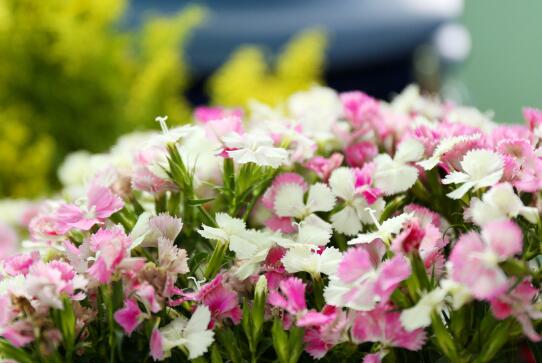
2. Watering methods and precautions for Dianthus
Watering frequency
As for how to water Dianthus, the needs are actually different in each season. In spring and autumn, when the climate is relatively suitable, we can generally water once every 5-7 days. In summer, the watering frequency must be greatly increased, because the temperature is higher in this season and water evaporates relatively quickly, so watering is basically needed every day.
Watering amount
As for how much to water Dianthus, it actually depends on the size of the flowerpot. Taking a cup as an example, if the flowerpot is relatively large and shallow, more water is needed, because moisture evaporates relatively quickly, and generally one and a half cups of water are needed. If the pot is small and deep, then less is needed, because moisture evaporates more slowly, so one cup of water is enough.
Watering method
As for how to water Dianthus, the method is actually very simple. Generally, water is applied to the soil so that the roots absorb water for growth. Of course, the leaves can also be misted at the right time, which can make the plant look more ornamental and can also prevent the invasion of some pests and diseases.
Watering in winter
Watering Dianthus in winter is different from the other three seasons. When watering in spring, summer and autumn, it needs to be watered thoroughly, but in winter it does not need to be, and an appropriate amount of watering is enough, because the weather is relatively cold. If watered thoroughly, it is very easy to freeze and damage the roots. Also, before the beginning of winter, Dianthus needs to be watered once with antifreeze water, which can improve the cold resistance of Dianthus.
3. Precautions for watering Dianthus
When watering Dianthus, the most important thing is that waterlogging must never be caused, because this can easily lead to root rot and may also cause some pests and diseases. If too much water is accidentally applied, the accumulated water must be poured out in time.
How to grow Dianthus, the cultivation methods and precautions for Dianthus / watering should be appropriate
Dianthus is also known as Luoyang flower. It is a flowering plant with many varieties, and basically every variety is grown by people in our country. However, there are many things to pay attention to when growing this flower. As for how to grow potted Dianthus? What are the cultivation methods and precautions for Dianthus? Let's take a look below.
1. How to grow Dianthus
If you want to know how to grow Dianthus, first we need to understand its growth habits. Dianthus is a plant with relatively strong vitality and has good resistance to severe cold and drought, but it is not tolerant of waterlogging, so watering must be appropriate. Of course, there are also many other aspects to pay attention to. They are introduced in detail in the cultivation methods and precautions for Dianthus below. Let's continue reading.
2. Cultivation methods and precautions for Dianthus
1. Soil selection
In terms of cultivation soil, Dianthus is relatively particular. Generally, it is best to use a soil mixed with garden soil and humus soil, so that the soil drainage will be relatively good and Dianthus can better absorb nutrients.
2. Fertilization management
Among the cultivation methods and precautions for Dianthus, fertilization is a very important part, especially during its growth period, when regular fertilization is needed. Generally, fertilization is needed once every 10 days, but remember to dilute it before fertilizing, so that Dianthus can absorb it more easily.
3. Watering management
Dianthus does not have very high water requirements. Generally, regular and appropriate watering is enough. When watering, just keep the soil somewhat moist. Remember never to cause waterlogging, otherwise root rot is very likely to occur.
4. Light management
Among the cultivation methods and precautions for Dianthus, light is also a relatively important point. Dianthus is a light-loving plant, so sufficient light must be maintained during cultivation so that it can grow better.
5. Pest and disease control
During the cultivation of Dianthus, if the method is wrong, pests and diseases are very likely to appear. When this happens, it must be dealt with in time. If left unchecked, it will cause the plant to wither and die. As for the specific treatment methods, you can refer to the article on pest and disease control for Dianthus. I will not introduce too much here.
Dianthus pictures, Dianthus cultivation methods, Dianthus flower language, when Dianthus blooms, how to water Dianthus
Dianthus
Dianthus is a traditional famous flower and is now widely cultivated and planted. It can be planted in patches for ornamental viewing, and can also be grown in pots to beautify the home environment. Dianthus is also a relatively commonly used flower, because Dianthus comes in yellow, deep red, red, pink, pink, purple, white, etc., and is divided into single-petaled and double-petaled types. The flower colors are brilliant and the ornamental value is high, and the petals also have a rich fragrance, making it especially suitable for the home...Dianthus pictures
Morphological characteristics of Dianthus
Dianthus is named because its stems have nodes that swell like bamboo. It is a perennial herb, often cultivated as a biennial flower, with linear lanceolate leaves, oblong capsules, and flat round seeds that are dark brown. There are more than 300 species in the same genus. In the north, it is sown in autumn and blooms the following spring; in the south, it is sown in spring and blooms in summer and autumn. The plant height is 30-40 cm, upright and clustered. The stems are upright, noded, and much branched, with opposite leaves, linear or linear lanceolate. The calyx tube is round, and flowers are solitary or several clustered at the top of the stem, forming a cyme. The flower diameter is 2-3 cm, and the flower colors include purplish red, bright red, pink, purplish red, pure white, red, white or bicolor, with 5 single petals or double petals, with serrated tips, and slightly fragrant. The middle and lower parts of the upper side of the petals form a beautiful black ring pattern. When fully open, the petal surface is like a dish shining with velvety luster, colorful and brilliant. The flowering period is from April to October, concentrated in April to May. The capsules are oblong or long round, and the seeds are flat round and dark brown.
Cultivation methods for Dianthus
1. Soil: Dianthus requires fertile, loose, well-drained loam or sandy loam containing lime. It is relatively tolerant of alkaline soil. A culture soil mixed with 6 parts garden soil, 2 parts compost, and 2 parts sand can be used.
2. Watering: During the growth and development period, Dianthus is best kept in a moist pot soil state. If watered too much, it is easy for root rot to occur.
3. Sunlight: During the growth period, Dianthus requires sufficient light. Place it in a sunny place. In summer, scattered light is suitable, avoiding exposure to the scorching sun. When the temperature is high, shade and cool it down.
4. Temperature: The suitable temperature for Dianthus growth is 15 - 20℃. In winter, it should be placed in a greenhouse, with the temperature kept above 12℃.
5. Pests: Dianthus often suffers from rust disease and red spider mite damage. For rust disease, spray with a 1500-fold solution of 50% carboxin wettable powder, and for red spider mites, spray with a 1500-fold solution of 40% omethoate emulsifiable concentrate.
Dianthus flower language
Dianthus flower language: pure love, talent, boldness, feminine beauty
Dianthus caryophyllus: bold, positive
Dianthus chinensis: feminine beauty
Carnation: enthusiasm
Variegated Dianthus: rejection of love
Red Dianthus: passion, I believe in your love
Deep red Dianthus: Ah! My poor heart
When Dianthus blooms
Dianthus (Dianthus chinensis), also known as Chinese Dianthus, Luoyang Dianthus, Dianthus chrysanthemum, embroidered bamboo, and carnation, is a perennial herb of the family Caryophyllaceae and genus Dianthus, and one of China's traditional famous flowers. The flowering period is from April to October, concentrated in April to May. The capsules are oblong or long round, and the seeds are flat round and dark brown.
How to water Dianthus
1. Plant Dianthus seedlings in a flowerpot and water thoroughly.
2. The suitable temperature for Dianthus growth is 15 – 20℃. Place it in a sunny place with slight shade to ensure moderate light and temperature.
3. For watering and fertilizing Dianthus, note that when the soil is not dry, there is no need to water. When the plant height is 10 cm, transplant once more. For Dianthus sown in autumn, water with antifreeze water in November-December, and water with green-returning water in the spring of the second year. Fertilize about 2~3 times.
Related encyclopedia
Pocket scale, non-woven bag, lamp wick, bamboo shoot, crab claw, red rice note 3, ykk zipper, ybs zipper, large mountain cherry, climbing rose, wild senna, wintersweet, green pine, wristwatch, Omega, Longines, famous watch, children's building blocks, flint, cymbidium orchid, curling iron, soursop