How to grow Photinia × fraseri and things to note: fertilize regularly
Photinia × fraseri has changeable leaf colors and dense, pure, bright white flowers. It is precisely because Photinia × fraseri has so many benefits and uses that more and more people grow it. However, to grow it well, a scientific approach is still needed. So how do you grow Photinia × fraseri? Let's take a look at the growing methods and things to note for Photinia × fraseri.
How to grow Photinia × fraseri
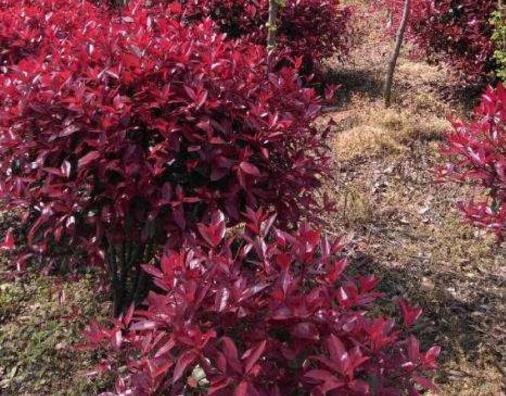
To know how to grow Photinia × fraseri, you first need to understand its growth habits. It is a plant that likes warm, humid environments and plenty of light. It has strong shade tolerance and drought tolerance, fears waterlogging, and can grow in acidic or alkaline soil, but slightly acidic soil is best. Its temperature requirements are relatively flexible.
Growing methods and things to note for Photinia × fraseri
I. Environmental requirements
1. Soil
Photinia × fraseri has stronger salt-alkali tolerance than other plants. Its soil requirements are not very strict, and it can grow normally in many kinds of soil, such as red soil, yellow soil, and so on, but slightly acidic soil is still the most suitable.
Note: Although Photinia × fraseri can adapt to many types of soil, no matter which soil is used, be sure the soil is healthy and free of insect eggs and pathogens.
2. Temperature
Photinia × fraseri has relatively flexible temperature requirements. It can adapt to low-temperature environments and also tolerate a certain amount of high temperature, so it can be planted indoors or outdoors.
Note: In the growing methods and things to note for Photinia × fraseri, although temperature requirements are not high, the most suitable temperature is 15-30 degrees. If you want the plant to look more beautiful, you can keep the temperature within this range.
3. Light
Photinia × fraseri has very strong shade tolerance and can still grow slowly in dark environments, but it actually likes sufficient light, so try to provide it with relatively abundant sunlight.
Note: When exposed to direct light, the leaves of Photinia × fraseri become more brightly colored. When light is insufficient, although it can still grow, the leaf color is dull and the ornamental value is somewhat poorer.
II. Care techniques
1. Fertilizing
In spring, summer, and autumn, Photinia × fraseri grows relatively quickly, so in spring it should be fertilized once every half month. In summer, a compound fertilizer is needed. Fertilizer is generally applied by digging a trench and burying it.
Note: Never overfertilize. There is no need to apply too much at once. It is best to apply light fertilizer frequently. If too much fertilizer is applied, the leaves may become oversized and dull, or even turn yellow and fall off.
2. Watering
Photinia × fraseri is relatively strong in drought resistance, but it prefers humid environments, so pay attention to watering more often in normal care, mainly so the soil does not dry out. Keeping the soil slightly moist is best.
Note: Photinia × fraseri is drought-tolerant but not waterlogging-tolerant, so do not water too much. Avoid water accumulating in the potting soil. If you find standing water, promptly check the soil drainage and be sure to drain the excess water.
3. Pruning
Photinia × fraseri is a very pruning-tolerant plant. To keep its shape more attractive, it can be pruned regularly. Cutting off overly tall and overly dense branches and leaves can promote growth and maintain its appearance.
Note: Generally do not prune in winter, as wounds heal more slowly at this time, to avoid pathogens or pests emerging from the wounds after spring.
Growing methods and things to note for Photinia × fraseri
Planting soil for Photinia × fraseri
The potting soil should be loose, fertile, and acidic or neutral, which is most suitable. It is best to use sandy soil for planting, as it helps with aeration.
Growth habits of Photinia × fraseri
Photinia × fraseri relatively likes warm and humid environments, and it also has strong adaptability to temperature. It can withstand low temperatures of minus 18 degrees Celsius and can be planted in all regions of China.
Fertilizing Photinia × fraseri
For fertilizing Photinia × fraseri, it is best to follow the principle of applying light fertilizer frequently. In spring, apply about once every half month. In summer and autumn, apply a compound fertilizer once every half month. If you can use the method of digging a trench and burying it, that would be even better.
Pruning Photinia × fraseri
Photinia × fraseri has very strong growth capacity, so it needs frequent pruning. Pruning of Photinia × fraseri can be carried out in every season, but it is mainly done in winter, mainly using heading back and thinning out branches. After heavy pruning in summer, it is not conducive to restoring tree vigor.
Watering Photinia × fraseri
Photinia × fraseri relatively likes humid environments, but do not overwater. If water accumulates, it will cause the plant roots to rot and prevent healthy growth. Watering between 8 a.m. and 10 a.m. each day, or between 4 p.m. and 6 p.m., is better.
Pests and diseases of Photinia × fraseri
Photinia × fraseri also has decent resistance to pests and diseases. Among diseases, it is relatively prone to leaf spot and anthracnose. Among pests, it is prone to scale insects, longhorn beetles, aphids, and other pests.
How to grow Photinia × fraseri: growing methods for Photinia
Photinia × fraseri is a relatively popular new variety at present. Photinia × fraseri not only has high ornamental value but also has very strong shapeability and can be made into various forms. Photinia × fraseri is often used in landscaping and is a good greening plant. So how do you grow Photinia × fraseri? Next, Xiao Qi will sharehow to grow Photinia × fraseriand the growing methods for Photinia × fraseri.
Photinia × fraseri flower pictures
I. How to grow Photinia × fraseri
Photinia × fraseri is an evergreen small tree or shrub. It likes strong light, is very shade-tolerant, and likes warm, humid growing environments. It is suitable for growing in slightly acidic soil. Photinia × fraseri also has not very strict climate requirements and can withstand low temperatures of minus 18 degrees Celsius. It can be cultivated in all parts of China.
Photinia × fraseri is propagated by cuttings, so choose branches that grow robustly and are free of pests and diseases. Note that the cuttings are best taken from semi-lignified young branches or lignified current-year branches. According to these standards, cut 6 cm to 10 cm long branches from the plant to use as cuttings.
Photinia × fraseri pictures
II. Growing methods for Photinia × fraseri
1. Soil: The soil pH for planting Photinia × fraseri is generally 6 to 6.5, and the soil is required to be loose and aerated with a certain amount of fertility. According to observation, Photinia × fraseri grows well in red loam soil. Before planting, dig deep tree holes and apply decomposed farmyard manure into the tree holes so that the organic matter content in the soil reaches about 2%. After planting, loosen the soil and weed in time to improve soil permeability.
2. Watering: Drain promptly after rain. During summer high temperatures with no rain, spray or water promptly so that the soil moisture content remains between 20% and 35%. Lack of soil moisture will inhibit the growth activity of Photinia × fraseri plants, accelerate leaf aging and fading, reduce the emergence of new leaves, and thereby shorten the red-leaf viewing period. Therefore, maintaining suitable soil moisture is the key to caring for Photinia × fraseri.
3. Fertilizing: Photinia × fraseri grows vigorously in soil with good fertility. If poor growth of new shoots is found, or growth stops, fertilizer should be supplemented in time. During the growing season, apply a dilute nitrogen fertilizer once every 7 days to 15 days to ensure the plant sends out new shoots in a timely manner. When planting in gardens, avoid planting Photinia × fraseri in areas prone to trampling, as the soil in these areas easily becomes compacted, which is not conducive to watering and fertilizing, and further affects the growth of Photinia × fraseri, causing poor red-leaf color effects.
4. Pruning: To improve the ornamental value of Photinia × fraseri, be sure to pay attention to pruning. Pruning is generally carried out in early spring, early summer, and early autumn before budding or in the late stage of new shoot growth. The degree of pruning can be decided according to the growth vigor of the branches and shoots. In principle, it is "remove the weak and keep the strong" to maintain a beautiful tree shape. If the tree sends out shoots too quickly and too many, pinch them back multiple times to promote branching; otherwise, the tree shape will be too tall and thin, which will reduce the ornamental effect. When pruning, leave the cut about 0.5 cm above a node. After pruning, pay attention to supplementing fertilizer to ensure robust tree growth.
Photinia × fraseri pictures
The above ishow to grow Photinia × fraseriandthe growing methods for Photinia × fraseriintroduced, hoping it is helpful to everyone.