How to prune purple magnolia after flowers fade and before buds sprout
Many plants need timely pruning when being grown to keep their shape more attractive, but purple magnolia is a rather unique plant, and pruning it may damage the flower buds, so the method must be paid close attention to. So how do you prune purple magnolia? The editor will tell you the answer.
How to prune purple magnolia
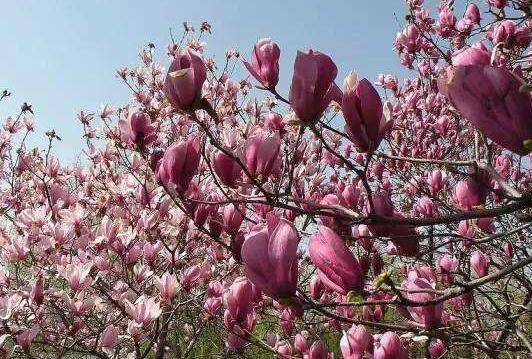
Under normal circumstances, purple magnolia trees are not cut back short, because this may cut into the flower buds and affect their normal blooming. Only when necessary should appropriate pruning be done. So how do you prune purple magnolia? Let us take a detailed look at the pruning time and methods.
1. When is the best time to prune purple magnolia
The pruning time is generally chosen from 3 periods, namely after the flowers fade, before heavy bud sprouting, and when pests or diseases appear. At other times, pruning is done less; generally, when there is no need, purple magnolia trees do not need pruning, and this will not affect the effects and benefits of purple magnolia.
2. Pruning methods for purple magnolia
1. Before budding
Purple magnolia has very strong root sprouting ability. To ensure nutrients are not excessively lost and to keep the already growing plant healthy, if propagation is not needed, these newly grown buds should be cut off, generally cutting them as they grow. It is enough to keep the main trunks of 3 plants in the potting soil.
2. After the flowers fade
If seed propagation is not needed, then after the flowers fade there is no need to keep the seeds. At this point, how do you prune purple magnolia? The faded flowers should be cut off together with the calyx, and overly long and tall branches should be cut short. Generally, only branches longer than 15 cm need to be cut short; those 12-15 cm do not need pruning.
3. When pests or diseases occur
In the pest and disease control work for purple magnolia, once relatively serious pests or diseases appear, the diseased and dead branches should be cut off in time to prevent pests or pathogens from spreading to other branches and leaves, thereby harming other plants.
Precautions for pruning purple magnolia
1. Apply sulfur powder
Because purple magnolia has a relatively weak ability to heal wounds on its own after pruning, sulfur powder should be applied to the wounds after cutting. It can play an antiseptic role and reduce the harm to the wounds from pathogens and fungi.
2. The cut should be smooth
To allow the wound to heal faster, the cut must be smooth and can be slightly slanted. The position of the cut should be less than 5 mm from the bud. For overly dense branches, redundant branches, parallel branches and leggy branches, prune only when necessary.
Purple magnolia
Purple magnolia tips
Purple magnolia is a deciduous shrub of the genus Magnolia in the family Magnoliaceae. When planted in the ground it is 3 to 5 m tall, and when potted it is 1 to 1.5 m tall. It often grows in clumps. The leaves are obovate or elliptical. The flowers are solitary at the tips of the branches, bell-shaped, with 9 tepals, 3 arranged in a whorl, purple or purplish red. In spring it blooms before the leaves emerge, or the flowers and leaves open together.
Growth habits of purple magnolia
Purple magnolia prefers a warm, humid environment with plenty of sunlight. It is relatively cold-tolerant, but not drought-tolerant or tolerant of saline-alkaline conditions, and fears waterlogging. It requires fertile, well-drained sandy loam. Purple magnolia cannot grow in calcareous or chalky soil. Its branches are weak, so it needs to be planted in a slightly shaded location. It has good wind resistance and is also highly tolerant of air pollution. Purple magnolia has a well-developed root system and strong sprouting and budding ability, and it tolerates pruning and shaping, but its wound-healing ability is poor, so sulfur powder should be applied after pruning for antisepsis. Its fleshy roots fear damage, so it is not easy to transplant. If transplanting is needed, it should be done in mild, humid weather in late autumn after leaf fall or in late spring after flowering. Purple magnolia needs frequent branch pruning and shaping, promptly removing diseased, damaged and dead branches; otherwise the tree shape will develop toward a shrub form, which is also unfavorable for flower bud growth.
Purple magnolia blooming
Purple magnolia is produced in central China and has long been cultivated for ornamental purposes. It was a precious ornamental flower in the courtyards of Jiangnan palaces in the past, with a cultivation history of more than 2,500 years. Purple magnolia blooms every year in early spring, with flowers opening before the leaves or rarely at the same time as the leaves. Although traces of winter still remain on the deciduous branches, the branch tips are full of graceful and luxurious purple flowers. Each blossom stands elegantly, as if carved from powder and jade, refined and graceful, vying in beauty. The scent is fragrant, and the corolla is large, purple or purplish red, large and bell-shaped, with elegance showing through the purple, very delicate and charming, with an enticing fragrance. The flowers last about one month and are truly spectacular. If white magnolia is like a noble princess, then purple magnolia is like a fashionable woman.
The benefits of purple magnolia
The flower buds of purple magnolia can be used in medicine, and the flowers can be used to extract natural essence for making cosmetics. At about 3 m tall, the flowers and leaves open at the same time. In Beijing's Summer Palace, there are purple magnolias more than a hundred years old. This species is produced in Hubei, Sichuan, Yunnan and other provinces. The flower buds of purple magnolia are used in medicine. Propagation is mostly by division. Its other habits and uses are the same as those of white magnolia.
Purple magnolia cultivation methods and purple magnolia picture appreciation
Purple magnolia has large flowers, a large number of blooms, bright flower color and a striking fragrance. Not only is its ornamental effect excellent, but the petals of purple magnolia can also be eaten. Most purple magnolias are grown in courtyards, while a small portion are grown in pots indoors. So how do you grow purple magnolia? Next, Xiao Qi will sharePurple magnolia cultivation methodsand purple magnolia pictures.
Purple magnolia pictures
Purple magnolia cultivation methods
1. Potting soil: Purple magnolia prefers loose, fertile acidic or slightly acidic soil. An equal mix of leaf mold and vegetable garden soil can be used as the growing medium, and 50 to 150 g of bone meal or nitrogen-phosphorus-potassium compound fertilizer should be added to the soil. The pot should preferably be somewhat deep and large, and some broken hard plastic foam blocks should be placed at the bottom of the pot to enhance air permeability and drainage and prevent root rot. Once a year or every other year after flowering, repot and change the soil, keeping 1/2 to 1/3 of the old soil.
2. Watering: Purple magnolia prefers moisture and fears waterlogging, so timely and appropriate watering is very important. From the beginning of spring to flowering, keep the potting soil moist but not wet; after flowering, keep the potting soil moist but not waterlogged; after leaf fall, keep the potting soil slightly moist but not dry. At no time should it be drought-stricken or waterlogged. Especially in the rainy season, pay attention to drainage and waterlogging prevention.
3. Fertilizing: Purple magnolia prefers fertilizer. Fertilization should seize the two key opportunities: 2 months before flowering and 5 months after flowering. Apply nitrogen-phosphorus-potassium compound fertilizer about once every ten days. The former makes the buds swell and the flowers open, while the latter promotes more bud formation and more flowers the following spring. When leaves fall in early winter, apply a fertilizer mainly of phosphorus and potassium once to enhance its cold resistance and ability to overwinter. At other times, apply less or not at all. Avoid applying nitrogen fertilizer alone.
Purple magnolia pictures
4. Light: Purple magnolia prefers light. Place it in a sunny courtyard or roof garden. With more sunlight, it grows robustly and luxuriantly. Under semi-shade conditions it can still grow, but it is relatively weak and bears few flowers; in too much shade it will not flower. It is relatively cold-tolerant, and can overwinter outdoors in Beijing and areas to the south.
5. Pruning: Purple magnolia has strong root sprouting ability. If propagation is not needed, cut the sprouts as they grow, and keep 3 main trunks per pot. For overly tall and long branches, they can be cut short right after flowering when leaves have just unfolded. Because its wound-healing ability is poor, sulfur powder should be applied after cutting for antisepsis. If not necessary, do not prune. After flowering, if seeds are not needed for propagation, the faded flowers should be cut off together with the calyx.
6. Propagation: Division, layering and sowing are commonly used. After flowering, together with repotting and changing the soil, take the plant out, use sharp scissors or a knife to cut off the rooted suckers from the roots, and plant them separately. Transplanting can be done in autumn or before flowering in early spring. Small seedlings can be dipped in mud slurry, while large seedlings must be moved with a soil ball. Apply fertilizer once before and once after the flowering period, mainly phosphorus and potassium fertilizer. In the high-temperature summer and dry autumn seasons, maintain soil moisture. After flowering and before new buds and shoots emerge, cut off dead branches and dense branches and shorten leggy branches. For sowing, collect seeds in September, store them in sand in winter, and sow in the following spring; they germinate 20-30 days after sowing.
7. Pest and disease control: Purple magnolia has relatively strong disease resistance. Apart from root rot caused by improper planting, the disease rate is not high. Common pests include stem borers, and in midsummer red spider mites must be guarded against, but these will not cause devastating damage. As long as you manage diligently, build up the tree's vigor and enhance its resistance. 6. Cultivation management: Transplant before flowering in spring or after autumn. When transplanting, it should be moved with old soil or the roots should be coated with mud slurry, and after survival keep the soil moist. During the summer growing period, high temperatures and drought will affect flower bud formation and cause leaf fall. After flowering and before budding, pay attention to pruning and shaping, cutting off dead branches, diseased branches, overly dense branches and leggy branches. Generally, medium and short branches shorter than 15 cm are not pruned. The cuts should be flat.
Purple magnolia pictures
The above ispurple magnolia cultivation methodsintroduced. Growing purple magnolia still requires some effort, and I hope everyone will put more care into it when growing it, so that purple magnolia can be grown better.
Recommended reading:
① How to grow flowering almond Flowering almond cultivation methods and precautions
② Cultivation methods for Malus halliana Making Malus halliana bonsai
③ Cultivation methods and precautions for desert rose
④ How to grow potted Chinese hibiscus Cultivation methods for Chinese hibiscus
⑤ Cultivation methods and precautions for Chinese viburnum