What to do when zinnias grow leggy? Reducing watering, increasing light, and fertilizing appropriately are key
Zinnia, because after blooming each petal is higher than the last, is also known as "step by step higher." Whenever zinnias bloom, their beautiful and unique flower shape, brilliant colors, and sturdy plant form make people adore them. But the one flaw is that if care is improper, they easily grow leggy. So what should you do when zinnias grow leggy? Next, the editor will tell you the causes and solutions.
I. What to do when zinnias grow leggy - find the cause
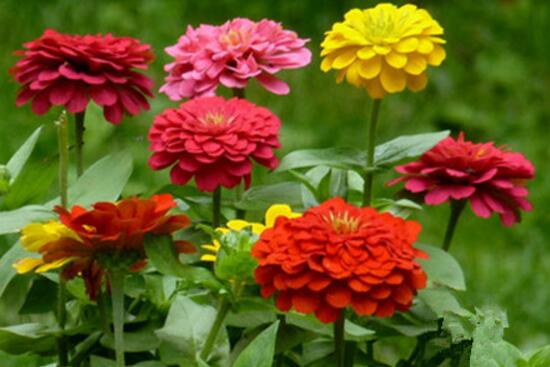
Zinnias love light and are not afraid of strong light. In summer, because water evaporates quickly, we need to water zinnias every day. But in the late stage of zinnia seedling growth, if we still water every day and they lack light, they easily grow leggy. So what should you do when zinnias grow leggy? Light, watering, fertilizing, and pinching are the main factors in zinnia legginess. For specific symptoms and solutions, let's continue reading.
II. Causes and solutions for zinnia legginess
1. Insufficient light
Zinnia, a plant with very high light requirements - in our article on when zinnias bloom, we also learned that by adjusting light duration, you can change the flowering period, making it earlier or later. In the late seedling stage, zinnias grow very quickly, and if light is insufficient at this time, legginess very easily occurs.
Solution: What to do when zinnias grow leggy? If it is caused by insufficient light, we need to increase light. After the sun comes out in the early morning, move the zinnia seedlings to a place with ample light until the sun sets. After a period of time, the leggy phenomenon will stop.
2. Overwatering
In the zinnia watering method, it was said that watering should be based on light. If light is strong, water evaporates quickly, and you should water more; if light is insufficient, water in the pot evaporates more slowly, and you should water less. If you continue to water heavily at this time, it will affect the root respiration of zinnias and cause legginess.
Solution: If zinnia legginess is caused by overwatering, you should pause watering and move the pot into full sun to let the water evaporate quickly. Afterward, water zinnias according to the correct watering method, so as to avoid legginess.
3. Unbalanced nutrients
Zinnias love fertilizer, and sufficient nutrients can allow zinnia seedlings to grow into sturdy plants. But nutrients must be balanced, otherwise legginess or other poor growth conditions easily occur.
Solution: When fertilizing, you can increase the amount of phosphorus and potassium fertilizer and reduce the proportion of nitrogen fertilizer to achieve a balanced nutrient ratio.
4. Overfertilizing
In zinnia seed propagation, we mentioned that when sowing, a small amount of fertilizer should be applied to the substrate - phosphorus, potassium, or nitrogen fertilizer all work. But if you use too much nitrogen fertilizer at this time, it will cause the late-stage growth rate of the seedlings to exceed normal levels, resulting in legginess.
Solution: What to do when zinnias grow leggy? If it is caused by overfertilizing, you should water heavily to dilute and flush out the fertilizer, or, if you are willing to take the trouble, directly change the potting soil so the zinnias start fresh.
5. Delayed pruning
In the zinnia growing method, it was said that everyone should pay attention to pruning, that is, pinching. If pinching is not done in time, legginess will occur in the plant, affecting its ornamental value.
Solution: When the seedlings grow to about 10 cm, they need to be pinched. Generally, leaving 2-4 pairs of true leaves is enough. The benefit of doing this is that it can prevent zinnia legginess and also make the zinnia plant shape look better. As for how to pinch zinnias, there is a detailed introduction earlier, so I won't say more here.
Overall, zinnias have strong adaptability and rarely grow leggy. But after all, plants are raised by people, and problems such as improper care are unavoidable. So in order to grow zinnias more easily, we should keep the above content in mind and prevent legginess. That's all from the editor about zinnia legginess. I hope it can help everyone.
What to do when zinnias grow leggy - how to prevent zinnia legginess
Zinnias like warmth, are not cold-tolerant, like sunlight, fear intense heat, are vigorous, drought-tolerant, tolerant of poor soil, and avoid continuous cropping. The roots are deep and the stems are hard, so they are not easy to lodge. They are suitable for growing in fertile, deep soil. The suitable temperature during the growing period is 15-30°C. So what should you do when zinnias grow leggy? What causes zinnia legginess? How can you prevent zinnia legginess? Below, the editor of wed114 wedding website brings you detailed content.
Causes of zinnia legginess
Insufficient light
Zinnia is a plant with very high light requirements, and it can also use light adjustment to change the flowering period, making it earlier or later. In the late seedling stage, growth is very fast, and insufficient light very easily causes legginess.
Excess water
In places with strong light, water evaporates relatively quickly, but if light is not sufficiently ample, water in the potting soil will evaporate slowly. If you continue to water heavily, it will affect root respiration and lead to poor plant growth and legginess.
Too much nitrogen fertilizer in the sowing substrate
In the sowing substrate for zinnias, a small amount of fertilizer can be applied - phosphorus, potassium, or nitrogen fertilizer all work. But if nitrogen fertilizer is excessive, it will cause the late-stage growth rate of the seedlings to exceed normal levels, resulting in legginess.
What to do when zinnias grow leggy
Increase light
Zinnia seedlings need enough light to grow happily. After the sun comes out in the early morning, you can place the seedlings in a spot where they can get sun until the sun sets. If the outdoor temperature is low at night, you can move the seedlings indoors. This is the advantage of potted seedlings - move them wherever you like!
Balance nutrients
Zinnia seedlings need sufficient nutrients to grow into sturdy plants. But nutrients must be balanced, otherwise legginess or other poor growth conditions easily occur. When fertilizing, you can increase the amount of phosphorus and potassium fertilizer and reduce the proportion of nitrogen fertilizer to achieve a balanced nutrient ratio.
Pinching treatment
When the seedlings grow to about 10 cm, carry out pinching to promote axillary bud growth, leaving 2-4 pairs of true leaves. Pinching can not only prevent seedling legginess but also limit the height of mature zinnias, achieving dwarfing, making the plant shape more beautiful and the flowers larger and more brilliantly colored.
What to do when zinnias grow leggy
Causes of zinnia legginess
Insufficient light
Zinnia is a plant with very high light requirements, and it can also use light adjustment to change the flowering period, making it earlier or later. In the late seedling stage, growth is very fast, and insufficient light very easily causes legginess.
Excess water
In places with strong light, water evaporates relatively quickly, but if light is not sufficiently ample, water in the potting soil will evaporate slowly. If you continue to water heavily, it will affect root respiration and lead to poor plant growth and legginess.
Too much nitrogen fertilizer in the sowing substrate
In the sowing substrate for zinnias, a small amount of fertilizer can be applied - phosphorus, potassium, or nitrogen fertilizer all work. But if nitrogen fertilizer is excessive, it will cause the late-stage growth rate of the seedlings to exceed normal levels, resulting in legginess.
How to prevent zinnia legginess
Increase light
Zinnia seedlings need enough light to grow happily. After the sun comes out in the early morning, you can place the seedlings in a spot where they can get sun until the sun sets. If the outdoor temperature is low at night, you can move the seedlings indoors. This is the advantage of potted seedlings - move them wherever you like!
Balance nutrients
Zinnia seedlings need sufficient nutrients to grow into sturdy plants. But nutrients must be balanced, otherwise legginess or other poor growth conditions easily occur. When fertilizing, you can increase the amount of phosphorus and potassium fertilizer and reduce the proportion of nitrogen fertilizer to achieve a balanced nutrient ratio.
Pinching treatment
When the seedlings grow to about 10 cm, carry out pinching to promote axillary bud growth, leaving 2-4 pairs of true leaves. Pinching can not only prevent seedling legginess but also limit the height of mature zinnias, achieving dwarfing, making the plant shape more beautiful and the flowers larger and more brilliantly colored.