What are the common pests and diseases of Manglietia insignis?
The main diseases of Manglietia insignis at the seedling stage are damping-off and root rot. Damping-off mostly occurs in the early stage after the seedlings emerge; because the root crown of the seedlings is tender, it is easily infected by damping-off. Control methods for damping-off:
(1) Spray with a 0.5% ferrous sulfate solution or 1000 times the equivalent Bordeaux mixture, once every 10 days.
(2) For plants that have already developed the disease, spray the seedlings with 800 times the Tuzet solution, once every 7 days for control.
Control methods for root rot:
(1) After the seedlings emerge, water less, provided it does not affect seedling growth, so as to make conditions unfavorable for the disease.
(2) For infected plants, immediately dig them out with the soil, and disinfect the soil within a 1 m range around the diseased plants; the chemical can be 50% benomyl wettable powder at 1000 times dilution applied as a drench.
The insect pests include black cutworm and white grubs, which damage the root crown of the seedlings.
Control methods for black cutworm:
(1) Weed removal to eliminate insects; keeping the seedling area free of weeds can kill some eggs and larvae.
(2) Fresh-grass baiting: cut succulent fresh grass or lettuce leaves into short pieces, mix fresh grass and trichlorfon at a ratio of 99.5:0.5 parts into a fresh-grass bait, place it near the seedlings in the seedling area, and scatter a small heap at certain intervals to trap and kill the larvae.
(3) Chemical control: spray the seedling area with 50% phoxim emulsifiable concentrate at 1000 times dilution.
Control methods for white grubs:
(1) Black-light trapping, carried out before the female adults lay large numbers of eggs.
(2) During the adult occurrence period, spray 90% trichlorfon technical material at 1000 times dilution.
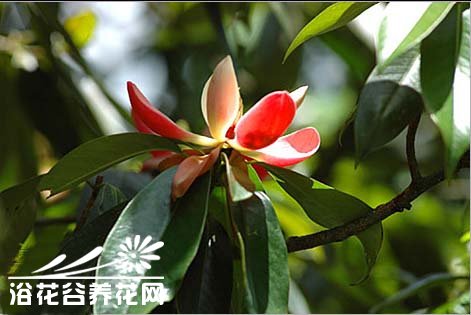
Common pests and diseases of Manglietia insignis
The main diseases of Manglietia insignis at the seedling stage are damping-off and root rot. Damping-off mostly occurs in the early stage after the seedlings emerge; because the root crown of the seedlings is tender, it is easily infected by damping-off. Control methods for damping-off:(1) Spray with a 0.5% ferrous sulfate solution or 1000 times the equivalent Bordeaux mixture, once every 10 days.
(2) For plants that have already developed the disease, spray the seedlings with 800 times the Tuzet solution, once every 7 days for control.
Control methods for root rot:
(1) After the seedlings emerge, water less, provided it does not affect seedling growth, so as to make conditions unfavorable for the disease.
(2) For infected plants, immediately dig them out with the soil, and disinfect the soil within a 1 m range around the diseased plants; the chemical can be 50% benomyl wettable powder at 1000 times dilution applied as a drench.
The insect pests include black cutworm and white grubs, which damage the root crown of the seedlings.
Control methods for black cutworm:
(1) Weed removal to eliminate insects; keeping the seedling area free of weeds can kill some eggs and larvae.
(2) Fresh-grass baiting: cut succulent fresh grass or lettuce leaves into short pieces, mix fresh grass and trichlorfon at a ratio of 99.5:0.5 parts into a fresh-grass bait, place it near the seedlings in the seedling area, and scatter a small heap at certain intervals to trap and kill the larvae.
(3) Chemical control: spray the seedling area with 50% phoxim emulsifiable concentrate at 1000 times dilution.
Control methods for white grubs:
(1) Black-light trapping, carried out before the female adults lay large numbers of eggs.
(2) During the adult occurrence period, spray 90% trichlorfon technical material at 1000 times dilution.
Common pest and disease control methods for Manglietia insignis
The main diseases of Manglietia insignis at the seedling stage are damping-off and root rot. Damping-off mostly occurs in the early stage after the seedlings emerge; because the root crown of the seedlings is tender, it is easily infected by damping-off. Control methods for damping-off:
(1) Spray with a 0.5% ferrous sulfate solution or 1000 times the equivalent Bordeaux mixture, once every 10 days.
(2) For plants that have already developed the disease, spray the seedlings with 800 times the Tuzet solution, once every 7 days for control.
Control methods for root rot:
(1) After the seedlings emerge, water less, provided it does not affect seedling growth, so as to make conditions unfavorable for the disease.
(2) For infected plants, immediately dig them out with the soil, and disinfect the soil within a 1 m range around the diseased plants; the chemical can be 50% benomyl wettable powder at 1000 times dilution applied as a drench.
The insect pests include black cutworm and white grubs, which damage the root crown of the seedlings.
Control methods for black cutworm:
(1) Weed removal to eliminate insects; keeping the seedling area free of weeds can kill some eggs and larvae.
(2) Fresh-grass baiting: cut succulent fresh grass or lettuce leaves into short pieces, mix fresh grass and trichlorfon at a ratio of 99.5:0.5 parts into a fresh-grass bait, place it near the seedlings in the seedling area, and scatter a small heap at certain intervals to trap and kill the larvae.
(3) Chemical control: spray the seedling area with 50% phoxim emulsifiable concentrate at 1000 times dilution.
Control methods for white grubs:
(1) Black-light trapping, carried out before the female adults lay large numbers of eggs.
(2) During the adult occurrence period, spray 90% trichlorfon technical material at 1000 times dilution.