Can Ivy Be Grown in Water? The Stem Cutting Water Propagation Method Is the Most Practical
As a common indoor foliage plant, ivy (Hedera helix) has always been much loved, and among all growing methods, hydroponics can maximize the ornamental value of ivy's benefits and uses. But can ivy be grown in water? The answer is yes. Today we will introduce the hydroponic method for ivy.
Can Ivy Be Grown in Water?
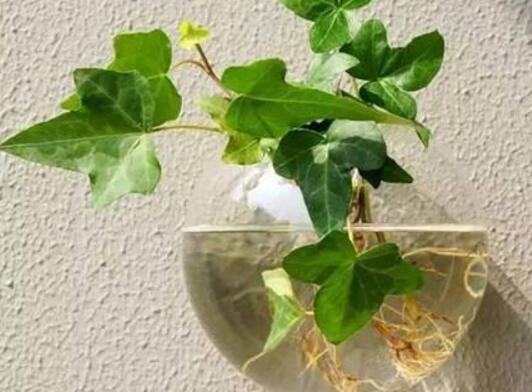
Judging from ivy's growth habits, it likes warm and humid environments and has strong shade tolerance, but fears direct strong light. So can ivy be grown in water? Scientific research shows that ivy is very well suited to hydroponics. Growing ivy hydroponically not only lets you enjoy the foliage but also observe root growth, and it is easier to care for, so there are many advantages.
Hydroponic Methods for Ivy
I. Whole-Plant Hydroponics
1. Washing the Roots
Take the ivy out of the pot together with its roots and soil, soak it in water, then clean the soil off the roots. Be very careful when cleaning so as not to break the roots, otherwise growth will be affected.
2. Disinfection
Soak the ivy's roots in a 1000-fold dilution of carbendazim solution for 5 minutes, which can effectively kill other pathogens and improve root resistance.
3. Planting and Adding Water
Place the ivy's roots into a planting basket, then secure it onto the container. After that, add water to the container until the water level reaches two-thirds of the roots. While adding water, you can add a small amount of nutrient solution, then change the water once every 3-4 days.
II. Stem Cutting Water Propagation Method
1. Timing
The stem cutting water propagation method is the most commonly used hydroponic method for ivy. Its advantage is that the roots are not damaged by root washing. This method is generally carried out in spring or autumn, which allows ivy to root quickly after hydroponic planting.
2. Method
Select fairly robust ivy, cut off young shoots with aerial roots, remove the leaves at the base, and insert them into prepared clean water. Change the water once every 1-2 days to keep the water clean. After 10 days it will grow new roots. Pay attention to changing the water, and after 3 weeks add a small amount of nutrient solution according to the growth condition, then carry out normal care.
III. Original-Pot Hydroponics Method
1. Selecting Branches
Choose robustly growing branches, or use branches that already have aerial roots as the hydroponic mother plant. Place the mother plant into a prepared water basin and keep it in a shady spot for care.
2. Management
The ivy will subsequently grow young shoots. During the rooting process, do not provide light; it is best to place it in indirect light or a shady spot. The temperature should be suitable, not too hot or too cold, as a large temperature difference is not good for the plant's growth. Once the roots have grown, light can gradually be provided.
Precautions for Growing Ivy in Water
1. Change the Water Frequently
To prevent bacteria from breeding in the water, with hydroponic ivy methods you need to change the water frequently. Ordinary tap water is fine; just be sure to keep the water clean.
2. Add Nutrient Solution
For hydroponic ivy, its main source of nutrition is the nutrient solution, so each time you change the water you need to add a certain amount of nutrient solution. Otherwise, a lack of nutrients may cause the ivy's leaves to dry out.
Can Ivy Be Grown in Water? Hydroponic Methods for Ivy
Ivy can not only decorate the home but also purify indoor air and absorb harmful gases such as benzene and formaldehyde released by furniture and renovations, reducing the harm of harmful gases to the human body. So can ivy be grown in water? Below we will explain the hydroponic methods for ivy.
Method One: Original-Pot Hydroponics
Choose fairly strong branches, or branches that already have aerial roots, as the hydroponic mother plant. If conditions permit, it is best not to cut the branches first. Place a water basin next to a large pot of ivy and directly put the branches with aerial roots into the water to let them grow on their own. This can avoid the risk of care failure; even if no new roots grow, the young shoots can still continue to grow. Once the roots are strong, then cut them off.
During the rooting process, do not provide light; it is best to place it in indirect light or a shady spot. The temperature should be suitable, not too hot or too cold, as a large temperature difference is not good for the plant's growth. Once the roots have grown, light can gradually be provided. But it is worth noting that some varieties of ivy grow poorly in direct sunlight.
After rooting, do not rush to switch from hydroponics to soil culture. It is best to continue caring for it and switch only after the root system is thick and strong. Otherwise, the relatively delicate new roots may not be able to supply enough nutrients to the new shoots. At the same time, the new roots may also be injured, making it very difficult for them to grow again afterward.
Method Two: Stem Cutting Water Propagation Method
Stem cutting water propagation is suitable in spring and autumn. As winter goes and spring comes, first select semi-lignified vines of ivy, cut them off and remove the base leaves, then insert them directly into clean water. Because ivy has the characteristic of growing aerial roots, they can quickly adapt to the hydroponic environment after being inserted into clean water. During the early stage of water propagation, pay attention to changing the water frequently; it is best to change the clean water once every 1 to 2 days, so as to keep the water clean and prevent the lower end of the branch from rotting. After about 10 days, tender white aerial roots grow out. After the new roots grow, the water should likewise be changed frequently. After about another 2 to 3 weeks, the lovely ivy shows fairly strong growth. At this time, add hydroponic flower nutrient solution to the water and place it in a bright spot for care. Do not think that once nutrient solution is added, there is no need to change the water; in fact, the nutrient solution still needs to be replaced once every 2 to 3 weeks.
In addition, in midsummer, because ivy is in its dormant period, it should be grown in clean water instead. In winter, placing it indoors in a sunny spot allows it to overwinter safely. As for how to prune the vines according to shaping needs and personal preference, that is a matter of individual judgment.
Method Three: Whole-Plant Hydroponics
Take the ivy out of the pot, soak the root ball in water using the root-washing method, and carefully pick away the soil on the roots. At this time, be careful not to be rough and break too many roots; severe root damage is not good for future hydroponic growing.
The root-washing method has some drawbacks. For example, when washing the roots, it is inevitable that the root hairs on the root surface will be washed off, which is bad for the plant's survival. Second, after washing, the roots will still carry the color of the soil, which is not very attractive when grown hydroponically in a transparent container.
Therefore, for hydroponic ivy it is best to use the stem cutting water rooting method. The roots grown this way are not only nice in color but also avoid the root damage that occurs during root washing.
Precautions for Growing Ivy in Water;
Generally, the cultivation water in a hydroponic ivy pot should be replaced once every 1-2 months. Ordinary household tap water is fine, but note that when the water temperature is lower than the indoor temperature, the tap water should be left to stand for a while before use, so as to keep the root temperature stable.
1. For the water, you can choose purified water or tap water.
2. Do not use too much water in the pot; a certain amount of root needs to be kept in the air (a root length of about 70% in water is appropriate; generally it is suitable if the planting basket does not touch the water).
3. When planting hydroponic ivy, be careful to protect the root system and try to straighten it out so that most of all the roots can be immersed in water.
Can Ivy Be Grown in Water? Hydroponic Methods for Ivy
Can ivy be grown in water? How do you grow ivy in water? This is a question many flower enthusiasts ask online. Today we will tell you the hydroponic methods for ivy.
Can Ivy Be Grown in Water?
Ivy has strong adaptability to the environment. It likes warm, humid and semi-shady environments, is relatively cold-tolerant, and most fears high-temperature, dry environments. It is fairly shade-tolerant and can also grow in sufficient sunlight, but fears intense direct sunlight. Judging from ivy's growth habits, ivy is very well suited to hydroponics.
Hydroponic Methods for Ivy:
In the early stage of hydroponics, pay attention to changing the water frequently; it is best to change the clean water once every 1 or 2 days, so as to keep the water clean and prevent the lower end of the branch from rotting. After about 10 days, ivy can grow tender white aerial roots. After the new roots grow, the water should likewise be changed frequently. After about another 2 or 3 weeks, hydroponic ivy shows a lush growth condition.
During the rooting process of hydroponic ivy, do not provide light; place the hydroponic ivy in indirect light or a shady spot. The temperature should be suitable, not too hot or too cold. Only after the roots have grown should light be gradually provided. Ivy is a shade-tolerant plant and fears direct strong light, so when growing ivy hydroponically, just provide scattered light.
In summer, hydroponic ivy should avoid direct strong light, and attention should be paid to ventilation and cooling. In winter in the north, the indoor room temperature should ideally be kept above 10°C. You can spray and wash the branches and leaves once every so often with clean water close to room temperature, to increase air humidity and keep the leaves clean and emerald green. In midsummer, because ivy is in its dormant period, it should be grown in clean water instead. In winter, placing it indoors in a sunny spot allows it to overwinter safely.
After hydroponic ivy is potted, the first application of nutrient solution should be thorough, and afterward supplement the solution once every 10 days. Top up with water on ordinary days to keep the substrate moist. But be careful not to use too much water, to avoid causing root rot. In the peak growing season, a 0.2% potassium dihydrogen phosphate solution can be used for foliar feeding. After that, the nutrient solution still needs to be replaced once every 2 or 3 weeks. In addition, when planting hydroponic ivy, be careful to protect the root system and try to straighten it out so that most of all the roots can be immersed in water.
More Information