What to do when ivy leaves dry up? Five effective ways to improve the situation
Normally, ivy leaves are dark green and glossy, yet some plant lovers find that the ivy they grow has dried-up leaves, which is very distressing. So what should you do when ivy leaves dry up? Only by figuring out the main causes can you find the right solution.
What to do when ivy leaves dry up
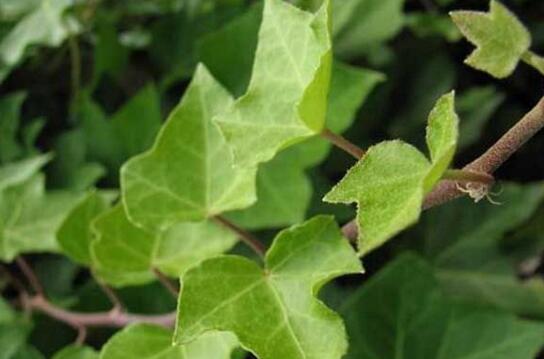
We know that to grow ivy well, you first need to understand how to care for it, and that involves many aspects, among which watering, light, fertilizing, soil, and pests and diseases all have an important effect on growth. They are also the main causes of dried-up leaves. What should you do when ivy leaves dry up? The specific methods are as follows.
1. Too little watering
When growing ivy, if you water too little, the leaves lack moisture, and the plant's own metabolism is affected. When growth is poor, dried-up leaves appear, so never go a long time without watering your ivy.
What to do: Replenish moisture in time and keep the soil slightly moist. For specific methods, you can refer to the detailed guide on how to water ivy. However, note that you should not water too much each time; the principle is that there should be no standing water in the pot.
2. Too much light
Ivy can grow in full light and can take direct sunlight, but if you move ivy that has long been in a dark place into the sun, it will be scorched because the light suddenly becomes too strong, and the leaves will wither and drop.
What to do: What should you do when ivy leaves dry up due to a change in light? The answer is to shade it first when you move it outdoors, keeping sunlight at around 50%, avoiding direct strong light, and it will gradually recover once it adapts to the new light conditions.
3. Not enough fertilizing
Only once ivy has matured can fertilizing be reduced appropriately, but during the growing period you should apply a dilute liquid fertilizer once every 15 days. If you fertilize too little, not only will growth be slow, but the leaves will also become dull and lusterless, and long-term nutrient deficiency can cause the leaves to dry up.
What to do: Apply a top dressing appropriately, mainly nitrogen fertilizer, with a suitable increase in phosphorus and potassium fertilizer. When fertilizing, use mainly dilute fertilizer water and avoid too high a concentration, once every 15 days; generally 2-3 times is enough to make the leaves turn back to a deep green.
4. Compacted soil
Compacted soil affects ivy's absorption of water and fertilizer and also affects root respiration, thereby indirectly affecting the plant's growth. Lacking the necessary nutrients, the leaves will gradually fade, and in the end dried-up leaves are unavoidable. What should you do when ivy leaves dry up for this reason? The methods are as follows.
What to do: Repot and change the soil as soon as possible to ensure the soil's air permeability. This not only avoids the problem of dried-up leaves but also benefits ivy's growth. During repotting and soil changing, you can add an appropriate amount of organic fertilizer water to increase the nutrient content of the soil.
5. Pests and diseases
Many pests feed on ivy leaves or sap, such as red spider mites, aphids, and so on. If these pests appear on the ivy, the sap of the leaves will be sucked out, and the result is that the leaves lack nutrients, become thin and weak, and dry up.
What to do: When you find pests or diseases, remove them promptly. If a large number of pests appear, use pesticides for control, and remove diseased leaves in time. Afterward, keep the environment tidy and clean to prevent the pests from recurring.
What to do when ivy leaves turn yellow: causes and solutions for yellowing ivy leaves
Many people encounter yellowing ivy leaves when growing ivy. What should you do when ivy leaves turn yellow? Below we tell you the causes and solutions for yellowing ivy leaves.
1. The first case is the very common yellowing of old leaves. This is a normal metabolism, so there is no need to worry too much; just do the cleanup promptly.
2. No matter which variety of ivy it is, in winter the potting soil must stay moist, not too dry or too wet. Pay attention to the indoor air humidity; if it is too low, it easily causes the leaf edges to turn dry and yellow, so in winter we should often pay attention to indoor air humidity, and if the humidity is not enough, take measures to add moisture in time.
3. The effect of light: Avoid direct sunlight in summer, because direct sunlight easily causes necrosis on the leaf surface. In winter there is no need to shade, and the light can be appropriately stronger.
4. The effect of temperature: Ivy has a habit of preferring cool conditions, but it is especially afraid of frost. It can also grow indoors without heating. In addition, it grows poorly in high summer temperatures, so it should be placed in a ventilated, cool spot.
5. The effect of water: During ivy's growing period, the potting soil must be kept moist, but standing water in the pot should be avoided; in winter, reduce the amount of watering to avoid the potting soil becoming too dry.
6. The effect of humidity: In hot and dry seasons or indoors, you should often spray water on the leaf surface and around the plant, and clean the leaf surface regularly.
7. Pests and diseases: When this happens, we should check by eye whether they are insects, or whether there is any difference from before, and use a low-concentration pesticide spray to solve the problem.
8. Lack of iron: A lack of iron starts with the young leaves turning yellow. If this happens, you can place a certain amount of iron filings in the soil, which can solve the problem well.
9. If the original environment differs from the current one, the plant will temporarily be unable to adapt, and the leaves will turn yellow as a result.
What to do when ivy leaves dry up
Dried-up ivy leaves - watering
Improper watering
Improper watering is a common cause of dried-up ivy leaves.
When growing ivy, water only when the soil is dry, and be careful not to keep it moist for a long time. Otherwise it is easily drowned, and the leaves dry up very easily.
Pay attention to watering
Normally, water ivy after the soil dries. If water is insufficient, do not pour a large amount of water; you can spray a little water, which can prevent the leaves from drying.
Dried-up ivy leaves - dryness
Insufficient light
In fact, the effect of light on ivy's growth is also very important. It likes light but fears scorching sun, so when growing it, generally keep it in partial shade with at least 3 hours of light each day.
If light is insufficient, the plant easily grows thin and spindly, turns yellow, and even dries up.
Maintain light
When growing ivy, is it very important to choose a suitable spot? Place it in a place with light but not exposed to scorching sun, and keep it ventilated.
Dried-up ivy leaves - soil too dry
When growing ivy, you need to keep it moist. Soil moisture is also very important; it must not be too dry, or it easily turns yellow and dries up.
Be careful to keep watering.
Dried-up ivy leaves - red spider mites
If your ivy is affected by red spider mites, the leaves turn yellow and dry, and it may even drop leaves.
Pay attention to preventing red spider mites, strengthen ventilation, and find the pests in time and kill them.