Detailed Guide to Overwintering Pitcher Plants: Keep Away from Windows and Raise the Temperature
The pitcher plant (Nepenthes) is a very unusual plant that grows many pitchers with the ability to catch mosquitoes and flies. It is precisely because of these qualities that many people keep pitcher plants as houseplants. However, since pitcher plants originally grow in tropical regions, they like high temperatures and cannot tolerate cold, so care in winter requires special attention. So how do you overwinter a pitcher plant? Below, the editor brings you the methods for overwintering pitcher plants.
I. How to Overwinter Pitcher Plants: Temperature and Water
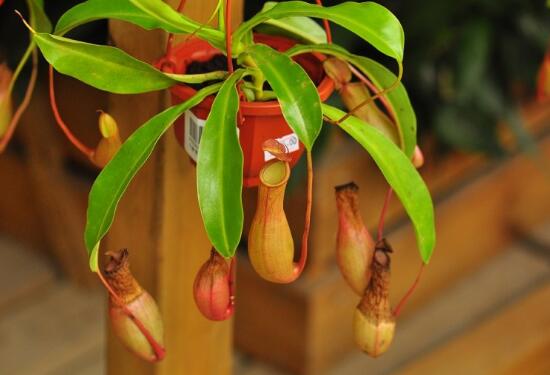
Based on the growth habits of pitcher plants, we know they are not afraid of heat but are afraid of cold. Especially in winter, once the temperature drops suddenly, they are easily frostbitten. So for how to overwinter pitcher plants, you need to take some measures before winter arrives, mainly covering two points: first, temperature, and second, water. The specific requirements are as follows:
1. Temperature requirements
Pitcher plants originally grow in tropical regions, so they like high temperatures and high humidity, but are afraid of cold. In winter, once the outdoor temperature falls below 10°C, they must be moved indoors, and the temperature must be kept at 10-15°C.
2. Water requirements
In the cultivation methods for pitcher plants, it was mentioned that they have extremely high water requirements, needing watering 2-3 times a day in summer. But in winter, as the temperature drops, the water in the potting soil evaporates more slowly. You should reduce watering and control the amount of water, keeping the potting soil merely moist. For the methods of overwintering pitcher plants, let's continue reading for the specific steps.
II. Detailed Methods for Overwintering Pitcher Plants
1. Move indoors
In southern regions, even in winter, the temperature is not low, so they can safely be kept outdoors. But in the north, once winter arrives, temperatures are below zero. So as winter approaches, or when the outdoor temperature falls below 10°C, you must move the pitcher plant indoors for cultivation.
2. Keep away from windows
In winter, after moving the pitcher plant indoors, its placement should be away from windows. This is because in the north, the outdoor temperature is extremely low, there is a lot of moisture on the windows, and the temperature is lower, which is not good for the pitcher plant's growth.
3. Provide light
During the pitcher plant's growth, light is essential at all times, so after the sun rises in the morning, you can move the pitcher plant outdoors to let it receive sufficient light. Because winter light is very weak, the pitcher plant can be placed in the sun all day.
4. Artificial supplementary lighting
Although it is winter, pitcher plants still need plenty of light, and in northern regions the daylight hours are very short, so those who are able should provide artificial supplementary lighting. The specific method: use a fluorescent lamp indoors to shine light on it.
How to overwinter pitcher plants - after reading the above, I believe you now know what to do! Overall, pitcher plants are easy to grow, but in winter you must pay attention to temperature and light. That's all the editor has to share about the methods for overwintering pitcher plants, and I hope it helps everyone. Finally, may everyone's pitcher plants grow beautiful pitchers.
How to overwinter pitcher plants
Temperature requirements for overwintering
Pitcher plants like warm environments but are afraid of cold. A slightly large temperature difference does not matter; just keep the temperature at 10-15°C. Remember, the temperature must not be lower than 10°C or higher than 35°C.
Water requirements for overwintering
The water mentioned here refers to watering and air humidity. Winter temperatures are relatively low, so watering should be controlled and reduced compared to other seasons. But air humidity should still be maintained, and you should frequently spray water around the plant.
Methods for overwintering pitcher plants
Point one
In the south, winter temperatures are relatively high. If the temperature is adequate, they can be kept outdoors; when the temperature falls below 10°C, consider moving them indoors.
Point two
Northern winters are cold, and there will be ice outdoors. When you move your pitcher plant indoors, do not place it by the window, as the temperature is lower there, there is heavy moisture around the window, and the side near the window is colder, which is not good for the pitcher plant's growth.
Point three
After the sun comes out in the morning, move it outdoors, and in the evening move it back inside, ensuring it can receive sunlight during the day. Winter sun is weak, so generally it can be placed in the sun all day. If you want the pitcher plant to stay outdoors overnight, that is also possible - wrap the entire pitcher plant in plastic film, then wrap it in a layer of newspaper, which should be thick, to prevent frost damage.
Point four
If you are in the north, have sufficient funds, and plenty of time, you can use a heating rod to appropriately raise the temperature. Of course, there is less sun in winter, so you can provide artificial supplementary lighting using a fluorescent lamp (there is still a certain cost involved!).
How to Grow Pitcher Plants: The Correct Cultivation Methods for Pitcher Plants
The pitcher plant (Nepenthes) is a rare carnivorous plant with a uniquely shaped insect-trapping pitcher that looks especially attractive. Nowadays, this pitcher plant is mostly kept by people as an ornamental plant, but many people do not know much about how to grow pitcher plants and do not know the most correct way to cultivate them. In a moment, I will write out the correct cultivation methods for pitcher plants, and after reading them, you will know how to grow pitcher plants.
Correct cultivation methods for pitcher plants1. Choose suitable soil for growing pitcher plants
When growing pitcher plants normally, you should choose suitable soil. They like loose, fertile, and well-aerated soil. For potted plants, you can mix peat moss, sphagnum moss, and charcoal. Also, pay attention to the growing environment for pitcher plants. They are epiphytic plants that like growing in semi-shaded environments, and especially in summer they must not be exposed to direct strong light.
2. Fertilizer and water management for growing pitcher plants
If you want to grow pitcher plants well, water and fertilizer management is very important. They are plants that are particularly sensitive to water and can only grow and develop normally in high-humidity environments. During their peak growing season, you should frequently spray water on the leaves, preferably four to five times a day. Pitcher plants have low fertilizer requirements. The insects they catch themselves can normally be converted into the fertilizer they need for growth, but when grown indoors, pitcher plants have no insects to eat, so fertilizer must be applied in a timely manner.
3. Pest and disease control and pruning of pitcher plants
During cultivation, pitcher plants can also suffer from some pests and diseases, especially leaf spot disease, which is very common. When it occurs, you can spray with zineb wettable powder. Also, if you want to increase the ornamental value of pitcher plants, pruning is also very important. Especially their pitchers, which are modified leaves, will wither after one or two months. At that time, you can directly cut them off, which will make the whole plant more beautiful.