How to grow Nepenthes? Growing methods and precautions, light must be sufficient
Everyone has probably heard of Nepenthes; it is a plant that preys on small insects such as mosquitoes and flies. With careful breeding by cultivation experts, Nepenthes has gradually entered human life and become an indoor potted plant. So how do you grow Nepenthes? Below is a carefully compiled guide to Nepenthes growing methods and precautions. Friends who want to grow it should definitely take a look~
1. How to grow Nepenthes: understand its habits
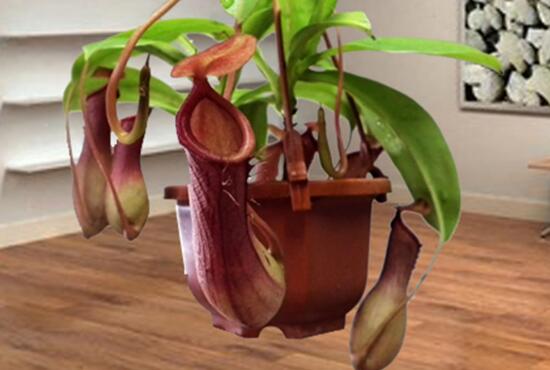
Indoor cultivation is not like growing in the wild; we need to create suitable conditions. So, to know how to grow Nepenthes, we first need to understand its growth habits and then create favorable conditions indoors. Next, we will explain specifically from soil, light, water and fertilizer, temperature, and other aspects. Among these, light is very critical. Let us continue reading below.
2. Nepenthes growing methods and precautions
1. Potting soil
To grow potted Nepenthes, the first thing is naturally choosing the potting soil:
Soil: According to the growth habits of Nepenthes, you should choose loose, fertile, well-aerated leaf mold or peat soil.
Flower pot: Because Nepenthes is a vine plant, it needs support to grow upright, so everyone must pay attention when choosing a flower pot. You can build a support frame for Nepenthes and choose a larger flower pot for planting, because larger and heavier flower pots are more stable and will not easily topple.
2. Light
In Nepenthes growing methods, light is very important. It is understood that Nepenthes is a tropical plant, and sufficient light can make its leaves appear red like red wine, looking very beautiful.
Precautions: Nepenthes likes light but fears strong light, so in summer pay attention to sun protection. The usual method is to set up a shade net. Nepenthes cannot lack light, otherwise it will affect plant growth, resulting in small pitchers or no pitchers.
3. Temperature
When growing Nepenthes, you must pay attention to temperature regulation, because it is a tropical plant and likes a high-temperature environment. If Nepenthes is grown above 1200 m elevation, its optimal growth temperature is 21°C during the day and 10°C at night; if Nepenthes is grown on flat ground or below 1200 m elevation, its optimal growth temperature is 29°C during the day and 21°C at night.
Precautions: Nepenthes is not cold-tolerant. Once the temperature is too low, it will stop growing. Therefore, in winter, to prevent Nepenthes from freezing, protective measures should be taken to ensure the indoor temperature is not lower than 10°C.
4. Watering
To know how to grow Nepenthes, watering is essential. It is understood that during growth, Nepenthes needs a large amount of water, so watering should be frequent. Generally, in the hotter summer, water 2-3 times a day; in the colder winter, everyone should appropriately reduce watering frequency and just keep the soil moist.
Precautions: Nepenthes is relatively sensitive to moisture. Although it needs a large amount of water, it cannot be too much. Be sure to follow the principle of "soil moist but not soggy." In addition, watering can be done in the evening to avoid water droplets remaining on the leaves and being exposed to sunlight, which can burn the leaves.
5. Fertilizing
After watering, let us talk about fertilizing. It can be omitted in Nepenthes growing methods, but proper fertilizing can make the plant grow better. Generally, from late spring to mid-autumn during the vigorous growth period, you can apply 1-2 times a month of diluted organic liquid fertilizer.
Precautions: After appropriately applying organic fertilizer, everyone should water promptly. If there is no organic fertilizer, ordinary chemical fertilizer can also be chosen, but apply less. Too much fertilizer will cause the plant to wither.
6. Pruning
Generally speaking, if all the needs of Nepenthes are met, each of its pitchers can survive for several months. When it has withered, you can cut it off. This can make the whole plant look more beautiful, but this is purely for appearance and has nothing to do with the health of the plant.
7. Repotting and changing soil
Although Nepenthes does not have high fertilizer requirements, it also cannot lack it too much. Therefore, every 2-3 years, everyone should repot it and change the soil, replacing rotted and deteriorated substrate. It is best to repot in spring when new roots have not yet grown.
3. How to grow Nepenthes best
About this, it is actually very simple. Everyone only needs to follow the above requirements strictly. Of course, for indoor cultivation, it is best to choose hanging baskets for planting, so that the pitchers grown by Nepenthes hang below. With good care, each pitcher will be bright and glossy, very beautiful.
How to grow Nepenthes: Nepenthes growing methods and precautions
Nepenthes is a plant that can catch small insects. Its place of origin is the tropical regions of the Old World. It only began appearing at flower exhibitions after being introduced to China in the 1990s. Today let us take a look at how exactly Nepenthes should be grown, and what its growing methods and precautions are.
Nepenthes growing methods
Soil: The soil required by Nepenthes is preferably loose, fertile, and breathable leaf mold or peat soil. For potted plants, a mixed substrate of peat soil, sphagnum moss, charcoal, and fir bark shavings is commonly used.
Watering: Nepenthes has a relatively large demand for water. It can grow normally only under high-humidity conditions. During the growing period, it needs watering 4 or 5 times a day, because being too dry will affect the development of Nepenthes.
Light: Nepenthes is actually an epiphytic plant, often growing under large trees or on the north side of rocks, belonging to a year-round semi-shaded environment. Therefore, in summer, please do not place Nepenthes directly under the sun; it must be shaded, otherwise the leaves are easily scorched, directly affecting the development of the leaf pitchers.
Temperature: The optimal growing temperature suitable for Nepenthes is 25°C to 30°C. Of course, there are slight differences in different months. For example, from March to September it is 20°C to 30°C, while from September to March of the following year it is 18°C to 24°C. In winter, the temperature cannot be lower than 16°C. Below 16°C, it will begin to stop growing.
Fertilizing: Nepenthes does not need special fertilizing, because Nepenthes can usually catch insects on its own and convert them into nutrients. If Nepenthes has insects to eat, then there is no need to fertilize.
Precautions for growing Nepenthes
The flowers of Nepenthes do not have much ornamental value. The flowers are small and plain, and only a few varieties have relatively bright flowers. In addition, the flowers of Nepenthes also give off an unpleasant smell, so try not to grow it indoors. A courtyard or balcony is the best choice. In addition, Nepenthes is an epiphytic plant and must have support to stand, so it is necessary to set up a support frame for Nepenthes.
How to grow Nepenthes? Home growing methods and precautions for Nepenthes
[Common questions]How do you grow Nepenthes?
[Expert answer]Nepenthes is the general term for all species in the genus Nepenthes. It belongs to tropical insectivorous plants. Because of its unique appearance and insect-eating function, it is also grown in some homes. So how should Nepenthes be grown? The home growing methods and precautions for Nepenthes are now as follows:
Image: Home growing methods for Nepenthes
1. Home growing methods for Nepenthes
Temperature: Nepenthes is a tropical plant and likes a high-temperature environment. At 20-30°C, it grows quickly. But when the temperature is too low, Nepenthes stops growing. In winter, to prevent Nepenthes from freezing, protective measures should be taken to ensure the indoor temperature is not lower than 10°C.
Light: Although Nepenthes is a tropical plant and can grow in sunlight, it fears strong light. In summer, pay attention to sun protection. The usual method is to set up a shade net. But do not directly move Nepenthes to a shady place just to avoid direct strong light. If Nepenthes receives less light, the plant grows slowly, and the pitchers are small or even absent, then it is not really the so-called Nepenthes anymore.
Water: The growth of Nepenthes requires a large amount of water. In hotter summer, water 2-3 times a day. Try to spray more water on the branches and leaves. When the temperature is lower, appropriately reduce watering frequency and just keep the soil moist.
Nutrients: Nepenthes can actually grow well without fertilizer, but fertilizing will make it more robust and grow faster. Appropriately apply organic fertilizer, but water promptly after fertilizing. If there is no organic fertilizer, ordinary chemical fertilizer can also be chosen, but apply less. Too much fertilizer will cause the plant to wither. Alternatively, apply leaf fertilizer, which has relatively good fertilizer efficiency.
Planting environment:Usually hanging baskets are chosen for planting. The pitchers that grow will hang below. With good care, each pitcher will be bright and glossy, very beautiful.
Image: Precautions for home growing of Nepenthes
2. Precautions for home growing of Nepenthes
1. Nepenthes flowering has no ornamental value. The flowers are relatively small, the flower color is not very bright, and it also gives off an unpleasant odor. During the flowering period, it is best to move it outdoors for care. However, Nepenthes must be grown for several years before it blooms, so there is no need to worry.
2. Nepenthes is a vine plant and needs support to grow upright, so a support frame should be built for Nepenthes, and a larger flower pot should be chosen for planting. Larger and heavier flower pots are more stable and will not easily topple.
[Editor's conclusion]Nepenthes gets its name because its unique organ, the insect-catching pitcher, resembles a pig cage. It is grown in quite a few homes. The above has introduced the home growing methods and precautions for Nepenthes. We hope it can be helpful to everyone!