How to grow potted silk tree flowers? Cultivation methods and precautions, avoid noise
Among the effects and functions of silk tree flowers, their ornamental value is the most widely known, but if you want them to be ornamental, the care process is very important. So how do you grow potted silk tree flowers? What are the cultivation methods and precautions for silk tree flowers? Below, the editor will walk you through it.
I. How to grow potted silk tree flowers
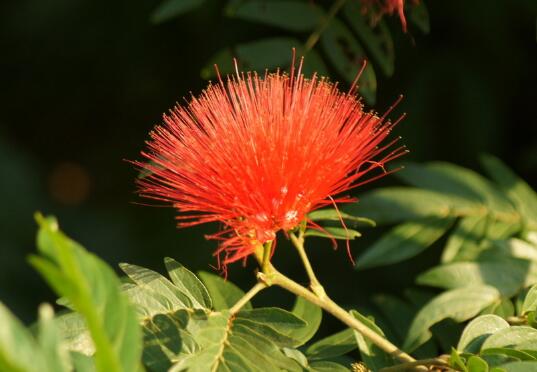
To know how to grow potted silk tree flowers, we first need to understand their growth habits. Silk tree flowers are a light-loving plant, so during cultivation you must maintain sufficient light. In addition, there are many other points to note. The specific details are in the cultivation methods and precautions for silk tree flowers below. Let's continue reading.
II. Cultivation methods for silk tree flowers
1. Soil selection
When cultivating silk tree flowers, we first need to choose soil. For soil, it is best to choose sandy soil with high looseness. This kind of soil has relatively good air permeability and drainage, allowing silk tree flowers to better absorb nutrients.
2. Watering management
Among the cultivation methods and precautions for silk tree flowers, watering is a very important one. Silk tree flowers are relatively intolerant of waterlogging, so when watering, it must be done in moderation. Never allow water to accumulate, otherwise root rot is very likely to occur.
3. Light management
Silk tree flowers are a light-loving plant, so during cultivation you must maintain sufficient light so that they can grow better. However, when summer sunlight is too strong, it is best to provide appropriate shade to prevent the leaves from being scorched.
4. Pest and disease control
During the cultivation of silk tree flowers, if cultivation is improper, pests and diseases are very likely to appear. This phenomenon is extremely harmful to the plant, so it must be dealt with promptly. For specific treatment methods, you can refer to the article on pest and disease control for silk tree flowers. The editor will not introduce too much here.
III. Precautions for cultivating silk tree flowers
1. Avoid noise
Among the precautions for cultivating silk tree flowers, avoiding noise is a very important point. Silk tree flowers do not like noise during growth, so when cultivating them it is best to control the surrounding sound, which can also let them grow better.
2. Less pruning
Silk tree flowers are a shallow-rooted plant, and their sprouting ability is not very strong, so during cultivation it is best not to prune, to avoid affecting their normal growth. Everyone should remember this point.
How to make a silk tree flower bonsai: potted cultivation methods and precautions for silk tree flowers
Hearing the name silk tree flower, many people are probably familiar with it. It is a plant with high ornamental value, and the shape of its flowers is like feathers, very beautiful. Nowadays many people make silk tree flowers into bonsai for viewing, so what exactly is the specific production method?
Production method for silk tree flower bonsai
1. Choose the tree species. The tree species is best a stump with a full form, upright branches and green leaves, and fibrous roots that have not yet dehydrated. Generally, you can choose from mountain-collected stumps or field-cultivated stumps, selecting tree species with relatively small leaves, glossy leaves, the ability to be transplanted, tolerance to pruning, and easy sprouting. Those with exposed roots and strong gripping power are even better as tree species.
2. Choose the flower pot. A shallow-mouthed pot can show the tallness of the silk tree, while a deep-mouthed tube can set off an old cliff-style silk tree stump. A purple clay pot is beneficial for support. In short, whatever effect you hope to achieve, you should choose the flower pot according to expectations. Different flower pots will yield different feelings.
3. Potting and pruning. According to the size of the silk tree species, choose a suitable flower pot. First prune the roots, removing excess bottom roots and overly long root systems, then place it into the flower pot. With one hand supporting the tree species, use the other hand to fill in the potting soil. After filling, press it firm with your hand. Prune the branches and trunk of the silk tree, removing overlapping branches, crossing branches, whorled branches, and parallel branches. Shorten the top-central branches and back branches.
Potted cultivation methods for silk tree flowers
1. Temperature. Silk tree flowers are a temperate, subtropical, and tropical tree species. They like a warm environment, and the suitable temperature for growth is 13°C—18°C. In winter they can withstand a low temperature of minus 10°C, but grow slowly in a cold environment. When cultivating silk tree flowers in southern regions, they do not need to be moved into a greenhouse in winter.
2. Light. Silk tree flowers relatively like sunlight and are not tolerant of shade, so during the growth period pay attention to providing sufficient sunlight. But when summer sunlight is too strong, shading is still needed to avoid scorching the leaves.
3. Soil. Silk tree flowers do not have many requirements for soil. Their roots have rhizobia and have the ability to improve soil. They tolerate poor soil and mild salinity-alkalinity, but grow best in fertile, moist, well-drained sandy loam and limestone soil.
4. Fertilization. Silk tree flowers do not have high requirements for fertilizer and can be managed extensively. Even in poor soil they can grow vigorously.
Precautions for potted silk tree flowers
1. Dislikes noise. Silk tree flowers do not like noise and dust during growth, so when cultivating them you need to control the surrounding sound, and take care not to cultivate them in areas with serious air pollution.
2. Moderate watering. Silk tree flowers can tolerate drought but are not tolerant of waterlogging. During maintenance, do not water too much, to avoid causing waterlogging, affecting root respiration, and causing root rot.
3. Less pruning. Silk trees are a shallow-rooted tree species with weak sprouting ability, so during daily maintenance try not to prune, and just maintain a normal growth rate.
Diseases of silk tree flowers and their control methods
1. Rust disease. Control method: spray 0.3 lime-sulfur mixture, or 75% chlorothalonil wettable powder 400 times liquid, spraying once every 10—15 days, for 2—3 consecutive sprays.
2. Fusarium wilt. Control method: choose varieties with strong disease resistance for cultivation. When the seedlings grow 2—3 true leaves, spray once with methamidophos 2000 times liquid to prevent ants and other pests from harming the seedlings. After that, regularly and quantitatively spray foliar fertilizer on the leaf surface to improve the disease resistance of the seedlings. For plants that have just become diseased, while replacing the soil, combine with chemical treatment for control. You can use 70% thiophanate-methyl wettable powder, 60% carbendazim · thiram wettable powder 100 times liquid to spray or smear the trunk; or use 14.5% duoxiaoling water-soluble powder, 40% quintozene powder 300 times liquid, as well as pesticides such as kangkuining, thiophanate-methyl, and carbendazim at conventional concentrations to irrigate the soil, irrigating once about every 8 days, for 3—4 consecutive times. Using 70% thiophanate-methyl wettable powder 300 times liquid and introducing it into the plant by infusion can improve the efficacy.
The production method for silk tree flower bonsai is actually quite simple. The main thing is to do a good job selecting the species and selecting the pot, then choose an appropriate time for potting, and prune after potting. If you want it to look good, in the later stage after making it into a bonsai, you can strengthen management, and this will ensure its growth.
How to plant silk tree flowers: planting methods and precautions for silk tree flowers
Silk tree flowers are a flowering plant that can bring people good blessings, and they are relatively common in life. Their trunk is tall and upright, and the flower color is bright and beautiful, making them much loved by people. Many people like to grow this bonsai plant at home, which is not only beautiful but also has a very good meaning. But why can ordinary households not grow them in pots? Let's take a look at their planting methods.
How to plant silk tree flowers
1. Sunlight
Silk tree flowers are a light-loving tree species and slightly tolerant of shade, so during the growth period pay attention to providing sufficient sunlight, but when summer light is too strong, also pay attention to shading.
2. Temperature
Silk tree flowers like a warm environment, but their cold resistance is very strong. In southern regions they do not need to be moved into a greenhouse in winter.
3. Soil
Silk tree flowers are not strict about soil, but fertile, moist, well-drained sandy loam and limestone soil are best.
4. Water and fertilizer management
Silk tree flowers tolerate dryness and are not tolerant of waterlogging. During maintenance, do not water too much, to avoid causing waterlogging and damaging the roots. Silk tree flowers can be managed extensively and do not have very high requirements for water and fertilizer. Even in poor areas they may grow very vigorously. But note that they do not like noise or dust, so when cultivating them you need to keep a good check on this.
Planting methods and precautions for silk tree flowers
I. Cultivation methods for silk tree flowers
1. Temperature
Silk tree flowers are a temperate, subtropical, and tropical tree species. They like a warm environment, and the suitable temperature for growth is 13°C-18°C. In winter they can withstand a low temperature of minus 10°C, but grow slowly in a cold environment. When cultivating silk tree flowers in southern regions, they do not need to be moved into a greenhouse in winter.
2. Light
Silk tree flowers relatively like sunlight and are not tolerant of shade, so during the growth period pay attention to providing sufficient sunlight. But when summer sunlight is too strong, shading is still needed to avoid scorching the leaves.
3. Soil
Silk tree flowers do not have many requirements for soil. Their roots have rhizobia and have the ability to improve soil.
They tolerate poor soil and mild salinity-alkalinity, but grow best in fertile, moist, well-drained sandy loam and limestone soil.
4. Fertilization
Silk tree flowers do not have high requirements for fertilizer and can be managed extensively. Even in poor soil they can grow vigorously.
II. Precautions for cultivating silk tree flowers
1. Dislikes noise
Silk tree flowers do not like noise and dust during growth, so when cultivating them you need to control the surrounding sound, and take care not to cultivate them in areas with serious air pollution.
2. Moderate watering
Silk tree flowers can tolerate drought but are not tolerant of waterlogging. During maintenance, do not water too much, to avoid causing waterlogging, affecting root respiration, and causing root rot.
3. Less pruning
Silk trees are a shallow-rooted tree species with weak sprouting ability, so during daily maintenance try not to prune, and just maintain a normal growth rate.
How to fertilize silk tree flowers
I. Selection of fertilizer
For fertilizing silk tree flowers, you can choose some organic fertilizers rich in phosphorus and potassium. This kind of fertilizer is very beneficial to soil air permeability, and the fertilizer effect is relatively long, and it can very well promote silk tree flowers to bloom.
II. Fertilization methods
1. During the period from the start of sprouting to July, nitrogen fertilizer and compound fertilizer need to be applied as a top dressing.
2. Wait until leaf fall begins, then fertilization can stop, because as the temperature drops, its growth rate gradually slows down, the bark cells also begin to thicken, and cold resistance continuously strengthens.
3. Each year when cultivating and weeding, you can also apply decomposed human and livestock manure and urine fertilizer to silk tree flowers two or three times as a top dressing, increasing the soil fertility.
III. Precautions for fertilization
1. Silk tree flowers are not tolerant of fertilizer, so when fertilizing them, the concentration must be as low as possible, and at the same time watering is also necessary.
2. Silk tree flowers like acidity, so regarding fertilizer selection you can also appropriately use more acidic fertilizers.
3. When fertilizing silk tree flowers, do not get too close to the trunk and roots. Especially when fertilizing deeply, be sure not to damage the roots.
Introduction to silk tree flowers
1. Other names
Silk tree flowers are also called night silk tree, night silk tree, velvet flower tree, bird velvet tree, and bitter love flower.
2. Origin
Silk tree flowers originate from various provinces and cities in China from the Northeast to South China and the Southwest, and generally grow on hillsides. They are distributed in Africa, Central Asia to East Asia, and are also cultivated in North America.
3. Morphological characteristics
Silk tree, deciduous tree, height can reach 16 m, crown spreading, branchlets angular, young branches, inflorescences, and leaf rachises covered with tomentum or short pubescence. Stipules linear-lanceolate, leaves small, falling early.
Head-shaped inflorescences arranged in panicles at the branch tips; flowers pink; calyx tubular, 3 mm long; corolla 8 mm long, lobes triangular, 1.5 mm long, both calyx and corolla outside covered with short pubescence; filaments 2.5 cm long.
Silk trees are tall plants and are especially suitable for planting along both sides of urban roads. Of course, some people can make them into bonsai for courtyard cultivation. However, during cultivation, you must master certain cultivation techniques according to their growth habits and your own actual situation, so that they can grow into the ideal state in your mind.