How to water a cast iron plant (Aspidistra elatior)? How often to water depends on how moist the soil is
We know that in the cultivation of the cast iron plant, watering is the key factor that makes it grow luxuriantly, but too much water will cause the roots to rot, while too little water is not good for new shoots to sprout, so how should the cast iron plant be watered properly? How many days does the cast iron plant need between waterings? Let us answer this one by one for flower lovers.
How to water a cast iron plant
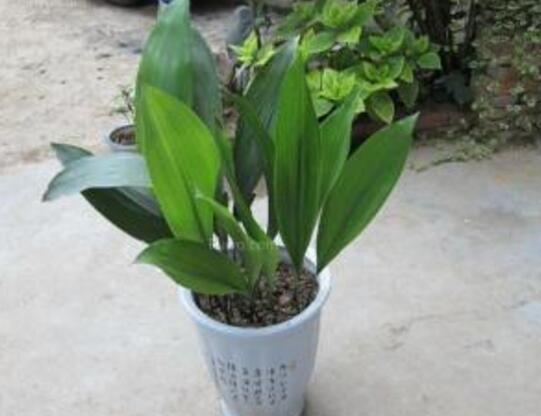
As for water quality, the cast iron plant is fairly tolerant, but the most suitable water is river water, well water, rainwater and so on; these waters are rich in minerals, which is beneficial to the growth of the cast iron plant. Of course, tap water can also be used. When watering, alternate between dry and wet and keep it fully moist, so as to promote growth.
How many days does the cast iron plant need between waterings
1. Watering the cast iron plant in spring
Spring is the vigorous growth period of the cast iron plant. How should it be watered at this time? Generally water once every 2 days, and choose the watering time according to the moisture of the soil. If it is the plum rain season in spring, rainwater can be used for irrigation; it is one of the water qualities most suitable for the growth of the cast iron plant.
2. Watering the cast iron plant in summer
Watering in summer must be done with care; generally water once a day, and it is best to choose the morning for watering, avoiding watering at midday high temperatures, which easily causes water to evaporate too quickly and too little water to be absorbed. In addition, the leaves also need to be sprayed with water, which can prevent the leaves from turning yellow.
3. Watering in autumn
Autumn is a transition process in which the growth of the cast iron plant goes from fast to slow, so watering should also go from more to less. In early autumn, water once every 2 days, and in late autumn, water once every 3-4 days; this needs to be judged according to the condition of the soil.
4. Should the cast iron plant be watered in winter
Many plants enter dormancy when temperatures are low in winter, and the cast iron plant is no exception. However, although growth is slow in winter, it still needs watering, so how should the cast iron plant be watered at this time? Generally water about once a week; warm water can be used when watering, and the amount does not need to be too much, about the usual amount is fine.
Can the cast iron plant be watered after repotting
When introducing how to make the cast iron plant grow into a full pot, we emphasized the importance of repotting. After repotting, watering is very important. After repotting, it should be watered thoroughly, then watered once every 3-4 days. After the cast iron plant resumes normal growth, water it in good time according to the moisture of the soil.
What to do if the cast iron plant is overwatered
When we are watering, what should we do if we accidentally water too much? The answer is to quickly drain away the accumulated water, check whether the soil drains well, and observe whether the drainage holes are blocked; the roots must not be left soaking in accumulated water for a long time.
How to grow a cast iron plant: cultivation techniques and care precautions for the cast iron plant
The cast iron plant, also known as spider's egg, belongs to the orchid family as a flowering ornamental plant. It is a perennial evergreen herbaceous plant with persistent roots, evergreen all year round, with elegant leaf shapes and robust growth, and is a very popular houseplant. Today let us tell you how to grow a cast iron plant, as well as the cultivation techniques and care precautions for the cast iron plant.
Introduction to the cast iron plant
The cast iron plant (scientific name: Aspidistra elatior Blume) is also called spider's egg because its fruit closely resembles a spider's egg. It is a flowering ornamental plant of the orchid family, a perennial evergreen herbaceous plant with persistent roots, and its underground rhizomes creep and spread; the leaves emerge from the roots and grow upright, with long leaf stalks and green leaves, and it will bloom. The cast iron plant is evergreen all year round, with elegant leaf shapes and robust growth, and is an ideal indoor greening plant. In traditional Chinese medicine, its rhizome is used as medicine. It can be harvested in all four seasons, used dried or fresh. It invigorates the blood and disperses stasis, tonifies deficiency and stops cough. It is used for traumatic injuries, rheumatic muscle and bone pain, lower back pain, cough due to lung deficiency, and hemoptysis.
1. Morphological characteristics
Rhizome: The cast iron plant is a perennial evergreen herb. The rhizome is nearly cylindrical, 5-10 mm in diameter, with nodes and scales.
Leaves: The leaves of the cast iron plant are solitary, 1-3 cm apart from each other, oblong-lanceolate, lanceolate to nearly elliptical, 22-46 cm long, 8-10 cm wide, with a gradually pointed tip and a wedge-shaped base, with edges more or less wrinkled and wavy, green on both sides, sometimes with slightly yellowish-white spots or stripes; the leaf stalk is obvious and thick, 5-35 cm long.
Flowers: The peduncle of the cast iron plant is 0.5-2 cm long; there are 3-4 bracts, of which 2 are located at the base of the flower, broadly ovate, 7-10 mm long, about 9 mm wide, light green, sometimes with small purple dots; the perianth is bell-shaped, 12-18 mm long, 10-14 mm in diameter, purple or dark purple on the outside, light purple or deep purple on the lower inside, with 6-8 lobes on the upper part; the perianth tube is 10-12 mm long. The lobes are nearly triangular, 3.5-4 mm wide, with a blunt tip, light green on the edges and upper inner side, with particularly thick fleshy ridge-like elevations on the inner surface, the middle 2 thin and long, the 2 on each side thick and short, up to 1.5 mm high in the middle, purplish-red; there are 6-8 stamens, borne near the base of the perianth tube, lower than the stigma; the filaments are short, the anthers elliptical, about 2 mm long; the pistil is about 8 mm high, the ovary hardly swells; the style has no joint; the stigma is shield-shaped and swollen, round, 10-13 mm in diameter, purplish-red, with 3-4 deep splits on top, the two sides of the splits more or less protruding upward, the central part slightly convex, the tips of the lobes slightly concave, and the edges often curled upward.
The natural flowering period of the cast iron plant is March to May.
2. Ecological habits
The cast iron plant is native to the southern provinces and regions of China, and is now cultivated in various places and used fairly widely. It likes warm, humid, semi-shaded environments, is relatively cold-tolerant, and extremely shade-tolerant. The suitable growth temperature is 10-25°C, the temperature range in which it can grow is 7-30°C, and the overwintering temperature is 0-3°C.
Cultivation techniques for the cast iron plant
1. Care methods
The cast iron plant has strong adaptability and grows relatively fast; it should be repotted once every 1-2 years. It mostly uses loam,
leaf mold and river sand mixed in equal amounts as the potting soil. When repotting, apply a small amount of crushed bone pieces or cake fertilizer powder as base fertilizer, and after planting, water thoroughly and place it in a cool place to grow. During the growth period, it should be watered fully, and the leaves should often be sprayed with water to maintain relatively high air humidity. Each month, apply 1-2 times of dilute liquid fertilizer to promote the sprouting of new leaves and robust growth.
Variegated varieties should be given light fertilizer; if the fertilizer is too rich, the spots on the leaves easily disappear. In summer, direct sunlight should be avoided, but attention should be paid to ventilation, and yellow leaves should be removed promptly. From the emergence of new leaves to the stage when new leaves are growing, it must not be placed in a dark indoor spot, otherwise the new leaves will grow slender and weak, affecting their ornamental value. In northern regions, it should be moved indoors in winter, with reduced watering and stopped fertilization; if the potting soil is too wet at this time, it easily causes root rot.
2. Planting essentials
The cast iron plant is mainly propagated by division. This can be done in spring when temperatures rise and before new shoots have sprouted, in combination with repotting. Divide the underground rhizomes together with the leaves into several clumps, with each clump having 3-5 leaves, then plant them separately in pots and keep them in a semi-shaded environment for care.
The cast iron plant is not strict about soil and tolerates barren conditions, but loose, fertile, slightly acidic sandy loam is better. When potting, equal amounts of leaf mold, peat soil and garden soil can be mixed as the substrate. During the growing season, water fully, keep the potting soil constantly moist, and often spray the leaves with water to increase humidity. This helps buds sprout and new leaves grow; after late autumn, the amount of watering can be appropriately reduced. During the vigorous growth period in spring and summer, apply liquid fertilizer 1-2 times a month to ensure the leaves are clear and bright. It can be grown year-round in a bright room, but whether indoors or outdoors, it must not be placed in direct sunlight; even a short period of direct sun can scorch the leaves and reduce their ornamental value. The cast iron plant is extremely shade-tolerant, and can even be displayed in a dark room for several months, but long-term excessive darkness is not good for the sprouting and growth of new leaves, so if it is placed in a dark room, it is best to move it at intervals to a place with bright light for a period of care, to benefit growth and ornamental value. Especially during the period from the emergence of new leaves to the maturity of new leaf growth, it must not be placed in too dark a place.
3. Propagation method -- division propagation
The cast iron plant is evergreen all year round, with upright and neat leaf shapes, deep green and glossy leaf color, and an elegant, refined and graceful bearing. At the same time, it grows vigorously, has strong adaptability, and is extremely shade-tolerant, making it an excellent shade-loving foliage plant for indoor greening and decoration. It is suitable for arrangement and placement in homes and offices, can be enjoyed alone, and can also be arranged together with other flowering plants to set off the brightness and beauty of other flowers. It is very suitable for home cultivation, and when growing a cast iron plant at home, the division method can be used for propagation. When propagating, attention should be paid to the choice of division time, the application of the division method, and the care after division.
1. Division time: For the division propagation of the cast iron plant, it can be done in spring when temperatures rise and before new shoots have sprouted, in combination with repotting. Generally it is done in early spring (February and March) after the soil thaws.
2. Division method: Take the mother plant out of the flower pot, shake off excess potting soil, separate the entangled root system as much as possible, and cut it open with a sharp knife into two or more plants. Each divided plant must have a considerable root system, and its leaves should be properly pruned, so that each clump has 3-5 leaves, to help it survive.
3. Potting and disinfection: Soak the divided small plants in a 1500-fold chlorothalonil solution for five minutes, then take them out and let them dry, and they can be potted. Alternatively, immediately after potting, use chlorothalonil to drench the roots.
4. Management after division: After the divided plants are potted, drench the roots or water thoroughly once. Because its root system has suffered great damage and its water-absorbing capacity is very weak, it takes about 3-4 weeks to recover and sprout new roots. Therefore, within 3-4 weeks after division, watering should be controlled to avoid root rot, but the transpiration of its leaves is not affected. In order to maintain the water balance of the leaves, the leaf surface needs to be sprayed 1-3 times a day (spray more when the temperature is high, spray less or not at all when the temperature is low). During this period, do not apply fertilizer either. After division, also pay attention to excessively strong sunlight; it is best to keep it in a shade shed for care.
5. Potting or transplanting: First place a 2-3 cm thick coarse substrate at the bottom of the pot as a drainage layer, then place the plant in. For the potting substrate, one of the following can be chosen: peat: perlite: ceramsite = 2:2:1; peat: vermiculite = 1:1; or peat: furnace slag: ceramsite = 2:2:1; sawdust: vermiculite: medium-coarse river sand = 2:2:1; vegetable garden soil: furnace slag = 3:1; or garden soil: medium-coarse river sand: sawdust (mushroom residue) = 4:1:2; or paddy soil, pond mud, leaf mold, etc. After potting, water thoroughly once and place it in a shaded environment for care
Care precautions for the cast iron plant
The cast iron plant is a perennial evergreen herb, with thick creeping rhizomes. The leaves are basal, hard in texture, narrowed into a groove at the base, with long leaf stalks, and the leaves can reach 70 cm long. The flowers are solitary, borne on short stalks, pressed close to the ground, about 2.5 cm in flower diameter, brownish-purple, with a flowering period from April to May. The cast iron plant has deep green leaves and a unique leaf shape, and is excellent foliage and modeling material for indoor potted plants and floral art. In growing the cast iron plant, in addition to paying attention to controlling temperature and moisture, special attention should also be paid to whether the cast iron plant is diseased.
1. When diseased leaves are found, cut them off promptly and burn them to reduce the source of infection.
2. Before the rainy season arrives, spray 50% Shibaike or Shibaogong wettable powder at 1000-fold solution, or 25% Tanteling wettable powder at 500-fold solution. Once every 10 days, for 3-4 treatments.
3. Choose a humid, well-drained, semi-shaded environment for planting. The cast iron plant is a shade-tolerant plant, and the light should not be too strong, otherwise it will cause the leaves to turn yellow or become diseased. Too much irrigation, especially in winter, will cause root rot and will also lead to yellowing of the leaves.
4. For cast iron plants cared for in a shed or greenhouse, one can raise the nighttime temperature of the shed or greenhouse, increase ventilation time during the day, and reduce the humidity inside and the duration of fog formation, thereby achieving the purpose of disease control.
Origin and habits: The cast iron plant is native to Hainan Island and Taiwan, China. It likes warm, shady and humid conditions, tolerates barren soil, is not cold-tolerant, and likes loose, fertile, well-drained sandy loam.
Propagation and cultivation: Propagation is mainly by division; in spring, in combination with changing the soil, the densely grown clumps can be cut into clumps of 2-3 leaves each for planting. During the growth period, sufficient water is needed, and the cultivation environment needs to be shady and humid; in summer it needs to be cared for under a shade shed, and in winter it can overwinter safely as long as the temperature is above 0°C. Fertilization is mainly with nitrogen fertilizer, and dilute liquid fertilizer can be applied 2 times a month. The cast iron plant has strong resistance, but waterlogging makes it prone to pests and diseases.
Disease control for the cast iron plant
1. Anthracnose
Symptoms and characteristics: The disease spots on the leaves of the cast iron plant mostly occur at the leaf edges or on the leaf surface. The spots are nearly round, grayish-white to grayish-brown, with the outer edge yellow-brown or reddish-brown, and in the later stage black small granular dots appear arranged in rings. Besides the leaves, the leaf stalks and stems also become diseased, producing elongated spots. The pathogen overwinters in the soil or on diseased leaf tissue. It spreads through airflow or splashing water, causing primary infection and reinfection. In the south there are 2-3 disease peaks each year, while in the north there is only 1 disease peak. Continuous rainfall and large rainfall amounts make the disease severe.
Control methods:
(1) When diseased leaves are found, cut them off promptly and burn them to reduce the source of infection.
(2) Before the rainy season arrives, spray 50% Shibaike or Shibaogong wettable powder at 1000-fold solution, or 25% Tanteling wettable powder at 500-fold solution. Once every 10 days, for 3-4 treatments.
(3) When necessary, spray 0.5% potassium dihydrogen phosphate or Shuangxiao micro-fertilizer at 300-fold solution, which helps enhance disease resistance.
2. Gray mold
Symptoms and characteristics: It often occurs at the leaf edges. Water-soaked spots begin to appear from the leaf edges; when humidity is high, the spots expand very quickly, causing the leaf edges to form irregular withering, and generally no gray mold layer is seen. But after continuous overcast rain, with high humidity and long duration, sparse gray mold can grow. The gray mold pathogen lives saprophytically as mycelium in diseased residues, continuously producing conidia for reinfection. The sclerotia survive for a relatively long period, and when suitable conditions are encountered, they grow hyphae and directly invade or spread through rain splashing or with diseased residues, water flow, farm tools, etc. The disease easily becomes epidemic under conditions of high humidity and a temperature of around 20°C.
(1) Careful maintenance
Choose a humid, well-drained, semi-shaded environment for planting. The cast iron plant is a shade-tolerant plant, and the light should not be too strong, otherwise it will cause the leaves to turn yellow or become diseased. Too much irrigation, especially in winter, will cause root rot and will also lead to yellowing of the leaves.
(2) If scattered diseased plants are found
spray 65% Jiameling wettable powder at 1000-fold solution, or 50% Suckeling wettable powder at 1500-fold solution, 50% Puhaiyin wettable powder, or 50% Nongliling wettable powder at 1000-fold solution.
(3) For cast iron plants cared for in a shed or greenhouse
one can raise the nighttime temperature of the shed or greenhouse, increase ventilation time during the day, and reduce the humidity inside and the duration of fog formation, thereby achieving the purpose of disease control.
3. Leaf spot
Leaf spot of the cast iron plant often occurs in its natural distribution areas and introduction areas, mainly harming the leaves and reducing their ornamental value. The affected leaf surface first produces small water-soaked necrotic spots, which then gradually expand into brown spots 2-3 mm in diameter, surrounded by a yellow halo. The pathogen is a fungus, Acremonium. The pathogen overwinters as mycelium in diseased leaves or fallen diseased residues, and the disease can occur in all three seasons of spring, summer and autumn. In northern greenhouses or heated indoor rooms, spot expansion can be seen in winter.
(1) Symptoms and characteristics: Also called black spot, brown spot, etc. First black spots appear in the middle of the leaves, then the leaves turn yellow and fall off. The cause is mostly stuffy, unventilated and humid environments.
(Note to improve environmental conditions; when the disease first occurs, the affected leaves can be removed and burned. Spray 1% Bordeaux mixture for control, once every 7 days, for a total of 4-5 sprays over the whole growth period, or spray 50% carbendazim at 1000-fold solution for control.
Growing methods and precautions for the cast iron plant
The cast iron plant is a beautiful foliage plant. It is a type of lily family plant, with leaves evergreen in all four seasons. It can be made into a potted plant and placed at home, and while beautifying the environment it can also purify the air. So how should the cast iron plant be grown? Today I will tell you all the growing methods and precautions for the cast iron plant. Friends who like to give flowers, come and take a look.
Growing methods and precautions for the cast iron plant1. Growing environment for the cast iron plant
The cast iron plant has relatively strong vitality and does not require much of the environment. It likes warm, humid, semi-shaded environments and has relatively strong cold tolerance. Normally it grows fastest in an environment of 10 to 25 [degrees]. Usually it can be placed in the living room, and every few days moved to the balcony to receive an appropriate amount of sunlight.
2. Soil requirements of the cast iron plant
The cast iron plant also does not require much of the soil; it is strongly tolerant of barren conditions, but when growing it, note that it should be given loose, fertile potting soil, and the soil is best slightly acidic, with sandy soil being the best. When making the potting soil, leaf mold and peat soil can be mixed in a 1:1 ratio.
3. Fertilizer and water requirements of the cast iron plant
During the peak growth season, the cast iron plant has relatively high water requirements; it can be watered once every two days, and when watering, water thoroughly, but water must not accumulate in the flowerpot. In addition, in spring and summer, the cast iron plant grows relatively fast, and at this time topdressing is needed in good time; it is best to fertilize twice a month, mainly with cake fertilizer, and after fertilizing, water promptly. The amount of fertilizer at one time should not be too much, otherwise adverse symptoms such as root rot or yellow leaves will appear.