Why doesn't the Aspidistra grow new leaves? Moderate temperature is the key to a full pot
Aspidistra (cast iron plant) is a well-known indoor foliage plant. During growth, it maintains its beauty by continuously sprouting new leaves, but some gardening enthusiasts find that the Aspidistra they grow barely grows any new leaves. So why doesn't the Aspidistra grow new leaves? Let me analyze the main reasons for you.
Why doesn't the Aspidistra grow new leaves
1. Dry air
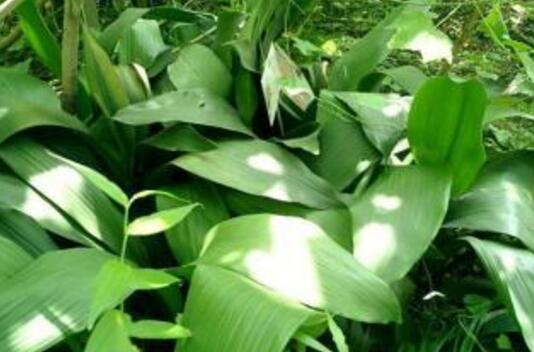
When the air is dry, the humidity in the environment where the Aspidistra sits will be relatively low, and since the Aspidistra is a plant that likes moist environments, when the humidity is low, its speed of sprouting and growing new leaves will be relatively slow.
2. Improper pruning
When explaining what to do when Aspidistra leaves turn yellow, we once mentioned that in order to maintain light penetration, dense branches and leaves need to be pruned in time. But if during pruning most of the leaves are all cut off, it will be unable to carry out normal photosynthesis, and then the situation of not growing new leaves will appear.
3. Temperature too low
The Aspidistra has strong cold resistance. Many gardening enthusiasts like to plant it in their courtyards, so in winter some enthusiasts find that it does not grow new leaves. At this point, why doesn't the Aspidistra grow new leaves? The answer is that the temperature is too low. When the temperature is below 3 degrees, the Aspidistra will enter a dormant state, its growth basically stalls, and new leaves naturally cannot grow out.
4. Soil alkalinity too high
The Aspidistra does not have high requirements for soil; slightly acidic or slightly alkaline soil can both be used for planting. But if the alkalinity is too high, its sprouting and stretching of new leaves will be very slow, and it may even affect the growth of old leaves. So when the soil we use has too high alkalinity, we should change the soil in time, and can improve this situation by watering with alum fertilizer water.
How to make the Aspidistra fill out its pot
1. Suitable temperature
Keeping the temperature at 10-25 degrees can make the Aspidistra grow at its fastest speed. So in the north, you should keep it warm in time in winter, and the temperature for it to overwinter should be above 3 degrees, while in the south it also needs to be moved back indoors in winter.
2. Loosen the soil and repot
The Aspidistra is relatively easy to keep alive, but how do you make the Aspidistra fill out its pot? The answer is that the soil should be turned and the pot changed once every 1-2 years, usually choosing spring as the time. Turning the soil can ensure good soil drainage, and changing the pot can increase growing space.
3. Scientific propagation
When the Aspidistra has grown to a certain stage, scientific propagation is needed. Ensuring 2-3 Aspidistra plants in each pot is the most suitable, as this can reduce competition for nutrients between plants, make nutrition more balanced, and at the same time also promote the sprouting of new buds.
Aspidistra flowering pictures, why doesn't the Aspidistra grow new leaves
Aspidistra, with aliases such as large-leaf evergreen and bamboo-leaf plate, etc., because when it bears fruit, the shape is like spider eggs, so it also has a very interesting name: cast iron plant (spider's egg).
The Aspidistra has relatively few leaves, at most 3—5 leaves, and when flowering it is mostly one leaf, one stem, one flower, so it is widely called “Aspidistra”.
The Aspidistra grows new leaves extremely slowly, but it is not that it does not grow leaves. Unlike other plants that concentrate on changing leaves and growing new buds all at once, it changes leaves at a speed we are not easily aware of, so some people think the Aspidistra does not grow new leaves, which is a misunderstanding.
Its leaf shape is upright and neat, the leaf color is emerald green, deep green and glossy, and its posture is elegant and graceful. It is an excellent plant for indoor greenery decoration.
It can be used for greening in family living rooms, and can also be used for arrangement and placement in office work and public leisure areas. It can be enjoyed alone, or used as a companion, paired with other flowering plants, as ”green leaves“, to set off the beauty of other flowers.
There are many varieties of Aspidistra, and the flowers also differ by variety. Common ones are yellow-white, with relatively small flowers; the most common are purple flowers, slender and light, and because of the contrast of the leaves, they appear both noble and elegant.
Aspidistra is a plant that combines beauty and medicinal value. Whether decorating the home environment or used to treat various physical discomforts, it is beautiful and practical, so it also makes people love it even more~~
Reasons why the Aspidistra does not grow new leaves
1. Temperature
This is a plant that originally grew in the southernmost part of China, which determines that it can endure relatively high temperatures. In fact, it likes warm conditions and is most suitable for growing in the range of 10 to 25 degrees. A high temperature of 30 degrees is also fine for growth, but any higher temperature will not do. The minimum should not be below 3 degrees. If your plant has not been growing leaves, then you should think about whether you have placed it in a place with an unsuitable temperature.
2. Light
It is a plant that can grow in an environment lacking light without becoming withered, which allows it to be kept very well indoors. Generally, giving it light occasionally is enough. But if you place it in a dark place for too long, that still will not do, because after all, plant growth definitely cannot be separated from sunlight. Long-term lack of light will affect the sprouting and growth of new buds, and new leaves will not be able to grow out.
3. Soil
It is not too different from ordinary flowers and plants; it likes loose, breathable soil. Perhaps the soil in your pot is too hard, or the soil is covered too thickly, so the plant's breathing is not very good and its growth becomes slow. You can loosen the soil, and the soil definitely must not be added too thickly.
4. Flower pot
Perhaps the flower pot your plant was planted in was chosen too small from the start. If the flower pot is small, the space it can grow in is small, the plant feels hindered in growth, and so it naturally grows slowly or even stops growing.
5. Pruning
If your plant has already stopped growing leaves, check whether its other leaves are turning yellow, and whether some branches have also already withered. At this time we should cut off these dead branches, and the yellowing leaves must also be cut off. This is beneficial for new buds and new leaves to grow out.
Compare with the points above, see which reason is causing the problem for your own Aspidistra, and handle it in time and it can grow new leaves!