What to do when hibiscus leaves turn yellow? Five methods to treat the root cause
Hibiscus is a perennial shrub, so its leaves should be evergreen, but when growing it some flower lovers also encounter the phenomenon of leaves turning yellow, which is not only unattractive but may also affect growth and flowering. So what to do when hibiscus leaves turn yellow? The editor will tell you the methods.
What to do when hibiscus leaves turn yellow
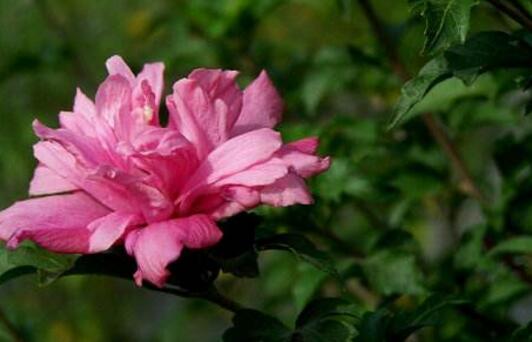
To solve the problem of leaves turning yellow, you must first find the cause of the problem. According to the summary of flower lovers, the main causes of hibiscus leaves turning yellow are: improper watering, too little fertilizing, too strong light, wrong timing for repotting, pests and diseases, and the solutions are as follows.
1. Improper watering
Hibiscus needs enough water to grow, but its water requirements are not high. If you water too little, drought yellowing will occur, and if you water too much, water yellowing will occur, so improper watering should be avoided when growing it.
[Solution]: When watering, just make sure the soil is not dry, do not let water accumulate around the roots, and do not go a long time without watering. For the specific watering method, you can refer to the detailed introduction in how to water hibiscus.
2. Too little fertilizing
Too little fertilizing or a lack of nitrogen fertilizer in the fertilizer will cause leaves to turn yellow, and if the concentration is too high or the frequency is too great when fertilizing, it will also cause the same situation, so when fertilizing you should apply thin fertilizer frequently.
[Solution]: What to do when hibiscus leaves turn yellow due to too little fertilizing? Apply nitrogen fertilizer, once every 15-20 days, and water appropriately after fertilizing. Nitrogen fertilizer can promote leaf growth and make the leaves greener.
3. Too strong light
Hibiscus can grow in a full-light environment and is also fairly shade-tolerant, but if it is not shaded when the light is too strong in summer, the leaves will be scorched, thus turning yellow.
[Solution]: Move the hibiscus back to a cool place for care, or shade it slightly, blocking out more than 50% of the light, then spray an appropriate amount of water on the leaf surface, which can prevent other leaves from continuing to turn yellow.
4. Wrong timing for repotting
When growing hibiscus, we have emphasized that the potting soil should be changed once every 1-2 years, but the repotting time should be chosen before spring sprouting, not during the flowering period or in winter, otherwise the leaves will turn yellow due to the sudden environmental change.
[Solution]: Learn the correct repotting time for hibiscus. When repotting, make sure the roots are not damaged. After repotting, water thoroughly and place it in a suitable environment for care, so that it can smoothly pass through the seedling recovery period.
5. Pests and diseases
Pests and diseases usually occur on the branches and leaves, because many pests feed on leaf tissue and sap, so when pests and diseases appear, yellowing leaves are the most obvious feature.
[Solution]: Take preventive measures when growing it, such as keeping the environment clean and ventilated to reduce the occurrence of pests and diseases, and when pests and diseases appear, spray pesticides to treat them.
How to prevent and treat diseases and insects in flower care
How to prevent and treat diseases and insects in flower care
Flowers, like people, can also get sick. For example, not adapting to the environment, too much or too little water and fertilizer, high or low temperatures, and invasion by bacteria or viruses can all make flowers sick.
Only by understanding the symptoms can you treat the root cause. Let us first understand common flower diseases:
1. Classification of flower diseases and control measures
Flower diseases are generally divided into two major categories: infectious diseases and non-infectious diseases.
(1) Infectious diseases: Infectious diseases are caused by pathogenic organisms and are contagious. Among flower diseases, infectious diseases have the largest number of types. According to the types of pathogenic organisms, they are divided into the following categories:
① Fungal diseases: Flower diseases caused by fungi account for the vast majority. The diseases caused by fungi mainly include the following.
A. Powdery mildew: The pathogen grows on buds or tender shoots. The damaged leaves and tender shoots will gradually curl and shrink, and the flower buds will become deformed and bent, unable to open normally. The pathogen spores spread with the wind. When there is insufficient light, poor ventilation, relatively high humidity, and a day-night temperature difference of HTC, this pathogen will rapidly break out over a large area. For example, Chinese rose, fuchsia, plum blossom, impatiens, cineraria, dahlia and others are all prone to powdery mildew.
This pathogen usually appears easily in early spring or early autumn. Pay attention to the ventilation of the flowers. If the branches and leaves of the flowers are too dense, thin and prune the branches and leaves to ensure good ventilation. Keep the temperature difference from becoming too large. Of course, you can also spray the flowers before the disease occurs, for example, spray 50% thiophanate 1000 times solution, 50% carbendazim or triadimefon 500 times solution for prevention, and during the susceptible period insist on spraying once about every 10 days.
B. Black spot and brown spot: This virus is a common disease easily caught by flowers. The pathogen lurks in the soil for a long time. In seasons of high temperature accompanied by high humidity, with rain or water splashing, the pathogen invades the lower leaves and causes disease, then rapidly spreads upward. The damaged leaves will show small black spots, which gradually expand into round or oval shapes and merge into patches. The diseased leaves turn yellow and wither until they fall off. This disease usually develops rapidly during the rainy season in July to August. Flowers such as Chinese rose, chrysanthemum, peony, and geranium often suffer from this disease.
Brown spot is similar to black spot, with oval or irregular brown or dark brown spots and unclear outlines. The disease process is the same as black spot.
For spot diseases such as black spot and brown spot, prevention should be carried out early. For example, when preparing the growing soil, you can mix in an appropriate amount of fungicides such as amobam to disinfect the soil. In daily care, promptly prune thin, weak, and messy branches and leaves close to the soil, keep the branches and leaves ventilated and exposed to light, and spray pesticides such as thiophanate on the front and back of the leaves. In rainy seasons, you can spray 1000 times amobam solution on the lower part of the plant and the soil surface of the pot for prevention. If lower leaves show mud stains, they should be cleaned promptly and sprayed with pesticide.
C. Gray mold: The damaged petals will show water-soaked spots and continuously expand and soft rot. When the pathogen falls on the leaves, it will immediately cause the leaves to become diseased, and the leaves will gradually rot. A relatively large day-night temperature difference,
too high humidity, poor ventilation, and insufficient light can all easily cause this disease. In particular, flowers such as hibiscus, geranium, cineraria, and cyclamen are easily harmed by this disease.
Promptly thin and prune branches and leaves to help the flowers ventilate, and often let them receive sunlight. Likewise, during the peak period of the pathogen, spray pesticides such as 75% chlorothalonil 500 times solution on the plants for control.
D. Damping-off: This disease often breaks out during the seedling stage of flowers, and infected seedlings will die in patches. This pathogen often lives on the soil surface and infects from the root crown of the seedlings. Diseased seedlings often show three symptoms: rot, damping-off, and damping-off. Usually about 20 days after the seedlings emerge is the most susceptible period. Flower damping-off often occurs in various pine and cypress seedlings, China aster, dianthus, gladiolus, begonia, and scutellaria.
To prevent flowers from suffering from this disease, the main thing is to disinfect the soil. You can use quintozene and formalin for disinfection. For each square meter, 8 grams of quintozene can be made into medicinal soil and spread over the soil surface about 1 cm; you can also use 40% formalin 50 grams added to 10 kg of water, pour it over 1 sq m of substrate, then cover it with straw mats for 7-10 days, and then you can raise seedlings. For a small amount of pot sowing and seedling raising, you can choose plain sand and new clay pots. Before putting the soil into pots, expose the soil to the sun until dry or pour boiling water through it to disinfect the soil.
When the seedlings have emerged for about 20 days, strictly control watering. Usually, before sowing, the growing soil should be watered sufficiently, and after sowing, do not water for the time being. This prevents excessive humidity that easily causes disease. Then also ventilate the seedlings more. After the seedlings emerge, spray 0.5% ferrous sulfate, 1% Bordeaux mixture, or 50% amobam 200 times solution to eliminate pathogens on the soil surface and protect the seedlings.
If individual seedlings are found to be diseased, immediately pull them out and spray pesticide for protection to prevent the pathogen from spreading.
E. Southern blight. It often occurs at the root crown near the ground. In the early stage, the diseased part will produce water-soaked purplish-brown spots, then spread and expand, and the leaf base will gradually rot. An obvious white mycelial layer will appear on the diseased part and nearby soil, along with many sclerotia the size of rapeseeds, initially white, then gradually turning yellow and brown, and the plant slowly dies. Flowers such as clivia, orchid, peony, and Chinese peony often get this disease.
This pathogen can survive in the soil for a long time. When conditions are suitable, the hyphae of the pathogen invade from the root crown or roots of the flower plant, and disease occurs in about a week. High temperature and humidity, water accumulation in the soil, and poor ventilation and light transmission will cause this disease and make it easy to spread rapidly.
To prevent the outbreak of this pathogen, pay attention in daily flower management to watering appropriately, fertilizing reasonably, and not planting too deep; disinfect the soil, and disinfect seedlings with formalin before planting; if diseased plants are found, promptly cut off the diseased parts and replant.
② Bacterial diseases: Bacterial diseases mostly invade from the stomata, lenticels, or wounds of the plant. The main symptoms are as follows:
A. Soft rot. The affected parts of the plant will show soft rot, and the rotten tissue is sticky and foul-smelling. Flowers such as cyclamen and clivia are often infected by this disease.
This pathogen has a wide host range and strong saprophytic ability. It survives for a long time in diseased plant residues, soil, and compost, and spreads through soil, water flow, tools, insects, and contact between diseased and healthy plants. Bacteria mostly invade through wounds and cause disease rapidly. It is most likely to break out during high temperature and high humidity in July to August each year.
To prevent this disease, pay attention to the ventilation of flowers in hot seasons, avoid rain soaking, do not water onto the top of tubers, prevent artificial wounds when transplanting and moving, and avoid insect damage. If diseased leaves or plants are found, promptly pull them out and burn them, replace the soil, and disinfect other healthy plants. In the early stage of the disease, immediately spray or drench with 400 micrograms of streptomycin or oxytetracycline solution.
B. Crown gall. Plants infected with bacteria will produce swellings of varying sizes on the root crown, stem, and other parts. At first they are colored and elastic, then gradually harden and become woody, and the surface becomes rough. This disease often occurs on flowering plants such as Chinese rose, cherry blossom, ornamental peach, and plum blossom.
This pathogen overwinters in galls or soil and invades plants through graft unions, insect wounds, and so on. The incidence rate is relatively high in moist, slightly alkaline soil.
To prevent this disease, disinfect the soil when planting. After the disease occurs, immediately cut off the galls of the plant and apply alcohol to the wounds for disinfection.
③ Root-knot nematode disease. When a plant is infected with this disease, round small gall-like root knots will form on its branch roots or lateral roots, either singly or in strings. At first the root knots are yellow-white, then gradually turn brown, and the surface becomes rough or even rotten and broken, with white granular female adults inside the small galls. After infection, the plant grows slowly or stops growing, becomes stunted, and the leaves turn yellow or even die. Cyclamen, dahlia, snapdragon, impatiens, salvia and others are easily infected by this bacteria.
Root-knot nematodes overwinter in the soil, and diseased soil and diseased plant residues are the main sources of infection. After larvae invade young roots, they become fixed and parasitic and form root knots. The larvae develop and mature inside the root knots, and the adults mate and lay eggs. It generally completes 1 generation in 30-50 days, with multiple generations occurring in one year. Plants growing in high-temperature, humid sandy loam are most easily infected with this disease.
To prevent and control this disease, do a good job of cleaning and disinfecting the soil. For potting soil disinfection, you can also use 3% carbofuran granules, 15% aldicarb granules, dazomet, cadusafos, and so on.
④ Viral diseases. Diseased plants will show various symptoms such as mosaic, chlorosis, streak, ring spot, necrosis, flower breaking, stunting, and deformity. Many flowers such as carnation, canna, chrysanthemum, lily, and tulip are easily infected.
Most viruses are transmitted by aphids, leafhoppers, planthoppers, and so on. Grafting and cutting propagation are also effective modes of transmission. In addition, contact between diseased plants and healthy plants can also easily cause cross-infection.
If diseased plants are found, promptly pull them out and burn them, and pay attention to pest control.
(2) Non-infectious diseases: Non-infectious diseases are also called physiological diseases, mainly caused by flowers not adapting to the surrounding environmental conditions. The non-infectious diseases commonly occurring in flowers mainly include the following:
① Plant disease caused by the lack of certain nutrient elements during plant growth. For example, iron-deficiency chlorosis.
In the early stage of iron-deficiency chlorosis, the leaf mesophyll will fade and turn yellow, while the veins remain green, forming a net-like vein pattern. As the condition worsens day by day, the whole leaf will turn yellow and fall off, affecting growth. For example, azalea, camellia, orchid tree, orchid, jasmine, gardenia and other flowers are prone to this disease.
Generally, this disease is most likely to occur in southern flowers grown in the north, because the soil in northern regions is slightly alkaline, generally with a pH between 7.5-8.5. The soil lacks soluble ferrous iron, and the plant cannot synthesize chlorophyll due to iron deficiency, so the disease occurs. The water quality in northern regions is slightly alkaline, and even with an acidic growing substrate, chlorosis is easily caused over time.
chlorosis.
To prevent and control this disease, you can apply alum fertilizer water. Choose 2.5-3 kg of black alum, 5-7 kg of cake fertilizer, 0-5 kg of manure, add 200-250 kg of water, and after fermenting for one month, take some out and then water the flowers after diluting it 1 time. You can also ferment a certain amount according to this ratio as appropriate. You can also spray vinegar solution. You can spray vinegar solution at a ratio of 1:250-1:300, once every 10 days, for 3-4 consecutive sprays.
② Disease caused by the plant not adapting to light, such as sunscald. Some shade-loving flowers often develop this disease because they are exposed to sunlight and the tissue of the tender leaves is killed by the sunlight. For example, orchid, clivia, camellia, ferns, and Philodendron foliage plants are prone to this disease.
After the plant becomes diseased, the leaf surface will lose its luster and become rough. Sometimes the light-facing side of the leaves will form chlorotic yellow-brown or yellow-white dead spots, and in severe cases the leaf margins and leaf tips will turn white and scorched.
Understand the habits of various flowers. For shade-loving plants, move them frequently and place them in shaded places, avoiding direct sunlight.
③ Excess salt toxicity. Also called alkali damage, it is the harm to plants when there are too many salts in the soil, especially easily soluble salts such as sodium chloride, sodium carbonate, and sodium sulfate. After the plant is harmed, sprouting is blocked and slowed, young plants grow thin and sickly, leaves become chlorotic, and they cannot reach the mature state of flowering and fruiting.
Use fresh water to wash the salts out of the soil and make it less saline. Cultivate and loosen the soil and apply more organic fertilizer to improve soil structure and accelerate soil desalination.
④ Affected by temperature, some flowers will become diseased because they cannot adapt to the temperature. For example, when the temperature is too high, photosynthesis in some plants will be hindered, chlorophyll will be destroyed, dead spots will appear on the leaves, the leaf color will turn brown and yellow, and abnormal physiological phenomena such as premature aging, abnormal gametes, and dropping of inflorescences or ovaries will also occur. Some plants will also show heat ulcers at the stem base, rotting of the plant root system, or wilting of the aboveground parts. Too low a temperature easily brings freezing damage to flowers. After plants are frozen, woody plants show bud blight and top dieback, with withering from the top downward, bark cracking, gum exudation, and leaf drop; some plants show water-soaked lesions on the tender stems or young leaves of the damaged parts, which later turn brown and finally the tissue dies; some whole plants turn black, dry up, and die.
In autumn and winter, pay attention to keeping plants warm. If freezing damage occurs, promptly cut off the frozen tissue to prevent the frozen area from rotting and affecting other healthy tissue.
⑤ Pesticide damage. Pesticide damage to flowers is caused by improper use of chemical agents. If too much arsenic preparation, Bordeaux mixture, or lime sulfur mixture is sprayed, plants will show burn spots or streaks on the leaf surface or at the base of the leaf stalk 2-5 days after spraying, with symptoms such as yellowing, deformation, wilting, and falling of leaves. Therefore, when spraying pesticides on plants, be sure to pay attention to the concentration. Try not to make it too strong; you can use a low concentration and spray several more times.
⑥ Environmental pollution. For example, if there is a lot of sulfur dioxide in the air, it will destroy the chloroplasts of the plant's palisade cells, then destroy the cell structure of the spongy tissue, causing cells to shrink and disintegrate, and the flowers will wilt as a result; some will show dark green water-soaked spots that further develop into necrotic spots. Some plants are also relatively sensitive to fluoride. Fluoride combines with calcium to form insoluble substances, causing calcium deficiency in plants. The leaf tips and leaf margins of the plant will show red-brown patches or streaks, and the veins will also be red-brown. Finally, the damaged parts will gradually necrose, break apart, and fall off. When plants show certain symptoms, you might consider whether they are caused by severe air pollution. Based on this, you can also judge air quality, actively grow other plants, or use other means to improve the air at home.
2. Flower pests and their control
Pests are mainly divided into two types:
(1) Chewing pests: For example, caterpillars, nettle moths, longhorn beetles, and white grubs (scarab beetle larvae) all belong to this category. These pests cut or perforate the roots, stems, leaves, flowers, fruits, and other parts of the plant.
At this time, stomach poisons and contact insecticides such as deltamethrin, trichlorfon, and phoxim can be used to kill the pests.
(2) Sucking pests: For example, aphids, scale insects, and red spiders (mites). These pests use their mouthparts to pierce into the plant body and suck sap. These pests cause symptoms such as spots, shrinkage, and discoloration on the stems and leaves of the plant. At this time, contact and systemic pesticides can be used for control, such as dimethoate and propargite.
Scale insects are a relatively common pest, often harming sago palm,
areca palm, Michelia alba, osmanthus, camellia, banana shrub, orange jasmine, banyan, elm, Fujian tea, and bamboo palm. They occur severely in environments with high planting density and high shade. If not controlled in time, they can easily cause leaf drop, dead branches, and even plant death. To eliminate these pests, you can choose profenofos and omethoate for control, and for mites use pyridaben, propargite, amitraz, and so on.
There are many types of flowers harmed by mites, commonly including citrus, elm, marigold, Chinese rose, rose, sago palm, and bamboos. Autumn is the peak period of mite damage, and corresponding pesticides must be used promptly for control.
When caring for flowers, pay attention to preventing pests in advance.
(1) For example, promptly clean up diseased and residual branches and leaves in pots, keep the pot clean, and use clean water sources to water the flowers.
(2) After pests occur, treat the root cause. Discover pests in time, then buy the corresponding insecticide and spray pesticide on the plants to kill the pests. In addition, methods such as pesticide drenching and mud paste coating can also be used for pest control.
3. Homemade pest and disease control preparations for the home
The following introduces some household-prepared pesticides that can prevent and control pests and diseases without polluting the environment, and the materials are easy to obtain and the operation is simple. You might as well try them.
(1) Ginkgo. Mash ginkgo and then add an equal amount of water, filter to obtain the stock solution. When using, take the stock solution, add one more time the amount of water to dilute it, put it into a sprayer, and spray the flowers. It can control aphids.
(2) Peach. Add water to peach leaves at a 1:6 weight ratio, boil for 30 minutes, take the filtrate and spray directly. It can control aphids and other mollusks.
(3) Mint. Chop and mash mint, add water at a 1:5 weight ratio, soak for 24 hours, and its filtrate can control leafhoppers and lace bugs.
(4) Chili pepper. Stir chili pepper and water at a 1:10 weight ratio, boil for 30 minutes, take the filtrate and spray. It can control aphids and stink bugs.
(5) Tobacco. Prepare tobacco leaves and water at a 1:10 weight ratio, soak for 24 hours, or boil for 1 hour, take the filtrate and soak through the potting soil to kill ants in the pot; or take the filtrate, add an equal amount of water to dilute it, and add a little soap. It can control aphids, red spiders, thrips, and leafhoppers.
(6) Sichuan pepper. Mix Sichuan pepper and water at a 1:10 weight ratio, boil, divide into 5 parts of stock solution, then dilute with water at a 1:10 volume ratio and spray. It can control whiteflies and aphids.
(7) Hibiscus. Mix hibiscus flowers and water at a 1:10 weight ratio, soak for 24 hours, and its filtrate can control root rot and damping-off.
(8) Ginger. Take ginger, mash it and squeeze the juice, then dilute the juice with water at a 1:20 volume ratio and spray. It can control
rot disease.
(9) Chives. Take chives, mash them, mix in 10 times the amount of water to dilute and spray. It can control rust disease and aphids.
(10) Scallion. Take scallion, mash it, and add water at a 2:1.5 weight ratio, filter and spray. It can control powdery mildew and aphids.
(11) Garlic. Mash garlic, then add an equal amount of water and stir evenly, then add three times the amount of water to dilute and spray. It can control powdery mildew, gray mold, root rot, and also aphids, red spiders, and other mollusks.
(12) Plant ash. Add water to plant ash at a 3:10 weight ratio, soak for 48 hours, clarify, and spray on the plants. It can control aphids and gray mold.
(13) Mosquito coil. Light a mosquito coil containing pyrethrin and place it in the flower pot, then cover the whole pot with plastic to seal it and smoke it for 50-60 minutes. It can kill red spiders.
(14) Essential balm. Add 600 times the amount of water to essential balm to make a solution and spray. It can control aphids and scale
insects, red spiders, and so on.
(15) Laundry detergent. Pour 150 times the amount of water into laundry detergent, stir evenly, or spray once every 5 days for 2-3 consecutive sprays. It can control aphids, red spiders, scale insects, whiteflies, and so on.