How to grow Viburnum macrocephalum? Detailed guide to cultivation methods and precautions for sufficient sunlight
Viburnum macrocephalum is a famous flower unique to China, and is the city flower of Yangzhou, Jiangsu Province. It enjoys the reputation of “only Yangzhou has this flower, none alike in all the world.” Many people in the Yangzhou area grow it, but there are many things to pay attention to when cultivating it. How do you grow Viburnum macrocephalum? What are the cultivation methods and precautions for Viburnum macrocephalum? Let's take a look below.
I. How to grow Viburnum macrocephalum
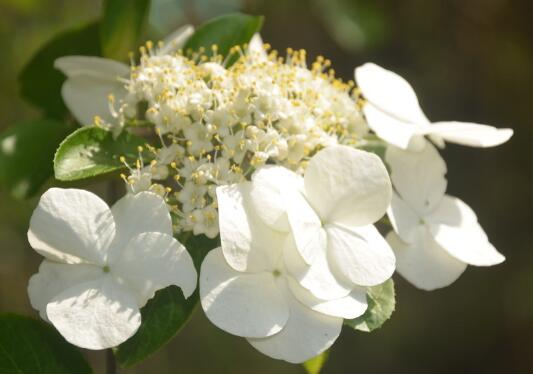
Regarding how to grow Viburnum macrocephalum, we first need to understand its growth habits. Viburnum macrocephalum is a light-loving plant, so during cultivation it needs to maintain sufficient sunlight. In addition, watering and fertilizing also require attention. For specific details, let's continue reading below in the cultivation methods and precautions for Viburnum macrocephalum.
II. Cultivation methods and precautions for Viburnum macrocephalum
1. Soil selection
When growing Viburnum macrocephalum, the first step is to choose the soil. This is the step that lays the foundation, so it is very important. Generally, a sandy soil with high looseness can be chosen. This type of soil has good drainage and aeration, allowing Viburnum macrocephalum to better absorb nutrients.
2. Fertilization management
During the growth process of Viburnum macrocephalum, the demand for fertilizer is very high. This is one of the main nutrients in its growth process. Basically, it needs to be fertilized once a month. This allows Viburnum macrocephalum to grow more robustly. This shows the importance of fertilization in the cultivation methods and precautions for Viburnum macrocephalum.
3. Watering management
Viburnum macrocephalum likes a warm and humid environment, so during cultivation it must be watered frequently. However, the amount of water should be noted. When watering, make sure to water thoroughly, but do not water too much, otherwise water accumulation can easily cause root rot.
4. Light management
In the cultivation methods and precautions for Viburnum macrocephalum, light is a very important point. Viburnum macrocephalum is a light-loving plant, so during cultivation it must maintain sufficient sunlight. However, when the sunlight is too intense, shade is still needed. Especially in summer, shade is still required.
5. Pest and disease control
During the cultivation of Viburnum macrocephalum, if care is improper, problems such as pests and diseases are very likely to occur. Such problems are extremely harmful to Viburnum macrocephalum. If not handled in time, they can easily cause the plant to wither and die. For methods to deal with such problems, you can refer to the article on pest and disease control for Viburnum macrocephalum, which has detailed teaching. You can take a look.
Cultivation methods and precautions for Cymbidium hybridum, Cymbidium hybridum pictures
Cymbidium hybridum is also called Cymbidium, with upright flower stems, huge blooms, dignified form, and spectacular momentum, and is highly favored by people. So how do you grow Cymbidium hybridum? What needs attention during cultivation? Let's take a look at the cultivation methods and precautions for Cymbidium hybridum.
Cymbidium hybridum pictures
I. Cultivation methods for Cymbidium hybridum
1. Selection of growing medium and pot: It is advisable to choose a tall cylindrical pot with many holes at the bottom and on all four walls. The growing medium should be bark chunks or fern roots with good aeration and water permeability. Charcoal, ceramsite, and similar materials should be added to the lower part of the pot to facilitate drainage.
2. Fertilization and watering: After division and planting, it should not be watered immediately. If dryness is found, water can be sprayed on the leaves and the pot surface to prevent the leaves from drying out, falling off, and the pseudobulbs from shrinking. Watering can only be done after new buds and new roots grow out. During cultivation, watering should depend on the weather and the dry-wet conditions. During the vigorous growth period, sufficient water should be supplied to the plant, and in dry and hot seasons, timely watering is needed. When the winter temperature is low, the frequency of watering can be reduced. The pH of the water used for watering is best at 6.5. Cymbidium hybridum prefers fertilizer. After new buds grow in spring, a compound fertilizer mainly of nitrogen with a concentration of 0.1%-0.2% should be applied once a week, or diluted decomposed cake fertilizer water. During the bud differentiation stage, quick-acting phosphorus and potassium fertilizers should be applied additionally in advance.
3. Light and ventilation: Direct sunlight should be avoided; sufficient scattered light is needed. Under strong summer light, about 50% shading is needed. In autumn, sunlight can be slightly more - this is beneficial for flower bud formation and overwintering. In winter, it can be placed in a greenhouse with light. In areas of southern China with strong sunlight and high temperatures, it should be cultivated under a shade shed year-round. To facilitate ventilation, it should be placed on racks and not too densely.
4. Temperature and humidity: During the day, 25°C; at night, 10°C is good. If the nighttime temperature is higher than 20°C, it will cause flower buds to wither or affect flowering. In winter, the temperature should not be lower than 5°C, but also should not be higher than 15°C, otherwise the flower buds will suddenly elongate. In addition, in summer and when the climate is dry, water should often be sprayed on the leaves, ground, and racks. At the same time, attention should be paid to controlling various pests and diseases.
Cymbidium hybridum pictures
II. Precautions for growing Cymbidium hybridum
1. Fertilization: The fertilizer composition and content differ between the growth period and the forcing period of Cymbidium hybridum, and cannot be generalized. During the growth period, fertilizer mixed with nitrogen, phosphorus, and potassium in equal proportions should be applied, while during the forcing period, the content of phosphorus and potassium should be appropriately increased, generally at a ratio of 1:2:2. The pH of the fertilizer should also be strictly controlled, generally between 5.8 and 6.2. If the target of fertilization is small seedlings, the fertilizer concentration should be controlled at 3500 to 4000 times, and for medium and large seedlings, the concentration should be lowered, roughly around 2000 to 3500 times. Except in summer, fertilize generally once every three days; in summer's high temperatures, maintaining 1-2 times a month is sufficient.
2. Organic fertilizer: If the plant is in the tissue culture stage, organic fertilizer should also be applied once a month. Its composition is soybean cake and bone meal from the growth period mixed at a ratio of 2:1.
3. Watering: Watering and fertilizing are generally used alternately. In May and September, watering is generally once a day. During the high-temperature summer months of July to August, it is twice a day. After entering autumn and entering the flowering period, watering once every 2-3 days is sufficient.
Cymbidium hybridum pictures
The above isthe cultivation methods and precautions for Cymbidium hybridumshared. After reading it, everyone surely has no more questions abouthow to grow Cymbidium hybridumYou might as well try growing a pot at home.
Recommended reading:
①How to grow Aglaia odorata, precautions for growing Aglaia odorata
②How to grow Magnolia denudata, cultivation methods for Magnolia denudata
③Cultivation methods and precautions for Viburnum macrocephalum
④How to grow Campsis grandiflora, cultivation methods and propagation techniques for Campsis grandiflora
⑤How to grow Albizia julibrissin, cultivation methods for Albizia julibrissin
Cultivation methods and precautions for Hydrangea macrophylla
The growing soil for Hydrangea macrophylla is best as loose, fertile, and well-drained sandy loam. The suitable growth temperature is 18-28°C. The potting soil should be kept moist, but watering should not be excessive. Usually, cultivation should avoid blazing sunlight. The flowering period is June to July. Fertilize once every half month. After flowering, attention should be paid to removing the flower stems. Note that it should be moved indoors in early to mid-October, watering should be controlled. During the growth period, pinching can generally be done twice to promote branching. Many people like Hydrangea macrophylla very much. It is rich in color, pleasing to the eye, and has high ornamental value. Below, we will introduce the cultivation methods and precautions for Hydrangea macrophylla.
Cultivation methods for Hydrangea macrophylla
1. Soil
The planting soil for Hydrangea macrophylla is best as loose, fertile, and well-drained sandy loam. However, flower color is affected by soil pH. In acidic soil, the flowers are blue, and in alkaline soil, the flowers are red.
2. Temperature
The suitable growth temperature for Hydrangea macrophylla is 18-28°C, and the winter temperature should not be lower than 5°C. Flower bud differentiation requires 6-8 weeks at 5-7°C. A temperature of 20°C can promote flowering. After the flowers appear, maintaining 16°C can extend the viewing period. Note that high temperatures make the flowers fade quickly.
3. Watering
The potting soil for growing Hydrangea macrophylla should be kept moist, but watering should not be excessive. Especially in the rainy season, attention should be paid to drainage to prevent waterlogging causing root rot. In winter, indoor potted plants are better kept slightly dry. If too humid, the leaves are prone to rot.
4. Light
Hydrangea macrophylla is a short-day plant. Usually, cultivation should avoid blazing sunlight, and 60%-70% shading is ideal. When the light is too strong in midsummer, appropriate shading can extend the viewing period.
5. Fertilization
The flowering period of Hydrangea macrophylla is June to July. During the flowering period, fertilizer and water should be sufficient, fertilizing once every half month.
6. Pruning
After Hydrangea macrophylla blooms, attention should be paid to removing the flower stems to promote the production of new branches. Proper pruning can maintain a beautiful plant shape.
7. Pests
Hydrangea macrophylla mainly has wilt disease, powdery mildew, and leaf spot disease. Spray 65% zineb wettable powder at 600 times dilution for control. Pests include aphids and mirids, which can be killed by spraying 40% omethoate emulsifiable concentrate at 1500 times dilution.
Precautions for growing Hydrangea macrophylla
(1) Hydrangea macrophylla likes acidic soil and cannot tolerate barren or saline-alkaline soil. It grows poorly in alkaline soil, with yellowing branches and leaves. It is suitable for loose, fertile, humus-rich acidic soil. Its flower color, affected by pH, can change from white to red, and from red to blue.
(2) Move it indoors in early to mid-October, control watering, and keep the room temperature at around 5°C to promote dormancy. Before moving indoors, remove the leaves to prevent leaf rot. From mid-December, move it to a sunny place and maintain a temperature of 15-20°C to promote the growth of branches and leaves. Move it outdoors in late April of the following year.
(3) During a one-year growth period, pinching can generally be done twice to promote branching. After flowering, keep 1-2 nodes on the old branches and cut them short to control plant height and promote new branches. After autumn, cut off the tops of new shoots to stop branch growth and facilitate overwintering.
(4) Seedlings cuttings in March can be moved into 10 cm pots after rooting, and then planted in 16 cm pots in mid-June. Do the first pinching in June. If pinching is done in early June, flower buds can form in mid-August. Cuttings taken in May to June can be planted in 16 cm pots in July to August. To promote flower bud formation in the same year, the last pinching must be done before September, otherwise flower buds cannot form that year.
Finally, let's look at the propagation methods for Hydrangea macrophylla.
Commonly used methods are cuttings, division, layering, and grafting, with cuttings as the main method. During the plum rain period, select robust young branches from a young mother plant as cuttings. The base of the cutting needs to have a node and be dipped in mud slurry. The length is about 20 cm, and the lower leaves should be removed. The suitable temperature for cuttings is 13-18°C. After cutting, shade is needed, and moisture should be maintained frequently. Rooting occurs in about 15 days to 1 month. After surviving, it can be transplanted in the second year. Division propagation is suitable before budding in early spring. Separate the rooted branches from the mother plant and pot them directly. Watering should not be excessive. Care for them in semi-shade, and after new buds sprout, switch to normal care. Layering propagation can be done when buds sprout. Growth occurs after 30 days. In the following spring, cut it off from the mother plant, transplant with soil, and it can bloom that year. Generally, air layering is done in March-April in spring, rooting occurs in June-July, and it can be cut off and planted separately that year. For grafting propagation, use Viburnum macrocephalum seedlings as rootstock. Cut grafting in spring makes it easy to survive. Transplanting is suitable after leaf fall or before budding, and the original soil should be kept. The main branches are prone to sprouting vigorous water shoots, so proper pruning is needed after flowering to tidy the tree shape.
Hydrangea macrophylla does not like sunlight and is a shade-tolerant flowering shrub. It can be grown in pots and placed in halls, studies, and other places as indoor ornamental plants. The cultivation methods and precautions for Hydrangea macrophylla are shared here with everyone.