How to fertilize Gerbera daisies? The method of fertilizing once a week in spring
Gerbera daisy, also known as Barberton daisy and Transvaal daisy, has beautiful flower shapes and rich colors, including red, white, yellow, orange, purple and so on, and has high ornamental value. However, although the Gerbera daisy is easy to grow, if you want to grow it well, it takes quite a bit of effort, such as proper fertilization. So how do you fertilize a Gerbera daisy? What fertilizer should you use? Below, the editor brings you the fertilization methods for Gerbera daisies.
I. How to fertilize Gerbera daisies, timing/methods
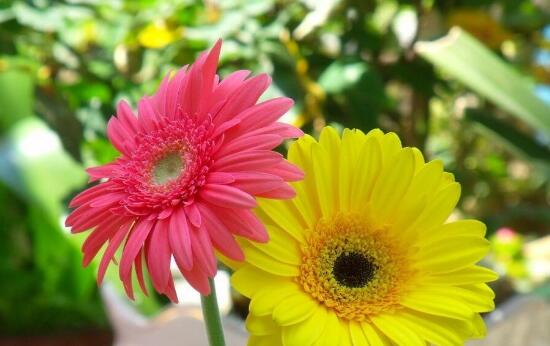
In the cultivation methods for Gerbera daisies, it was once mentioned that the Gerbera daisy is a flowering plant that loves fertilizer, and especially during the growing period, it needs a lot of fertilizer. But when fertilizing Gerbera daisies, one thing is very troublesome, which is that you cannot fertilize too much, otherwise it is easy to cause root rot, leading to phenomena such as yellowing leaves on the Gerbera daisy, seriously affecting the plant's ornamental value. As for how to fertilize Gerbera daisies, both timing and method are very important. Let's continue reading below.
II. Fertilization methods for Gerbera daisies
1. Timing and frequency of fertilization
How to fertilize Gerbera daisies: first you must master the timing and frequency, otherwise it is easy to end up fertilizing too much or too little. Gerbera daisies love fertilizer, and normally they tend to favor potassium fertilizer, with a fertilizing interval of once every 5-6 days, or once every 10 days. However, there are two points about the timing of fertilization that need attention:
① Generally, when the temperature is particularly high, you need to be careful with fertilization, because at this time the Gerbera daisy is in a dormant state, so fertilization must be stopped at this time, otherwise the plant will not only fail to grow, but will also have the opposite effect.
② Fertilization must be stopped at high temperatures, and attention must also be paid in winter when the temperature is relatively low, because if the temperature is too low, the Gerbera daisy is also prone to dormancy, so fertilization must also be stopped at this time. At other times, normal fertilization can be carried out.
2. Fertilization methods
Fertilizing Gerbera daisies requires attention to method. For example, before fertilizing, you should first loosen the soil appropriately, so that after fertilizing, the plant's roots can absorb it more easily and growth will naturally be better. There is also one thing to note when fertilizing: never sprinkle fertilizer on the leaves, otherwise it will easily burn the leaves, so you must remember this when fertilizing.
In addition, in different seasons, the frequency of fertilizing Gerbera daisies should also change accordingly. Gerbera daisies have a great demand for fertilizer, and fertilization should be light and frequent. Fertilize once a week in spring, and fertilize less in summer and winter, once every half a month is enough.
3. What kind of fertilizer is suitable
Gerbera daisies love fertilizer, especially during the growing period, and their demand for fertilizer is particularly great. Generally, we apply nitrogen fertilizer, phosphorus fertilizer and potassium fertilizer to them. The fertilization ratio for Gerbera daisies should be controlled at 15:18:25, which can maintain a balanced fertilizer supply, better provide the nutrients needed for growth, and also help it resist diseases well and improve its photosynthetic efficiency.
After following the above methods, the Gerbera daisy will bloom more beautiful flowers, and it is also very nice to admire. Therefore, when choosing fertilizer for Gerbera daisies, you must also pay attention, otherwise if it is unsuitable, the Gerbera daisy will not be able to grow well, which will have the opposite effect. So choosing the right fertilizer is also very important.
Overall, the Gerbera daisy is a plant with a relatively high fertilizer demand. We should fertilize selectively according to the different growth stages of the Gerbera daisy, so that we can grow beautiful Gerbera daisies. As for the fertilization methods for Gerbera daisies, the editor has introduced them here, hoping to be of help to everyone.
How to grow Barberton daisy/Gerbera daisy, cultivation methods and precautions for potted Gerbera daisies
Gerbera daisy, also known as Barberton daisy, has large flowers and brilliant colors. It is a very famous and very elegant flower, often used as material for flower arrangements and dried flowers. In daily life, many flower lovers like to grow Gerbera daisies themselves. So how do you grow Gerbera daisies? Below are the cultivation methods and precautions for Gerbera daisies carefully selected by the editor. They are very comprehensive, and those who want to grow them should definitely take a look~
I. How to grow Gerbera daisies, understand their habits
Indoor cultivation is not like the wild; everything needs to be created by ourselves. So for how to grow Gerbera daisies, we first need to understand their growth habits, and then create an environment favorable for their growth. In this regard, the editor will bring you the cultivation methods and precautions for Gerbera daisies from aspects such as soil, light, temperature, watering, fertilization and pruning. Let's continue reading below.
II. Cultivation methods and precautions for potted Gerbera daisies
1. Soil, slightly acidic
For how to grow potted Gerbera daisies, the first thing is naturally choosing soil. Whether you are growing them yourself or repotting them, the choice of soil is very important. According to the growth habits of the Gerbera daisy, you should choose loose, fertile, well-drained, slightly acidic soil.
Pot soil selection: the pot does not need to be too large; 12-18cm is suitable for Gerbera daisies; for soil, you can use a mix made of 2 parts peat and 1 part perlite. Commercially available culture soil with peat as the main ingredient is also fine, such as Cuiyun and others.
2. Light, full sun in winter
In the cultivation process of Gerbera daisies, we need to give them sufficient light. Because Gerbera daisies love light and have relatively high light requirements, when there is no shortage of water, the more they are exposed to sun, the stronger they become, growing quickly and blooming more.
Precautions: you must give Gerbera daisies sufficient light. When light is insufficient, artificial supplementary lighting is needed. In addition, in summer, when the sunlight is too strong, you need to shade the Gerbera daisy from some of the intense sunlight, while in winter, you should try to ensure full sun.
3. Temperature, 20-25°C
In the cultivation methods for Gerbera daisies, temperature is also a point that everyone needs to pay attention to. It is understood that Gerbera daisies are not tolerant of heat or cold. When growing them indoors, it is best to keep the temperature between 20-25°C.
Precautions: in winter, the temperature should not be lower than 10°C, otherwise the Gerbera daisy will stop growing. It is worth mentioning that the extreme tolerance temperature of the Gerbera daisy is 5-40°C, but it cannot last too long. Everyone must pay attention to this point.
4. Watering
How to grow Gerbera daisies: watering is naturally indispensable. It is understood that Gerbera daisies like a moist environment. During the growing period, we must ensure a sufficient water supply. In summer, when the temperature is high, you can water lightly and frequently; in winter, when the temperature is low, the watering interval can be longer.
Watering timing: you can often touch the leaves of the Gerbera daisy with your hand. If they are firm, water is not needed; when they are slightly soft but not wilted, that is the best time to water.
Precautions: when watering Gerbera daisies, do not choose noon; it is best to arrange it in the morning or evening. In addition, be careful not to water in the center of the leaves.
5. Fertilization
After watering, let's talk about fertilization, which is also very important in the cultivation methods for Gerbera daisies. It is understood that Gerbera daisies have a great demand for fertilizer, and fertilization should be light and frequent. Fertilize once a week in spring, and fertilize less in summer and winter, once every half a month is enough.
Precautions: when the temperature is too high or too low, you should stop fertilizing. In addition, fertilizing Gerbera daisies should be sufficient and balanced. Like other herbaceous plants, if you want them to grow strong, use a fertilizer with balanced nitrogen, phosphorus and potassium. As for how to fertilize Gerbera daisies, the specifics were introduced earlier, so I will not say more here.
6. Pruning
The above points must be done in the process of growing Gerbera daisies, and the next points require everyone's special attention, such as pruning and pests and diseases. First is pruning. During the growth process, phenomena such as yellowing or overly dense leaves of the Gerbera daisy may appear. At this time, you should prune appropriately, cutting off yellow leaves, dead leaves and overly dense leaves.
7. Pests and diseases
In the growth process of the Gerbera daisy, due to improper care and various other reasons, it is inevitable that insects and diseases will appear. Among them, diseases include powdery mildew, leaf spot disease, viral disease, etc., and pests include whitefly, cabbage worm and thrips, etc. As for what to do, there is a detailed introduction in the pest and disease control of Gerbera daisies, which everyone can refer to for solutions.
High-yield bag-culture drip irrigation technology for Gerbera daisies
Gerbera daisy, also known as Gerbera, is a perennial evergreen herbaceous flower of the genus Gerbera in the Asteraceae family. Its flowers are large and brightly colored, and it is one of the important cut flower species popular in the world for decades. In recent years, our company has introduced multiple Dutch Gerbera varieties and adopted bag-culture drip irrigation production technology to achieve high yield and excellent quality. The products have been launched on the market and are deeply loved by consumers. The main cultivation techniques are as follows.
I. Cultivation facilities
The Gerbera daisy originated in South Africa and likes a warm climate. The suitable growth temperature is 20—25°C, around 16°C at night, and not lower than 15°C during the flowering period. The safe wintering temperature in winter is below 7°C, and growth stops when it is above 35°C in summer, so in most areas of our country, protected cultivation must be carried out. In the Guangdong region, choosing ordinary film greenhouses (single greenhouse or multi-span), strengthening insulation in winter above 12°C, shading in summer (30%—40%) for cooling, maintaining ventilation, avoiding the accumulation of high-humidity air, and reducing the occurrence of pests and diseases, can allow year-round production of Gerbera daisies. By adopting bag-culture drip irrigation production technology and carrying out dwarfing treatment, potted flowers of excellent quality can be cultivated, with relatively high economic benefits.
II. Planting
1. Substrate: Gerbera daisies like fertile, ventilated, well-drained, humus-rich neutral or slightly acidic (pH 6—6·5) sandy loam. Commonly used substrates include: sandy loam (with an appropriate amount of decomposed base fertilizer added), soil plus peat soil (1:1), peat soil plus river sand (7:3), and peat soil plus perlite or vermiculite (6:4). The cultivation substrate needs to be disinfected before planting. If planting in a seedbed, phoxim plus dexon can be poured on; if planting in seedling bags, the substrate can first be fumigated and disinfected with formalin before use.
2. Cultivation method: Gerbera daisies generally use high beds plus drip irrigation tape for planting, but continuous cropping is taboo, so planting troughs plus drip irrigation or bag-culture drip irrigation are often used. Gerbera tissue culture seedlings grow quickly, and bag-culture drip irrigation planting can harvest cut flowers in the same year, greatly shortening the growth cycle. They can also be potted for sale, significantly improving production economic benefits.
3. Planting out: Gerbera daisies are year-round flowering plants, and the planting time is not limited, but from the perspective of favoring production and sales, it is best to plant in spring, bloom in autumn, and enter the full flowering period from the beginning of winter to before the Spring Festival. Try to avoid planting after August. Gerbera seedlings grow quickly, and it is best to replace them every year to ensure the quantity and quality of flower production. In the seedling bed, wait until the seedlings grow to 5—6 leaves before planting out. Be careful to plant shallowly to avoid poor roots and dead seedlings caused by planting too deep. After planting, water thoroughly and clear away the substrate covering the heart leaves to improve the survival rate.
III. Propagation of seedlings
1. Sexual propagation: seed propagation, seeds can be obtained through hybridization. In the Gerbera inflorescence, the stamens and pistils mature at different times, so artificial pollination is required to obtain seeds. Therefore, through seed propagation, the offspring are relatively easy to segregate. Apart from being used for the propagation of potted varieties, seed propagation methods are generally not directly used for large-scale cut flower production.
2. Asexual propagation
① Division propagation. Strong-growing adult Gerbera plants can be propagated by division, but the propagation coefficient is low, and they are susceptible to pests and diseases. When the number of division propagation generations is high, the seedlings degenerate, seedling quality is unstable, and the commercial rate is reduced, so it is generally used less often.
② Tissue culture. This is currently the main method of Gerbera propagation. Tissue culture seedlings have high seedling quality and fast propagation speed, can be arranged on a year-round plan, and are conducive to commercial production.
IV. Management during the growing period
1. Small seedling stage: after Gerbera seedlings are planted out, shading treatment must be done well. When the weather is dry, drip water frequently to keep the substrate moist, and on the second day after planting, use fungicides such as carbendazim to drench the roots. Observe after 1 week. If new roots have grown, apply nitrogen fertilizer lightly, once a week. Also promptly inspect and replant seedlings, remove dead seedlings, and replace them with healthy small seedlings. Small seedlings grow slowly in the early stage, and after about 4 weeks new leaves can grow.
2. Adult seedling stage: 45 days after planting out, small seedlings enter the vigorous growth period. During this growth period, 1 new leaf can grow every 7—10 days, the root system is well developed, and the ability to absorb fertilizer and water is strong. In fertilizer and water management, a sufficient amount of water must be supplied to keep the substrate moist. Fertilization should mainly be nitrogen fertilizer, with appropriate additional application of phosphorus, potassium and elements such as calcium, magnesium and iron. In summer, high temperatures should avoid strong radiation, and shading treatment is needed, along with spraying water on the leaves to maintain moisture and lower temperature. In winter, it is necessary to control nitrogen fertilizer and water, increase light, and carry out insulation treatment.
3. Flowering period: 3—4 months after planting out, the flowering period begins. In the early flowering stage, due to low nutrient accumulation, the flowers are small and weak, and the commercial rate is low, so it is not suitable to keep the flowers. Flower buds should be removed in time to maintain a balanced nutrient supply for the plant. At the same time, flower leaves, yellow leaves and diseased leaves should also be removed in time to avoid nutrient consumption, prevent branches and leaves from becoming too dense, and affect mid- and late-stage growth. Generally, keeping about 25 leaves per plant is appropriate. In the early flowering stage, heavy fertilizer and heavy water are needed to promote growth and make the stems thick and the flowers strong. Also promptly adjust the ratio of nitrogen, phosphorus and potassium, and increase potassium fertilizer to make the plant strong and store sufficient nutrients. At the same time, pay attention to timely pest and disease control to ensure the yield and quality of year-round flowering.
V. Pest and disease control
When using greenhouse cultivation, due to many years of continuous cropping, if management is improper, the occurrence of pests and diseases will increase year by year, seriously affecting production benefits. In pest and disease control, achieve prevention first and combine it with comprehensive control. In addition to paying attention to good ventilation in the planting environment, greenhouse cleaning and disinfection must be done well every spring to reduce insect sources and diseased plants. The main pests and diseases that generally occur and the control agents are as follows.
1. Pests: Spider mites: this is the pest that poses the greatest threat to Gerbera daisies. They reproduce quickly and are difficult to control. Plants damaged by spider mites have curled and hardened leaves, and flowers cannot open normally. Propargite, dicofol, and isocarbophos can be used alternately for control. Thrips: plants damaged by thrips grow slowly, and petals develop white spots and fade. High-efficiency thrips-aphid clear, thrips spirit and others can be used for control. Leafminers: adults damage leaves and produce small white round feeding spots, and larvae damage leaves and produce white feeding tunnels. Abamectin can be used for control. Aphids: after damage, leaves lose green color and discolor, and their excrement easily causes fungal growth. Aphid-whitefly clear, Shuodan and others can be used for control. Whitefly: this insect reproduces quickly and causes relatively great damage, harming leaves and leaving sooty mold-like material on the leaves. High-efficiency thrips-aphid clear, leafhopper powder, fenpropathrin and others can be used for control.
2. Diseases: Phytophthora blight: this disease is mainly caused by Fusarium invading through wounds on the rhizome and petiole. It is prone to occur when soil moisture is high. When the disease occurs, the leaf stem base turns black and rots, causing the plant to wilt and die. Topsin, dexon and others can be used for root drenching. Neck blight: when the disease occurs, flowers become smaller and deformed, and the top part of the flower stem dries up. Mancozeb or streptomycin can be used for control. Leaf spot disease: affected plants have gray spots or patches on the leaves and flowers. In severe cases, the patches connect into sheets. Diseased leaves can be removed, and Topsin, Pujunke, chlorothalonil and others can be used for control.