How often should you water Iris japonica? Master the watering method of watering thoroughly without waterlogging
When growing Iris japonica, how to water, when to water, what kind of water to use, and so on - these are the questions flower lovers consider when learning how to care for Iris japonica, because too little water will cause poor plant growth, while too much water will lead to root rot. So what is the most scientific way to water Iris japonica? Let's take a look at the watering methods for Iris japonica.
How much water does Iris japonica need
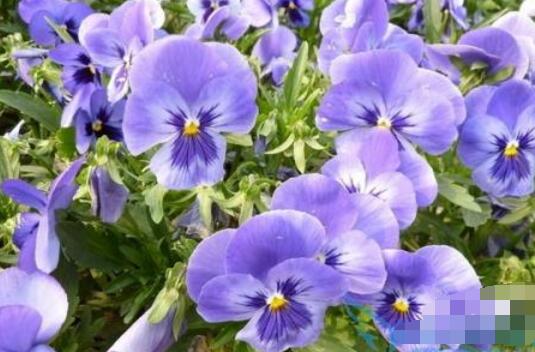
When watering, judge how much water is needed based on the moisture condition of the soil. Make sure both the upper and lower parts of the soil are moist. The way to judge this is to insert a wooden stick into the potting soil and observe the moisture condition of the stick. Make sure to water thoroughly each time, but do not let it become overly wet.
When to water Iris japonica
1. At planting time
After potting up and securing the plant, water once. At this time, do not water too much - just enough to make the soil slightly moist - but note that the watering should be thorough, so that Iris japonica can quickly take root.
2. After planting
Watering after planting is also crucial. How should you water Iris japonica at this time? You should water moderately after planting to keep the soil and the bulb in full contact, so that the bulb can quickly adapt to the potting soil environment.
3. Early spring
As winter transitions into spring, Iris japonica will gradually resume growth. Therefore, in early spring, you need to water with thawing water. When watering, you must water thoroughly, and make sure the water temperature is not too low.
4. Growing season
During the growing season, water once every 7-10 days. The standard is to keep the soil moist. If the soil can be squeezed into a ball by hand and does not crumble when released, it meets the standard. The time for watering should be chosen in the morning.
5. Watering in summer
When watering in summer, you also need to keep the air humidity at 75%-80%. The method is to spray water on the leaves, but do not water too much in summer - generally once every 3-4 days is sufficient.
Precautions for watering Iris japonica
1. Do not overwater
No matter the season or growth stage, you must always be careful not to overwater. The principle is that there should be no water accumulation in the pot and the soil should not be overly wet. If you accidentally water too much, drain it immediately and place the Iris japonica in sunlight for care.
2. Water quality requirements
Iris japonica does not have high requirements for water quality. The tap water we use is very suitable for watering Iris japonica. However, note that the EC value of the water should preferably not exceed 0.5 ms/cm, and the water quality should be kept as clean as possible.
Medicinal herbs around us - the effects and benefits of the pagoda tree, pagoda tree flowers, pagoda tree pods, pagoda tree buds, and pagoda tree branches
Sophora japonica, pagoda tree, pagoda tree stamens, bean pagoda tree, white pagoda tree, fine-leaf pagoda tree, golden medicinal herb, house-guarding tree, home pagoda tree, six-year fragrance, Chinese pagoda tree (photo)|Species name: Sophora japonica
Both Sophora japonica and Platycladus orientalis have become city trees of Beijing, and Sophora japonica is also the city tree of Dalian City, Liaoning Province and Tai'an City, Shandong Province. Names
English name: Flower of Japanese Pagodatree, Pagodatree Flower Bud
Latin scientific name: Sophora japonica Linn.
Chinese aliases: pagoda tree, pagoda tree stamens, bean pagoda tree, white pagoda tree, fine-leaf pagoda tree, golden medicinal herb, house-guarding tree, home pagoda tree, six-year fragrance, Chinese pagoda tree
Name origin: The pagoda tree has pinnate compound leaves with relatively small leaflets, so its crown is dense. The primary lateral branches of the pagoda tree are thick and sturdy, giving the crown a cloud-like appearance. The pagoda tree has rhizobia and sufficient nitrogen nutrition, so the leaves are dark in color, appearing dark green. From a distance, the crown of the pagoda tree looks like a mass of dark green thick clouds. Dark green is a dim color, and thick clouds likewise bring dimness. The pagoda tree's pods are constricted into a bead-like shape, with very thin constricted areas. The pagoda tree pods remain on the tree, and by the next year's rainy season, when rain falls, the constricted areas become soaked by rainwater and break off, falling down. The fruit skin is soaked and rots, exposing the seeds and dyeing the ground beneath the tree's shade dark green. The pagoda tree is prone to aphid damage, and the aphid secretions that fall to the ground also dye the ground black. Beneath the pagoda tree's shade therefore often appears black, which likewise carries the meaning of dimness. Thus, the name "huai" (pagoda tree) derives from "hui" (dimness). The character "huai" is similar in pronunciation to the character "hui", and "huai shu" (pagoda tree) is "hui shu" (dim tree), indicating a type of tree with a dim crown. Because of this characteristic of the pagoda tree, people like to enjoy the cool and gather beneath its shade. In the Han Dynasty, some people therefore believed that "huai means to look and long for - people stand beneath the pagoda tree longing for someone from afar, wishing to discuss matters with them." This is actually a humanistic interpretation of the pagoda tree's naming based merely on observing the phenomenon of people enjoying the cool beneath its shade. Because it is suitable for people to enjoy shade and cool beneath it, the pagoda tree is also a symbol of status and position. According to the Rites of Zhou, Autumn Officials: In the Zhou Dynasty, three pagoda trees were planted outside the palace, and the Three Excellencies stood beneath the pagoda trees when they had an audience with the Son of Heaven. The Three Excellencies refer to the Grand Preceptor, Grand Tutor, and Grand Guardian, which were the collective names of the three highest official positions in the Zhou Dynasty. Later generations therefore used "three pagoda trees" as a metaphor for the Three Excellencies, and it became a symbol of the positions of the Three Excellencies and chief ministers. The pagoda tree thus became a famous cultural tree species in China. Family and genus
Kingdom: Plantae
Division: Magnoliophyta
Class: Magnoliopsida
Order: Fabales
Family: Leguminosae, subfamily Fabaceae (Papilionoideae)
Genus: Sophora
Species: Sophora japonica. DistributionIt is found in many countries, especially in Asia; it was originally more concentrated in northern China, from Liaoning in the north to Guangdong and Taiwan, China in the south, and from Shandong in the east to Gansu, Sichuan, and Yunnan in the west. It commonly grows on the North China Plain and the Loess Plateau at elevations up to 1000 m. Morphological characteristics
Deciduous tree, 15-25 m tall, trunk bark dark gray, young branches green with obvious lenticels. Pinnate compound leaves 15-25 cm long; rachis hairy, enlarged at the base; 9-15 leaflets, ovate-oblong, 2.5-7.5 cm long, 1.5-5 cm wide, apex gradually pointed with a fine protruding tip, base broadly cuneate, grayish-white beneath, sparsely covered with short soft hairs. Panicle terminal; calyx bell-shaped with 5 small teeth; corolla milky white, standard petal broadly heart-shaped with a short claw and purple veins, wing petals and keel petals slightly purple at the margins; 10 stamens, unequal in length. Pod fleshy, bead-like, 2.5-5 cm long, hairless, indehiscent; 1-6 seeds, kidney-shaped. Flowering and fruiting period September-December.
Plants of the same family
(1) Sophora japonica 'Pendula': young branches curved and drooping, crown umbrella-shaped, often planted in gardens.
(2) Purple-flowered pagoda tree: 15-17 leaflets, leaves covered with blue-gray silky short soft hairs; wing petals and keel petals of the flowers often tinged with purple, the latest to bloom.
(3) Five-leaf pagoda tree: 3-5 leaflets clustered, terminal leaflet often 3-lobed, lateral leaflets often with large lobes on the lower part.
(4) Golden-branch pagoda tree: lateral leaflets often with large lobes on the lower part, leaf undersides hairy, branches yellow.
Growth habits
Cold-hardy, sun-loving, slightly shade-tolerant, not tolerant of shade and moisture but drought-resistant, grows poorly in low-lying waterlogged areas, deep-rooted, not demanding about soil, relatively tolerant of poor soil, and can grow normally on limestone and mildly saline-alkali soil (salt content around 0.15%). However, it grows best on moist, fertile, deep, well-drained sandy soil. Tolerant of smoke and dust, able to adapt to urban street environments. Few pests and diseases. Long-lived, strong resistance to smoke and toxic gases. Garden uses
A commonly used characteristic tree species in Chinese courtyards. It grows relatively fast, has hard wood with elasticity, straight grain, is easy to process, and is corrosion-resistant. The flower buds can be used as dye, the fruit flesh can be used as medicine, and the seeds can be used as feed. It is also a tree species used for windbreaks and sand fixation, as well as for timber and economic forests, and is a good shade tree and street tree in urban and rural areas. Sophora japonica 'Pendula' is one of the traditional tree species for courtyard landscaping in China, rich in national flavor. The five-leaf pagoda tree has peculiar leaf shapes, like thousands of green butterflies resting on the tree - a spectacle indeed, suitable for solitary planting. Propagation and cultivation
Mainly propagated by sowing, but also by cuttings. Spring sowing: because the seed coat has a palisade layer of tightly bound cells with poor water permeability, before sowing, soak the seeds in water at an initial temperature of 85-90 degrees for 24 hours, and treat the remaining hard seeds 1-2 more times. Seeds that swell after absorbing water can be sown. Drill sowing with row spacing of 20-25 cm, covering soil 1.5-2 cm thick, sowing rate 8-10 kg per mu. Seedlings emerge in 7-10 days. During the seedling stage, maintain reasonable density to prevent trunk bending. Generally, keep 6-8 seedlings per meter. One-year-old seedlings reach over 1 m in height. You can also raise seedlings in nutrient pots in early spring and then transplant and thin them. Sophora japonica has strong sprouting ability. If cultivating large seedlings to form a good trunk shape, you can cut the trunk in early spring of the second year, increase the plant and row spacing, and the seedlings will reach 3-4 m in height that year, with straight, thick, and smooth trunks. Economic uses
An excellent nectar plant; the seeds are pressed for oil for industrial use; the outer fruit skin of the pods can be used to extract syrup, etc.; the wood is used for construction or making farm tools and furniture; it has strong resistance to toxic gases such as sulfur dioxide and chlorine. Medicinal value
Pagoda tree flowers are cool in nature and bitter in taste, with the effects of clearing heat and cooling blood, clearing liver fire, and stopping bleeding. They contain rutin, quercetin, sophoradiol, vitamin A, and other substances. Rutin can improve capillary function, maintain normal capillary resistance, and prevent bleeding, high blood pressure, and diabetes caused by excessive capillary fragility and permeability. Taking it can prevent bleeding; pagoda tree pods can stop bleeding and lower blood pressure.
Cut pagoda tree branches into small pieces, decoct until the medicinal liquid turns green, first steam and then wash the hemorrhoid area - it has a good therapeutic effect.
★ Warning
This species is a toxic plant recorded in the Chinese Plant Species Database. Its toxicity lies in the flowers, leaves, stem bark, and pods being toxic. When humans eat the flowers and leaves and are poisoned, they develop facial swelling, skin fever, and itching. The leaves and pods can also irritate the gastrointestinal mucosa, causing colic and diarrhea. Fruit shell extracts can cause breathing difficulties in mice and rats. The flower buds and flowers contain rutin, sterols, and the fruit contains various flavonoids and phenolic compounds such as acaciin and quercetin. Differences between white ash and Sophora japonica
White ash: deciduous tree, crown oval, leaflets elliptical to ovate. Ecology: sun-loving, slightly shade-tolerant, suitable for warm and humid climates, drought-tolerant, cold-tolerant, well-developed root system, fast-growing, tolerant of pruning, long-lived. Trunk upright and elegant, with dense green shade, leaves turning yellow in autumn.
Sophora japonica (pagoda tree): Sophora japonica L.
Tree, up to 25 m tall. Bark dark gray, rough and furrowed, young branches green; bud beneath the petiole. Once-pinnate odd compound leaves, 7-17 leaflets, with short petiolules, ovate to lanceolate-ovate, apex pointed, base rounded or broadly cuneate, grayish-white beneath, covered with appressed hairs. Panicle terminal, corolla yellowish-white. Flowers pale yellow, pods 2.5-5 cm, yellow-green, hairless. Fruit skin fleshy, containing gum, indehiscent, remaining on the tree through winter. Flowering period June-August, fruiting period September-October.
The bark is different, and the leaves are different too.Generally we often saythatPagoda trees include Sophora japonica, black locust, Sophora japonica 'Pendula', purple-flowered pagoda tree, and others. The basic differences between Sophora japonica and black locust are: 1. Black locust has stipular spines, Sophora japonica does not. 2. Black locust blooms in May, Sophora japonica blooms in July-August. 1. Sophora japonica: The pagoda tree belongs to the genus Sophora in the family Papilionaceae. The pagoda tree is also directly called Sophora japonica. It is a deciduous tree with a round crown. Young branches green with obvious lenticels, winter buds without visible bud scales. Odd pinnate compound leaves, alternate, 7-17 leaflets, opposite, ovate to ovate-lanceolate, entire margins. Terminal panicle, papilionaceous flowers, pale yellow-green. Pods constricted between seeds into a bead-like shape, indehiscent when mature, fleshy, hanging from the treetop, persisting for a long time without falling. Flowering period June-August, fruiting period October. 2. Black locust: Black locust is also called false acacia, white black locust, German pagoda tree. It is a deciduous tree in the family Papilionaceae, up to 25 m tall; bark brown with longitudinal cracks. Branches with stipular spines, pinnate compound leaves with 7-25 leaflets, alternate, elliptical or ovate, 2-5.5 cm long, 1-2 cm wide, apex rounded or slightly notched with a small pointed tip, base rounded. Flowers white, with red markings on the calyx tube. Flowering and fruiting period May. Fruit matures October-November. 3. Sophora japonica 'Pendula': Its general characteristics are the same as Sophora japonica, except that the branches and leaves droop. 4. Red-flowered pagoda tree: The purple-flowered pagoda tree has the same general characteristics as black locust, except that the flower color is red. 5. Golden-leaf black locust: Belongs to the genus Robinia in the family Papilionaceae, broadleaf deciduous tree, over 25 m tall, trunk bark deeply furrowed, odd pinnate compound leaves, 7-19 leaflets, elliptical, 2-5 cm long, entire margins, apex slightly notched with a small spiny tip. Leaves are golden yellow in spring, turning yellow-green in summer, and orange-yellow in autumn, with rich color changes. Blooms in early summer, flowers white, fragrant, in drooping racemes. 6. Bristly locust: Belongs to the genus Robinia in the family Papilionaceae, deciduous tree, 2-4 m tall, branches and pedicels densely covered with red bristles, odd pinnate compound leaves, 7-15 leaflets, nearly round or oblong, 2-5 cm long, racemes with 3-7 flowers, corolla rose-red or light purple, pods 5-8 cm long, rarely developing, flowering period July, fruit ripening September-October. 7. Fragrant rosewood: Belongs to the genus Cladrastis in the family Papilionaceae, deciduous tree, up to 16 m tall, bark brown to gray-brown, smooth, leaves alternate, 7-11 leaflets forming pinnate compound leaves, leaves elliptical, ovate to oblong, 4-12 cm long, apex pointed, base slightly oblique, inflorescences axillary, flowers red, fragrant, flowering period May and July. The May flowering period lasts 20 days, and the July-August flowering period lasts about 40 days. In the south, it blooms continuously in spring, summer, and autumn. Corolla papilionaceous, pink or purplish-red, with a small amount of small spines, fruiting period October. 8. Five-leaf pagoda tree: Also known as butterfly pagoda tree, belongs to the genus Sophora in the family Papilionaceae, a variety of Sophora japonica. 3-5 leaflets clustered, terminal leaflet often 3-lobed, lateral leaflets often with large lobes on the lower part, leaf undersides hairy. 9. Golden-branch Sophora japonica: Also known as golden-branch pagoda tree, belongs to the genus Sophora in the family Papilionaceae, deciduous tree, crown round-spherical or obovate, up to 25 m tall, branches golden yellow, odd pinnate compound leaves, leaflets opposite, entire margins, inflorescence a terminal panicle, flowers yellow-white, flowering period June-September. Pagoda tree flowers in May, like snow, with waves of delicate fragrance, so sweet it intoxicates! In May, when pagoda tree flowers are fragrant, waves of fresh scent refresh the heart and mind. So during the May Day holiday, you might as well go to a rural farmhouse to see the pagoda tree flowers: when the flowers are about to bloom, one by one, string by string, cluster by cluster, set off against the fresh green - the white ones are supremely pure, the purplish-red ones are enchanting in every way, making you unable to resist picking a string, holding it in your palm, and putting it in your mouth. Strolling along a forest path, resting on a stone bench, waves of fresh fragrance drift with the wind, making one feel relaxed and happy. When the pagoda tree flowers enter full bloom, not only is the fragrance overflowing, but people can also pick the flowers themselves, eat pagoda tree flower cakes, and enjoy pagoda tree flower banquets. Looking at these pagoda tree flowers about to bloom, don't you feel refreshed and happy! Go and enjoy the beauty of nature! This product is the dried flowers and flower buds of the legume plant Sophora japonica L. Harvest when the flowers open or the flower buds form in summer, dry promptly, and remove branches, stems, and impurities. The former is commonly called "huaihua" (pagoda tree flower), and the latter is commonly called "huaimi" (pagoda tree bud). Many regions in China have the custom of steaming and eating pagoda tree flowers. In fact, pagoda tree flowers are not only edible but also a good medicine. Pagoda tree flowers are cool in nature and bitter in taste, with the effects of clearing heat and cooling blood, clearing liver fire, and stopping bleeding. They contain rutin, quercetin, sophoradiol, vitamin A, and other substances. Rutin can improve capillary function, maintain normal capillary resistance, and prevent bleeding, high blood pressure, and diabetes caused by excessive capillary fragility and permeability. Taking it can prevent bleeding. Here are several pagoda tree flower dietary therapy recipes: Rhubarb and pagoda tree flower honey drink [Ingredients] 4 g raw rhubarb, 30 g pagoda tree flowers, 15 g honey, 2 g green tea. [Method] First sort and clean the raw rhubarb, wash, air-dry or sun-dry, cut into slices, put into a clay pot, add an appropriate amount of water, decoct for 5 minutes, remove the residue, keep the liquid, and set aside. Add pagoda tree flowers and tea leaves to the pot, add an appropriate amount of clean water, bring to a boil, pour in the raw rhubarb decoction, remove from heat, let cool slightly, and while warm, mix in the honey. [Usage] Take twice daily, morning and evening. [Effects] Clears heat and cools blood. This dietary therapy recipe is suitable for blood in the stool caused by colorectal cancer, with bright red blood, and blood in the stool after cancer surgery. Purslane and pagoda tree flower porridge [Ingredients] 100 g fresh purslane, 30 g pagoda tree flowers, 100 g japonica rice, 20 g brown sugar. [Method] First sort and clean the fresh purslane, wash, blanch in boiling water until soft, remove, arrange neatly, cut into small pieces, and set aside. Sort and clean the pagoda tree flowers, wash, air-dry or sun-dry, grind into a very fine powder, and set aside. Wash the japonica rice clean, put into a clay pot, add an appropriate amount of water, bring to a boil over high heat, then switch to low heat and simmer into a thin porridge. When the porridge is almost done, add the fine pagoda tree flower powder, add the purslane pieces and brown sugar, and simmer over low heat until it boils, then it is done. [Usage] Take twice daily, morning and evening. [Effects] Clears heat and detoxifies, cools blood and stops bleeding. This dietary therapy recipe is suitable for blood in the stool caused by colorectal cancer, with bright red blood. Sanguisorba and pagoda tree flower honey drink [Ingredients] 60 g sanguisorba, 30 g pagoda tree flowers, 30 g honey. [Method] First wash the dug sanguisorba, or buy it from a Chinese medicine shop, sort and clean, cut into slices, put into a clay pot with an appropriate amount of water, decoct twice, 40 minutes each time, combine the two concentrated decoctions, return to the clay pot, add pagoda tree flowers, add clean water as needed, decoct again over high heat for 10 minutes, filter with clean gauze, remove the residue, collect the filtrate in a container, and when warm, mix in the honey and stir evenly. [Usage] Take twice daily, morning and evening. [Effects] Clears heat and cools blood, fights cancer and stops bleeding. This dietary therapy recipe is suitable for vaginal bleeding from cervical cancer and other conditions. Rehmannia and pagoda tree flower porridge [Ingredients] 30 g each of raw rehmannia, cortex lycii, and pagoda tree flowers, 30-60 g japonica rice. [Method] Wash the raw rehmannia, cortex lycii, and pagoda tree flowers, decoct in water, remove the residue, take the liquid, and cook with japonica rice into porridge. [Usage] Once daily, can be taken for 3-5 consecutive days. [Effects] Clears heat and stabilizes menstruation. Used for excessive menstruation, with dark red or purplish-red menstrual blood, thick and sticky with clots, abdominal distension and pain, irritability and thirst, yellow urine, red tongue, yellow coating, and slippery rapid pulse. Steamed fish with pagoda tree flowers [Ingredients] 15 g pagoda tree flowers, 7 scallion whites, 20 g purple-skinned garlic, 500 g crucian carp or carp, appropriate amounts of ginger slices, salt, and cooking wine. [Method] Wash the fish, remove scales, gills, and internal organs, make 3-5 diagonal cuts on the body of the fish, put into a clay pot, add scallions, ginger, garlic, salt, cooking wine, and an appropriate amount of clean water, and steam over low heat for 20 minutes. Then add the washed pagoda tree flowers, add a little monosodium glutamate and sesame oil, and it is ready to eat. [Therapeutic effect] This dietary therapy recipe focuses on clearing heat and draining dampness. It has a good effect on psoriasis vulgaris with damp-heat predominance, presenting as red papules covered with multiple layers of silvery-white scales, thirst, constipation, and yellow greasy coating. [Characteristics] Pagoda tree flower: This product is shrunken and curled, with petals mostly fallen off. Complete ones have a bell-shaped calyx, yellow-green, with 5 shallow lobes at the apex; 5 petals, yellow or yellow-white, 1 piece larger, nearly round, slightly notched at the apex, the remaining 4 pieces oblong. Stamens 10, of which 9 are united at the base, filaments slender. Pistil cylindrical, curved. Light in weight. Odorless, slightly bitter in taste. Pagoda tree bud: Ovate to elliptical, 2-6 mm long, about 2 mm in diameter. Several longitudinal lines on the lower part of the calyx. Above the calyx are yellow-white unopened petals. Pedicels small. Light in weight, crumbles when rubbed by hand. Odorless, slightly bitter and astringent in taste. [Nature, flavor, and meridian entry] Bitter, slightly cold. Enters the liver and large intestine meridians. [Functions and indications] Cools blood and stops bleeding, clears liver fire. Used for blood in the stool, hemorrhoidal bleeding, bloody dysentery, abnormal uterine bleeding, vomiting blood, nosebleeds, liver-heat red eyes, headache, and dizziness. [Storage] Store in a dry place, protect from moisture and insects. [English name] FLOS SOPHORAE [Aliases] Golden medicinal tree, house-guarding tree, bean pagoda tree, pagoda tree bud [Source] This product is the dried flowers and flower buds of the legume plant Sophora japonica L. Harvest when the flowers open or the flower buds form in summer, dry promptly, and remove branches, stems, and impurities. The former is commonly called "huaihua" (pagoda tree flower), and the latter is commonly called "huaimi" (pagoda tree bud). [Processing] Pagoda tree flower: Remove impurities and ash. Stir-fried pagoda tree flower: Take clean pagoda tree flowers and stir-fry according to the plain stir-frying method (Appendix II D) until the surface is dark yellow. Pagoda tree flower charcoal: Take clean pagoda tree flowers and stir-fry according to the charcoal stir-frying method (Appendix II D) until the surface is scorched brown. [Characteristics] Pagoda tree flower: This product is shrunken and curled, with petals mostly fallen off. Complete ones have a bell-shaped calyx, yellow-green, with 5 shallow lobes at the apex; 5 petals, yellow or yellow-white, 1 piece larger, nearly round, slightly notched at the apex, the remaining 4 pieces oblong. Stamens 10, of which 9 are united at the base, filaments slender. Pistil cylindrical, curved. Light in weight. Odorless, slightly bitter in taste. Pagoda tree bud: Ovate or elliptical, 2-6 mm long, about 2 mm in diameter. Several longitudinal lines on the lower part of the calyx. Above the calyx are yellow-white unopened petals. Pedicels small. Light in weight, crumbles when rubbed by hand. Odorless, slightly bitter and astringent in taste.
The pagoda tree's seed pod is called huai jiao
Main components: Contains flavonoids and isoflavonoids, including genistein.
Pharmacological effects:
1. Effect on blood sugar: When pagoda tree pod extract was injected into rabbits, blood sugar levels increased significantly after 1 hour, along with the appearance of urine sugar. However, this reaction was temporary; 1 day after injection, blood sugar levels had returned to normal.
2. Antibacterial effect: Pagoda tree pods contain bactericidal substances that have an inhibitory effect on Staphylococcus and Escherichia coli.
〖Clinical applications〗
Clinical reports:
1. Treating urinary tract infections: 500 g pagoda tree pods, add 1500-2000 ml water, boil, remove the pagoda tree pods, evaporate the water from the medicinal liquid and concentrate into a paste. Take 12 g pagoda tree pod extract, dissolve in warm boiled water and take, reduced for children, 2-3 times daily. Treated 28 cases: 20 cured, 5 improved, 3 ineffective. 〖Shandong Journal of Traditional Chinese Medicine 1988; 7(5): 46〗
Selected formulas: Treating five types of intestinal wind bloody diarrhea - blood before stool is called external hemorrhoids, blood after stool is called internal hemorrhoids, prolapsed large intestine is called rectal prolapse, fleshy growths around the anus like breasts is called raised hemorrhoids, and holes on the head is called fistula - all are treated: pagoda tree pods (remove branches and stir-fry) 1 jin, sanguisorba, angelica (soaked in wine overnight, roasted), saposhnikovia (remove rhizome), scutellaria, bitter orange (remove pulp, stir-fried with bran) each half a jin. Grind the above into powder, make into pills with wine paste, the size of firmiana seeds. Take 30 pills each time, with rice water, at any time. (Taiping Huimin Hejiju Fang, Huai Jiao Wan)
2. Treating bloody dysentery with toxic blood: Pagoda tree pod seeds 4 liang (washed with wine, stir-fried), white peony root 2 liang (stir-fried with vinegar), costus root 5 qian (roasted). Grind together into powder. Take 2 qian each morning, mixed with white soup. (Bencao Huiyan)
3. Treating vomiting blood, coughing blood, spitting blood, bloody saliva, or nosebleeds, gum bleeding, tongue bleeding, ear bleeding: Pagoda tree pod seeds 8 liang, dwarf lilyturf (remove core) 5 liang. Use 50 large bowls of clean water, decoct into 15 bowls of juice, simmer over low heat into a paste. Take 3 large spoonfuls each morning, noon, and evening, with white soup. (Bencao Huiyan)
4. Treating inguinal hernia swelling and contraction: Pagoda tree seeds (stir-fried) 1 liang. Grind and sift into powder, make into pills with refined honey the size of firmiana seeds. Take 20 pills each time, with warm wine, on an empty stomach. (Shengji Zonglu, Huai Zi Wan)
5. Treating eye heat and blurred vision: Pagoda tree seeds and coptis (remove fibrous roots) each 2 liang. Grind and sift into powder, make into pills with refined honey the size of firmiana seeds. Take 20 pills with warm rice water after each meal, and take again at bedtime. (Taiping Shenghui Fang, Mingmu Huai Zi Wan)Many of us know that pagoda tree flowers are not only edible but can also be used as medicine. In fact, pagoda tree leaves and pods can also be used as medicine. So what are the benefits of pagoda tree pods? Traditional Chinese medicine believes that pagoda tree pods enter the liver and large intestine meridians and have the effects of clearing heat, moistening the intestines, cooling blood, and stopping bleeding. The heat-clearing effect of pagoda tree pods is remarkable - it can clear fire from the heart, lungs, spleen, liver, and large intestine. Therefore, any bleeding symptoms caused by heat pathogens, such as bloody diarrhea, hemorrhoidal bleeding, bloody dysentery with toxic blood, blood in urine, bloody strangury, etc., can be effectively treated with it.
In addition, pagoda tree pods have another benefit: skincare and darkening hair. Yan Zhitui was a famous scholar of the Northern and Southern Dynasties period and also had considerable research on health preservation. He wrote in The Family Instructions of Master Yan: "I often took pagoda tree pods, and in my seventies, I could still read fine print, and my hair and beard were still black," and recommended that later generations take it frequently. The Shennong Bencao Jing also holds that pagoda tree pods, "taken over a long time, brighten the eyes, boost qi, keep the hair from turning white, and prolong life."
Pagoda tree pods can generally be bought at pharmacies, and you can also collect them yourself. After the pods mature, pick them from the tree, wash them, sun-dry them, then place them on a steamer rack and heat-steam them like steaming buns. After steaming, sun-dry them, then steam again, then sun-dry again. Repeat this nine times, which is the "nine steamings and nine sun-dryings" of traditional Chinese medicine.
After nine steamings and nine sun-dryings, they still need to be stir-fried with honey. Place the pagoda tree pods in a wok, stir-fry over low heat until the skin puffs up, then spray honey water into it and continue stir-frying. When the outer skin is glossy and no longer sticky to the touch, it is done. If stir-fried until the surface is scorched black, it can be used as pagoda tree pod charcoal. When stir-frying pagoda tree pods, the ratio of pods to honey is 20:1.
Pagoda tree pods processed by the above method can be used to make tea. Each time, no need for too much - just take six or seven pieces. If you find it troublesome, you can also buy finished pagoda tree pod tea from the market. Regular drinking has excellent effects on lowering blood pressure, lowering cholesterol, and preventing and treating hemorrhoids.
However, it should be noted that pagoda tree pods are a bitter and cold medicine, more suitable for people with a excess-heat constitution. If you have a deficiency-cold constitution, it is not suitable. In addition, even when taking it, the longest duration should not exceed two weeks, because pagoda tree pods also have certain toxic side effects on the body. Also, pregnant women should not take it, to avoid the risk of miscarriage.
Nature, flavor, and meridian entry of pagoda tree pods: Bitter, cold. Enters the liver and large intestine meridians.
Functions and indications: Clears heat, moistens the liver, cools blood, stops bleeding. Treats intestinal wind bloody diarrhea, hemorrhoidal bleeding,
The amazing benefits of the pagoda tree
News source: You Bao. Published: 2011/6/3 11:19:44
The pagoda tree is planted throughout China. The Compendium of Materia Medica lists that its flowers, leaves, branches, fruits, root bark, and pagoda tree gum can all be used, fully proving that the entire tree is medicinal.
Pagoda tree flower, also known as "huai rui" and "huai mi," is the flower or flower bud (huai mi) of the legume plant Sophora japonica. It is bitter in taste and slightly cold in nature, with the functions of cooling blood and stopping bleeding, and clearing liver fire. It mainly treats blood in the stool, hemorrhoidal bleeding, bloody dysentery, abnormal uterine bleeding, vomiting blood, nosebleeds, liver-heat red eyes, headache, and dizziness. Pharmacology has confirmed that it maintains normal capillary resistance, reduces vascular permeability, restores normal elasticity, dilates coronary arteries, improves myocardial circulation, prevents arteriosclerosis, lowers blood pressure, and has anti-inflammatory and anti-allergic effects. It has inhibitory effects on certain bacteria, fungi, and viruses.
Pagoda tree pod, also known as "huai shi," is the fruit of the pagoda tree. It is bitter in taste and cold in nature, with the functions of clearing heat and moistening the liver, cooling blood and stopping bleeding. It mainly treats intestinal wind bloody diarrhea, hemorrhoidal bleeding, abnormal uterine bleeding, bloody strangury, bloody dysentery, chest and heart oppression, wind dizziness about to cause falling, and genital sores with damp itching. Pharmacology has confirmed that it raises blood sugar and kills Staphylococcus and Escherichia coli.
Pagoda tree branch is the young branch of the pagoda tree. It is bitter in taste and neutral in nature, with the functions of stopping bleeding and relieving pain, and eliminating sores and itching. It mainly treats abnormal uterine bleeding and leukorrhea, red swollen painful eyes, hemorrhoids and fistulas, scabies, and skin itching.
Pagoda tree white bark is the inner white bark of the pagoda tree's trunk bark or root bark. It is bitter in taste and neutral in nature, with the functions of dispelling wind and removing dampness, and reducing swelling and relieving pain. It mainly treats external attack of wind pathogens, rigidity of the body, numbness of the skin and flesh, mouth sores and gum disease, intestinal wind with blood in the stool, genital itching and pain, sores and abscesses, and burns.
All four medicines have heat-clearing and bleeding-stopping effects. Pagoda tree flower is more oriented toward clearing liver fire, pagoda tree pod toward cooling blood and stopping bleeding, pagoda tree branch toward eliminating sores and relieving pain, and pagoda tree white bark toward dispelling wind and removing dampness. They must be differentiated in clinical practice. Those with weak spleen and stomach and pregnant women should not take them. (Wu Heng)
Pagoda tree flowers have the effect of restoring vascular elasticity and preventing arteriosclerosis
May 30, 2011 07:52 Source: China Traditional Chinese Medicine News
The pagoda tree is planted throughout China. The Compendium of Materia Medica lists that its flowers, leaves, branches, fruits, root bark, and pagoda tree gum can all be used, fully proving that the entire tree is medicinal.
Pagoda tree flower: Also known as huai rui and huai mi, it is the flower or flower bud (huai mi) of the legume plant Sophora japonica. It is bitter in taste and slightly cold in nature, with the functions of cooling blood and stopping bleeding, and clearing liver fire. It mainly treats blood in the stool, hemorrhoidal bleeding, bloody dysentery, abnormal uterine bleeding, vomiting blood, nosebleeds, liver-heat red eyes, headache, and dizziness. Pharmacology has confirmed that it maintains normal capillary resistance, reduces vascular permeability, restores normal elasticity, dilates coronary arteries, improves myocardial circulation, prevents arteriosclerosis, lowers blood pressure, and has anti-inflammatory and anti-allergic effects. It has inhibitory effects on certain bacteria, fungi, and viruses.
Pagoda tree pod: Also known as huai shi, it is the fruit of the pagoda tree. It is bitter in taste and cold in nature, with the functions of clearing heat and moistening the liver, cooling blood and stopping bleeding. It mainly treats intestinal wind bloody diarrhea, hemorrhoidal bleeding, abnormal uterine bleeding, bloody strangury, bloody dysentery, chest and heart oppression, wind dizziness about to cause falling, and genital sores with damp itching. Pharmacology has confirmed that it raises blood sugar and kills Staphylococcus and Escherichia coli.
Pagoda tree branch: It is the young branch of the pagoda tree. It is bitter in taste and neutral in nature, with the functions of stopping bleeding and relieving pain, and eliminating sores and itching. It mainly treats abnormal uterine bleeding and leukorrhea, red swollen painful eyes, hemorrhoids and fistulas, scabies, and skin itching.
Pagoda tree white bark: It is the inner white bark of the pagoda tree's trunk bark or root bark. It is bitter in taste and neutral in nature, with the functions of dispelling wind and removing dampness, and reducing swelling and relieving pain. It mainly treats external attack of wind pathogens, rigidity of the body, numbness of the skin and flesh, mouth sores and gum disease, intestinal wind with blood in the stool, genital itching and pain, sores and abscesses, and burns.
All four medicines have heat-clearing and bleeding-stopping effects. Pagoda tree flower is more oriented toward clearing liver fire, pagoda tree pod toward cooling blood and stopping bleeding, pagoda tree branch toward eliminating sores and relieving pain, and pagoda tree white bark toward dispelling wind and removing dampness. They must be differentiated in clinical practice. Those with weak spleen and stomach and pregnant women should not take them. (Zhou Xiangqian)
The benefits and preparation methods of pagoda tree flowers
Pagoda tree flower
Encyclopedia entry Pagoda tree flower
In the broad sense, pagoda tree flower refers to the flowers and flower buds of the legume plant Sophora japonica L., but generally the opened flowers are called "huaihua" (pagoda tree flower), also known as "huai rui," and the flower buds are called "huai mi" (pagoda tree bud).
Chinese scientific name: Huai (Sophora japonica)
Kingdom: Plantae
Division: Magnoliophyta
Class: Magnoliopsida
Order: Fabales
Family: Fabaceae
Subfamily: Faboideae
Tribe: Sophoreae
Genus: Styphnolobium
Edit this section - Brief description
Pagoda tree flowers are multiple flowers, in racemes, with papilionaceous corollas, forming clusters when in full bloom, overlapping and hanging down. The small flowers are mostly shrunken and curled, with petalsSophora japonica flowers - Plant source ecology
mostly fallen off. Complete ones have a bell-shaped calyx, yellow-green, with 5 shallow lobes at the apex; 5 petals, mostly yellow or yellow-white, with other colors such as purplish-red also seen (see photo), usually 1 piece larger, nearly round, slightly notched at the apex, the remaining 4 pieces oblong; stamens 10, of which 9 are united at the base, filaments slender
; pistil cylindrical, curved. This entry mainly introduces the flowers of the legume plant Sophora japonica. For information about the plant Sophora japonica, please see the entry Sophora japonica. For information about the flower buds of Sophora japonica, please see the entry Huai Mi. For other traditional Chinese medicines related to Sophora japonica, please see Huai Shi.
Edit this section - Ornamental value
Sophora japonica is a deciduous tree, often planted beside houses and roads. It is widely cultivated throughout China, mostly on the Loess Plateau and the North China Plain,Black locust (Robinia pseudoacacia)
It generally blooms from April to May each year, with a flowering period of about 10-15 days. Pagoda tree flowers have good ornamental value. When the summer flowering season arrives, strings of pure white pagoda tree flowers adorn the branches, and a faint, elegant fragrance fills the air, refreshing the heart and mind. A poem (author unknown) is often mentioned: "In May the pagoda tree forest ripples with jade-like flowers, their rich fragrance intoxicates ten thousand homes; where the spring waters' blue waves drift and fall, the floating scent travels all the way to the world's end."
Edit this section - History and culture
In Chinese poetry there are many lines mentioning pagoda tree flowers (Sophora japonica), mostly used to express a sense of desolation and melancholy. In the Tang dynasty, Luo Ye once wrote a poem titled "Pagoda Tree Flowers," the full text of which reads: "Outside the palace gate on the road of bronze camels, most are planted on both sides. As clear autumn approaches, they vie to open golden stamens toward the passes and rivers. From storied towers, grief drifts through pearly blinds; fine horses cherish the fragrance and shake their jade bridle bells. It grieves to death those who follow the schemes of rivers and lakes, year after year for you they wear themselves out rushing about" (from "Complete Tang Poems," vol. 654-9). Others include, for example, "Softly the autumn wind blows much, pagoda tree flowers half turned to fruit" (Bai Juyi, "Autumn Day"), and "At dusk before the house gate, pagoda tree flowers lie a full inch deep" (Bai Juyi, "Idly Resting on a Cool Autumn Day"),The red-flowering bristly locust (Robinia hispida) is not edible
"Who was it who lived here in years past, the ground covered with pagoda tree flowers and autumn grass growing" (Zilan, "Seeking the Old Residence of Official Pei in Taiping Ward"), "The wind dances, pagoda tree flowers fall into the imperial ditch, the colors of Mount Zhongnan enter the city's autumn" (Zilan, "Early Autumn in Chang'an"). For more poems, please see Further Reading.
In addition, pagoda tree flowers are occasionally mentioned in folk songs; for example, a traditional mountain song from the Yibin region of Sichuan, "When Will the Pagoda Tree Flowers Bloom," expresses a young girl's deep and devoted love for her sweetheart[1]: "High on the mountain stands a pagoda tree, oh hey / Hand on the railing, gazing for my love, oh hey / Mother asks her daughter, what are you gazing at, oh hey / I am gazing to see when the pagoda tree flowers bloom, oh hey / Pagoda tree flowers bloom on the mountain in May, oh hey / Through all of March I cannot wait for you, oh hey / Foolish daughter, what are you gazing at, oh hey / Standing day and night, my eyes are worn through with gazing, oh hey / Bright sky, sky of March, April, May / The earth's light is like rain with no warmth / In the world, scattered bits of heart / The pagoda tree flowers wake early / The daughter asks her mother, what are you asking about, oh hey / Shy as the pagoda tree flowers, hard to open my mouth, oh hey." The blooming pagoda tree flowers also often stir people's memories of their hometown and childhood; for example, in Xie Jun's song "Fragrance of Pagoda Tree Flowers" it sings: "Another year of pagoda tree flowers fragrance drifting / Stirring up childhood's pure yearning / Playmates from childhood, no news at all /Pagoda tree flowers in Linyi (2010.05.11.)
One cannot help but feel heartbroken / Another year of pagoda tree flowers fragrance drifting / The one in my heart, I know not where they are / In this season of pagoda tree flowers fragrance drifting / I think again of that tender night / The pagoda tree flower boat of my hometown / That was my childhood / Childhood stories / Float before my eyes again / The beloved's pagoda tree flower boat / Fragrance drifting in my heart / My heart filled with love / Sweeter than the flowers."
There is a modern poet Yuan Linyan's five-character regulated verse "Pagoda Tree Flowers Bloom"
"In May the pagoda tree flowers bloom, like snow, like butterflies hovering.
A light breeze clusters the waves, strings of them float on the balcony.
Waves of clear fragrance seep in, graceful angels come.
I ask you, for what purpose? To return one purity to the world."
Edit this section: Edible valueBlack locust flowers
The pagoda tree flowers used as food mostly refer to the black locust, Robinia pseudoacacia, which is not used in traditional Chinese medicine.
Pagoda tree flowers have a delicate, sweet fragrance and are rich in vitamins and various minerals. They also have the effects of clearing heat and detoxifying, cooling the blood and moistening the lungs, lowering blood pressure, and preventing stroke. After being picked, they can be made into soup, mixed salads, or braised rice, and can also be made into pagoda tree flower cake or used as dumpling filling. The most common everyday preparation is steamed pagoda tree flowers (also called pagoda tree flower wheat rice); many regions of China share this custom. The method is very simple: mix washed pagoda tree flowers with wheat flour, then add refined salt, monosodium glutamate and other seasonings, mix well, and place in a steamer basket to steam until cooked. In addition, pagoda tree flowers can also be added when making porridge or soup. Dietary contraindications
Although pagoda tree flowers are delicious, there are some contraindications when eating them. Because pagoda tree flowers are rather sweet, people with diabetes had best not eat too many. Flour-steamed pagoda tree flowers are not easy to digest, so people with poor digestive systems, especially middle-aged and elderly people, should not eat them in excess. At the same time, people with allergic constitutions should also eat pagoda tree flowers with caution[2].
Note: All pagoda tree flowers used for medical purposes refer to the black pagoda tree, the so-called clumsy pagoda tree, not the black locust. The black locust is not used in traditional Chinese medicine. Therefore all the following formulas belong to the clumsy pagoda tree flower. Special attention is needed! Dietary therapy methods
Pagoda tree flower and schizonepeta drink
[Ingredients] Equal parts pagoda tree flowers and fried schizonepeta.
[Usage] Decoct in water and drink.
[Effects] This formula uses pagoda tree flowers to cool the blood and stop bleeding, and fried schizonepeta to enhance the bleeding-stopping function. Used for bloody stool and bleeding hemorrhoids.
Pagoda tree flower and chrysanthemum tea
[Ingredients] 6 g pagoda tree flowers, 15 g chrysanthemum flowers, 10 g tender mulberry leaves.
[Usage] Soak in boiling water and drink as a tea substitute.
[Effects] This formula uses all three to clear the liver and brighten the eyes, with mulberry leaves and chrysanthemum flowers also dispersing wind-heat. Used for red eyes due to liver heat or wind-heat.
Rhubarb and pagoda tree flower honey drink
[Ingredients] 4 g raw rhubarb, 30 g pagoda tree flowers, 15 g honey, 2 g green tea.
[Usage] First sort and wash the raw rhubarb, air-dry or sun-dry it, cut into slices, put into a clay pot, add an appropriate amount of water, decoct for 5 minutes, remove the residue, keep the liquid, and set aside. Add the pagoda tree flowers and tea leaves to the pot, add an appropriate amount of clear water, bring to a boil, pour in the raw rhubarb decoction, remove from the heat, let cool slightly, and while still warm, stir in the honey and it is done. Take in 2 divided doses, morning and evening.
[Effects] Clears heat and cools the blood. This dietary therapy formula is suitable for bloody stool caused by colorectal cancer patients, with bright red blood, as well as bloody stool after cancer surgery and other conditions.
Purslane and pagoda tree flower porridge
[Ingredients] 100 g fresh purslane, 30 g pagoda tree flowers, 100 g japonica rice, 20 g brown sugar.
[Usage] First sort and wash the fresh purslane, blanch it soft in a pot of boiling water, remove, arrange neatly, cut into fine pieces, and set aside. Sort and wash the pagoda tree flowers, air-dry or sun-dry them, grind into an extremely fine powder, and set aside. Rinse the japonica rice clean, put into a clay pot, add an appropriate amount of water, bring to a boil over high heat, then switch to low heat and simmer into a thin porridge. When the porridge is almost done, stir in the fine pagoda tree flower powder, and add the minced purslane and brown sugar, then simmer over low heat until it boils, and it is done. Take in 2 divided doses, morning and evening.
[Effects] Clears heat and detoxifies, cools the blood and stops bleeding. This dietary therapy formula is suitable for bloody stool caused by colorectal cancer patients, with bright red blood.
Sanguisorba and pagoda tree flower honey drink
[Ingredients] 60 g sanguisorba, 30 g pagoda tree flowers, 30 g honey.
[Usage] First wash the dug-up sanguisorba, or purchase it from a Chinese pharmacy, sort it, cut into slices, put into a clay pot with an appropriate amount of water, decoct 2 times, 40 minutes each time, combine the 2 concentrated decoctions, return them to the clay pot, add the pagoda tree flowers, add clear water as needed, decoct again over high heat for 10 minutes, filter through clean gauze, remove the residue, collect the filtrate into a container, and when it is warm, stir in the honey and mix evenly, and it is done. Take in 2 divided doses, morning and evening.
[Effects] Clears heat and cools the blood, fights cancer and stops bleeding. This dietary therapy formula is suitable for vaginal bleeding from cervical cancer and other conditions.
Two-herb pagoda tree flower porridge
[Ingredients] 30 g each of rehmannia root, lycium bark, and pagoda tree flowers, 30-60 g japonica rice.
[Usage] Wash the rehmannia root, lycium bark, and pagoda tree flowers, decoct in water, remove the residue and take the liquid, and cook together with the japonica rice into porridge. Once daily, can be taken continuously for 3-5 days.
[Effects] Clears heat and stabilizes menstruation. Used for excessive menstruation, with dark red or purple-red menstrual blood, thick and sticky with clots, and distending pain in the lower back and abdomen. With vexation, thirst, yellow urine, red tongue proper, yellow coating, and slippery, rapid pulse.
Steamed fish with pagoda tree flowers
[Ingredients] 15 g pagoda tree flowers, 7 scallion whites, 20 g purple-skin garlic, 500 g crucian carp or carp, appropriate amounts of ginger slices, salt, and cooking wine.
[Method] Wash the fish, remove scales, gills, and internal organs, make 3-5 diagonal cuts on the trunk of the fish, put into a clay pot, add scallion, ginger, garlic, salt, cooking wine and an appropriate amount of clear water, and steam over gentle heat for 20 minutes. Then add the washed pagoda tree flowers, add a little monosodium glutamate and sesame oil, and it is ready to eat.
[Therapeutic effect] This dietary therapy formula focuses on clearing heat and draining dampness. It has a relatively good effect on ordinary psoriasis of the damp-heat excess type presenting as red papules covered with multiple layers of silvery-white scales, thirst, constipation, and a yellow, greasy coating.
Edit this section: Medicinal value
Processing
Pagoda tree flowers are not only edible but also a fine medicine. They are generally harvested in summer when the flowers open or the flower buds form, and those that are large, compact, yellow-green in color, and free of stems and leaves are considered best.Sophora japonica flowers
[Processing methods]
1. Pagoda tree flowers: Take the original medicinal material, remove impurities and branches and stems, and sift out debris.
2. Fried pagoda tree flowers: Take clean pagoda tree flowers, place in a preheated frying container, heat over gentle heat, fry until dark yellow, remove and let cool.
3. Pagoda tree flower charcoal: Take clean pagoda tree flowers, place in a preheated frying container, heat over medium heat, fry until scorched brown, spray with a little clear water, extinguish all sparks, fry dry, remove and let cool.
[Finished product characteristics]
1. Pagoda tree flowers: shrunken and curled, petals mostly fallen off; the intact calyx is bell-shaped, yellow-green, and the petals are yellow or yellowish-white. Light in body. Slightly bitter in taste. The flower buds (pagoda tree rice) are ovate or elliptical. The calyx is yellow-green, above which are unopened yellowish-white petals, and the interior is yellow-brown. Light in texture. Slightly bitter and astringent in taste.
2. Fried pagoda tree flowers: externally dark yellow, with a fragrant aroma.
3. Pagoda tree flower charcoal: externally scorched brown, light in texture, astringent in taste.
[Processing effects]
1. Pagoda tree flowers: bitter in taste, slightly cold in nature. Enters the liver and large intestine meridians. Has the functions of cooling the blood and stopping bleeding, and clearing the liver and draining fire. Raw pagoda tree flowers have a relatively strong bitter-cold nature, are good at clearing the liver and draining fire, and clearing heat and cooling the blood. Mostly used for reckless movement of blood due to blood heat, red eyes due to liver heat, headache and dizziness, and sores and toxic swellings.
2. Fried pagoda tree flowers: the bitter-cold nature is moderated, and it destroys enzyme activity, which helps preserve the active ingredients. Its heat-clearing and blood-cooling effect is weaker than the raw product, and its bleeding-stopping effect is inferior to pagoda tree flower charcoal but stronger than the raw product. Used for bleeding patients with weak spleen and stomach.
3. Pagoda tree flower charcoal: the heat-clearing and blood-cooling effect is extremely weak, the astringent nature is enhanced, and it tends toward stopping bleeding. Used for hemoptysis, epistaxis, bloody stool, hemorrhoidal bleeding, metrorrhagia and metrostaxis, and various other bleeding patterns.
When the flowers are open, cloth, mats, plastic film, etc. can be spread under the tree, the flowers knocked down, collected and sun-dried. However, when used as a street tree, the pagoda tree flowers may be contaminated with pesticides, so care is needed when picking. After drying, pagoda tree flowers are light in body, odorless, and slightly bitter in taste. During storage, attention should be paid to keeping them in a dry place, preventing moisture, and preventing insects. Main indicationsMedicinal pagoda tree flowers
Traditional Chinese medicine holds that they are bitter in taste and slightly cold in nature, entering the liver and large intestine meridians; they enter the blood, astringe and descend, and being light in body, slightly disperse; they have the effects of cooling the blood and stopping bleeding, and clearing the liver and draining fire; they mainly treat intestinal wind bloody stool, hemorrhoidal bleeding, blood dysentery, bloody urine, strangury with blood, metrorrhagia and metrostaxis, hematemesis, epistaxis, headache due to liver fire, red and swollen eyes with pain, throat obstruction, loss of voice, and carbuncles, sores, and ulcers. From the perspective of Western medicine, pagoda tree flowers contain rutin (i.e., rutoside, Rytub), quercetin, tannins, sophoradiol, vitamin A and other substances (see the content table below for details). Rutin can improve the function of capillaries, maintain the normal resistance of capillaries, and prevent bleeding, high blood pressure, and diabetes caused by excessive capillary fragility and excessively high permeability; taking it can prevent bleeding.
Therefore pagoda tree flowers are mostly used as a common medicine for treating bloody stool, used for hemorrhoidal bleeding, bloody stool, and blood dysentery caused by large intestine damp-heat, as well as hematemesis and epistaxis caused by blood heat. Generally taken as a decoction, 10-15 g, with an appropriate amount for external use. Those with deficient cold of the spleen and stomach and yin deficiency with fever but no excess fire should take it with caution[3]. Usage
1. For cooling the blood and stopping bleeding, it is best used fried; for clearing the liver and draining fire, it is best used raw.
2. Pagoda tree flowers are mainly used for bloody stool, bloody urine, and hemorrhoidal bleeding, and can also be combined with agrimony and cogongrass rhizome to treat hemoptysis, epistaxis, and other conditions.
3. They can be decocted in water and drunk as a tea substitute, and can also be used together with prunella, chrysanthemum flowers, and skullcap to enhance the effects of clearing the liver, draining fire, and brightening the eyes. Relevant pharmacopoeia discussions
1. "Ri Hua Zi Ben Cao": Treats the five types of hemorrhoids, heart pain, red eyes, kills worms in the abdominal organs and heat, treats skin wind, and intestinal wind with bloody discharge, and red and white dysentery.
2. "Ben Cao Gang Mu": Fried until fragrant and chewed frequently, it treats loss of voice and throat obstruction, and also treats hematemesis, epistaxis, and uterine bleeding and dripping.
3. "Yao Pin Hua Yi": Pagoda tree flowers are bitter in taste; bitterness can go directly downward, and the taste is thick and sinking. It mainly clears intestinal red bloody discharge, swollen and painful hemorrhoids, and dirty toxin with dribbling strangury. This blood-cooling function is uniquely in the large intestine. The large intestine and lung are interior-exterior paired, and it can disperse skin wind-heat, which is to drain the qi of the lung metal.
4. "Yi Xue Qi Yuan": Cools the heat of the large intestine.
5. "Ben Cao Zheng": Cools the large intestine, kills gan worms. Treats carbuncles, sores, and toxic swellings, yin sores with damp itch, hemorrhoidal fistula, resolves syphilitic malignant sores, and latent toxin of chancre.
6. "Yi Lin Zuan Yao": Drains rebellious lung qi, drains heart fire, clears liver fire, and firms kidney water.
7. "Ben Cao Qiu Zhen": Treats blood in stool and urine, and tongue epistaxis.
8. "Ben Cao Qiu Yuan": It is an important medicine for cooling the blood. Treats sudden pain in the stomach cavity, and kills roundworms.
9. "Dong Bei Yao Zhi Zhi": Treats diabetic retinitis.
Main chemical components (taking purple-red pagoda tree flowers as an example)
Edit this section: Modern research
Main components
Raw pagoda tree flowers mainly contain rutin (Rutin) or its compounds, and also wax, green pigment, resin, condensed tannins, pigment, protein (or mucilage), amino acids (or peptides), sugars, and vitamin A, etc. Fried pagoda tree flowers are basically the same as raw pagoda tree rice, only some amino acids (or peptides) or sugars are destroyed, and the tannin content increases slightly. From dried flower buds are obtained triterpene saponins, which upon hydrolysis yield betulin, sophoradiol, glucose, and glucuronic acid. From the flower buds are also obtained pagoda tree rice element A, B, and C; element A is a flavonoid different from rutin, and elements B and C are sterols. The rutin in pagoda tree flowers can be hydrolyzed into quercitrin under the action of acid or enzymes.
Pharmacological effects:
1. Effects on the cardiovascular system: Pagoda tree flower liquid has a mild excitatory effect on the isolated frog heart, and a blocking effect on the cardiac conduction system. Rutin, quercetin, and quercitrin can also increase the contraction volume and output of isolated and in situ frog hearts, and can slow the heart rate. Quercetin can dilate coronary blood vessels and improve myocardial circulation. Rutin can cause contraction of the blood vessels of the toad's lower limbs and rabbit ears. Pagoda tree flower liquid and pagoda tree flower tincture have a temporarily significant blood pressure-lowering effect on anesthetized dogs and cats. Rutin and its preparations have a blood pressure-lowering effect, and quercetin can also lower blood pressure for a short time.
2. Effects on blood lipids: Subcutaneous injection of 10 mg quercetin can effectively reduce the cholesterol content in the liver, aorta, and blood of rats with experimental hypercholesterolemia, and increase the stability of cholesterol-protein complexes. It has preventive and therapeutic effects on experimental arteriosclerosis.
3. Effects on capillaries: Rutin and its aglycone quercetin can maintain the normal resistance of capillaries, reduce vascular permeability, and can restore normal elasticity to capillaries that bleed due to increased fragility. Quercetin can enhance the resistance of skin capillaries in guinea pigs and rats, reduce vascular permeability, and its stabilizing effect on capillaries is 1/3 stronger than that of rutin. Continuous large-dose application of rutin and quercetin can prevent rat lung hemorrhage caused by decompression.
4. Anti-inflammatory effects: Rutin and quercetin can inhibit paw swelling in rats caused by histamine, egg white, 5-hydroxytryptamine, formaldehyde, and polyvinylpyrrolidone, as well as ankle swelling caused by hyaluronidase. Rutin can significantly inhibit traumatic swelling in rats, and can prevent the occurrence of conjunctivitis, auricle inflammation, and pulmonary edema. It has only a slight inhibitory effect on conjunctival edema caused by mustard oil in rabbits; if rutin is dissolved in propylene glycol, the anti-inflammatory effect is better. Intravenous injection of rutin can inhibit allergic inflammation of the skin and joints caused by horse serum in rabbits. The sodium salt of rutin sulfate can accelerate the recovery of thrombophlebitis of the hind limbs caused by turpentine injection in dogs.
5. Antispasmodic and anti-ulcer effects: Quercetin can reduce the tension of intestinal and bronchial smooth muscle, and its antispasmodic effect is 5 times stronger than that of rutin. Rutin can reduce gastric motor function in rats, and can relieve small intestinal smooth muscle spasm caused by barium chloride. Subcutaneous injection of rutin 5-10 mg/kg can significantly reduce the number of gastric ulcer lesions caused by pyloric ligation in rats, and its effect on reflex gastric ulcer is stronger than that of khellin. Pagoda tree flower liquid (containing very little rutin), when injected into the intestinal cavity of rabbits, can stimulate the intestinal mucosa and increase exudate.
6. Anti-pathogenic microorganism effects: Pagoda tree flower water infusion (2:5), in test tubes, has varying degrees of inhibitory effects on skin pathogenic fungi such as Trichophyton violaceum, Trichophyton schoenleinii, Microsporum audouinii, Microsporum lanosum, and Nocardia asteroides. In test tubes, rutin and quercetin have antibacterial effects on certain bacteria; they also show inhibitory effects on viruses.
7. Other effects: Rutin has a protective effect against X-ray irradiation. The pagoda tree contains hemagglutinin, which has a hemagglutinating effect. Large doses of pagoda tree flower tincture can cause inhibition of certain central reflex functions. It is generally believed that rutin cannot be absorbed when taken orally, so it cannot be determined whether oral administration has a therapeutic effect. But some reports also point out that it can still be absorbed after oral administration.
Experiments show
The decoction of pagoda tree rice charcoal, when given to mice by gavage, can significantly shorten bleeding time and clotting time. Its bleeding-stopping and clotting effects may be related to its tannin content, or it may contain other bleeding-stopping and clotting components. Pagoda tree flower charcoal can shorten the time of traumatic bleeding and reduce the amount of bleeding in rats; the pagoda tree flower solution with rutin removed has a significant bleeding-stopping effect on traumatic bleeding in rats; rutin has a significant inhibitory effect on punctate hemorrhage generated under negative pressure on the skin and on experimental pulmonary hemorrhage. Rutin given to rabbits by gavage has a preventive effect on experimental frostbite.
Compatibility and effects:
Pagoda tree flowers combined with gardenia: Pagoda tree flowers are bitter in taste and cool in nature, specialized in cooling the blood and stopping bleeding, can clear and drain intestinal heat, and also drain excess fire of the liver meridian; gardenia is bitter in taste and cold in nature, clears heat of both the qi and blood aspects, drains dampness, and stops bleeding; when fried into charcoal for medicinal use, within clearing heat there is the effect of cooling the blood and stopping bleeding. When the two are used together, gardenia clears lung heat and pagoda tree flowers clear intestinal heat, treating the organs together, jointly achieving the effects of clearing heat and draining dampness, and cooling the blood and stopping bleeding; if fried into charcoal for medicinal use, the bleeding-stopping effect is stronger. Used to treat bloody stool, hemorrhoidal bleeding, blood dysentery, and metrorrhagia and metrostaxis due to excessive large intestine fire or accumulated damp-heat[4].
Edit this section: Selected medicinal formulas
1. Treating large intestine bloody discharge: Equal parts pagoda tree flowers and schizonepeta spikes. Grind into powder, take one qianbi with wine. ("Experiential Formulas")
2. Treating dirty toxin, wine disease, and bloody stool: Pagoda tree flowers (half a liang fried, half a liang raw), one liang of gardenia fruit (peeled, fried). Grind the above into powder, take two qian each time, mix with newly drawn water and take before meals. ("Experiential Good Formulas," Pagoda Tree Flower Powder)
3. Treating red and white dysentery: Three qian of pagoda tree flowers (lightly fried), two qian of white peony root (fried), one qian of bitter orange (bran-fried), five fen of licorice. Decoct in water and take. ("Ben Cao Hui Yan")
4. Treating unstoppable hematemesis: Pagoda tree flowers, any amount. Burn over fire to preserve its nature, grind fine, add a little musk. Take three qianbi each time, mixed with warm glutinous rice drink. ("Sheng Ji Zong Lu," Pagoda Tree Flower Powder)
5. Treating unstoppable leukorrhea: Equal parts pagoda tree flowers (fried) and oyster (calcined). Grind into powder. Take three qian with wine each time to obtain effect. ("Zhai Yuan Fang")
6. Treating unstoppable epistaxis: Equal parts pagoda tree flowers and cuttlefish bone. Half raw and half fried, grind into powder, blow into the nose. ("Shi Yi De Xiao Fang")
7. Treating unstoppable tongue bleeding, called tongue epistaxis: Pagoda tree flowers, sun-dried and ground into powder, applied on the tongue, or fried over fire to remove fire toxin, ground into powder and applied[4]. ("Qi Xiao Liang Fang," Pagoda Tree Flower Powder)
Excerpts of pagoda tree flower medicinal formulas and compatibility effects, total 0 replies
1. Treating large intestine bloody discharge: Equal parts pagoda tree flowers and schizonepeta spikes. Grind into powder, take one qianbi with wine. ("Experiential Formulas")
2. Treating dirty toxin, wine disease, and bloody stool: Pagoda tree flowers (half a liang fried, half a liang raw), one liang of gardenia fruit (peeled, fried). Grind the above into powder, take two qian each time, mix with newly drawn water and take before meals. ("Experiential Good Formulas," Pagoda Tree Flower Powder)
3. Treating red and white dysentery: Three qian of pagoda tree flowers (lightly fried), two qian of white peony root (fried), one qian of bitter orange (bran-fried), five fen of licorice. Decoct in water and take. ("Ben Cao Hui Yan")
4. Treating unstoppable hematemesis: Pagoda tree flowers, any amount. Burn over fire to preserve its nature, grind fine, add a little musk. Take three qianbi each time, mixed with warm glutinous rice drink. ("Sheng Ji Zong Lu," Pagoda Tree Flower Powder)
5. Treating unstoppable leukorrhea: Equal parts pagoda tree flowers (fried) and oyster (calcined). Grind into powder. Take three qian with wine each time to obtain effect. ("Zhai Yuan Fang")
6. Treating unstoppable epistaxis: Equal parts pagoda tree flowers and cuttlefish bone. Half raw and half fried, grind into powder, blow into the nose. ("Shi Yi De Xiao Fang")
7. Treating unstoppable tongue bleeding, called tongue epistaxis: Pagoda tree flowers, sun-dried and ground into powder, applied on the tongue, or fried over fire to remove fire toxin, ground into powder and applied. ("Qi Xiao Liang Fang," Pagoda Tree Flower Powder)
Compatibility and effects:
Pagoda tree flowers combined with gardenia: Pagoda tree flowers are bitter in taste and cool in nature, specialized in cooling the blood and stopping bleeding, can clear and drain intestinal heat, and also drain excess fire of the liver meridian; gardenia is bitter in taste and cold in nature, clears heat of both the qi and blood aspects, drains dampness, and stops bleeding; when fried into charcoal for medicinal use, within clearing heat there is the effect of cooling the blood and stopping bleeding. When the two are used together, gardenia clears lung heat and pagoda tree flowers clear intestinal heat, treating the organs together, jointly achieving the effects of clearing heat and draining dampness, and cooling the blood and stopping bleeding; if fried into charcoal for medicinal use, the bleeding-stopping effect is stronger. Used to treat bloody stool, hemorrhoidal bleeding, blood dysentery, and metrorrhagia and metrostaxis due to excessive large intestine fire or accumulated damp-heat.
Edit this section: Nutritional knowledge
Introduction to pagoda tree flower knowledge:
Pagoda tree flowers are the flowers and flower buds of the legume plant Sophora japonica. The pagoda tree is a deciduous tree, often planted beside houses and roads, and commonly cultivated throughout the country.
Harvest in summer when the flowers open or the flower buds form, dry promptly, and remove branches, stems, and impurities. It is also possible, when the flowers are open, to spread cloth, mats, plastic film, etc. under the tree, knock the flowers down, collect and sun-dry them.
The opened flowers of pagoda tree flowers are customarily called "pagoda tree flowers," and the flower buds are customarily called "pagoda tree rice."
1. Pagoda tree flowers are mostly shrunken and curled, with petals mostly fallen off. The intact calyx is bell-shaped, yellow-green, with 5 shallow lobes at the tip; 5 petals, yellow or yellowish-white, 1 petal larger and nearly round with a slightly concave tip, the remaining 4 petals oblong; 10 stamens, of which 9 are united at the base, with slender filaments; the pistil is cylindrical and curved.
Those that are large, compact, yellow-green in color, and free of stems and leaves are considered best.
2. Pagoda tree rice is ovate or elliptical, 2 to 6 mm long, 2 to 3 mm in diameter. There are several longitudinal lines on the lower part of the calyx. Above the calyx are yellowish-white unopened petals, and the pedicel is small. Light in body, faint in odor, slightly bitter and astringent in taste.
Supplementary information on pagoda tree flowers:
Depending on the processing method, it is divided into Huaihua (Sophora flower), stir-fried Sophora flower, Sophora flower charcoal, and vinegar-processed Sophora flower. After processing, store in a dry container; keep vinegar-processed Sophora flower sealed, place in a cool, dry place, and protect from moths.
Suitable groups for Sophora flower:
Those with spleen and stomach deficiency-cold and yin deficiency fever without excess fire should take it with caution.
Dietary therapeutic effects of Sophora flower:
Sophora flower is bitter in taste and slightly cold in nature, entering the Liver and Large Intestine meridians.
It enters the blood and astringes downward, being light in body and slightly dispersing; it has the effects of cooling blood and stopping bleeding, clearing the liver and purging fire.
It mainly treats intestinal wind with bloody stool, hemorrhoidal bleeding, bloody dysentery, bloody urine, strangury with blood, metrorrhagia and metrostaxis, hematemesis, epistaxis, liver-fire headache, red and swollen painful eyes, throat obstruction, loss of voice, and carbuncles, boils, sores and ulcers.
Guidance on preparing Sophora flower: 1. For cooling blood and stopping bleeding, it is best used stir-fried; for clearing the liver and purging fire, it is best used raw.
2. Sophora flower is mainly used for bloody stool, bloody urine, and hemorrhoidal bleeding; it can also be combined with Xianhecao (Agrimonia pilosa) and Baimaogen (Imperata cylindrica rhizome) to treat hemoptysis, epistaxis, etc.
3. It can be decocted in water and drunk as tea, or used together with Xiakucao (Prunella vulgaris), chrysanthemum, and Huangqin (Scutellaria baicalensis) to enhance the effects of clearing the liver, purging fire, and improving eyesight.
Entry image gallery More galleriesSophora flower photo collection (19 photos)Sophora flower picture appreciation (20 photos)Efficacy and effects of Sophora flower:
It is the dried flower buds and flowers of the leguminous plant Sophora japonica L. It is produced in all regions of China, with more in the Loess Plateau and the North China Plain. In summer, when the flowers have not yet opened, the flower buds are harvested and called "Huaimi"; when the flowers open, they are harvested and called "Huaihua". After harvesting, remove the branches, stems, and impurities of the inflorescence, dry promptly, and use raw, stir-fried, or as charcoal.
[Medicinal nature] Bitter, slightly cold. Enters the Liver and Large Intestine meridians.
[Efficacy] Cools blood and stops bleeding, clears the liver and purges fire.
[Applications]
1. Blood-heat bleeding syndrome. This product is cold and cool in nature and functions to cool blood and stop bleeding, so it can be used to treat various bleeding syndromes caused by blood-heat reckless movement. Because it is bitter, descending, and downbearing, and is good at clearing and draining the fire-heat of the Large Intestine to stop bleeding, it is most suitable for hemorrhoidal bleeding, bloody stool, and the like caused by blood heat in the lower part. For treating recent and chronic hemorrhoidal bleeding, it is often combined with Huanglian (Coptis chinensis) and Diyu (Sanguisorba officinalis), as in Yuhuai Zanglian Wan ("Chengfang Bian Du"); for treating bloody stool with severe blood heat, it is often combined with Shanzhi (Gardenia jasminoides), as in Huaihua San ("Jingyan Liangfang").
2. Red eyes and headache. This product is bitter in taste and cold in nature, and is good at clearing and purging liver fire. For all syndromes such as red eyes, distending headache, and dizziness caused by liver fire flaring upward, a single herb can be decocted as tea, or it can be combined with Xiakucao (Prunella vulgaris), chrysanthemum, and the like.
[Usage and dosage] Decoct and take, 10-15 g. Appropriate amount for external use. For stopping bleeding, it is mostly used as charcoal; for clearing heat and purging fire, it is best used raw.
[Precautions for use] Use with caution in those with spleen and stomach deficiency-cold and yin deficiency fever without excess fire.
[Medication differentiation] Both Diyu (Sanguisorba officinalis) and Sophora flower can cool blood and stop bleeding, and are used to treat various bleeding syndromes due to blood-heat reckless movement. Because their nature is downbearing, they are suitable for treating lower-body bleeding syndromes. However, Diyu, while cooling blood, also has an astringent effect, so it is suitable for all lower-body blood-heat bleeding such as bloody stool, hemorrhoidal bleeding, metrorrhagia and metrostaxis, and bloody dysentery; Sophora flower has no astringent nature, and its bleeding-stopping effect lies in the Large Intestine, so it is best for treating bloody stool and hemorrhoidal bleeding.
[Summaries from ancient texts]
1. "Rihuazi Bencao": "Treats five types of hemorrhoids, heart pain, red eyes, kills abdominal organ worms and heat, treats skin wind, and intestinal wind with bloody diarrhea, and red and white dysentery."
2. "Yaopin Huayi": "Sophora flower is bitter in taste; bitterness can directly descend, and its flavor is thick and sinking. It mainly clears intestinal red and downward bleeding, hemorrhoidal swelling and pain, and visceral toxin with dripping strangury. This shows that its blood-cooling function is uniquely in the Large Intestine. The Large Intestine and Lung are interior-exterior paired, and it can disperse skin wind-heat, which is to drain the qi of the Lung metal."
[Modern research]
1. Chemical composition: This product is rich in rutin (Rytub), quercetin (Quercetin), tannins, etc.
2. Pharmacological effects: Sophora flower water infusion can significantly shorten bleeding and coagulation time, and after being made into charcoal, its coagulation-promoting effect is stronger; its decoction has the effect of reducing myocardial oxygen consumption and protecting heart function. It also has varying degrees of inhibitory effects on skin fungi such as Trichophyton violaceum, Trichophyton schoenleinii, Microsporum audouinii, Microsporum lanosum, and Nocardia asteroides.
[Selected formulas]
(1) To treat large intestine downward bleeding: Sophora flower and Jingjie sui (Schizonepeta tenuifolia spike) in equal parts. Grind into powder, take one qianbi with wine. ("Jingyan Fang")
(2) To treat visceral toxin, wine disease, and bloody stool: Sophora flower (half a liang stir-fried, half a liang raw), Shanzhizi (Gardenia jasminoides) one liang (peeled, stir-fried). Grind the above into powder. Take two qian each time, mix with newly drawn water and take. Take before meals. ("Jingyan Liangfang" Huaihua San)
(3) To treat sudden heat with downward bleeding: one fresh pig intestine, washed, drained, filled full with stir-fried Sophora flower powder and tied firmly, stir-fried with rice vinegar, boiled until soft in a pot, pounded, made into pills the size of a bullet, and sun-dried. Take one pill each time on an empty stomach, dissolved in decocted wine with Danggui (Angelica sinensis). ("Yonglei Qianfang")
(4) To treat bleeding from various hemorrhoids: Sophora flower two liang, Diyu (Sanguisorba officinalis) and Cangzhu (Atractylodes lancea) one liang five qian each, Gancao (licorice) one liang. Stir-fry all lightly, grind into fine powder, and take two qian each morning and evening before meals. For qi hemorrhoids (bleeding due to damage to middle qi from overexertion), take mixed with ginseng decoction; for wine hemorrhoids (bleeding due to excessive accumulated alcohol toxin), take mixed with Chenpi (dried tangerine peel) and Gange (Pueraria lobata) decoction; for worm hemorrhoids (bleeding due to worms moving inside because of itching), take mixed with Wumei (dark plum) decoction; for vessel hemorrhoids (bleeding shooting out like a thread from the hemorrhoid opening due to injury from labor), take mixed with Ejiao (donkey-hide gelatin) decoction. ("Du Shi Jiachao Fang")
(5) To treat bloody urine: Sophora flower (stir-fried) and Yujin (Curcuma aromatica, roasted) one liang each. Grind into powder. Take two qian each time with light fermented black bean soup. ("Qiezhong Mibao Fang")
(6) To treat strangury with blood: Sophora flower burned, remove fire toxin, pound into powder. Take one qian each time, taken with water and wine. ("Diannan Bencao")
(7) To treat metrorrhagia: aged Sophora flower one liang, Baicaoshuang (soot from the bottom of a cooking pot) half a liang. Grind into powder. Take three or four qian each time, mixed with warm wine; if the patient is unconscious and unresponsive, take it with wine quenched by a red-hot scale weight. ("Liangpeng Huiji" Huaihua San)
(8) To treat incessant white vaginal discharge: Sophora flower (stir-fried) and Muli (oyster shell, calcined) in equal parts. Grind into powder. Take three qian with wine each time to obtain effect. ("Zhaiyuan Fang")
(9) To treat incessant epistaxis: Sophora flower and Wuzeiyugu (cuttlefish bone) in equal parts. Half raw and half stir-fried, grind into powder, and blow into the nose. ("Shiyi Dexiao Fang")
(10) To treat incessant hematemesis: Sophora flower in any amount. Burn over fire while preserving its nature, grind finely, and add a little Shexiang (musk). Take three qianbi each time, mixed with warm glutinous rice drink. ("Shengji Zonglu" Huaixiang San)
Supplementary medicine Huaijiao (Sophora fruit)
It is the mature fruit of the pagoda tree, originally called Huaishi. Its nature, flavor, efficacy, and indications are similar to Sophora flower, but its bleeding-stopping effect is weaker than that of Sophora flower, while its power to clear, descend, and drain heat is stronger, and it also can moisten the intestines. It is mainly used for hemorrhoidal bleeding and bloody stool, and especially for hemorrhoidal swelling, pain, and bleeding, often combined with Diyu (Sanguisorba officinalis), Huangqin (Scutellaria baicalensis), Danggui (Angelica sinensis), and the like, as in Huaijiao Wan ("Heji Jufang"). Decoct and take, 6-12 g, or make into pills or powders. Use with caution in pregnant women.
This article comes from Xiangshitan.
Sophora tree flowers, also called Huaihua, are often picked by people, washed clean, and used in cooking, becoming a purely natural green woody vegetable. They are not only delicious but also highly nutritious, and are called "fine vegetables on the tree." They are mainly distributed in Anhui, Sichuan, Yunnan, Guizhou, Hunan, and other provinces in the Yangtze River basin. The pagoda tree is a deciduous tree, often planted beside houses and roads, and is commonly cultivated throughout China, with more in the Loess Plateau and the North China Plain. It generally blooms from April to May each year, and the flowering period is generally about 10-15 days. Sophora flowers have good ornamental value. When the midsummer flowering season arrives, strings of pure white Sophora flowers adorn the branches, and a faint, elegant, delicate fragrance fills the air, refreshing the heart. A poem (author unknown) is often mentioned: "In May the Sophora grove ripples with jade-like flowers, their rich fragrance intoxicates ten thousand homes; where the blue waves of spring water fall, floating fragrance travels all the way to the horizon."
Nutritional value of Sophora tree flowers:
Sophora tree flowers have a fragrant, sweet taste and are rich in vitamins and various minerals. They also have the effects of clearing heat and detoxifying, cooling blood and moistening the lungs, lowering blood pressure, and preventing stroke. After picking, they can be used to make soup, mixed dishes, or braised rice, and can also be made into Sophora flower cake or dumplings. The most common everyday method is steamed Sophora flowers (also called Sophora flower wheat rice), a habit found in many regions of China. The method is very simple: wash the Sophora flowers, add flour and mix well, then add refined salt, monosodium glutamate, and other seasonings, mix well, and place in a steamer basket until cooked. In addition, Sophora tree flowers can also be added when making porridge or soup.
Dietary therapeutic effects and functions of Sophora tree flowers:
1. Sophora flower: bitter in taste, slightly cold in nature. Enters the Liver and Large Intestine meridians. It has the functions of cooling blood and stopping bleeding, and clearing the liver and purging fire. Raw Sophora flower has a stronger bitter-cold nature and is good at clearing the liver and purging fire, and clearing heat and cooling blood. It is mostly used for blood-heat reckless movement, liver-heat red eyes, headache and dizziness, and sores and toxins with swelling and pain.
2. Stir-fried Sophora flower: its bitter-cold nature is milder, and it destroys enzyme activity, which helps preserve active ingredients. Its heat-clearing and blood-cooling effect is weaker than the raw product, and its bleeding-stopping effect is inferior to Sophora flower charcoal but stronger than the raw product. It is used for bleeding patients with weak spleen and stomach.
Method for making cold dressed Sophora tree flowers:
Main ingredient: canned Sophora tree flowers 300 g.
Auxiliary ingredients: scallion 15 g, soy sauce 5 g, sesame oil 5 g, white sugar 5 g, refined salt 1 g, monosodium glutamate 1 g.
Production method:
(1) Put the Sophora tree flowers into a bowl, add an appropriate amount of boiling water, blanch briefly, remove, and drain.
(2) Wash the scallion, cut into small pieces, mix well with soy sauce, white sugar, and refined salt, then pour in hot sesame oil to make a sauce.
(3) Put the sauce and Sophora tree flowers together in a bowl and mix well.
Characteristics of cold dressed Sophora tree flowers: fresh and emerald green, tender on the palate.
Sophora tree flowers are relatively sweet. The turn of spring and summer is the season when Sophora flowers bloom. There are many ways to eat Sophora flowers: 1. Pan-fried Sophora flowers: collect black locust flowers that have not yet fully opened during full bloom. Clean them, blanch with boiling water, and rinse (to remove Sophora toxin). Drain most of the water from the Sophora flowers. Crack open one egg and beat it, add Sichuan pepper powder and refined salt, stir evenly, pour into the basin holding the Sophora flowers, and stir evenly. Sprinkle flour evenly into the basin and stir with the Sophora flowers into a thick batter. Add a small amount of peanut oil to a flat-bottomed pan and heat. Pour the prepared Sophora flower batter into the pan and spread evenly to pan-fry. When the lower layer can be moved, flip it over and fry the other side. Turn the heat down and repeatedly fry both sides until both sides are deep yellow and the inside is cooked, then plate directly. 2. Sophora flower egg soup: heat a soup pot, saute scallion pieces and Sichuan pepper in oil, add water, dried small shrimp, and refined salt, and bring to a boil. Add the prepared Sophora flowers to the pot. Beat 2 eggs with 3 or 4 drops of water, and when the Sophora flower soup in the pot boils, immediately pour the egg liquid evenly into the pot, push it apart with a ladle, and bring to a boil. 3. Sophora flower porridge: dried Sophora flowers 30 g or fresh 50 g, japonica rice 50 g, cook porridge and take. Suitable for patients with diabetes complicated by hypertension or stroke. Sophora flower can dilate coronary arteries and can prevent and treat arteriosclerosis; regular use has a stroke-preventing effect. 4. Chrysanthemum-Sophora green tea drink: chrysanthemum, Sophora flower, and green tea 3 g each, brew in boiling water and drink. Suitable for patients with diabetes accompanied by hypertension. 5. Sophora flower tea: pick the flower buds growing on the pagoda tree, air-dry them, soak in boiling water, and drink as tea several times a day. It has a unique therapeutic effect on patients with hypertension. At the same time, Sophora flower also has effects such as contracting blood vessels and stopping bleeding.
Fengguo Wuhen Shaobao, because Sophora tree flowers have medicinal values such as activating blood, lowering blood pressure, and lowering lipids, introduces a folk proven formula to everyone; treating hemorrhoids achieves a 90% cure rate. Pick Sophora tree flowers and air-dry them, take 2 g daily, add a small amount of green tea, and steep in water to drink; 1 month is one course of treatment. Cure in 3 months. Black locust is also called "Yanghuai"; its flowers are white and very fragrant. These flowers have certain nutritional and medicinal value and can treat intestinal wind with bloody stool, hemoptysis, etc. It is best to blanch black locust flowers with boiling water first, then stir-fry them, and they must not be eaten in large amounts. Moreover, some Sophora tree flowers can cause allergies or even poisoning when eaten, so Sophora tree flowers should be eaten with caution.
Sophora tree flowers stir-fried with eggs
Ingredients: fresh Sophora tree flowers, eggs
Method: wash the Sophora tree flowers, blanch them, and drain; beat the eggs and add a little salt for later use; heat oil in a pan to 80% hot, saute minced garlic, add the Sophora tree flowers and stir-fry, then immediately add the beaten egg liquid and stir-fry, and drizzle with sesame oil before taking out of the pan.Huaimi
[Family and genus] It is the flower or flower bud of the leguminous plant Sophora japonica.
[Aliases] Huaihua, Huaimi.
[Nature, flavor, and meridians] Cold and cool in nature, sweet and neutral in taste; enters the Liver and Large Intestine meridians.
[Collection and processing] Harvest in summer when flower buds form, dry promptly, and remove branches, stems, and impurities.
[Characteristics] Flower buds are ovate or elliptical, 2-6 mm long, about 2 mm in diameter. The calyx is yellow-green, with several longitudinal lines on the lower part. Above the calyx are yellow-white unopened petals. The pedicel is slender. Light in body, crumbles when rubbed by hand. Odorless, slightly bitter and astringent in taste.
[Chemical composition] Contains rutin, saponins, and sterols.
[Nature and flavor] Slightly cold in nature, bitter in taste.
[Functions and indications] Cools blood and stops bleeding, clears the liver and purges fire. Used for bloody stool, hemorrhoidal bleeding, bloody dysentery, metrorrhagia and metrostaxis, hematemesis, epistaxis, liver-heat red eyes, headache and dizziness. Dosage 4.5-9 g.
[Notes] The flower (Sophora flower) cools blood and stops bleeding; the fruit (Huaijiao) clears heat and purges fire.
[Efficacy and indications] Cools blood and stops bleeding, clears the liver and lowers fire. Mainly treats intestinal wind with bloody stool, hemorrhoidal bleeding, bloody urine, strangury with blood, metrorrhagia and metrostaxis, hematemesis, red and white dysentery, red eyes, sores and toxins, hypertension, and other conditions.
[Nutritional composition] Every 100 g of fresh product contains 78 g water, 3.1 g protein, 0.7 g fat, 15 g carbohydrates, 8.3 mg calcium, 69 mg phosphorus, 3.6 mg iron, 0.04 mg carotene, 0.04 mg vitamin B1, 0.18 mg vitamin B2, 6.6 mg niacin, and 66 mg vitamin C. In addition, it also contains rutin, sophorin, and other substances.
[Dietary therapeutic effects]
1. Cooling blood and stopping bleeding. Sophora flower is mainly used for bleeding conditions that belong to blood heat. It can be combined with Diyu (Sanguisorba officinalis) to treat lower-body bleeding such as bloody stool, bloody urine, and hemorrhoidal bleeding, and combined with Xianhecao (Agrimonia pilosa) and Baimaogen (Imperata cylindrica rhizome) to treat upper-body bleeding such as hemoptysis and epistaxis.
2. Lowering blood pressure and preventing stroke. The rutin contained in Sophora flower is a vitamin that enhances capillary resistance, can strengthen blood vessel wall elasticity, improve capillary toughness, has the effect of preventing cerebral blood vessel rupture in hypertensive patients, and can prevent stroke; Sophora flower liquid has a significant blood pressure-lowering effect on anesthetized dogs.
[Health recipes]
1. Sophora flower wine: Sophora flowers 100 g, baijiu 750 mL, appropriate amount of white sugar. Pick Sophora flower buds that are about to open, place them in gauze, put them together with the baijiu into a container, add an appropriate amount of white sugar, seal, and it can be drunk after 2 months. Drink 30-50 mL each time, once daily. This wine is sweet, mellow, and fragrant, and has the effects of lowering blood pressure, preventing stroke, strengthening the stomach and promoting digestion, and eliminating fatigue. It is suitable for cardiovascular diseases in the elderly and conditions such as spleen deficiency with poor appetite, fatigue and desire to sleep, and obesity.
2. Sophora flower drink: aged Sophora flower 10 g, japonica rice 30 g, appropriate amount of brown sugar. First cook the rice and take the rice soup; grind Sophora flower into powder and mix it into the rice soup, add an appropriate amount of brown sugar, and take. This drink is fragrant, sweet, and palatable, and has the effects of cooling blood and stopping bleeding, and clearing the liver and lowering fire. It is suitable for conditions such as bloody stool, red eyes, and hemorrhoidal bleeding caused by internal disturbance of wind-heat.
3. Chrysanthemum-Sophora tea: chrysanthemum, Sophora flower, and green tea 3 g each. Wash the chrysanthemum and Sophora flower, drain the water, put them together with the tea leaves into a cup, brew with boiling water for a while, then drink. This tea is fragrant and aromatic, and has the effects of clearing the liver and dispersing wind, lowering fire and improving eyesight, quenching thirst, and relieving restlessness. It has a certain effect as an auxiliary treatment for hypertension, and is also suitable for red eyes, blurred vision, thirst, and restlessness with heat.
[Precautions] Sophora flower is cold and cool in nature; those with insufficient yang qi and spleen and stomach deficiency-cold should eat it with caution.
[Selected literature]
"Rihuazi Bencao": "Treats five types of hemorrhoids, heart pain, and red eyes."
"Daming Bencao": "Treats five types of hemorrhoids, heart pain, red eyes, kills abdominal worms and skin wind-heat, intestinal wind with bloody diarrhea, and red and white dysentery, and is taken stir-fried and ground."
"Bencao Gangmu": "Stir-fry until fragrant and chew frequently; treats loss of voice and throat obstruction. It also treats hematemesis, bloody epistaxis, and uterine bleeding with dripping."
[Cultural appreciation]
Tang Dynasty, Weng Chengzan. "Inscribing the Pagoda Tree": "Adorned in the rain, yellow in the gaze, luring cicada songs to send off the setting sun. Remembering back then following the accounting official, the horse's hooves were busy for you all day."
Jin Dynasty, Zhao Bingwen. "Yutang Sophora Flower": "The jade hall shades closed, cold on the window gauze; after rain, silver mud lures the seal-script snail. Camp grass and hibiscus are both unseen; bee sounds fill the garden as they gather Sophora flowers."
Qing Dynasty, Ye Shenxiang. "Yi Qin E: Sophora Flower": "Fragrance drifts in the wind; after rain, the whole courtyard is yellow with Sophora flowers. Sophora flowers yellow; in past years toil, busy three times. The lush growth is prosperous and strong; cool returns to tall trees, prolonging autumn light. Prolonging autumn light; guest swallows leave the nest, chirping in the evening."
Historical legend: According to "Rites of Zhou," "facing three pagoda trees, the three ducal positions are there." This means that when having an audience with the Son of Heaven, the three ducal ministers stood facing three pagoda trees. In the Tang Dynasty, there was also the saying "when Sophora flowers turn yellow, the examination candidates are busy." Wu Cheng noted: the word huai (pagoda tree) means to cherish, to cherish people coming here; Wang Anshi explained: huai yellow, inwardly cherishing its beauty, therefore the three ducal positions are there; "Chunqiu Wuming Bao" says: huai means to return. In ancient times, pagoda trees were planted and lawsuits were heard beneath them, causing feelings to return to truth. Black locust belongs to a toxic plant and generally cannot be used as medicine. Its stem bark, leaves, pods, and seeds are all strongly toxic, with the inner layer of the stem bark being the most toxic. Poisoning symptoms after taking it are: fever, swollen tongue, lower limb edema, vomiting, drowsiness, constipation, dullness, dilated pupils, convulsions, difficulty breathing, and irregular heartbeat, etc. The main medicinal parts of the Chinese pagoda tree are Sophora flower, Huaishi, and Sophora branches, all three of which have good blood pressure-lowering effects:
Sophora flower is bitter in taste and slightly cold in medicinal nature. It has the functions of cooling blood and stopping bleeding, and clearing the liver and purging fire. It is mostly used for blood-heat reckless movement, liver-heat red eyes, headache and dizziness, and sores and toxins with swelling and pain.
Huaishi is bitter in taste and cold in medicinal nature. It has the effects of clearing heat and moistening the liver, and cooling blood and stopping bleeding. Used for intestinal wind with bloody diarrhea, hemorrhoidal bleeding, metrorrhagia and metrostaxis, strangury with blood, bloody dysentery, chest and heart oppression, wind dizziness with a tendency to fall, and genital sores with damp itching.
Sophora branches are bitter in taste and neutral in medicinal nature. They have the effects of dissipating blood stasis and stopping bleeding, clearing heat and drying dampness, and dispelling wind and killing worms. Used for metrorrhagia and metrostaxis, red and white vaginal discharge, hemorrhoids, scrotal damp itching, heart pain, red eyes, and scabies.
Detailed introduction to the method of making Sophora tree sprouts and nutritional knowledge
Click to browse Sophora tree sprout recipes (there are 2 Sophora tree sprout methods in total)
Aliases: Longya cai, Cilao bao, Niao bu su
Introduction to Sophora tree sprout knowledge:
Longya cai, also called Huaimu, commonly known as Sophora tree sprouts, Cilao bao, and Niao bu su. It is the tender tip of tree sprouts, often picked by people, washed clean, and used in cooking, becoming a purely natural green woody vegetable. They are not only delicious but also highly nutritious, and are called "fine vegetables on the tree."
They are mainly distributed in Anhui, Sichuan, Yunnan, Guizhou, Hunan, and other provinces in the Yangtze River basin.
Nutritional analysis of Sophora tree sprouts:
Longya cai contains 22 trace elements, among which the contents of essential minerals for the human body such as calcium, manganese, iron, titanium, nickel, cobalt, and germanium are all higher than those in ginseng, especially germanium, which is much higher than in ginseng.
Dietary therapeutic effects of Sophora tree sprouts:
Longya cai is slightly bitter in taste and cold in nature, and has the effects of dispelling wind and removing dampness, and activating blood and relieving pain.
Some time ago, my feet unfortunately got sprained. The monk helped find mugwort leaves and instructed me on how to wash them so my feet could recover. The method was also very simple, but during the few days I stayed at home, my father asked an old traditional Chinese medicine doctor about the effects of mugwort leaves, and then he recommended a folk remedy. Now I will tell everyone the folk remedy, hoping it will help some people.
In many people's eyes, they only know that mugwort leaves can ward off evil and can also repel mosquitoes. Little do they know that its effects are great; everyone might as well check online.
Mugwort leaves can be used for bathing and can maintain a fresh fragrance for a long time. Mugwort leaves combined with salt can treat foot sprains.
The bark of the bitter pagoda tree can be fried with eggs and eaten, and is very effective in treating cough in children. Those with persistent cough can try this method.
Mugwort leaves + bitter pagoda tree branches + salt: very effective for treating various types of athlete's foot. Boil mugwort leaves and bitter pagoda tree branches in a pot for 25 minutes. Remember not to add cold water. Soak a towel in the boiling water, then take it out and apply it to the feet, once a day, for two weeks.
Yesterday, in front of the stop sign of the Beimalu Stomatological Hospital, the reporter saw an elderly man bending over and using a pick to dig a tree pit. The reporter stepped forward and learned that this elderly man's surname is Jiang and he is already 76 years old this year. Digging up tree roots was to go home and treat his wife's illness. Grandpa Jiang told the reporter that what he was digging was pagoda tree roots. Pagoda tree roots are a traditional Chinese medicine and have the effects of clearing heat and purging fire, and promoting diuresis and reducing jaundice. They are used to treat damp-heat jaundice, edema, and other conditions. Grandpa Jiang also often goes up the mountain to dig some baimao, which is what we commonly call thatch grass. In traditional Chinese medicine, its root is used as medicine and can clear heat and promote diuresis, and cool blood and stop bleeding. Put pagoda tree roots, baimao, Sichuan pepper, and the like into water and boil, then wipe the swollen area with hot water. This has a very good effect on treating edema in the elderly.
Huaimi
Help edit Encyclopedia entryHuaimi, also called Huaihua
In the broad sense, Huaimi is the dried flower buds and flowers of the leguminous plant Sophora japonica L. It is produced in all regions of China, with more in the Loess Plateau and the North China Plain. In summer, when the flowers have not yet opened, the flower buds are harvested and called "Huaimi"; when the flowers open, they are harvested and called "Huaihua". After harvesting, remove the branches, stems, and impurities of the inflorescence, dry promptly, and use raw, stir-fried, or as charcoal.
Chinese scientific name: Huaimi
Kingdom: Plantae
Phylum: Angiosperms
Class: Dicotyledons
Family: Fabaceae
Subfamily: Faboideae
Tribe: Sophoreae
Genus: Sophora
Species: Sophora japonica
Edit this section Basic Information
Sophora japonica flower budsSophora japonica flower buds
Flos Sophorae Immaturus
(English) Japanese Pagodatree Flower-bud
[Aliases] Baihuai, huaihua, huaihuami, huaizi (in traditional Chinese medicine, the flowers and buds of Sophora japonica are used interchangeably).
[Source] The flower buds of the leguminous plant Sophora japonica.
Cultivated throughout the country.
[Harvesting and processing] Harvested in summer when the flower buds form, dried promptly, and the twigs, stems and impurities removed.
[Characteristics] The flower buds are ovate or elliptical, 2-6mm long, about 2mm in diameter. The calyx is yellow-green, with several longitudinal striations at the lower part. Above the calyx are yellow-white unopened petals. The pedicel is slender. Light in weight, crumbling when rubbed between the fingers. Odorless, with a slightly bitter and astringent taste.
[Nature and flavor] Slightly cold in nature, bitter in taste.
[Functions and indications] Cools the blood and stops bleeding, clears the liver and drains fire. Used for blood in the stool, bleeding hemorrhoids, bloody dysentery, abnormal uterine bleeding, hematemesis, epistaxis, red eyes due to liver heat, headache and dizziness. Dosage 4.5-9g.
[Notes] The flower (huaihua) cools the blood and stops bleeding; the fruit (huaijiao) clears heat and drains fire.
Dye use: Sophora japonica flower buds are also a natural plant dye, and can be used not only as a food coloring but also as a dye for textiles.
Edit this section Plant Morphology
A deciduous tree, 15-25m tall. Pinnately compound leaves alternate; the leaf rachis is hairy and enlarged at the base; leaflets 9-15, ovate-oblong, 2.5-7.5cm long, 1.5-5cm wide, pointed at the tip, broadly cuneate at the base, gray-white beneath, sparsely covered with short soft hairs. Panicles terminal; calyx bell-shaped, with 5 small teeth; corolla milky white, its standard petal broadly heart-shaped, with a short claw and purple veins, the wings and keel petals slightly purple along the edges; stamens 10, free, unequal in length. The pod is fleshy, bead-like, 2.5-5cm long, hairless, indehiscent. Seeds 1-6, kidney-shaped. Flowering period July-September, fruiting period September-October.Purple-red Sophora japonica flowers
Edit this section Chemical Composition
The dried flower buds of Sophora japonica contain the glycoside rutin, triterpenoid saponins (0.4%), betulin, sophoradiol, glucose, and glucuronic acid. The flower buds also contain sophoraflavone A (14%), sophoraflavone B (1.25%) and sophoraflavone C (0.35%); sophoraflavone A is a flavonoid compound different from rutin (formerly written as dai, now mostly written as gan), while sophoraflavone B and sophoraflavone C are sterol compounds.Petals
Edit this section Literature Discussion
1. "Rihua Zi Bencao": Treats the five types of hemorrhoids, heart pain, red eyes, kills abdominal parasites and heat, treats wind on the skin, and also intestinal wind with bloody discharge, red and white dysentery.
2. "Yixue Qiyuan": Cools the heat of the large intestine.
3. "Gangmu": Fried until fragrant and chewed frequently, it treats loss of voice and throat obstruction. It also treats hematemesis, epistaxis, and abnormal uterine bleeding.
4. "Bencao Zheng": Cools the large intestine, kills gan parasites. Treats carbuncles, sores and toxins, genital sores with damp itching, hemorrhoid fistula, resolves syphilitic malignant sores, and latent toxins of chancre.
5. "Yilin Zuanyao": Discharges reversed lung qi, drains heart fire, clears liver fire, and firms kidney water.
6. "Bencao Qiu Zhen": Treats blood in the stool and urine, and bleeding from the tongue.
7. "Bencao Qiu Yuan": An essential medicine for cooling the blood. Treats sudden stomach pain and kills roundworms.
8. "Dongbei Yaozhi": Treats diabetic retinitis.
Edit this section Pharmacological Effects
1. Anti-inflammatory effect: Rutin contained in this product, when administered intraperitoneally to rats, has a significant inhibitory effect on the inflammatory process induced by implanted wool balls.
2. Vitamin P-like effect: Rutin helps maintain vascular resistance, reduces its permeability, and decreases fragility; it has a lipid-removing effect on fatty liver, and the lipid-removing effect is more pronounced when used together with glutathione.
3. Antiviral effect: At a concentration of 200ug/ml, it has the greatest inhibitory effect on vesicular stomatitis virus.
4. Aldose reductase inhibitory effect: At a rutin concentration of 10-5mol/L, the inhibition rate is 95%. This effect is beneficial for the treatment of diabetic cataracts.
5. Expectorant, antitussive and other effects: The quercetin contained in this product has a certain anti-asthmatic effect. In addition, it also lowers blood pressure, enhances capillary resistance, reduces capillary fragility, lowers blood lipids, dilates the coronary arteries, and increases coronary blood flow.Sophora japonica flowers
Edit this section Medicinal Material Identification
Character identification
1. The flowers are mostly shrunken and curled, with the petals mostly fallen off. In complete specimens, the calyx is bell-shaped, yellow-green, with 5 shallow lobes at the tip; petals 5, yellow or yellow-white, 1 petal larger and nearly round with a slightly concave tip, the other 4 oblong; stamens 10, of which 9 are united at the base, with slender filaments; pistil cylindrical, curved. Those that are large, compact, yellow-green in color, and free of stems and leaves are considered best.
2. The flower buds are ovate or elliptical, 2-6mm long, 2-3mm in diameter. The lower part of the calyx has several longitudinal striations. Above the calyx are yellow-white unopened petals. The pedicel is slender. Light in weight, slight odor, slightly bitter and astringent taste.Sophora japonica honey
Microscopic identification
Powder characteristics: yellow-green.
① Pollen grains subspherical or bluntly triangular, diameter 14-22μm, with 3 germinal pores.
② Non-glandular hairs of 1-6 cells, 64-709μm long, 7-23μm in diameter, with a wall 9μm thick, bearing irregular cuticular striations, some showing minute wart-like protrusions.
③ The epidermal cells of the sepals appear polygonal in surface view, with non-glandular hairs and hair-shedding marks visible; stomata are of the anomocytic type, with 4-8 subsidiary cells. In addition, epidermal cells of the corolla, cells of the inner wall of the pollen sac, and calcium oxalate prisms can be seen.
Physicochemical identification
Take 0.2g of this product, add 5ml of ethanol, warm in a water bath for 5min, and filter. Take 2ml of the filtrate, add a little magnesium powder, mix well, and add a few drops of hydrochloric acid; a cherry-red color immediately appears. (Test for flavonoids)
Edit this section Clinical Application
1. Treatment of psoriasis: Fry Sophora japonica flowers until yellow and grind into a fine powder; take 1 qian each time, twice a day, taken with warm boiled water after meals. The flowers can also be made into honey pills for oral use, at the same dosage. In a clinical observation of 53 cases, 6 were cured, 22 showed marked improvement, 19 improved, and 6 showed no effect. This medicine has certain side effects in people with gastrointestinal diseases, which can be relieved by adding vitamin B1 and B6 when taking it. Some patients also experience diarrhea at first, which disappears on its own after a few days, so it is advisable to start with a small dose and increase to the full dose after 2-3 days.
2. Treatment of cervical lymph node tuberculosis: Take 2 parts Sophora japonica flower buds and 1 part glutinous rice, fry until yellow, grind into powder, and take 2 spoonfuls (about 10g) on an empty stomach every morning. Sugar is prohibited during the medication period. In clinical treatment of more than 30 cases, all were cured.
3. Treatment of summer boils: Use 1-2 liang of dried Sophora japonica flower buds, add 1500ml of water and decoct into a juice, and wash the affected area with a cotton ball dipped in it. The medicinal juice can be reheated repeatedly, washing 2-3 times a day. At the same time, mash the residue into a paste and apply it to the affected area. Generally, after 1-2 days of use, the local swelling subsides and healing occurs.
4. Note allergic reactions: A case was once reported of a child who developed an allergic reaction after holding Sophora japonica flowers in the mouth, presenting with fever, flushing of the skin of the face, neck and limbs, with dense papules of varying sizes on the surface that did not fade under pressure, itching and stinging, and round raised white blisters about 0.5cm in diameter and patchy erosion on the cheeks and anterior neck area, with a small amount of exudate; patch testing was positive. Initial treatment with diphenhydramine was ineffective, and the patient gradually recovered after being given hydrocortisone instead.
Sophora japonica flower buds are dried flower buds, non-toxic, and can be directly steeped in water after sun-drying; this medicine is slightly cold, so people with a yang-deficient constitution had best not drink it.
Treatment of chronic bronchitis, with anti-inflammatory effects, vitamin P-like effects, effects of maintaining vascular resistance, reducing its permeability, and decreasing fragility, a lipid-removing effect on fatty liver, antiviral effects and aldose reductase inhibitory effects.
Sophora japonica flower bud benefits
November 18, 2008 Tuesday 08:19 PM
[Family and genus] The flower or flower bud of the leguminous plant Sophora japonica.
[Aliases] Huaihua, huaimi.
[Nature, flavor and meridian entry] Cold and cool in nature, sweet and neutral in taste; enters the liver and large intestine meridians.
[Functions and indications] Cools the blood and stops bleeding, clears the liver and lowers fire. Mainly treats intestinal wind with blood in the stool, bleeding hemorrhoids, blood in the urine, bloody strangury, abnormal uterine bleeding, hematemesis, red and white dysentery, red eyes, sore toxins, high blood pressure and other conditions.
[Nutritional composition] Every 100 grams of the fresh product contains 78 grams of water, 3.1 grams of protein, 0.7 grams of fat, 15 grams of carbohydrates, 8.3 milligrams of calcium, 69 milligrams of phosphorus, 3.6 milligrams of iron, 0.04 milligrams of carotene, 0.04 milligrams of vitamin B1, 0.18 milligrams of vitamin B2, 6.6 milligrams of niacin, and 66 milligrams of vitamin C. In addition, it also contains substances such as rutin and sophoraflavone.
[Dietary therapy effects]
1. Cools the blood and stops bleeding. Sophora japonica flowers are mainly used for bleeding conditions belonging to blood heat; they can be combined with Sanguisorba officinalis to treat lower bleeding such as blood in the stool, blood in the urine and bleeding hemorrhoids, and combined with Agrimonia pilosa and Imperata cylindrica rhizome to treat upper bleeding such as hemoptysis and epistaxis.
2. Lowers blood pressure and prevents stroke. The rutin contained in Sophora japonica flowers is a vitamin that enhances capillary resistance, can strengthen the elasticity of blood vessel walls, improve the toughness of capillaries, has the effect of preventing cerebral vascular rupture in hypertensive patients, and can prevent stroke; the Sophora japonica flower liquid has a significant blood pressure-lowering effect on anesthetized dogs.
[Health-preserving recipes]
1. Sophora japonica flower wine: 100 grams of Sophora japonica flowers, 750 milliliters of baijiu, and an appropriate amount of white sugar. Pick flower buds that are about to open, place them in gauze, put them together with the baijiu into a container, add an appropriate amount of white sugar, seal, and it can be drunk after 2 months. Drink 30-50 milliliters each time, once a day. This wine is sweet, mellow and fragrant, and has the effects of lowering blood pressure, preventing stroke, strengthening the stomach and promoting digestion, and relieving fatigue; it is suitable for cardiovascular disorders in the elderly and for conditions such as spleen deficiency with poor appetite, fatigue and drowsiness, and obesity.
2. Sophora japonica flower drink: 10 grams of aged Sophora japonica flowers, 30 grams of japonica rice, and an appropriate amount of brown sugar. First cook the rice to obtain rice soup, grind the Sophora japonica flowers into powder and mix into the rice soup, add an appropriate amount of brown sugar and take it. This drink is fragrant, sweet and palatable, and has the effects of cooling the blood and stopping bleeding, and clearing the liver and lowering fire; it is suitable for conditions such as blood in the stool, red eyes, and bleeding hemorrhoids caused by internal disturbance of wind-heat.
3. Chrysanthemum and Sophora japonica tea: 3 grams each of chrysanthemum, Sophora japonica flowers and green tea. Wash the chrysanthemum and Sophora japonica flowers, drain the water, put them together with the tea leaves into a cup, brew with boiling water for a moment, then drink. This tea is fresh and fragrant, and has the effects of clearing the liver and dispelling wind, lowering fire and brightening the eyes, quenching thirst and relieving restlessness; it has a certain effect in the auxiliary treatment of high blood pressure, and is also suitable for red eyes, blurred vision, diabetes and irritability with heat.
[Precautions] Sophora japonica flowers are cold and cool in nature, so those with insufficient yang qi or cold-deficiency of the spleen and stomach should consume them with caution.
[Selected literature]
"Rihua Zi Bencao": “Treats the five types of hemorrhoids, heart pain, red eyes.”
"Daming Bencao": “Treats the five types of hemorrhoids, heart pain, red eyes, kills abdominal parasites and skin wind-heat, intestinal wind with bloody discharge, red and white dysentery, and is taken fried and ground.”
"Bencao Gangmu": “Fried until fragrant and chewed frequently, it treats loss of voice and throat obstruction. It also treats hematemesis, epistaxis, and abnormal uterine bleeding.”
[Cultural appreciation]
Tang Dynasty, Weng Chengzan. "Inscription on the Sophora Tree": “Adorning the view in the rain with yellow, luring the cicada's song to send off the setting sun. I recall that year when I followed the accountant official, my horse's hooves were busy for you all day long.”
Jin Dynasty, Zhao Bingwen. "Jade Hall Sophora Flowers": “The jade hall shades the cold window gauze, after the rain the silver mud draws the seal-script snail. Camp grass and hollyhock are both unseen, bee sounds fill the garden gathering Sophora flowers.”
Qing Dynasty, Ye Shenxiang. "Yi Qin E: Sophora Flowers": “The wind wafts fragrance, after the rain the whole courtyard is yellow with Sophora flowers. Sophora flowers yellow, in years past toil, three times busy. The old woman's vitality is strong, coolness returns to the tall trees prolonging autumn light. Prolonging autumn light, the guest swallows leave the nest, chirping at dusk.”
Historical legends: According to the "Rites of Zhou", “facing three Sophora trees, the three ducal offices are positioned there.” This means that when appearing before the Son of Heaven, the three ducal ministers stood facing three Sophora trees. In the Tang Dynasty there was also the saying “when Sophora flowers turn yellow, the examination candidates are busy.” Wu Cheng's commentary says: The word huai (Sophora) means to cherish; it means cherishing people who come here; Wang Anshi explained: The Sophora is yellow, and one cherishes its beauty within, so the three ducal offices are positioned there; the "Chunqiu Wuming Bao" says: The word huai means to return. In ancient times, Sophora trees were planted and lawsuits were heard beneath them, so that feelings would return to truth.