Verbena cultivation methods and precautions: frequent pruning is the key to a full, bursting pot
Verbena is a highly ornamental flowering plant, and people grow it in all parts of our country, but growing it well is not an easy task, and there are many points that need attention. So how do you grow verbena so it bursts into a full pot? What are the cultivation methods and precautions for verbena? Let's take a look below.
I. How to grow verbena
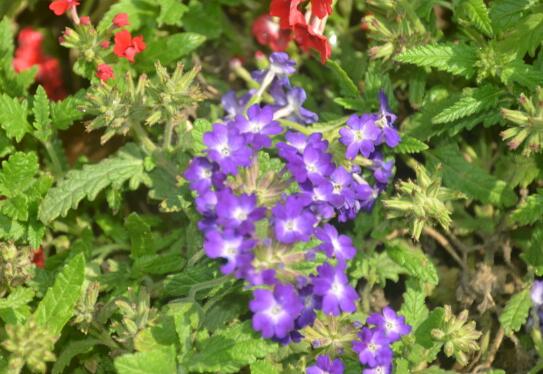
To know how to grow verbena, we first need to understand its growth habits. Verbena is a light-loving plant and does not adapt to shady environments, so during cultivation you must maintain sufficient light, and watering and other aspects also need special attention. The details are described in detail below, so let's read on.
II. How to grow verbena so it bursts into a full pot
Regarding how to grow verbena so it bursts into a full pot, proper pruning is very important. During the cultivation of verbena, pruning the old branches on the plant at regular intervals can promote its branching, and this can also make it grow into a full pot.
III. Verbena cultivation methods and precautions
1. Soil selection
Among the verbena cultivation methods and precautions, choosing soil is the first step and the step that lays a good foundation. Generally we can choose humus soil with high looseness; this kind of soil has good drainage and allows verbena to absorb nutrients better.
Precautions: It is best not to choose soil with too high a clay content. This kind of soil has a great impact on the growth of verbena, making it difficult for it to absorb nutrients and causing the leaves to turn yellow. Everyone should pay attention to this point.
2. Watering management
During the growth of verbena, the water requirement is also relatively high, because verbena needs long-term exposure to light, so water also evaporates relatively quickly. Therefore, among the verbena cultivation methods and precautions, timely watering is still very important.
Precautions: When watering verbena, maintain the principle of watering when dry and stopping when wet, and water after the potting soil dries. When watering, water thoroughly at one time, and remember not to water too much and cause waterlogging, otherwise it can easily lead to root rot.
3. Light management
Among the verbena cultivation methods and precautions, light is also a point that needs attention. Verbena is a light-loving plant, so during cultivation you must maintain sufficient light. Only in an environment with sufficient sunlight can it grow vigorously.
Precautions: Remember not to grow verbena in a dark and damp environment. Verbena grown in such an environment not only grows slowly, but is also very easily attacked by pests and diseases.
4. Pest and disease control
Among the verbena cultivation methods and precautions, the problem people least want to encounter is pests and diseases. Such problems are extremely harmful to the plant, and if handled improperly or neglected, they can easily cause the plant to die.
Precautions: The appearance of pests and diseases in verbena is mainly caused by improper cultivation, so you must be careful during cultivation. But if such problems occur, we must deal with them promptly. As for the treatment methods, you can refer to the article on verbena pest and disease control, and I will not introduce too much here.
How to grow verbena, verbena cultivation methods and precautions
Verbena is a perennial herbaceous plant native to South America, and it was only introduced to our country in recent years. The flowering part of verbena is corymb-shaped, and the flower colors include white, red, blue, snow blue, pink, and so on. It is currently a popular material for potted ornamentation or for arranging flower platforms, garden gaps, and tree beds. So how do you grow verbena? What are the cultivation methods and precautions for verbena?
Verbena cultivation methods
Soil: Verbena does not have high soil requirements. Generally, loose, fertile, and relatively moist neutral soil is chosen. This kind of soil can make verbena root at each node, grow robustly, and bloom abundantly.
Watering: The root system of verbena is not well developed, so more attention should be paid to watering, especially during high-temperature summer periods, and even more attention should be paid to preventing drought. During the growth period of verbena, the watering frequency should be adjusted well, and it should not be too much or too little, because at this time verbena's demand for water is very limited, and too much or too little watering both have an impact.
Light: Verbena is a semi-light plant, and in spring, summer, and autumn all three seasons it needs to be maintained under shaded conditions. If verbena is placed in direct sunlight for maintenance, the leaves will noticeably become smaller, the internodes of the branches will shorten, the lower leaves will yellow and fall off, and growth will be very slow or it will enter a semi-dormant state.
Precautions for growing verbena
Verbena has vigorous growth, and you should always pay attention to pinching the tips to control the plant's growth, promote new branches, extend the flowering period, and produce more flower clusters. In addition, after each pruning of verbena, apply 1 to 2 rounds of manure fertilizer. Also, verbena is mostly sown in spring, and generally it can bloom by July.
The above are the verbena cultivation methods and precautions. Now everyone knows how to grow verbena, right! Here I want to tell everyone that verbena has strong resistance to pests and diseases, and pests and diseases rarely occur, so everyone does not need to worry about pest and disease control.
How to grow verbena: verbena cultivation methods and precautions
Verbena is an ornamental flower with a very long flowering period and is very popular among people. How do you grow verbena? Let's take a look below at the knowledge on verbena cultivation methods and precautions.
Verbena cultivation methods
1. Soil requirements
Verbena does not have strict soil requirements, but in loose, fertile, and relatively moist neutral soil it can root at each node. For the soil, use a mixed substrate composed of fertile, loose, and well-drained culture soil, peat soil, and coarse sand, with a pH of 6.0-6.5.
2. Sunlight requirements
Verbena needs to be maintained under shaded conditions in spring, summer, and autumn. When the temperature is relatively high, if it is placed in direct sunlight for maintenance, the leaves will noticeably become smaller, the internodes of the branches will shorten, the lower leaves will yellow and fall off, and growth will be very slow or it will enter a semi-dormant state.
3. Watering management
Because verbena has a relatively shallow root system, attention should be paid to watering in summer to prevent drought. During the maintenance period, too much or too little water is not conducive to growth. With too much water, the stems become thin and weak and leggy, and the amount of flowering decreases; with insufficient water, the plant's growth and development are poor, and there will be a phenomenon of setting seed early.
4. Fertilization management
Like other herbaceous flowers, verbena has a relatively high demand for fertilizer and water, but it requires following the fertilization (water) principle of "apply light fertilizer frequently, less amount and more times, complete nutrition," and after fertilizing, keep the leaves and flowers dry at night.
5. Suitable temperature
Verbena likes a warm climate and avoids extreme heat. When the summer temperature is above 34°C, its growth is clearly poor; it is not tolerant of frost and cold, and when the winter temperature is below 4°C, it enters dormancy or dies. The most suitable growth temperature is 15-25°C. It is generally sown in autumn and winter to avoid high summer temperatures.
6. Pruning methods
Before flowering, verbena is generally pinched twice to promote the sprouting of more flowering branches.
Verbena cultivation precautions
1. It likes sunlight and is not tolerant of shade, is relatively cold-tolerant, poor in shade tolerance, and not drought-tolerant. Grown in sunny, loose, and fertile soil, it blooms abundantly.
2. It likes a warm and humid climate, likes sun, and is not drought-tolerant.
3. During growth, verbena is relatively sensitive to water, fearing drought and also avoiding waterlogging. During the seedling stage, the potting soil must be kept moist, which is beneficial to seedling growth. After the seedlings mature, drought tolerance strengthens. If the temperature is high and water consumption is large, attention should be paid to ensuring sufficient water. If there are many cloudy and rainy days, in mild cases the branches and vines become leggy and thin and weak and flowering decreases, and in severe cases the stems and leaves gradually wilt and may even die.
4. Light is very important to the growth and development of verbena. From seedling growth to flowering, verbena needs sufficient sunlight; then the stems and leaves grow robustly, flower branches are dense, flowering is continuous, and flower colors are vivid. If it is in a semi-shaded state for a long time or has insufficient light, the stems and leaves are prone to becoming leggy, flowering decreases, the flowers become smaller, and the flower colors are not vivid.