How to grow hostas? Cultivation methods and precautions, avoid strong light
Hosta is a highly ornamental plant that can be seen in many gardens in our country, and many people in our country also grow it. However, there are many points to pay attention to during cultivation. So how do you grow hostas? What are the cultivation methods and precautions for hostas? Below, the editor will take everyone through them.
I. How to grow hostas
II. Cultivation methods and precautions for hostas
1. Soil selection
In the process of growing hostas, choosing soil is the first step and the step that lays the foundation, so it is very important. Generally, it is best to choose relatively fertile sandy soil. This kind of soil has good drainage and aeration, allowing hostas to better absorb nutrients during growth.
2. Fertilization management
Among the cultivation methods and precautions for hostas, fertilization is a very important part. Hostas have a fairly high demand for fertilizer during growth, and basically need to be fertilized once a month. However, when fertilizing, remember that the fertilizer must be diluted first, otherwise it is very easy to burn the plant.
3. Environmental control
As the editor mentioned above, hostas are shade plants, so when growing them it is best to maintain environmental humidity, which allows them to grow better. Remember not to grow them in an environment that is too dry.
4. Watering management
In the cultivation methods and precautions for hostas, watering is also relatively important. Hostas like humid environments, so during cultivation the soil needs to be kept moist and watered frequently. However, do not water too much. If too much water is given and waterlogging occurs, it may cause root rot.
5. Light management
When growing hostas, avoid strong light. Generally, it is best to grow them in semi-shade. If they receive direct sunlight for a long time, their leaves are very likely to turn yellow, and their development will also be affected.
6. Pest and disease control
During the growth of hostas, if care is improper, pests and diseases are very likely to appear. These problems are also the most troublesome for people, so when they appear they must be dealt with promptly. Otherwise, if they drag on for too long, the plant can easily wither and die. For specific treatment methods, everyone can refer to the article on pest and disease control for hostas. The editor will not introduce too much here.
How to grow hostas: cultivation methods and flower language introduction
Hosta is a perennial herbaceous plant with glossy jade-green leaves, elegant and upright form, jade-white flowers, and a subtle fragrance that fills the air. It is a famous traditional fragrant flower in our country. Regarding how to grow hostas, I believe many flower lovers want to know. Below, the editor will introduce the cultivation methods of hostas, the flower language of hostas, and other related knowledge.
Introduction to hostas
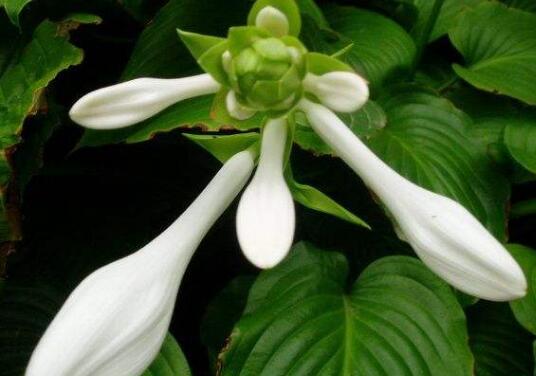
Hosta, also known as white calyx and white crane immortal. It is a perennial herbaceous flowering plant of the Liliaceae family. The terminal raceme bears 9 to 15 flowers. The flowers are white, tubular-funnel-shaped, fragrant, and bloom from July to September. It gets its name because the flower buds are delicate and lustrous like jade and shaped like a hairpin. With glossy jade-green leaves, elegant and upright form, jade-white flowers, and a subtle fragrance that fills the air, it is a famous traditional fragrant flower in our country.
Hosta is a perennial herbaceous plant. The leaves are clustered, ovate or heart-shaped. The flower stem is drawn out from the leaf cluster, forming a raceme. It blooms in autumn, with flowers white as jade. Before opening, they resemble hairpin heads and are fragrant. It is cultivated for ornament. It originated in China, was introduced to Europe in 1789, and later spread to Japan. As for the name hosta, legend says: when the Queen Mother of the West feasted the immortals, the fairy maidens drank the elixir of immortality and became tipsy, their hair became disheveled, and a jade hairpin fell into the mortal world and transformed into the hosta flower. In gardens, it is often planted under trees as ground cover, or the flowers are picked off.
I. Morphological characteristics
Perennial herb, with a thick rhizome and many fibrous roots. Leaves are clustered from the stem base, heart-shaped ovate, with long petioles, and arcuate veins. The flower stem is drawn out from the leaf cluster, taller than the leaves, bearing 9-15 flowers in a raceme. Flowers are white or purple, fragrant, with a slender perianth tube, with 6 lobes at the apex, funnel-shaped, blooming from July to September. The capsule is cylindrical, splitting into 3 valves when mature, seeds black, with wings at the apex.
Rhizome thick, 1.5-3 cm thick. Leaves ovate-cordate, ovate, or orbicular-ovate, 14-24 cm long, 8-16 cm wide, apex nearly acuminate, base cordate, with 6-10 pairs of lateral veins; petiole 20-40 cm long. Scape 40-80 cm tall, bearing several to more than ten flowers; outer bracts ovate or lanceolate, 2.5-7 cm long, 1-1.5 cm wide; inner bracts very small; flowers solitary or in clusters of 2-3, 10-13 cm long, white, fragrant; pedicel about 1 cm long; stamens nearly as long as or slightly shorter than the perianth, base about 15-20 mm adnate to the perianth tube. Capsule cylindrical, with three ridges, about 6 cm long, about 1 cm in diameter. Flowering and fruiting period August-October.
Perennial herb. Plant height 30 cm-50 cm. Leaves basal, clustered, ovate to cordate-ovate, base cordate, veins arcuate. Terminal raceme, taller than the leaf cluster, flowers white, tubular-funnel-shaped, strongly fragrant. Flowering period June-August. The same genus also includes purple calyx, narrow-leaved hosta, wave-leaved hosta, and others with pale purple and violet flowers. It is robust, cold-resistant, shade-loving, and avoids direct sunlight. It is not particular about soil, but grows most luxuriantly in well-drained, fertile, moist sites.
II. Ecological habits
It is a typical shade plant and likes shady, humid environments. Under strong light, the leaves turn yellow and growth is poor. It likes fertile, moist sandy loam. It is extremely cold-resistant, and in most areas of our country it can overwinter in the open ground. The aboveground parts wither after frost, and new buds sprout from the perennial roots the following spring. Avoid intense direct sunlight.
Cultivation methods for hostas
1. Soil: Hostas are not particular about soil, but grow better in moist, fertile, well-drained sandy loam.
2. Watering: During the growth period of hostas, it is advisable to keep the soil moist frequently. If watered too much, it easily causes root rot and yellowing leaves. In summer, the water supply should be sufficient. When the air is dry, spray water on the leaves every day to prevent the leaves from drying out.
3. Sunlight: Hostas avoid scorching sun exposure. It is best to plant them on the shady side of buildings or under the shade of large trees and other places where sunlight cannot shine directly.
4. Temperature: Hostas are robust and cold-resistant. Move them indoors at the end of November, and the room temperature should be above freezing.
5. Fertilization: Start fertilizing hostas in early May, applying a dilute liquid fertilizer about once a month. In July-August it can be slightly more concentrated. Stop fertilizing after late September. After each fertilization, water and loosen the soil promptly to help keep the soil loose and aerated.
The flower language of hostas
Hosta represents: tranquility and gentleness.
Hosta is a perennial herbaceous plant. The leaves are clustered, ovate or heart-shaped. The flower stem is drawn out from the leaf cluster, forming a raceme. It blooms from summer to autumn, with flowers white as jade. The purple hosta is beautiful and graceful. Before opening, they resemble hairpin heads and are fragrant.
Hosta gets its name because it resembles the hairpin on a woman's head. Because its color is pure white, it is also called “white calyx.” And because its shape resembles a crane, it also has the elegant title “white crane immortal.” Also, because its flowers before opening are like a white jade hair scratcher, it also has the name “jade hair scratcher.” Whenever spring arrives, the soft green stems and leaves send out new buds. In summer, strings of white inflorescences are drawn out from the leaf clusters, just like milky white jade hairpins clustered and inserted on emerald branches.
Hosta leaves are delicate and lustrous, the buds resemble hairpins, the color is white as jade, and the fragrance is pleasant. It is one of the important flowers in classical Chinese gardens. In modern gardens, it is often planted under trees, in grassy areas, in rock gardens, or on the back side of buildings, exactly as in “the hosta's fragrance is best when a few branches bloom by the wall corner.” It can also be used in twos and threes as clumps to accent a garden. There is even a poem praising it: “Facing the wind, one jade hairpin, holding affection, waiting for whom? Keeping its feeling undisplayed, yet before displaying it, the feeling is even truer.” This vividly and charmingly describes the elegant posture and gorgeous color of the hosta, as noble as a jade tree in the wind.
Are hostas poisonous?
Are hostas poisonous? The leaves are not only non-toxic, but also have detoxifying effects. The whole hosta plant can be used as medicine. The flowers used as medicine have the effects of draining dampness, regulating menstruation, and stopping leukorrhea. The roots used as medicine have the effects of clearing heat, reducing swelling, detoxifying, and relieving pain. The leaves can detoxify and reduce swelling.
The uses of hostas
1. Ornamental. Hosta leaves are verdant, and in summer they can produce beautiful inflorescences with fragrance. Whether planted in large patches or in pots, they are good foliage and flowering plants with high ornamental value.
2. Home decoration. Hostas are excellent plant accents in the home. The flowers are white as jade and the fragrance is refreshing. Placing them indoors or beside windowsills and other places has a very good decorative effect.
3. Edible. Hosta flowers can be eaten and can be used as a vegetable or sweet dish, but the stamens need to be removed. In addition, the tender buds of hostas can also be eaten.
Cultivation methods for hostas: avoid scorching sun exposure
Hosta is also known as jade spring stick, white crane flower, jade bubble flower, etc. It is a perennial herbaceous plant of the genus Hosta in the Liliaceae family. The leaves are clustered, ovate or heart-shaped, and the flower stem is drawn out from the leaf cluster, forming a raceme. So what are the cultivation methods for hostas?
Cultivation methods for hostas:
1. Soil: Hostas are not particular about soil, but grow better in moist, fertile, well-drained sandy loam. You can use peat, perlite, furnace slag, vegetable garden soil, sawdust, or paddy soil, pond mud, leaf mold, and so on.
2. Watering: During the growth period of hostas, it is advisable to keep the soil moist frequently. If watered too much, it easily causes root rot and yellowing leaves. In summer, the water supply should be sufficient. When the air is dry, spray water on the leaves every day to prevent the leaves from drying out.
3. Sunlight: Hostas avoid scorching sun exposure. It is best to plant them on the shady side of buildings or under the shade of large trees and other places where sunlight cannot shine directly. After summer begins, they need to be moved to a shaded place or a north-facing balcony to prevent direct sunlight.
4. Temperature: Hostas are robust and cold-resistant. After frost descends, move them indoors. Keeping the room temperature at 2-3°C is enough for them to overwinter safely, and they can be taken outside in April of the following year.
5. Fertilization: Start fertilizing hostas in early May, applying a dilute liquid fertilizer about once a month. In July-August it can be slightly more concentrated. Stop fertilizing after late September. After each fertilization, water and loosen the soil promptly to help keep the soil loose and aerated.
Growth habits of hostas:
Hostas originated in China and Japan, and are cultivated in various places in our country. They are typical shade plants and like shady, humid environments. Under strong light, the leaves turn yellow and growth is poor. They like fertile, moist sandy loam. They are extremely cold-resistant, and in most areas of our country they can overwinter in the open ground. The aboveground parts wither after frost, and new buds sprout from the perennial roots the following spring. Avoid intense direct sunlight.
Propagation methods for hostas:
1. Division: Division can be done in both spring and autumn. In spring it is from April to May, and in autumn it is from October to November. Because hosta stem buds are fat and obvious in spring and easy to separate, you can divide them into clumps of 3-4 buds each. After coating the cut with plant ash or sulfur powder, plant them. Generally, division can be done once every 3-5 years.
2. Sowing: Hosta seeds are very small. At room temperature, it is best to sow them as soon as they are collected. When sowing, to spread the seeds evenly, mix them thoroughly with 2/3 fine sand or fine dry soil, then sow them in the seedbed and cover with fine soil 1-1.5 cm deep. After the seeds mature in September, they can be sown in pots indoors. Under environmental conditions of 20°C, they will germinate and emerge in about 30 days.