How to water a Venus flytrap? The tray method of care, split into outdoor growing and enclosed growing
The Venus flytrap is a plant that can repel mosquitoes. Keeping it indoors not only eliminates flies and insects in the home but also purifies the air. However, growing a Venus flytrap well is not easy, and watering is especially important. So how do you water a Venus flytrap? Below are Venus flytrap tray-method care tips and fertilizing methods; follow along with the editor to learn more.
1. How to water a Venus flytrap: the tray method
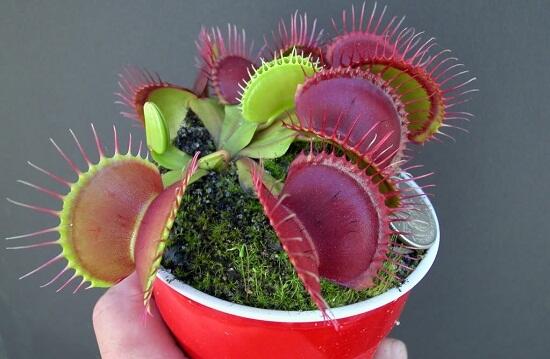
Unlike other indoor potted plants, watering a Venus flytrap is not done by pouring water directly from a watering can, but by using the tray method, which was mentioned in the Venus flytrap growing methods. However, the tray method has two problems: first, high summer temperatures easily cause root rot; second, over time minerals accumulate. To solve these two problems, let us look at Venus flytrap tray-method care tips.
Venus flytrap tray-method care tips
Before understanding Venus flytrap tray-method care tips, it is necessary to know the Venus flytrap's growth habits. It is said that the Venus flytrap originally grows in swamps, where it often endures long periods of intense sunlight. At this time the ground temperature keeps rising, and large amounts of water evaporate from underground to the surface. But while the water evaporates, because the underground temperature is lower than the surface, the cool moisture carries heat away from the plant's roots.
Once the heat is carried away, root rot in the Venus flytrap will not occur. After understanding this habit of the Venus flytrap, the tray method needs to make use of this point. The method is to appropriately adjust the growing medium; simply choose a medium that retains water, is breathable, and improves heat dissipation. The media are as follows:
1. Outdoor growing medium
Place coarse-grained Kanuma pumice or foam blocks, sponge blocks at the bottom 1/4 of the pot, to absorb water while maintaining ventilation and breathability. On top of it, add 40% medium and fine-grained Akadama soil, or 20% peat moss mixed with Akadama soil; 100% pure sphagnum moss also works, helping to lock in water and maintain humidity.
Because water evaporates quickly when grown outdoors, you can add 60% medium and fine-grained mixed Kanuma pumice, or 30% medium and fine-grained mixed Kanuma pumice + 30% medium-grained royal stone, with the water tray at about 1/4 of the pot. If the summer temperature is above 30°C, 50% shading is needed, placing it under soft, diffused light.
2. Enclosed growing medium
Place coarse-grained Kanuma pumice or foam blocks at the bottom 1/4 of the pot, to absorb water while maintaining ventilation and breathability. For the upper layer, you can use 100% pure sphagnum moss, or 40% medium or fine-grained Akadama soil, or 20% peat moss mixed with 20% Akadama soil to lock in water and maintain humidity.
When grown outdoors, water evaporates quickly, so you can add 60% medium and fine-grained mixed Kanuma pumice, or 30% medium and fine-grained mixed Kanuma pumice plus 30% medium-grained royal stone, with the water tray below 1/4 of the pot. Likewise, if the summer temperature exceeds 30°C, the enclosed container must not be covered, keeping the area above the container ventilated and breathable, while shading 50% and placing it in soft, bright, diffused light.
The reason the tray method is used for watering Venus flytraps has another explanation: a professional large-scale grower may have tens of thousands of pots in one greenhouse, so when would they finish watering them one by one? That is why they all use the tray method. After reading the above, I believe everyone now has some understanding of Venus flytrap tray-method care tips, and you can grow them this way too~
Venus flytrap tray-method care tips
Outdoor growing of the Venus flytrap
Place coarse-grained Kanuma pumice or foam blocks, sponge blocks at the bottom 1/4 of the pot, to absorb water while maintaining ventilation and breathability. On top of it, add 40% medium and fine-grained Akadama soil, or 20% peat moss mixed with Akadama soil; 100% pure sphagnum moss also works, helping to lock in water and maintain humidity. Because water evaporates quickly when grown outdoors, you can add 60% medium and fine-grained mixed Kanuma pumice, or 30% medium and fine-grained mixed Kanuma pumice + 30% medium-grained royal stone, with the water tray at about 1/4 of the pot. If the summer temperature is above 30°C, 50% shading is needed, placing it under soft, diffused light.
Enclosed growing of the Venus flytrap
Place coarse-grained Kanuma pumice or foam blocks at the bottom 1/4 of the pot, to absorb water while maintaining ventilation and breathability. For the upper layer, you can use 100% pure sphagnum moss, or 40% medium or fine-grained Akadama soil, or 20% peat moss mixed with 20% Akadama soil to lock in water and maintain humidity. When grown outdoors, water evaporates quickly, so you can add 60% medium and fine-grained mixed Kanuma pumice, or 30% medium and fine-grained mixed Kanuma pumice plus 30% medium-grained royal stone, with the water tray below 1/4 of the pot. Likewise, if the summer temperature exceeds 30°C, the enclosed container must not be covered, keeping the area above the container ventilated and breathable, while shading 50% and placing it in soft, bright, diffused light.
Venus flytrap tray-method care
The Venus flytrap tray method of cultivation is now used by many flower enthusiasts. When using the tray method for care, you only need to pay special attention to high summer temperatures. The water tray, due to intense sunlight, will cause the temperature of the stored water to rise rapidly, and water as hot as boiling water will be absorbed through the bottom of the pot to the surface of the medium and evaporate. The moisture then cannot carry heat away from the plant's roots, which is the main cause of "root rot."
Venus flytraps living in nature often endure long periods of intense sunlight. Although the ground temperature keeps rising, large amounts of water evaporate from underground to the surface. While the water evaporates, because the underground temperature is lower than the surface, the cool moisture carries heat away from the plant's roots.
After understanding the laws of nature, you only need to appropriately adjust the growing medium. Simply choose a medium that retains water, is breathable, and improves heat dissipation. The media are as follows:
1. Outdoor growing: place coarse-grained Kanuma pumice or foam blocks, sponge blocks at the bottom quarter of the pot (absorbing water while maintaining ventilation and breathability). For the upper layer, you can use 100% pure sphagnum moss, or 40% medium or fine-grained Akadama soil, or 20% peat moss mixed with 20% Akadama soil (locking in water and maintaining humidity. Because when grown outdoors, water evaporates too quickly) + 60% medium and fine-grained mixed Kanuma pumice, or 30% medium and fine-grained mixed Kanuma pumice + 30% medium-grained royal stone (to handle the excess water after mixing Akadama soil, so that the upper layer of the mixed medium still retains good breathability). Keep the water tray at about a quarter of the pot. "If the summer temperature exceeds 30°C, shade 50% or place it in soft, bright, diffused light."
2. Enclosed growing: "Place coarse-grained Kanuma pumice or foam blocks at the bottom quarter of the pot (absorbing water while maintaining ventilation and breathability). For the upper layer, you can use 100% pure sphagnum moss, or 40% medium or fine-grained Akadama soil, or 20% peat moss mixed with 20% Akadama soil (locking in water and maintaining humidity. Because when grown outdoors, water evaporates too quickly) + 60% medium and fine-grained mixed Kanuma pumice, or 30% medium and fine-grained mixed Kanuma pumice + 30% medium-grained royal stone (to handle the excess water after mixing Akadama soil, so that the upper layer of the mixed medium still retains good breathability). Keep the water tray below a quarter of the pot." If the summer temperature exceeds 30°C, the enclosed container must not be covered, and it should not exceed the plant by more than 10 cm (keeping the area above the container ventilated and breathable), while shading 50% or placing it in soft, bright, diffused light.