Mountain rose blooms from late spring to early summer; does it die after blooming?
Mountain rose is a highly ornamental plant that can be seen in many parts of China, but many people do not want it to bloom, because it is said that it dies after flowering. So is this really the case? Does mountain rose die after blooming? How long is the flowering period of mountain rose? Let's take a look below.
1. Does mountain rose die after blooming? Yes, it does.
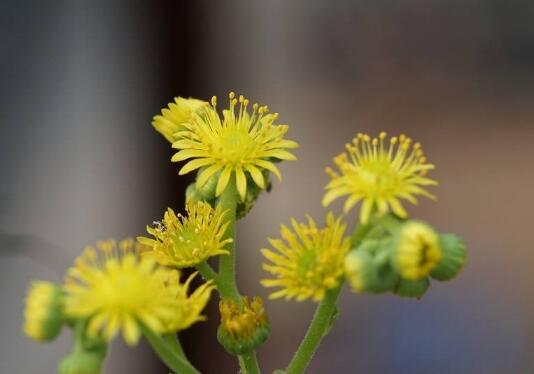
As for the question of whether mountain rose dies after blooming, the answer is actually yes. Mountain rose is a plant that dies after flowering. After the mountain rose blooms, its seeds gradually mature, and the mother plant gradually withers, but new shoots grow from its base. So it can be said that mountain rose does die after blooming.
2. The flowering period of mountain rose: late spring to early summer
During the cultivation of mountain rose, if you want it to bloom, it must be grown for at least 5 years before it is possible. Its flowers are generally yellow, and its flowering period is generally from late spring to early summer. Among flowering plants, the flowering period of mountain rose is not considered very long.
3. How to keep mountain rose from blooming
Mountain rose is a plant that dies once it blooms, so if you want it to live longer, it is best not to let it bloom. So how do you keep mountain rose from blooming? We can use the method of cutting off the flower stalk. As for what to pay attention to when cutting the flower stalk, there is a detailed introduction below. Let's take a look.
Precautions for cutting the flower stalk
1. Since you have decided to use the method of cutting off the flower stalk on the mountain rose, then do not be soft-hearted. You should cut as aggressively as possible, because the lower you cut, the greater the chance of normal side shoots appearing. If you only cut off a little bit from the top, there will not be much effect.
2. After we cut off the flower stalk of the mountain rose, if it is cared for properly, it will sprout new side shoots in about 1-2 weeks, and the number of side shoots is generally between 3-5. In that case, you can basically declare that your first step has been achieved.
3. After the side shoots grow, we need to confirm whether they are normal. If they are normal side shoots, then we have successfully eliminated the mountain rose's desire to bloom, and it will not bloom again in a short time. Through repeated experiments and statistics, after cutting off the main flower stalk, the probability that the side shoots that emerge are secondary flower stalks is about 80 percent to 100 percent.
How does mountain rose reproduce? Does it die after blooming, and if so, how can it be avoided?
Because its shape closely resembles a rose, mountain rose is a succulent that many flower lovers enjoy growing. Many flower lovers want a full pot of it, and just a few plants seem a little lonely. Some flower lovers are also very puzzled about whether it will die after blooming. Today I will take everyone through it.Propagation methods
It can be propagated by sowing, division, and beheading.
1. Sowing
Seeds should be stored in the refrigerator's cold compartment, where they still have a high germination rate after about 5 years. Sowing is done during the growing season, with autumn being the best time. Sprinkle the seeds evenly on the surface of the soil, do not cover with soil, place in a spot without direct sunlight, and water using the immersion method to avoid the tiny seeds being washed away. They germinate 5 to 10 days after sowing. During the seedling stage, keep the soil moist and provide sufficient soft light. When the seedlings become too crowded, thin them in time so as not to affect their growth.
2. Division
Except for a few varieties, mountain rose readily produces side shoots. During the growing season, you can separate them, let them dry for 3 to 5 days, and after the wounds are dry, plant them directly in pots. Whether they have roots or not, they are very easy to keep alive.
3. Beheading
In autumn, insert dental floss or fishing line into the gap between the leaves, wrap it around the plant at a middle height, and pull tight to separate the core from the base. Leave the base in the original pot, and be careful not to let the wound touch water, otherwise it will easily rot, and it will soon sprout many side shoots between the leaves. Place the removed core in a ventilated place to dry the wound. Depending on the size of the plant and the ambient humidity, dry it for anywhere from two or three days to a week, then plant it in moist soil and keep it dry (meaning the medium is moist but not wet; it clumps when squeezed in the hand and falls apart when released), and wait for roots to form. Once signs of growth are observed, you can water and care for it normally.
As for newly purchased mountain rose plants, if the outer leaves have all withered, it is best to peel off the withered leaves, otherwise they easily become moldy after potting and then infect inward. In addition, before potting, remove the withered roots and keep only healthy, plump roots. After drying for 2 to 7 days, plant in moist soil and keep dry. Plants recover faster after root trimming.
Flowering
The flowering period of mountain rose is from late spring to early summer. It has a raceme inflorescence, and the flowers are yellow. After the mountain rose blooms, as the seeds mature, the mother plant gradually withers, but new shoots grow from its base. So to some extent, it can be said that mountain rose dies after blooming, and mountain rose can only be crossbred within the genus.
How to avoid flowering
The usual way to prevent mountain rose from blooming is to cut off the flower stalk. Cut as low down the stem as possible; the lower you cut, the greater the chance of normal side shoots appearing. Cutting off only a little from the top has little effect. After cutting off the flower stalk, if the root system is well developed and care is proper, new side shoots will grow in about two weeks. But if the new side shoots are still flower stalks, then you must continue cutting until normal side shoots are produced.
The above is the propagation methods for mountain rose and how to avoid flowering that I have compiled. I hope it can be helpful to the many flower lovers, and please continue to follow Succulent Garden to learn more about flower care knowledge.
How to grow mountain rose and the flower language of mountain rose
Because mountain rose is native to mountainous areas at an altitude of more than two thousand meters, many people are asking how to grow mountain rose. Below, Home Network will tell everyone how to grow mountain rose and the flower language of mountain rose.
Introduction to mountain rose:
Mountain rose (Greenovia) is a succulent in the Crassulaceae family and the Aeonium genus (many species in the Crassulaceae family and Aeonium genus have the characteristic of leaves opening during the growing season and closing during dormancy, only not as obviously as mountain rose, such as the black mage [1]). The fleshy leaves are arranged in a rosette, and the plant width varies greatly depending on the variety. The small variety 'Aeoniumaizoon' is only 2 to 4 cm, while the large variety 'Aeoniumdiplocyclum' can grow to 30 cm to 40 cm or larger. Leaf colors include gray-green, blue-green, or emerald green. After exposure to strong sun, the leaves sometimes develop reddish-brown markings, and some varieties have a slight powdery coating and fine hairs on the leaf surface, with "eyelashes" along the leaf margins. Its flowering period is from late spring to early summer, with a raceme inflorescence and yellow flowers. After flowering, as the seeds mature, the mother plant gradually withers, but small buds grow from its base. It was originally an independent genus, Mountain Rose, and was later merged into the Aeonium genus. There are varieties such as Greenoviaaizoon, Greenovia aurea, Greenovia diplocycla, and Greenoviadodrentalis. [2] Because mountain rose dies after blooming, care should be taken during cultivation to preserve seeds and side shoots.
How to grow mountain rose:
Care points
It likes a cool, dry, and sunny environment, is tolerant of drought and partial shade, fears waterlogging and hot, humid, stuffy conditions, and has the habit of dormancy in high-temperature seasons and growth in cool seasons. The growing season is from mid-September in autumn to late spring in June of the following year. At this time, the plant should be given sufficient sunlight. If the light is insufficient, the plant will become leggy, causing a loose plant shape and thinner leaves. In winter, it can grow normally when moved indoors, and attention should be paid to frequent ventilation. It should be given sufficient sunlight, and the pot soil should always be kept slightly moist. It is not strict about whether to fertilize; generally, placing some granular slow-release fertilizer in the soil can meet its growth needs. The dormant period is from July to August.
In winter, although the plant will not die at around 0°C, growth often stops, so it is best to have a minimum temperature of around 5°C and a day-night temperature difference of around 10°C. During the summer dormant period, good ventilation is required, and watering should be controlled so that the plant spends the hot summer in a ventilated, dry, and cool environment. Avoid exposure to the scorching sun, and even more avoid rain, so as to prevent the plant from rotting due to stuffy, hot, and humid conditions. Repotting mountain rose is best done in autumn. The pot soil should be loose, breathable, somewhat granular, and contain a small amount of organic matter. Generally, use a small amount of grass peat or peat soil mixed with vermiculite, perlite, or other granular materials for planting.
During the growing season, the pot soil should always be kept slightly moist. Both waterlogging and excessive drought in the soil are unfavorable to plant growth. In particular, avoid water accumulating in the center of the leaf rosette, otherwise it easily causes heart rot. It is not strict about whether to fertilize; generally, placing some granular slow-release fertilizer in the soil can meet its growth needs.
This overall plant state that resembles a rose bud only appears during the summer dormant season. In the other three seasons, its leaves open normally in a rosette shape, just like other Aeonium plants. If you observe carefully, you will find that when mountain rose is dormant, all its leaves curl toward the center to form a flower bud, which is very similar to the leaf center appearance of many Aeonium plants in summer. Also, a reminder: in actual cultivation, please try not to let water accumulate in the center of the leaves, otherwise it easily causes heart rot, especially in indoor environments with poor ventilation. If water accidentally accumulates in the leaf center, after absorbing it with a cotton swab, it is best to ventilate as much as possible.
Precautions:
1. In winter, although the plant will not die at around 0°C, growth often stops, so it is best to have a minimum temperature of around 5°C and a day-night temperature difference of around 10°C.
2. During the summer dormant period, good ventilation is required, and watering should be controlled so that the plant spends the hot summer in a ventilated, dry, and cool environment.
3. Repotting mountain rose is best done in autumn. The pot soil should be loose, breathable, and somewhat granular. Generally, use a small amount of grass peat or peat soil mixed with vermiculite, perlite, or other granular materials for planting.
Mountain rose flower language: the green rose that never withers
Mountain rose refers to the plants of the genus Greenovia. In fact, this small genus Greenovia no longer exists; in 2003 it was merged by taxonomists into the Aeonium genus. But for convenience of description, it is still referred to below as Greenovia. The reason the mountain rose series is so popular is mostly because they look so adorable when dormant.
This overall plant state that resembles a rose bud only appears during the summer dormant season. In the other three seasons, its leaves open normally in a rosette shape, just like other Aeonium plants. If you observe carefully, you will find that when mountain rose is dormant, all its leaves curl toward the center to form a flower bud, which is very similar to the leaf center appearance of many Aeonium plants in summer. Also, a reminder: in actual cultivation, please try not to let water accumulate in the center of the leaves, otherwise it easily causes heart rot, especially in indoor environments with poor ventilation. If water accidentally accumulates in the leaf center, after absorbing it with a cotton swab, it is best to ventilate as much as possible.
The so-called "green rose that never withers" is the charming mountain rose series in the Crassulaceae family. The flower language of the rose is love and beauty, so does the green rose that never withers represent more lasting love and beauty?
More information