The timing and amount of watering and fertilizing desert roses are determined by climate and growth stage.
Plant growth requires nutrients, and besides soil, the main sources are watering and fertilizing. Desert roses are naturally no exception. Although they are drought-tolerant and do not like heavy feeding, watering and fertilizing are equally indispensable. So how do you water and fertilize a desert rose? The editor will give you the answer.
How to water and fertilize desert roses
I. How to water a desert rose
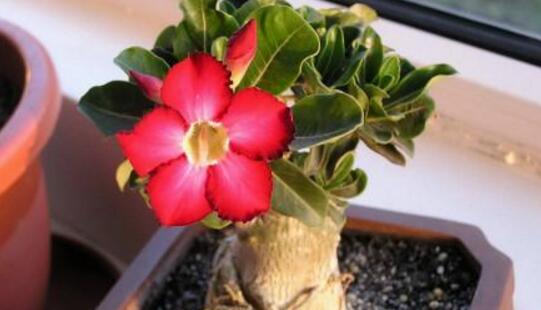
1. Spring. At this time, the desert rose has just resumed growth from its winter dormancy, so it should not be watered too much. Generally, water once every 4-5 days, and when watering, just make sure both the upper and lower parts of the potting soil are moist.
2. Summer. Temperatures are higher in summer and water evaporates faster, but desert roses are relatively drought-tolerant, so they do not need daily watering. Usually water once every 2-3 days. There is no need to spray the leaves, because it does not have high humidity requirements and actually prefers a dry environment.
3. Autumn. Temperatures will go from high to low, so watering should gradually decrease, from once every 3 days slowly reducing to once every 5-7 days. When watering, you can decide according to the moisture condition of the soil.
4. Winter. In northern winters, watering should stop. In the south, if the temperature is above 15°C, water about once every 10 days. When watering, the water temperature should not be too low, to avoid freezing the roots.
[Notes]: The principle of watering is to water when dry, which means watering after the soil is completely dry. There is no need to water frequently, and watering must ensure that there is no standing water in the pot. From the cultivation methods of desert roses, we know that they are very afraid of waterlogging, and standing water is extremely harmful.
II. How to fertilize a desert rose
1. During the growing period. How should a desert rose be watered and fertilized at this time? Water according to the principle of watering when dry, and fertilize by applying decomposed compost about once every 20 days. Because desert roses do not grow quickly, slow-release fertilizer should be the main type.
2. Before the flowering period. Before flowering, you can apply a supplementary phosphorus and potassium fertilizer once. The concentration does not need to be too high. Its main purpose is to promote flowering and make the flower color more vivid.
3. During the dormant period. Fertilizing should stop at this time, because during dormancy the growth of the desert rose is almost stagnant, and its fertilizer requirements are also at their lowest. Fertilizing instead would lead to excess nutrients in the soil, which is not good for the desert rose's dormancy.
[Notes]: The most critical point of fertilizing is that the fertilizer concentration should not be too high. In addition, do not apply raw fertilizer. Unfermented fertilizer will have an adverse effect on the root system of the desert rose, thereby affecting its normal growth.
Succulent planting methods and watering and fertilizing techniques
April. As the weather further warms, "summer-growing type" succulents begin to grow, represented by Agavaceae plants such as Agave horrida, Agave potatorum 'Kichiokan', Agave lophantha, and Agave parrasana; Cactaceae plants such as Echinocactus grusonii, Ariocarpus retusus, and Mammillaria; Euphorbiaceae plants such as Euphorbia meloformis, Euphorbia polyacantha, and Euphorbia bupleurifolia; Apocynaceae plants such as Pachypodium horombense and desert rose, as well as Dioscorea macrostachya and Portulacaria afra. They can gradually be moved outdoors to receive sunlight and the spring breeze. Plants that have not been repotted can be repotted and given fresh soil, and division propagation can be carried out along with repotting. "Winter-growing type" succulents, represented by Aizoaceae species with a high degree of succulence such as Lithops, Conophytum, Gibbaeum, and Ophthalmophyllum; Crassulaceae plants such as Sedum 'Tony', Pachyphytum oviferum, Echeveria 'Chihuahuaensis', Crassula 'Ivory Pagoda', Crassula 'Springtime', Sedum 'Drifting Island', as well as Bulbine, Bulbine natalensis, Bulbine latifolia, and Dioscorea elephantipes, gradually slow their growth rate or even stop; while "intermediate type" succulents, represented by epiphytic cacti such as Schlumbergera and Rhipsalis, Aizoaceae species with a lower degree of succulence such as Oscularia deltoides and Lampranthus spectabilis, most Crassulaceae species such as Sedum 'Autumn Flame' and Echeveria, Asteraceae plants such as Kleinia, Senecio rowleyanus, and Asphodelaceae plants such as Aloe 'Snow Queen' and Gasteria, are in their peak growing season. The management of each type of succulent should be carried out according to the different species and the specific local climate. For example, in some areas, if there is prolonged continuous rain, attention should be paid to controlling watering to prevent succulents from becoming leggy under insufficient sunlight.Watering: In April, fast-growing succulent varieties can be watered more, while slow-growing varieties should be watered less. In short, it is necessary both to meet the plants' water needs for growth and to avoid standing water. For plants that are growing, "keeping the soil moist without standing water" is the best choice. Watering is generally done on clear mornings or in the evening. If using tap water to water plants, let the water sit for 2-3 days before use, so the chlorine in the water can evaporate, which benefits succulent growth.
In April, vigorously growing succulents can be fertilized. Succulent fertilization can be divided into two main categories: base fertilizer and top dressing. Base fertilizer is generally mixed directly into the soil at planting time. Commonly used ones include plant ash, bone meal, shell powder, decomposed poultry and livestock manure, and cake fertilizer. In addition, there are some synthetic slow-release granular fertilizers that can be placed on the surface of the potting soil, slowly releasing nutrients for the plant to absorb. They are clean and sanitary and have good effects, and can be used for mid-range and high-end succulent species such as Haworthia maughanii, Haworthia truncata, and Lithops. Top dressing should be carried out according to different varieties and differences in growth stages. Newly planted plants should not be fertilized within one month, and plants with weak growth should not be fertilized either. For most succulents, fertilize once every half month; slow-growing varieties can also be fertilized once a month, and some extremely slow-growing varieties may not need fertilizing at all. Do not water for a few days before fertilizing. After the potting soil has basically dried, first loosen the soil the day before, then fertilize the next day, to help the plant roots absorb nutrients. Except for a few varieties such as leaf cacti, the root osmotic pressure of most succulents is very low, so the concentration of the fertilizer solution must not be too high. The type of fertilizer should vary according to the plant variety and growth stage. Generally, at the seedling stage and for leafy, green succulents, the amount of nitrogen fertilizer can be slightly higher, while for varieties in the flower bud differentiation stage and the flowering and fruiting stage, as well as plants with spherical or columnar shapes and leaf colors of red, yellow, or other non-green colors, more phosphorus and potassium fertilizer should be applied. Stem-type succulents should be given more potassium fertilizer. Organic fertilizers can include water-fermented soybean cake, sesame cake, chicken manure, pigeon manure, bone meal, and so on. No matter what kind of fertilizer, it must be fully decomposed and diluted with water before use. Inorganic fertilizers such as urea, monopotassium phosphate, and superphosphate, as well as various compound fertilizers sold on the market and special fertilizers for home flower growing, can also be used when the plants are growing vigorously, but the concentration should be low and the frequency should be small. Otherwise, it will cause soil compaction and affect plant growth, making things worse rather than better. However, undecomposed eggshells, soybean milk, fresh milk, and salty meat soup or bones must not be used. When fertilizing, be careful not to splash the fertilizer solution onto the plants.
In April, when repotting, you can also make succulents that have multiplied excessively into bonsai or combined arrangements to increase ornamental value. They have the characteristics of taking shape quickly, being easy to process, and being easy to maintain, making them very suitable for home creation and enjoyment. Because April temperatures vary greatly, you should pay attention to weather forecasts and keep track of climate changes. When the temperature exceeds 25°C, ventilation and cooling should be carried out in time to prevent the plants from being damaged by excessive heat. If there is continuous rainy weather, take care to protect them from rain, so that standing water does not cause the plants to rot. This month is also a good season for sowing, cuttings, and grafting of "summer-growing type" succulents. For plants with hidden pest and disease problems, spray pesticides in time for prevention, and scale insects should also be scraped off. For the planting and management of succulents in April, you can also refer to spring care for succulents.
Succulent management monthly calendar (second quarter)
Enjoy green plants and exchange cultivation experience.Build the best platform for spreading knowledge about plants and flowers!
(My beloved wife, hug me)
Curator consultation QQ: 732275000
51 0340 ****
Every day, we strive to do better, but we also firmly believe: one tree cannot make a forest, and many people make great strength. Therefore, the future brilliance of Nuonuo Forest Flower and Tree Hall needs your participation! We are waiting for you here. Where are you? For WeChat promotion, cooperation, or submissions (flower-related), or if you have any suggestions for us, please leave us a message or add the chief editor's personal WeChat 732275000. We look forward to becoming friends with you!
April. In April, as the weather further warms, "summer-growing type" succulents begin to grow, represented by Agavaceae plants such as Agave horrida, Agave potatorum 'Kichiokan', Agave lophantha, and Agave parrasana; Cactaceae plants such as Echinocactus grusonii, Ariocarpus retusus, and Mammillaria; Euphorbiaceae plants such as Euphorbia meloformis, Euphorbia polyacantha, and Euphorbia bupleurifolia; Apocynaceae plants such as Pachypodium horombense and desert rose, as well as Dioscorea macrostachya and Portulacaria afra. They can gradually be moved outdoors to receive sunlight and the spring breeze. Plants that have not been repotted can continue to be repotted and given fresh soil, and division propagation can be carried out along with repotting. "Winter-growing type" succulents, represented by Aizoaceae species with a high degree of succulence such as Lithops, Conophytum, Gibbaeum, and Ophthalmophyllum; Crassulaceae plants such as Sedum 'Tony', Pachyphytum oviferum, Echeveria 'Chihuahuaensis', Crassula 'Ivory Pagoda', Crassula 'Springtime', Sedum 'Drifting Island', as well as Bulbine, Bulbine natalensis, Bulbine latifolia, and Dioscorea elephantipes, gradually slow their growth rate or even stop; while "intermediate type" succulents, represented by epiphytic cacti such as Schlumbergera and Rhipsalis, Aizoaceae species with a lower degree of succulence such as Oscularia deltoides and Lampranthus spectabilis, most Crassulaceae species such as Sedum 'Autumn Flame' and Echeveria, Asteraceae plants such as Kleinia and Senecio rowleyanus, and Asphodelaceae plants such as Aloe 'Snow Queen' and Gasteria, are in their peak growing season. Their management should also be carried out according to different species and the specific local climate. Watering: This month, fast-growing succulent varieties can be watered more, while slow-growing varieties should be watered less. In short, it is necessary both to meet the plants' water needs for growth and to avoid standing water. Therefore, for plants that are growing, "keeping the soil moist without standing water" is the best choice. Watering is generally done on clear mornings or in the evening. If using tap water to water plants, let the water sit for 2 to 3 days before use, to volatilize the chlorine in the water, which benefits plant growth. Fertilizing: This month, vigorously growing plants can be fertilized. Succulent fertilization can be divided into two main categories: base fertilizer and top dressing. Base fertilizer is generally mixed directly into the soil at planting time. Commonly used ones include plant ash, bone meal, shell powder, decomposed poultry and livestock manure, and cake fertilizer. In addition, there are some synthetic slow-release granular fertilizers that can be placed on the surface of the potting soil, slowly releasing nutrients for the plant to absorb. They are clean and sanitary and also effective, and can be used for mid-range and high-end succulent species such as Haworthia maughanii, Haworthia truncata, and Lithops. Top dressing should be carried out according to different varieties and differences in growth stages. Newly planted plants should not be fertilized within one month, and plants with weak growth should not be fertilized either. For most succulents, fertilize once every half month; slow-growing varieties can also be fertilized once a month, and some extremely slow-growing varieties may not need fertilizing at all. Do not water for a few days before fertilizing. After the potting soil has basically dried, first loosen the soil the day before, then fertilize the next day, to help the plant roots absorb nutrients. Because, except for a few varieties such as leaf cacti, the root osmotic pressure of most succulents is very low, the concentration of the fertilizer solution must not be too high. The type of fertilizer should vary according to the plant variety and growth stage. Generally, at the seedling stage and for leafy, green succulents, the amount of nitrogen fertilizer can be slightly higher, while for varieties in the flower bud differentiation stage and the flowering and fruiting stage, as well as plants with spherical or columnar shapes and leaf colors of red, yellow, or other non-green colors, more phosphorus and potassium fertilizer should be applied. Stem-type succulents should be given more potassium fertilizer. Organic fertilizers can include water-fermented soybean cake, sesame cake, chicken manure, pigeon manure, bone meal, and so on. No matter what kind of fertilizer, it must be fully decomposed and diluted with water before use. Inorganic fertilizers such as urea, monopotassium phosphate, and superphosphate, as well as various compound fertilizers sold on the market and special fertilizers for home flower growing, can also be used when the plants are growing vigorously, but the concentration should be low and the frequency should be small. Otherwise, it will cause soil compaction and affect plant growth, making things worse rather than better. However, undecomposed eggshells, soybean milk, fresh milk, and salty meat soup or bones must not be used. When fertilizing, be careful not to splash the fertilizer solution onto the plants. In April, when repotting, you can also make succulents that have multiplied excessively into bonsai or combined potted arrangements to increase ornamental value. They have the characteristics of taking shape quickly, being easy to process, and being easy to maintain, making them very suitable for home creation and enjoyment. Because temperatures vary greatly this month, you should pay attention to weather forecasts and keep track of climate changes. When the temperature exceeds 25°C, ventilation and cooling should be carried out in time to prevent the plants from being damaged by excessive heat. If there is continuous rainy weather, take care to protect them from rain, so that standing water does not cause the plants to rot. This month is also a good season for sowing, cuttings, and grafting of "summer-growing type" succulents. For plants with hidden pest and disease problems, spray pesticides in time for prevention, and scale insects should also be scraped off.
------------------------------------------
May. In May, late spring and early summer, the temperature is suitable, the temperature difference between day and night is large, and the sunshine duration is long, creating favorable conditions for succulent growth. Among them, "summer-growing type" succulents generally reach their peak growing season. Many species, such as Cactaceae plants like Echinocactus grusonii, Echinopsis, Cleistocactus, and Echinocereus, all bloom this month. Crassulaceae plants that grow in spring and autumn, such as Echeveria, Aeonium arboreum 'Zwartkop', Crassula obliqua, and Sedum 'Autumn Flame'; Asphodelaceae plants such as Gasteria, Haworthia, and certain varieties of Haworthia retusa, are also "intermediate type" succulents growing vigorously. Meanwhile, "winter-growing type" succulents such as Aizoaceae plants like Lithops, Bulbine, Dinteranthus, Gibbaeum, and Conophytum; Crassulaceae plants such as Sedum 'Tony', Pachyphytum oviferum, Echeveria laui, and Echeveria agavoides; Dioscoreaceae plants such as Dioscorea elephantipes; and Hyacinthaceae plants such as Bulbine, Albuca, Bulbine, Bulbine latifolia, and Albuca spiralis slow their growth due to rising temperatures, and in hotter southern regions they may even stop growing. Therefore, this month's succulent management should be carried out according to different species. Light: "Summer-growing type" succulents such as Agavaceae plants like Agave horrida, Agave americana, and Agave potatorum, as well as Echinocactus grusonii and other species, and "intermediate type" succulents such as Crassulaceae plants like Sedum 'Autumn Flame' and Pyracantha, can be placed outdoors in a sunny spot for care. This can make the plants sturdy and the colors beautiful. If there is insufficient light, the plants will become leggy, causing a loose plant shape. For some varieties with red or yellow markings on the leaves, the color will become dull or even disappear. Varieties with white powder on the stems or leaves, such as Pachypodium, are best kept indoors year-round; otherwise, wind and rain will cause the white powder to come off, affecting ornamental value. "Intermediate type" varieties such as Asphodelaceae plants like Haworthia cooperi, Haworthia 'Winter Constellation', and Haworthia marginata can be appropriately shaded to avoid strong sunlight burning the leaves and affecting growth, but they should not be too shady either, to avoid loose plant shape and brittle, easily broken leaves due to lack of light. "Winter-growing type" plants such as Lithops, Haworthia maughanii, Haworthia truncata, and Echeveria laui can be kept in a bright place without direct sunlight. Plants kept indoors should be given good ventilation to prevent the stuffy climate from damaging your beloved succulents. Outdoor plants should avoid prolonged rain, otherwise standing water in the potting soil will cause root rot. Watering: For varieties in the growing period, keep the soil moist, but avoid standing water in the potting soil to prevent root rot. However, it should not be too dry either; otherwise, if the potting soil is dry and lacking water for a long time, the plant will not die, but growth will be slow or even stop, the leaves will shrivel, and there will be no luster, seriously affecting ornamental value. When watering, be sure to water thoroughly. It is best if the water can flow out through the drainage holes at the bottom of the flowerpot, as this can wash away salts in the soil, preventing them from adhering to the root system and affecting plant growth, and in severe cases causing root rot. For "winter-growing type" succulents that are about to go dormant, such as Lithops, Dinteranthus, Echeveria laui, Echeveria agavoides, Haworthia maughanii, and Haworthia truncata, although growth has not completely stopped, it is very slow and the water requirement is not great, so watering should be appropriately controlled and the potting soil kept half dry. Plants in the Asphodelaceae family, Haworthia genus, and certain cactus species have some requirements for air humidity. In dry climates, pay attention to spraying the plants to increase air humidity and keep the color fresh and moist. Fertilizing: Actively growing "summer-growing type" succulents can be fertilized according to different varieties; "winter-growing type" plants about to go dormant should stop being fertilized. Even for the same type of succulent, whether to fertilize should be chosen according to differences in variety and individual plants. In short, fast-growing plants should be fertilized more, and slow-growing ones should be fertilized less or even not at all. This month, "summer-growing type" succulents can continue to be repotted, and division propagation, cuttings, grafting, and seed propagation can be carried out. For certain flowering Cactaceae plants, artificial pollination can also be done for breeding. This month's climate is suitable, and pests also begin to become active. Attention should be paid to prevention and control, and the ventilation conditions of the cultivation environment should be improved to prevent abnormal yellow spots, black spots, brown spots, and other physiological diseases caused by pathogen infection. If found, fungicides should be sprayed in time for prevention and control, so as not to expand the scope of infection.
------------------------------------------
June. June is the month with the longest sunshine duration of the year. Abundant sunlight and a hot climate are very suitable for the growth of "summer-growing type" succulents. Most of their varieties, especially many species in Cactaceae and Euphorbiaceae, bloom this month. However, the growth of "winter-growing type" succulents completely stops; "intermediate type" succulents that grow in spring and autumn can continue to grow in the first and middle ten days of this month in the cooler northern regions, and basically enter dormancy in the last ten days, while in the south, due to the hot climate, "intermediate type" succulents basically stop growing this month. In particular, in the last ten days of this month, the southern regions of our country enter the high-temperature, muggy, and humid plum rain season. This climate is extremely unfavorable for the growth of succulents native to desert or semi-desert areas, and their management must be especially careful. Light and ventilation: Most species of Cactaceae, as well as "summer-growing type" succulents in Agavaceae, Euphorbiaceae, Apocynaceae, Asclepiadaceae, and so on, can be placed outdoors in a sunny, well-ventilated place for care. If there is insufficient light, some columnar or spherical varieties will suddenly become thinner in the fleshy stem, forming an ugly "tip", while for leaf-ornamental species such as Agavaceae, it will cause a loose plant shape, thinner leaves, and reduced or disappeared white powder on the leaf surface, which is not good for ornamental value. "Winter-growing type" succulents such as Lithops, Conophytum, Dinteranthus, Haworthia maughanii, Haworthia truncata, and Dioscorea elephantipes; "intermediate type" succulents such as Crassula ovata 'Hummel's Sunset', Echeveria, Echeveria elegans, Gasteria, and Haworthia can be kept in a bright place without direct sunlight, which can make the plant shape more compact and the leaf color more attractive. No matter what type of succulent it is, plants that have been indoors for a long time or in other low-light conditions should not be suddenly taken into the sun for exposure. They should first be placed in semi-shade for a few days to gradually adapt to environmental changes, so that strong direct sunlight does not burn the leaves and form ugly scars. Most succulents require good ventilation in summer. If muggy, humid conditions are caused by poor ventilation, the plants can easily rot; while muggy, dry conditions can lead to red spider mite damage, causing the plant surface to turn brown. Watering: Actively growing "summer-growing type" succulents can be watered fully. This is because although succulents in the growing period are drought-tolerant, they do not like drought. If water is lacking for a long time during the growing season, the plant will not die, but growth will be extremely slow or even stop, and its appearance will also be poor. Therefore, sufficient water must be given during the growing period. The best time to water is early morning; after sunset in the evening is also acceptable, but avoid watering at noon in high temperatures, so that the soil temperature does not change suddenly and cause rotting. However, the soil must not have standing water, to avoid root rot. For "intermediate type" succulents, because they grow slowly and need little water, just keep the potting soil slightly moist. For "winter-growing type" succulents, because growth has completely stalled, watering must be strictly controlled. For extremely succulent Aizoaceae plants such as Dinteranthus and Lithops, water must be cut off completely, and they must not be rained on, otherwise they will easily rot. Fertilizing: Actively growing "summer-growing type" succulents can be fertilized according to different varieties; "winter-growing type" succulents and "intermediate type" succulents should stop being fertilized. Other: For flowering succulents, artificial pollination can also be carried out to produce seeds and prepare for seed propagation. In Portulacaceae, Talinum, and in Euphorbiaceae, Euphorbia ambovombensis and Euphorbia cristata, the seed pods are prone to splitting open after maturity, causing seeds to scatter. Therefore, when the seed pods mature, they should be collected in time to avoid losing seeds. After the seeds of "summer-growing type" succulents such as Euphorbia ambovombensis and Cactaceae plants like Lophophora williamsii, Echinocactus grusonii, and Astrophytum asterias are harvested, they should be sown in time, because fresh seeds have a relatively high germination rate. If they cannot be sown temporarily, the seeds are best stored in a refrigerator to keep them fresh. Some species among "summer-growing type" and "intermediate type" succulents, such as Crassula ovata 'Hummel's Sunset', Crassula ovata, Portulacaria afra, Echinopsis, Pachypodium, Mammillaria, Euphorbia neriifolia, and Euphorbia lactea, can be propagated by cuttings using cut fleshy stems or removed offsets. Before cutting, they must be dried for 3 to 5 days or longer, and cuttings should be taken after the wounds have dried, to prevent the wounds from rotting. For Agavaceae and Asphodelaceae plants such as Gasteria, Haworthia cooperi, and Haworthia cymbiformis, side shoots can be removed. Those with roots can be directly potted, and those without roots can be cut after the wounds dry. After cutting, keep the medium slightly moist to help rooting. In addition, for variegated varieties or other slow-growing species such as Astrophytum asterias 'Variegata', Astrophytum myriostigma 'Variegata', Gymnocalycium mihanovichii, and Echinocactus grusonii 'Brevispinus', as well as Euphorbiaceae plants such as Euphorbia 'Spring Peak', Euphorbia obesa, and Apocynaceae plants such as desert rose, grafting propagation can be carried out this month to speed up growth.