How to Grow a Desert Rose? 6 Simple Tips on Growing Methods and Precautions
We know that the desert rose has many effects and uses, and its main purpose is Flower Viewing, but to make it bloom successfully, you must understand how to grow a desert rose, otherwise it will not only be difficult to bloom but may even cause the plant to die. Today we will introduce the growing methods and precautions for the desert rose.
How to Grow a Desert Rose
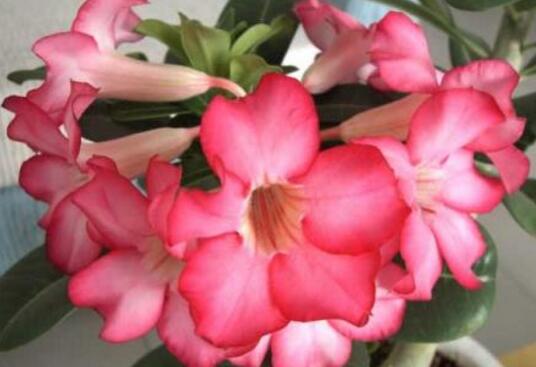
To grow a plant well, you need to provide the most suitable environment and the most scientific methods according to its growth habits. So how do you grow a desert rose? We first need to understand its growth habits.
Desert Rose Growth Habits
It likes high temperatures, drought and environments with ample light, and the most suitable temperature is 25-30°C; it likes loose, airy and well-drained sandy soil, and the soil is best rich in calcium; it is not afraid of drought but afraid of waterlogging; it likes sunlight and cannot tolerate shade; it likes fertilizer but is afraid of high-concentration fertilizer and raw fertilizer; its cold tolerance is relatively weak.
Growing Methods and Precautions for the Desert Rose
I. Create the Most Suitable Environment
1. Light
The desert rose likes an environment with ample sunlight the most. It can grow vigorously in full-light conditions, and good light can promote its flowering. Unlike other plants: even during the winter dormant period, the desert rose still needs to enjoy sufficient sunlight to overwinter successfully.
[Precautions]: Never grow the desert rose in a shaded environment. If conditions permit, it can be placed in a sunny spot for care. If it is a place that sunlight cannot reach, fluorescent lamps, scattered light, etc. can be used for supplementary lighting.
2. Temperature
The desert rose can adapt to high-temperature environments. During its growing period, the average temperature can be kept at 30 degrees, so in summer its growth is the most vigorous. In other seasons, try to create an environment above 20 degrees, and sun exposure is one of the best ways.
[Precautions]: In the growing methods for the desert rose, in winter you must pay attention to keeping the desert rose warm, because its cold tolerance is relatively weak. It should be moved back indoors in time, ensuring the temperature is above 10 degrees, so that it can overwinter successfully.
3. Soil
The best soil is fertile, loose, well-drained sandy soil. We can make it by mixing sandy soil and leaf mold, and to increase its calcium content, some bone meal can be added.
[Precautions]: Good soil drainage is crucial for the desert rose, because the desert rose prefers a dry environment. If drainage is insufficient, not only can such an environment not be created, but waterlogging is also more likely to occur, causing huge damage to the roots.
II. The Growing Methods for the Desert Rose Must Be Scientific
1. Watering
As mentioned earlier, the desert rose likes a dry environment, but when planting we cannot completely avoid watering. So when it comes to watering, how do you grow a desert rose? Before each watering, first determine whether the potting soil is completely dry. Water only after the soil is dry, avoiding keeping it in a moist environment.
[Precautions]: Do not water too much each time, and in winter watering must be stopped, otherwise it is easy to cause cold damage or withering of the desert rose.
2. Fertilizing
The desert rose does not have high fertilizer requirements, but during the growing period sufficient fertilizer should be applied. For example, in spring and summer it should be fertilized once a month, mainly with slow-release fertilizers, such as compost and so on.
[Precautions]: When fertilizing, the concentration of the fertilizer must not be too high, and the amount applied should not be too much, otherwise it is easy to cause fertilizer damage, leading to thick leaves and blocked flowering.
3. Pruning
Flower enthusiasts grow the desert rose mainly to bring out its ornamental value, and pruning can keep its plant shape beautiful. At the same time, it can also promote the sprouting of new flowering branches, keeping it blooming continuously, so pruning is very important work.
[Precautions]: After the flowering period, the spent flowers and dead branches should be cut off to avoid wasting nutrients. In addition, usually pay attention to cutting off overly dense and overly tall branches, otherwise it is prone to leggy growth.
Complete January Flower Care Manual
Weather characteristics of January: This month is the month with the lowest temperature and the coldest weather of the year. January 5 is Minor Cold, right around the "third nine-day period", and most parts of China enter the severe cold period; January 20 is Major Cold, cold air from the north frequently moves south, frost is heavy and snow is thick, and the lowest temperature of the year appears. For flower care this month, the most important thing is to do a good job of keeping cold-sensitive flowers, bonsai, etc. in greenhouses, plastic tunnels and indoors warm and protected against the cold; next is auxiliary work such as tree pruning, clearing dead branches and fallen leaves, turning and preparing the soil, and preparing potting soil.I. Flower Growing
1. Sowing
Flower species that can be sown in greenhouses in January include: gloxinia, asparagus fern, clivia, tuberous begonia, cyclamen, winter coral, African daisy, etc. Ornamental plant species that can be sown in open fields outdoors include: rose (Elizabeth), nandina, Ardisia crenata, holly, firethorn, palm, photinia, Photinia davidsoniae, soapberry, privet, wisteria, Chinese tallow, goldenrain tree, etc.
2. Cuttage
Ornamental plant species suitable for open-field or plastic-film-covered cuttage propagation in January include: plum blossom (green calyx, palace pink and other cultivars), red-leaf plum, rose (Elizabeth, floribunda, miniature and other cultivars), cherry blossom, wintersweet (with heel), spiraea, boxwood types, pomegranate, silver bud willow, mahonia, Buddhist pine, serissa, three-pronged, hypericum, forsythia, spiraea thunbergii, winter jasmine, jasmine orange, etc. Species that can be propagated by cuttage in greenhouses include: jasmine, chloranthus, geranium, fuchsia, African violet (leaf cutting), Belgian azalea, bougainvillea, carnation, umbrella plant, gem flower, jade leaf, jade tree, echeveria, epiphyllum, nopalxochia, pilea, mirror grass, shrimp plant, golden shrimp plant, kalanchoe, Rieger begonia, clerodendrum, schefflera, rubber tree, daphne, red-backed excoecaria, Guangdong evergreen, pothos, cordyline, etc. In addition, branches of lilac, trumpet creeper, tamarisk, grape, weigela, deutzia, hydrangea, plane tree, fig, etc. can also be cut and stored in sand, and then cut in March.
3. Grafting
For excellent plum blossom cultivars, one-year-old seedling rootstocks of apricot, fruiting plum, mountain peach, and wild peach can be used as rootstocks for rootstock grafting propagation. After grafting, bury and plant them on the seedbed, and cover with plastic film to retain moisture and protect against cold. In Guangdong, usually between Minor Cold and Major Cold, bud grafting is used to propagate four-season tangerine, kumquat, etc.; using dug-up wild roses for bud grafting of excellent rose cultivars, using the Elizabeth rose cultivar as the rootstock and scion, and using cut grafting or cleft grafting for excellent rose cultivars, grafting and cuttage are carried out simultaneously, and plastic film is covered to retain moisture and protect against cold.
4. Layering
Ornamental plant species that can be propagated by layering in January include: purple magnolia, camellia, plum blossom, weigela, gardenia, Chaenomeles speciosa, Buddhist pine, snowball, viburnum, winter jasmine, forsythia, hydrangea, snow-in-summer, spiraea thunbergii, pomegranate, red maple, etc.
5. Division
Herbaceous ornamental plant species that can be propagated by division in January include: dwarf lilyturf, big-leaf dwarf lilyturf, silver-edge dwarf lilyturf, Rohdea japonica, zephyr lily, rain lily, hosta, purple calyx, purple-backed oyster plant, Cymbidium ensifolium, Cymbidium goeringii, Cymbidium faberi, sword fern, blackberry lily, iris, spider plant types, Rohdea japonica, Guangdong evergreen, kalanchoe, bromeliads, small torch lily, shell ginger, Monstera deliciosa, aloe, etc. Woody ornamental plant species that can be propagated by division in January include: nandina, hypericum, mahonia, Chaenomeles speciosa, bamboo palm, spiraea thunbergii, red-flowered spiraea, broom, forsythia, winter jasmine, jasmine orange, jasmine, chloranthus, tiger thorn, gardenia, three-pronged, boxwood, purple magnolia, etc.
6. Collecting Seeds
In January, if there are mature asparagus fern or clivia seeds in the greenhouse, they can be sown as soon as collected. Mature winter coral seeds can also be sown indoors at this time. In January, seeds of nandina, firethorn, holly types, Ardisia crenata, etc. can be collected, treated, and then stored in sand to promote germination. Sowing can be carried out only after the seeds crack and show white.
In January, sand-stored seeds should be checked frequently, including magnolia types, michelia types, photinia types, holly types, etc., to see whether the seeds have become moldy. If mold appears, the seeds must be poured out, rubbed and washed again, and clean fine sand replaced before storing again; if the seeds are found to be dry, supplementary spraying with water should be given in time; if the seeds are found to have cracked and shown white or the radicle has emerged, sowing must be carried out immediately, and plastic film, straw, pine needles, etc. should be covered to retain warmth and moisture.
7. Transplanting and Field Planting
In January, in areas that are not too cold, herbaceous flowers that can be transplanted and field planted include: dianthus types, ornamental kale, pot marigold, daisy, etc.; in colder areas, after sowing seedlings of dianthus, ornamental kale, snapdragon, pansy, primrose, etc. are potted, they can first be placed in simple plastic tunnels, and after spring returns and the weather warms, used for street flowerbeds, green spaces and flower border displays.
In January, most deciduous flowering shrubs and landscaping trees can be transplanted and field planted, such as hibiscus, pomegranate, redbud, crabapple types, ginkgo, sweetgum, maple types, wintersweet, plum blossom, white magnolia, purple magnolia, soapberry, goldenrain tree, silk tree, horse chestnut, red-leaf plum, cherry blossom, papaya, Magnolia soulangeana, crape myrtle, wisteria, trumpet creeper, linden, tulip tree, ornamental peach, Chinese tallow, red-flowered spiraea, three-pronged, rose, pagoda tree, dragon-claw pagoda tree, etc. Evergreen tree species, especially camphor and French green, this month, except in special circumstances, should generally be transplanted earlier in December or delayed to February. Of course, in wind-sheltered places, after transplanting, heavy shortening pruning and strengthened cold protection and watering management after transplanting are also acceptable.
In January, although the weather is cold, in areas south of the Yangtze River it does not affect the collection of wild tree stumps during the process of forestry afforestation site preparation, mainly deciduous tree stumps, such as Chinese elm, Sageretia thea, trident maple, rhododendron, crape myrtle, Japanese maple, wisteria, wintersweet, wild plum, Elaeagnus pungens, Euonymus pendulus, etc.; for evergreen tree stumps, such as nandina, cat-leaved holly, Chinese holly, holly, oak, etc., heavy shortening pruning must be done and most leaves removed. Whether deciduous tree stumps or evergreen tree stumps, shallow burying and high mounding cultivation should be adopted, and straw curtains should be covered for freeze protection.
II. Cold Protection and Overwintering
1. Cold Protection
This month's cold protection and warmth preservation work is the top priority in management work. Even a little negligence will bring serious losses to potted flowers and bonsai overwintering. According to the lower limit of the lowest temperature that various flower species can tolerate, create a special environment for safe overwintering, either in a greenhouse, in a plastic tunnel, indoors, or buried in open-ground soil. In simple plastic tunnels not lower than 0°C, ornamental plant species that can tolerate low temperatures around 0°C can be placed, such as asparagus fern, Asparagus cochinchinensis, Aspidistra elatior, Fatsia japonica, Chinese fan palm, sword fern, bamboo palm, nandina, aucuba, michelia, Cymbidium goeringii, Cymbidium, Ardisia crenata, daphne, cycad, acorus, bamboo fern, Pleioblastus fortunei, etc.
In double-layer plastic tunnels not lower than 5°C, ornamental plant species that can tolerate low temperatures around 5°C can be placed, such as Norfolk Island pine, rubber tree, jasmine, chloranthus, white orchid, miniature coconut, bottle orchid, calla lily, Philodendron, Monstera deliciosa, kumquat, bitter orange, lemon, areca palm, camellia, sasanqua, Cymbidium ensifolium, Cymbidium sinense, epiphyllum, nopalxochia, Buddha belly bamboo, Belgian azalea, bougainvillea, lantana, etc.
In double-layer plastic tunnels or greenhouses with auxiliary heating equipment, flower species that can tolerate low temperatures around 10°C can be placed, such as croton, caladium, syngonium, maranta, bromeliads, peperomia, coleus, lucky bamboo, fishtail palm, Brazil iron, money tree, fittonia, red (green) gem, giant taro, green emperor, silver queen, aglaia, Cymbidium hybridum, Phalaenopsis, Cattleya, Oncidium, Vanda, Zamioculcas zamiifolia, sago palm, desert rose, pink taro, poinsettia, golden shrimp plant, coral plant, etc. During particularly cold periods, from 4 p.m. to 9 a.m. the next day, straw curtains should be added on top of the tunnel, and covering with straw curtains can stop only after the temperature turns warmer.
On very cold days, inspections of heating facilities and duty personnel should be strengthened, especially at 5 to 6 in the morning. The fire must not be cut off and the electricity must not go out, otherwise it is very easy to cause cold damage to the plants. For those relatively cold-tolerant potted flower and bonsai plant species, such as wintersweet, plum blossom, crabapple types, rhododendron, pomegranate, Chinese elm, Sageretia thea, oak, crape myrtle, wisteria, boxwood types, Buddhist pine, trident maple, Chinese incense cedar, Chinese juniper, summer cypress, Oriental arborvitae, small bayberry, Chinese holly, holly, Chinese ash, etc., they can be buried in the soil together with the flower pots. When the temperature is not lower than -10°C, cold damage generally will not occur. In particularly cold weather, plastic film or soft grass can be added for warmth.
It is worth noting that whether potted flowers or bonsai are placed in plastic tunnels, greenhouses, or indoors, including fruit-viewing and foliage plants, in addition to maintaining the corresponding air temperature, ventilation and air exchange work should also be done well. Doors and windows can be opened around noon when the temperature is highest in the day for ventilation, to prevent flower drop, leaf drop and fruit drop. When providing ventilation and air exchange, also try to avoid cold wind blowing directly on the plants.
In January, special attention should be paid to inspecting greenhouses and plastic tunnels during each cold air southward movement. If broken glass, torn film, etc. are found, they should be blocked and repaired in time, so as to avoid potted flowers being frozen. When providing coal, gas, or oil heating to greenhouses, also check carefully, and do not let leaking gas or smoke enter the greenhouse or plastic tunnel, so as to prevent smoke damage, etc. from causing flower drop, leaf drop and fruit drop.
In order to force potted peonies to bloom at Spring Festival, potted peonies can be placed in a greenhouse, heated to 18°C to 25°C during the day, kept at around 10°C at night, and given 4 to 5 hours of additional light each day (incandescent lamps). They can be expected to bloom around Spring Festival. Potted plum blossom, wintersweet, camellia, sasanqua, Chaenomeles speciosa, Malus halliana, winter jasmine, etc. can also be placed in a plastic tunnel at around 15°C for flower forcing, and the lighting time appropriately increased, which can meet the need for indoor display of potted flowering plants during Spring Festival.
For potted hyacinth, tulip, red-cupped narcissus, freesia, etc. that were already placed in the greenhouse in December, strengthening water and fertilizer management can also be expected to be used for decorative display during Spring Festival.
2. Watering
For potted flower watering management in January, the most important thing first is to pay attention to the temperature of the water used for watering and spraying, that is, keep the water temperature roughly consistent with the soil temperature. If the difference between the two is too large, it is very easy to cause adverse reactions in potted plants, and may even cause leaf drop, root rot or death. Watering time is best arranged around noon for 2 to 3 hours.
Second, according to different plant species, determine the amount, frequency and method of watering. For most potted flowers and bonsai placed in greenhouses, plastic tunnels and indoors, it is suitable to keep the potting soil moist. When the temperature is lower, watering should be reduced accordingly; when the temperature rises, the amount of watering can be increased and leaf spraying can be given. For most foliage plants, it is necessary both to keep the potting soil moist and to pay attention to spraying the leaves, always keeping the plant leaves clean. For foliage plant species that are not very cold-tolerant, such as pink taro, syngonium, maranta, croton, etc., when the temperature approaches the lower limit of the lowest temperature the plant can tolerate, the amount of watering should be especially controlled.
For those potted flower species that will bloom around Spring Festival, such as camellia, sasanqua, Belgian azalea, poinsettia, cineraria, wintersweet, plum blossom, primrose, hyacinth, kalanchoe, pot marigold, etc., and fruit-viewing types such as firethorn, bitter orange, Buddha's hand, lemon, Ardisia crenata, kumquat, golden bean, winter coral, etc., not only should the potting soil be kept moist, but the plants must also be sprayed with water, to help the flower buds expand and also to increase the bright color of the fruit.
In January, although potted flowers need little water, inspections should be strengthened to prevent potted flowers placed in remote spots from lacking water. Plants whose potting soil has dried out should be watered in time, which can reduce the death of overwintering plants.
For newly planted landscaping trees and flowering shrubs, check frequently and give supplementary watering in time. Especially for evergreen ornamental plants after transplanting, leaf spraying should also be given appropriately around noon, to prevent the leaves from shrinking and falling off due to overly dry air.
3. Fertilizing
For most field-planted landscaping trees and flowering shrubs, such as crabapple types, white magnolia, southern magnolia, purple magnolia, Magnolia soulangeana, manglietia, michelia types, maple types, gardenia, horse chestnut, camphor, linden, crape myrtle, trumpet creeper, osmanthus, wintersweet, plum blossom, Buddhist pine, cherry blossom, soapberry, silk tree, goldenrain tree, palm, schima, Machilus, purple tree, camptotheca, peony, forsythia, boxwood, grape, coral tree, rose, hydrangea, red-leaf plum, plum, elm-leaved plum, tulip tree, deutzia, mock orange, banksia rose, Elaeocarpus, golden willow, weeping elm, Japanese cedar, Taiwan fir, deodar cedar, pagoda tree, dragon-claw pagoda tree, white silk plum, hibiscus, lilac, crape myrtle, photinia, nandina, purple bamboo, pomegranate, loquat, etc., if the fertilizing task was not completed in December, while turning the soil, bury and apply cake fertilizer, barnyard manure, pond mud, septic tank cleanings, etc. around the outer perimeter of the tree root system, to lay a material foundation for spring growth and flowering.
For potted flowers placed in greenhouses at around 10°C to 15°C, such as Belgian azalea, shrimp plant, golden shrimp plant, daphne, cineraria, primrose, cyclamen, red-cupped narcissus, Chaenomeles speciosa, hyacinth, tulip, colorful bromeliad, clivia, bird of paradise, crab claw cactus, etc., low-concentration potassium dihydrogen phosphate solution can continue to be applied, to help plant growth and bud formation and flowering.
For most potted flowering plants, foliage plants, bonsai, etc. placed in plastic tunnels, because the plants are in a dormant state in winter, fertilizing should be stopped, otherwise it is very easy to cause root rot and death of the plants.
4. Pruning
For hedges, green walls and ball-shaped plants, etc. whose pruning was not completed in December, continue pruning; for flowering shrubs whose pruning was not completed in December, such as rose, crape myrtle, banksia rose, trumpet creeper, wisteria, floribunda rose, camphor, plane tree, Chinese tallow, photinia, pomegranate, red-leaf plum, papaya, wintersweet, plum blossom, palm, grape, etc., continue pruning; after pruning is completed, bury and apply base fertilizer around the outer perimeter of their root systems, to meet their spring growth needs.
For bonsai plant types that are mainly pruned and supplemented by wiring, such as Chinese elm, Sageretia thea, bougainvillea, Fukien tea, oak, Chinese ash, water elm, Elaeagnus pungens, firethorn, serissa, juniper, etc., continue to adjust and prune according to the original composition requirements, the development and change trends of the plant trunk and branches, and personal aesthetic taste, to lay a foundation for spring growth and shaping. While pruning, plants that have not been repotted for many years can be repotted.
5. Pest and Disease Control
For the main trunks or large branches of crabapple types, plum blossom types, elm-leaved plum types, papaya, loquat, ornamental peach, cherry blossom, red-leaf plum, etc. that have been hollowed out by peach red-necked longhorn beetles, etc., they can be sawed off, and the sawed-off trunks and branches burned.
Clear the leaves under rose, rugosa rose, grape, crape myrtle, etc., gather them and burn them in a concentrated manner, which can reduce the occurrence of leaf diseases in the coming year.
For horned wax scale, tortoise wax scale, red wax scale, cottony cushion scale, armored scale, arrowhead scale, mealybug, thread scale, etc. appearing on the trunks and branches of pittosporum, plane tree, privet, firethorn, persimmon, gardenia, plum blossom, wintersweet, photinia, etc., spray-kill with high-concentration Supracide, quinalphos, buprofezin, lime sulfur mixture, etc., which can effectively suppress a major outbreak of scale insects in the current year.
For powdery mildew appearing on cineraria in greenhouses, and gray mold easily appearing on primrose leaves, thiophanate-methyl can be used for control, to prevent it from spreading to other plants.
For scale insects and sooty mold appearing simultaneously on plants such as bitter orange, Buddha's hand, kumquat, etc. in greenhouses, carry out integrated control. First use a wet cloth to wipe off the sooty mold patches on the leaves and the insect bodies attached to the dry branches, then spray pesticides such as dimethoate for control.
For gray mold appearing on cyclamen plants in greenhouses, 50% iprodione (main ingredient iprodione) wettable powder at 1000 to 1500 times dilution can be sprayed for control.
6. Composting Fertilizer
Pour rapeseed cake, soybean cake, tea seed cake, etc. into a water pool or water vat and soak and ferment them, so they can be used for watering potted flowers during the growing season; stack dead grass, branches, fallen leaves, etc. with garden soil in layers, set fire and burn them, to make homemade burned soil, which can be used as covering soil when sowing and raising seedlings in spring; mix barnyard manure, pond fertilizer, tobacco dust, chicken droppings and pigeon manure, etc. with garden soil for composting and fermentation, which can be used as fertilizer for preparing potting soil.
7. Plowing and Freezing Soil Blocks
For nursery land that was not yet turned and reclaimed in December, seize the time to plow in early January. While plowing the garden land, apply cake fertilizer, compound fertilizer, soil and miscellaneous fertilizer, etc. After overwintering and freezing into blocks, in early spring dig furrows and make beds, for use in sowing and planting seedlings.
Because January is particularly cold, plant species suitable for shaping must be those with soft branches, good flexibility, and easy shaping operations, such as Buddhist pine, Chinese incense cedar, ginkgo, boxwood, cypress, Chinese juniper, serissa, creeping juniper, true cypress, five-needle pine, Huangshan pine, black pine, water elm, broom, wintersweet, Euonymus pendulus, banyan, wisteria, etc. After shaping, the plants are best placed indoors or in simple plastic tunnels, and moved outdoors after spring returns and the weather warms, which helps the healing of parts that may be damaged during shaping.
For plants shaped 1 to 2 years ago with palm rope or metal wire, etc., if obvious sunken constriction marks are found at the binding sites, the original binding material should be removed and wiring and training carried out again.
In January, for some shallow-pot tree stump bonsai, shallow-pot landscape bonsai, and small and miniature bonsai, management must be strictly strengthened. Small and miniature bonsai should be buried on indoor sand beds; tree stump bonsai must be prevented from having the potting soil freeze, damaging the plant's fibrous roots, and possibly causing the artificially cemented rocks to disintegrate. Also prevent plants planted on small stones from dying after freezing. They should be placed in a place that does not freeze, and watered and sprayed regularly, only then can they be ensured to overwinter safely.