Gerbera hydroponics: change the water frequently and avoid direct sunlight
Gerbera, one of the world's four major cut flower varieties, has high ornamental value and can also absorb formaldehyde, making it one of the flowers that gardeners all love. Compared with soil culture, hydroponics looks more beautiful, and gerbera lasts a long time in water, so it is very suitable for hydroponics. So how do you grow gerbera hydroponically? Below is the hydroponic method for gerbera; follow along with the editor to learn more.
I. How to grow gerbera hydroponically: wash the roots
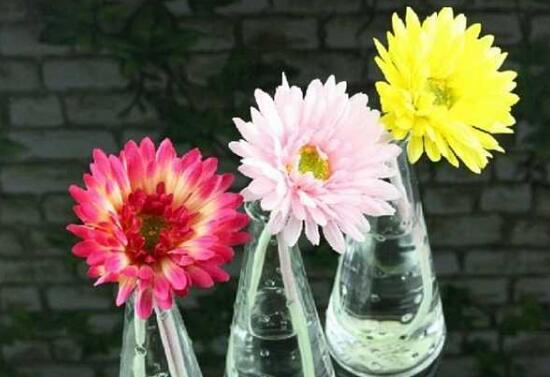
In fact, compared with the soil culture method for growing gerbera, hydroponics is very simple: just wash the gerbera roots clean, then toss them into water, and place them in a warm spot (with the roots kept out of light), and it is basically done. Overall, hydroponic gerbera has a high survival rate; as long as everyone follows the hydroponic method for gerbera, it will be fine. For the specifics, let's continue reading below.
II. Hydroponic method for gerbera
1. Container selection
For how to grow gerbera hydroponically, the first thing is naturally choosing a container. You should choose a glass container with an open mouth, a certain volume, and enough room for the root system to spread out.
Note: When placing the gerbera into the container, do not let the leaves become submerged in the water, so as to avoid rot. Then place the glass container under suitable light conditions, and it will soon take root.
2. Temperature
After successfully growing gerbera hydroponically, the subsequent care is very important. First, temperature: the most suitable temperature for hydroponic gerbera is 5-30°C. Growing in such an environment, it will feel very comfortable and will be able to grow normally.
3. Light
Although gerbera likes light and needs full sun except in summer, when grown hydroponically it is best to give it mainly diffused light, with just appropriate brightness. Of course, in summer, be sure not to expose it to direct sunlight.
4. Changing the water
When it comes to how to grow gerbera hydroponically, changing the water is certainly the most important thing. Generally speaking, in spring and autumn, change the water once every 5-10 days; in summer, when temperatures are high, change the water once every 3-5 days; in winter, when temperatures are low, change the water once every half month. This helps ensure the oxygen supply in the water, so the gerbera can grow more healthily.
Note: Hydroponic gerbera must have its water changed frequently, because once the water is not changed for a long time, oxygen will be insufficient and the water quality will not be fresh, which is very likely to cause the plant to die.
5. Cleaning/pruning
After discussing water changes, cleaning is naturally indispensable. When changing the water, you should also rinse the roots and the container clean with clear water. In addition, you should prune dead branches and fallen leaves and rotten roots, and note that the pruning tools must be disinfected.
6. Nutrient solution
Having discussed water changes, let's now talk about nutrient solution, which is also indispensable in the hydroponic method for gerbera. To fertilize hydroponic gerbera, you can use a special nutrient solution for hydroponics sold on the market.
Note: When using the nutrient solution, let tap water sit for half a day, then add the concentrated nutrient solution in proportion. This can volatilize the chlorine in the water completely, and the temperature will be closer to room temperature.
Can gerbera be grown hydroponically? Gerbera hydroponic method and care guide
Gerbera blooms beautifully and has strong vitality, making it a flower variety chosen by many beginner growers. Common gerbera is grown in soil. Did you know it can also be grown hydroponically? So, how do you grow and care for gerbera hydroponically?
1. Growth characteristics
Gerbera, also known as fringed flower, lantern flower, and sun red. It belongs to the genus Gerbera (or fringed flower) in the Asteraceae family. Gerbera is a perennial evergreen herbaceous plant with persistent roots. The plant height is 20-35 cm, and the whole plant is covered with fine hairs. The leaves are clustered at the base, spoon-shaped, with wavy margins, shallowly or deeply pinnately lobed, and stalked. In the center are clustered tubular flowers, which may be the same color as or a different color from the ligulate flowers. It blooms year-round, and the flower shapes and colors are rich and varied. Set off by the green leaves, it is even more enchanting.
2. Hydroponic method
(1) Before hydroponic planting, treat the plant with paclobutrazol, chlormequat, etc., plant it in a glass container matching the size of the plant, and fix it in place with ceramsite or gravel, etc.
(2) Use 1/4-1/2 of the standard nutrient solution concentration for hydroponics, and the flowering period can be regulated by light intensity. During the growing period, pinch appropriately to promote branching, increase flower buds, and adjust the plant shape.
3. Care guide
(1) Temperature and light
The temperature suitable for gerbera growth is 20-25°C. When the temperature is higher than 30°C or lower than 10°C, the plant will enter a dormant state. Gerbera likes light, but in summer it should be shaded appropriately. When the midday sun is strong, avoid direct sunlight and strengthen ventilation. In winter, it needs full sunlight.
(2) Changing the water
In the early stage, change the water once every 2-3 days. After water roots grow out, change the water about once every 10 days.
(3) Fertilizing
When changing the water for hydroponic gerbera, add nutrient solution, because gerbera flower stems are relatively long and prone to breaking. When spraying during the flowering period, be careful not to let water get on the center of the leaf rosette, so as to avoid the flower buds rotting from water.
(4) Pest and disease control
Gerbera does not compete for fertilizer. If the leaf tips or the tips of the pinnate lobes appear scorched, it may be caused by too high a nutrient concentration; simply extend the interval for replacing the nutrient solution.
The above is the hydroponic method and care guide for gerbera compiled by the editor of Huinong Network. Have you all learned it? The gerbera planting method is simple and easy to operate. Friends who like gerbera can try growing it.
How to grow gerbera hydroponically
Gerbera hydroponic method
Choose a glass container with an open mouth, a certain volume, and enough room for the root system to spread out. When planting, do not let the leaves become submerged in the water, then place it under suitable light conditions. When there is little water, add water promptly, and it will soon take root.
Gerbera hydroponic management
Temperature
The most suitable temperature for hydroponic gerbera is 5-30°C. Growing in such an environment, it will feel very comfortable and will be able to grow normally; even in winter it will have luxuriant branches and leaves.
Light
Mainly diffused light, with just appropriate brightness. In summer, be careful not to expose it to direct sunlight.
Nutrient solution
You can use a special nutrient solution for hydroponics sold on the market, and prepare it according to the proportions in the instructions. One thing to note: let tap water sit for half a day, then add the concentrated nutrient solution in proportion. This can volatilize the chlorine in the water completely, and the temperature will be closer to room temperature.
Changing the water
Generally speaking, in spring and autumn, change the water about every 5-10 days; in winter, change the water once every half month; in summer, changing the water about once every 5 days is fine. This helps ensure the oxygen supply in the water, so the gerbera can grow more healthily. If the water is not changed for a long time, oxygen will be insufficient and the water quality will not be fresh, which is very likely to cause the plant to die.
Cleaning
When changing the water, rinse the roots and the container clean with clear water, and prune dead branches and fallen leaves and rotten roots. Remember that the pruning tools must be disinfected, and also be careful not to damage the water roots, otherwise your gerbera may not grow well.
The above is the method for how to grow gerbera hydroponically summarized by the editor, and I hope it can help everyone.