When Does Cymbidium Bloom, and How to Care for Cymbidium After the Flowers Fade / Blooms in October
Gardeners are probably familiar with Cymbidium; it is a hybrid variety of orchid with large blooms and vivid flower colors, and it is deeply welcomed and loved by a wide range of people. In daily life, many people grow Cymbidium, and they all look forward to it blooming, so when does Cymbidium bloom? How do you care for Cymbidium after the flowers fade? Here, the editor will answer these questions for everyone.
1. When Does Cymbidium Bloom, October
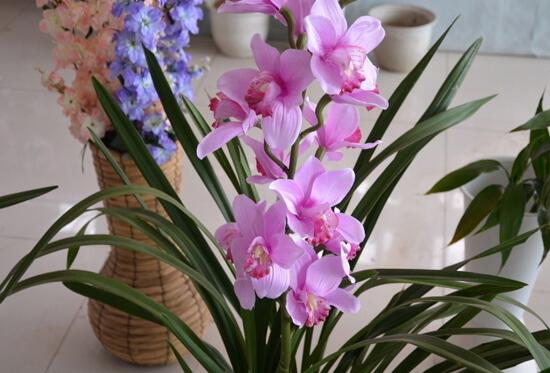
As for this question, the answer is actually not fixed, because depending on the variety and care methods, Cymbidium blooms at different times. However, if you strictly follow Cymbidium cultivation methods, starting from October, Cymbidium will bloom, and it can continue until April of the following year, so the flowering period can be said to be very long.
2. How Long Is the Cymbidium Flowering Period, 6 Months
Generally speaking, the Cymbidium flowering period is from October to April of the following year, which means it can bloom for 6 months. No wonder this plant is so popular! With the development of breeding technology, the Cymbidium flowering period can also be regulated, and June to October is the flowering regulation period. As long as the temperature is controlled during this time, the flowering period can also be changed.
3. How to Grow Cymbidium So It Blooms
Cymbidium, also called cicada orchid, has large flowers and bright colors and is deeply loved by gardeners. Although Cymbidium is very beautiful after blooming, some gardeners report that their Cymbidium does not bloom or blooms little. What is going on? How do you grow Cymbidium so it blooms? To do this, everyone should do the following two things:
1. Nutrients
Cymbidium blooming consumes a large amount of nutrients, so sufficient nutrient supply must be ensured. For fertilizer, you can choose decomposed fertilizer or a special flower fertilizer. Everyone should apply thin fertilizer frequently, and never apply fertilizer too concentrated. When fertilizing, apply it along the edge of the flowerpot, and do not get it on the roots or leaves.
2. Temperature / Light
How do you grow Cymbidium so it blooms? Control of temperature and light is very important. First is temperature: the suitable growth temperature for Cymbidium is 10-25°C. For flower bud formation, flower stem emergence, and blooming, a large temperature difference between day and night is needed for normal blooming; second is light: Cymbidium likes light, and more sunlight is beneficial for flower bud germination.
3. How to Care for Cymbidium After the Flowers Fade
For many gardeners, Cymbidium dies not long after the flowers fade, becoming a one-time flower. In fact, this idea is wrong, because Cymbidium is not difficult to grow. As long as you understand its habits and give it corresponding measures, you can make it bloom again the following year. How do you care for Cymbidium after the flowers fade? In general, just do the following two things:
1. Pruning
After the Cymbidium flowering period, everyone should promptly cut off the flower stems, so that it has sufficient nutrients to continue growing.
2. Repotting
After the Cymbidium flowers fade, it needs to be repotted, but do not rush to repot it. Wait until around Qingming, when the temperature is basically stable. As for repotting Cymbidium, it was introduced in detail earlier, so I will not say more here. As long as everyone does the above two things, Cymbidium will not die.
How to Care for Cymbidium After Blooming? Cymbidium Post-Bloom Care Methods
How do you care for Cymbidium after blooming? After Cymbidium blooms, the first task is to remove spent flowers and buds, dead branches, and withered leaves, and then consider whether repotting is needed according to the actual situation. Below is a summary of how to care for Cymbidium after blooming.
How to Care for Cymbidium After Blooming 1. Remove the Flower Stems After Cymbidium BloomsFor purchased Cymbidium, the flowering period can generally last 25 days to 40 days. After the flowers fade, promptly cut off the flower stems to avoid consuming too many nutrients and affecting blooming the following year.
2. Spray Water Often After Cymbidium BloomsThe Chinese orchid proverb “dry in autumn, not wet in winter” also applies to Cymbidium. Because it has fleshy roots and transpiration is low in winter and spring, too much water can easily cause root rot, so water less and spray the plant frequently, keeping a certain humidity.
3. Provide Sufficient Light After Cymbidium BloomsCymbidium likes scattered light. If light is insufficient, leaves can easily turn yellow, so place it on a south-facing windowsill so it receives sufficient light.
4. Keep It Warm After Cymbidium BloomsCymbidium likes a warm environment. In winter, room temperature should not be lower than 8°C. Especially in early spring after the heating stops, if cold protection measures are not taken, the plant can easily suffer cold damage and die. A relatively simple way to keep it warm is to immediately cover the entire flowerpot with plastic film after the heating stops, and place it indoors in a sunny spot. If the temperature is still low, use measures such as turning on an electric heater or warm air to raise room temperature, keeping it above 10°C.
5. Repot Properly After Cymbidium BloomsAfter the Cymbidium flowers fade, do not rush to repot it. Wait until around Qingming, when the temperature is basically stable. The flowerpot should be a breathable clay or tile bucket-shaped pot. At the bottom of the pot, use broken pot pieces to make a good drainage layer. The growing medium can be made of charcoal, fine crushed stone, coarse river sand, and annealed ceramsite in a 1:1:3:1 ratio, and disinfected by spraying before use. It should be mentioned that the growing medium must be soaked thoroughly with water before use. After the plant is potted, there is no need to water thoroughly; just water a small amount so the potting soil settles naturally and firmly.
How to Make Bloomed Cymbidium Bloom Again the Following Year
Cymbidium is an evergreen perennial herbaceous plant of the genus Cymbidium in the orchid family. It belongs to the luxurious and elegant type of orchids, sells very well in the international flower market, and is deeply loved by flower enthusiasts. But many growers say that Cymbidium dies not long after the flowers fade, becoming a “one-time flower.” In fact, Cymbidium is not more difficult to cultivate than other orchids. As long as you understand its habits and give corresponding measures, you can successfully make it bloom again the following year. 1. Remove the flower stems. For Cymbidium bought before Spring Festival, the flowering period can generally last 1-3 months. After the flowers fade, promptly cut off the flower stems.2. Keep it warm. Cymbidium likes a warm environment. In winter, room temperature should not be lower than 8°C. Especially in early spring after the heating stops, if cold protection measures are not taken, the plant can easily suffer cold damage and die. A relatively simple way to keep it warm is to immediately cover the entire flowerpot with plastic film after the heating stops, and place it indoors in a sunny spot. If the temperature is still low, use measures such as turning on the air conditioner to raise room temperature, keeping it above 10°C.
3. Repot properly. After the Cymbidium flowers fade, do not rush to repot it. Wait until around Qingming, when the temperature is basically stable. The flowerpot should be a breathable clay pot. At the bottom of the pot, use broken pot pieces to make a drainage layer. The growing medium can be pine bark or charcoal, fine crushed stone, coarse river sand, and annealed ceramsite, mixed in a 1:1:3:1 ratio, and sprayed with disinfectant before use. Note that the growing medium should be soaked thoroughly with water before use. After the plant is potted, there is no need to water thoroughly; just water a small amount so the potting medium settles naturally and firmly.
4.Cultivation Management TechniquesKey Points
1. Watering: Most Cymbidium varieties need relatively high humidity, so mature plants need sufficient water in all four seasons. Generally, water once every 1-3 days in winter and early spring, and water 1-2 times per day from early summer to late autumn, and while watering every day, spray the leaves once (mist).
2. Fertilizing: During the peak growing season, use decomposed cake fertilizer diluted into a 0.02% liquid fertilizer and water it on 1-2 times. At ordinary times, use fermented oil meal organic fertilizer mixed with bone meal or superphosphate to make pellets about 2 cm in diameter and place them on the pot surface (they can slowly release fertility as moisture penetrates), and once a week, along with watering, apply a 0.1-0.2% compound fertilizer solution once.
3. Light: Cymbidium growth requires sufficient scattered light. If light is insufficient, leaves can easily turn yellow, so place it on a south-facing windowsill so it receives sufficient light. In summer and autumn, use a shade net to provide about 50% shade. On cloudy days or in winter and spring when sunlight is soft, open the shade net to receive direct light. During the flowering period, place the orchid plant in a place with weaker light so its flowers are bright and beautiful.
4. Temperature: Cymbidium likes a warm environment. It generally grows vigorously at 15-25°C. In summer, the highest temperature it can tolerate is 35°C. In autumn, when the temperature is above 25°C, flower buds stop growing and turn yellow and wither, so in autumn during flower bud formation, keep it below 25°C. The most suitable temperature for Cymbidium growth and development is 20-25°C.
5. Pest and disease control: ① Southern blight. Under poorly ventilated conditions, southern blight is likely to occur. It can be sprayed and used as a root drench with a 600-800 times dilution of 12% copper abietate emulsifiable concentrate. After 7-10 days, spray and drench once more. ② Leaf spot and black rot of the orchid pseudobulb. It can be sprayed with a 1000 times dilution of 70% thiophanate-methyl, or a 1000 times dilution of 50% carbendazim, once every 15 days, to prevent it from occurring. ③ Scale insects. Use a 600-800 times dilution of essential balm to spray and kill them. ④ Red spider mites. Use neutral laundry detergent diluted 150 times with water to spray and kill them. ⑤ Aphids. Boil 500 g of Chinese pulsatilla root for half an hour, filter, and use the liquid to spray.