What to do when the leaves of the baby rubber plant turn yellow? Four simple tricks to make the leaves lush and green again
The leaves of the baby rubber plant should normally be lush and green, and also give off a bright gloss. However, if the baby rubber plant is not cultivated properly, it can lead to yellowing leaves, a wilted baby rubber plant, and other such problems, which greatly affect its ornamental effect. So what should you do when the leaves of the baby rubber plant turn yellow? Let me tell you the solutions.
What to do when the leaves of the baby rubber plant turn yellow
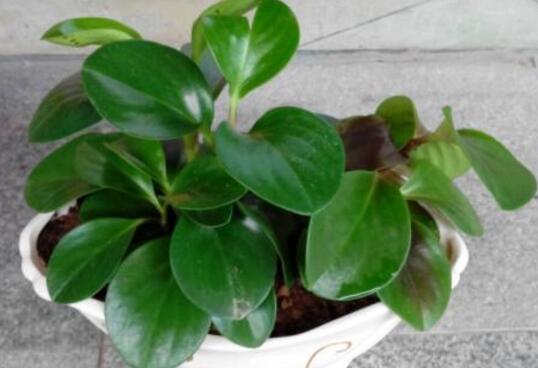
Aside from old leaves turning yellow and drying up normally, yellowing in new leaves or leaves during the growing season should be taken seriously. The main causes of yellowing leaves are overwatering, going too long without watering, temperatures that are too low, and never fertilizing. The corresponding solutions are as follows.
1. Overwatering
Some flower growers are misled by experience and think the baby rubber plant is a water-loving plant, so they water it too often and with too much water, letting water accumulate in the pot every time, which causes root rot and yellow, withered leaves.
Solution: What should you do when the baby rubber plant's leaves turn yellow due to overwatering? The answer is to reduce watering. Do not let water accumulate when watering each time, and if you accidentally overwater, drain the excess water promptly.
2. Going too long without watering
Watering the baby rubber plant too much is wrong, but going a long time without watering is also wrong. Some flower growers go a whole month without watering once, and then find the leaves turning yellow and the baby rubber plant wilting. This is caused by an insufficient water supply.
Solution: Replenish water promptly. Water when the soil looks dry, water thoroughly each time, and avoid letting the soil get too dry.
3. Temperature too low
The baby rubber plant has only average cold tolerance. Below 5 degrees, its leaves may suffer frost damage. Yellowing leaves in winter are a fairly common sight for the baby rubber plant, so temperature control should be paid attention to.
Solution: What should you do when the baby rubber plant's leaves turn yellow due to low temperatures? Check the ambient temperature. When it is below 10 degrees, move it indoors or to a warmer place, and you can keep it in a spot with ample light.
4. Never fertilizing
Fertilizer and water are very important for the growth of the baby rubber plant, and fertilizing is often inseparable from watering. If you never fertilize while growing the baby rubber plant, then even if the soil is fertile, the nutrients are limited. Once the nutrients have been absorbed, the leaves will lose their green color due to a lack of nutrition.
Solution: Fertilize once every 15-20 days during the growing season, and pay attention to applying nitrogen fertilizer, which can keep the leaves deep green, as it is a main component of chlorophyll. When fertilizing, use mainly decomposed fertilizer, and water promptly after fertilizing.
What to do when the baby rubber plant wilts
A baby rubber plant with weak growth is often that way due to insufficient nutrition. Besides the four causes above that can make the plant wilt, there is one more: lack of light. Although the baby rubber plant likes a semi-shaded environment, going a long time without light or with too little light will make the leaves wilt and the plant look listless. You can solve this by supplementing with scattered light.
What are the uses of the mulberry tree? What are the uses of mulberry leaves?
What are the uses of the mulberry tree? And what are the uses of mulberry leaves? Everyone knows only one thing: the mulberry tree can grow mulberry leaves for raising silkworms. In fact, the mulberry tree has many other uses, and the role of mulberry leaves is not just as simple as feeding silkworms. They also have a range of other uses, all of which are of direct benefit to our lives.
Editor's recommendations:What causes yellowing leaves on the clivia? What plants absorb formaldehyde? What are the best radiation-resistant plants?
>>Click the image to learn more related content<<
The mulberry tree is a deciduous tree, 2-6 zhang tall; it has a well-developed root system and strong sprouting ability, likes light, and grows quickly. The mulberry tree is strongly drought-resistant, tolerant of high temperatures and humidity, and also has fairly strong alkali resistance, so it is a good tree species for soil and water conservation and sand fixation. In our country, from Liaoning in the northeast to the Yunnan-Guizhou Plateau in the southwest, and from the northwest to the coastal provinces in the southeast, mulberry trees are planted in many places.
>>Click the image to learn more related content<<
The mulberry tree can grow lush green mulberry leaves, and mulberry leaves are the main food for feeding silkworms. In our country, the textile industry is very developed, and its silk floss all comes from silkworm cocoons, while the production of silkworm cocoons comes from mulberry leaves. Mulberry wood is hard and can be used to make furniture and farm tools, and can also serve as small construction material; mulberry bark can be used to make paper; mulberry branches can be woven into baskets; and mulberry fruits can be used to brew wine.
>>Click the image to learn more related content<<
Because the mulberry tree has high economic value, and especially because silk is a top-grade prevention and control raw material, with the development of the country's economic construction and the improvement of people's living standards, the demand for silk will also increase day by day. Therefore, each region can appropriately develop the mulberry planting industry according to local specific conditions.
>>Click the image to learn more related content<<
Mulberry leaves are bitter, sweet, and cold in nature and flavor. Besides feeding silkworms, mulberry leaves also have the effects of dispelling wind-heat, clearing the lungs and moistening dryness, and clearing the liver and improving eyesight. They can play the fire-clearing role you mentioned. When a person is ill with a cold, mulberry leaves can be brewed as tea, and the leaf essence enters the tea water, which is greatly beneficial for the body during a cold. In addition, the bark of the mulberry root can also be used to cure colds and reduce fever.
Related recommendations:Which plants are suitable for hydroponics? An introduction to how to grow the baby rubber plant How do you change the water for hydroponic plants? How do you grow the anthurium? Is the anthurium toxic? An introduction to related knowledge about pickerelweed What hydroponic plants are there for the home How to hydroponically grow spider plants Methods for hydroponically growing spider plants
These flowers can survive even if thrown into water, and no amount of watering will hurt them
Coin grass
Coin grass, as many flower growers surely know, simply cannot do without water. It can even be grown half in soil and half in water! You can see how high its water requirements are!
Care points:
1. For the care of coin grass, first, it cannot lack water, and second, it cannot lack light. Whenever you see that the water is low, add more quickly; when the soil is dry, water quickly. The stronger the light, the better!
2. If you want the coin grass to grow more vigorously, you can put a few slow-release fertilizer granules into the water or soil where the coin grass is grown. It will absolutely make your coin grass explode with growth until the pot is invisible!
Saxifrage
(Author: Cai Hui 1001 Source: Sina Blog)
Saxifrage probably got this name because its leaves look very much like a tiger's little ears! Except that these ears are green~
Care points:
1. Saxifrage needs a large amount of water during its growth period and needs to stay moist every day. It may even turn yellow and drop leaves if it suffers even slight drought. For flower growers who like to water, saxifrage is very suitable~ After flowering, reduce watering; once it enters dormancy, just water thoroughly when the soil is dry.
2. It needs ample light, otherwise the leaves will become dull, but in summer it should be shaded, and it can also be placed indoors in a spot with scattered light.
3. Saxifrage has relatively high temperature requirements. In winter it cannot go below 5°C, and the variegated tricolor saxifrage is even prone to frost damage below 15°C.
Maidenhair fern
In Huahua's eyes, the maidenhair fern has always had the best looks in the fern family! So fresh and lovely! So suitable for keeping at home!
Care points:
1. The maidenhair fern, like saxifrage, has very high water requirements. During the growing season it may even need watering once every 1-2 days, and normally you should spray water on the maidenhair fern to increase humidity! Even in autumn and winter, the potting soil must be kept slightly moist!
2. The maidenhair fern is a shade plant. Indoors, it is best kept on a north-facing or east-facing balcony or windowsill. If it is kept outdoors, it must be shaded in summer.
3. The suitable growth temperature for the maidenhair fern is 15-20°C, and the winter temperature should not be lower than 10°C. In summer, if the temperature is too high, you need to spray the plant with water every day.
Baby rubber plant
Baby rubber plant, just hearing this name, you can imagine its lush green appearance. In fact, the baby rubber plant lives up to its name and really is lush green all year round~
Care points:
1. The baby rubber plant likes water and is not drought-tolerant. It also needs a lot of watering during the growing season, as long as water does not accumulate! Air humidity is best at around 70%; if it cannot reach that, spray the baby rubber plant in the morning and evening. When the temperature is below 25°C, water thoroughly after the soil dries; below 10°C, wait several days after the potting soil dries before watering.
2. Apart from winter, when it needs ample light, it needs a little shading in the other seasons. The baby rubber plant is very suitable for growing in an office, where daily incandescent light is enough for its growth. Going without sunlight for a long time will cause leggy growth and affect its ornamental value.
3. When baby rubber plant seedlings grow to about 10CM, they should be pinched back to encourage side branches to sprout, increase the number of branches, and make the plant shape fuller. For larger plants, you can prune according to your own needs.
Caladium
Caladium, as the name suggests, definitely does not have the kind of green leaves we commonly see, but leaves with all kinds of colors. There are also many varieties of caladium, such as those with white leaves, red leaves, and so on~
(Author: Su Yong Source: Sina Blog)
Care points:
1. Caladium likes moisture and is very intolerant of drought. Therefore, in spring and summer, caladium needs a lot of watering, but water must not accumulate~ In other seasons, watering can wait until the surface soil is dry.
2. It cannot be kept shaded for a long time, otherwise the leaf color becomes dull and its ornamental value is affected. In spring, autumn, and winter it can receive direct sunlight, but in summer it must be shaded, otherwise the leaves are prone to sunburn.
3. During the growing season, apply a thin fertilizer once a week. The fertilizer should preferably be balanced in nitrogen, phosphorus, and potassium, or mainly nitrogen fertilizer.
4. The temperature cannot be lower than 15°C. Below 12°C, the leaves of caladium will turn yellow and wither.
Lucky bamboo
(Author: jtt7024 | Source: Baidu Zhidao)
Most flower growers probably grow lucky bamboo hydroponically. In fact, lucky bamboo also grows easily in soil~ With the rich nutrients in soil, the chances of lucky bamboo growing large are even greater!
(Author: Haval M4_SUV Source: Lucky Bamboo Bar)
Care points:
1. During the growing season, keep the soil moist. Do not let it dry out and then get soaked; also often spray or sprinkle water on the leaf surface to maintain air humidity.
2. It is not strict about light and is suitable for growing under bright scattered light, so it is quite suitable for keeping indoors~
3. The soil mix for lucky bamboo should be loose and breathable. You can use peat soil mixed with 50% garden soil, or an equal mix of leaf mold, garden soil, and river sand.
Cordyline
Cordyline has rather gorgeous colors, and placed together with all those green plants it has a distinctive charm. Flower growers whose homes are all green plants might consider it~
Care points:
1. Watering should not only be sufficient but also balanced. You cannot water a lot one time and a little the next. Also, in dry weather, spray cordyline with water 2-3 times a day.
2. During the peak growing season, apply diluted cake fertilizer water 1-2 times a month. Older plants should be given more phosphorus and potassium fertilizer.
3. It should be placed near a south window in a spot with bright light. At noon in summer and early autumn, avoid direct strong light.
4. Keeping the winter room temperature above 10°C is enough for it to overwinter safely.
Pothos
Pothos surely needs no lengthy introduction from Huahua, right? This plant is just too common in flower markets! Basically, you can see a pot every few steps, so it is definitely easy to grow!
Care points:
1. Soil-grown pothos should keep the potting soil moist. Normally water it more often; in midsummer you can water it every day, but water must not accumulate. At the same time, spray water on the pothos leaves every day to increase air humidity. Hydroponic pothos needs its water changed, especially in summer, when it should be changed often. For changing the water, tap water left to sit for 1-2 days is best.
2. Pothos likes shade. Home-grown pothos should be placed in a spot with scattered light indoors. If the indoor light is rather dim, you can move it to a brighter place for one day about every 10 days, otherwise it will affect the pothos's photosynthesis.
3. It is recommended to grow pothos at a room temperature of around 20°C, and also be careful not to let the leaves get close to heating, underfloor heating, air conditioning, and so on. In winter, as long as the temperature is not below 10°C, pothos can overwinter safely.
How about it?
As long as you can ensure water does not accumulate,
watering a little more is no problem~