How to care for Lantana (five-color plum) in winter? Control fertilizer and water, increase light, and keep the temperature above 8 degrees
Lantana is a shrub native to the tropics. Because of its strong adaptability, it is also very common in the wild in many places. However, it is not without weaknesses. For example, its intolerance to cold is one of its shortcomings, so caring for it in winter requires certain techniques. So how do you care for lantana in winter? Let me tell you the answer.
How to care for lantana in winter
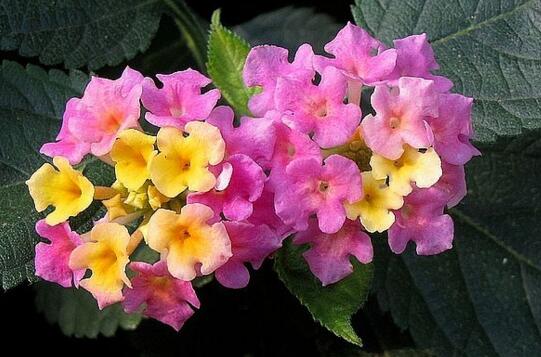
Because winter is different from other seasons in terms of light intensity, temperature, humidity, and so on, the methods for growing lantana in winter will differ from those in spring, summer, and autumn. Below we will look at this in detail from aspects such as light, temperature, fertilizer, and water.
Methods for growing lantana in winter
1. Light
Although lantana grows relatively slowly in winter, we still need to provide it with enough light. Since winter sunlight is not strong, in order to ensure sufficient light intensity while also keeping it from freezing indoors, it needs to be placed in a bright spot for care, such as a window or balcony.
In addition, some methods can be used to increase light, such as using scattered light or fluorescent lamps to supplement lighting, so that it can carry out normal metabolism and keep its leaves evergreen in winter.
2. Temperature
When the temperature is below 10 degrees, lantana will drop its leaves. At this time, how do you care for lantana in winter? Try to keep the temperature above 8 degrees. The method is to move it back indoors, or cover lantana with two layers of plastic film, but be careful to leave ventilation holes in the plastic film.
3. Fertilizer and water
Except for greenhouse cultivation, lantana usually does not need fertilizing in winter. Only in late autumn can a small amount of diluted fertilizer water be applied, with the purpose of improving its ability to resist cold.
Watering in winter also has certain techniques. Generally, water a small amount every 7-10 days to keep the soil from drying out completely. When watering, the water temperature should also be above 8 degrees to avoid frost damage to the leaves and roots caused by water that is too cold.
Precautions for growing lantana in winter
1. Clean up dead branches and spent flowers
Before winter arrives, the spent flowers, dead branches, and fallen leaves on the lantana plant should be pruned off and disposed of centrally. This helps avoid unnecessary waste of nutrients, so that under the condition of relatively little fertilizer and water in winter, it can have enough nutrients to successfully overwinter.
2. Avoid sowing and cuttings
Winter is not suitable for propagating lantana, because neither the temperature nor the humidity, among other factors, is favorable for quick rooting after propagation. Not only that, it will also have an adverse effect on the mother plant.
These 8 flowers bloom for half a year once they start, so satisfying
Crown of Thorns
Flowering period
Year-round - if fertilizer, water, temperature, and light are suitable, Crown of Thorns can bloom all year.
Care methods
Temperature: If you want Crown of Thorns to bloom in winter too, the temperature must not be lower than 15 degrees. If the temperature is below 0 degrees, there is a risk of frost damage and death.
Light: If you want Crown of Thorns to bloom all year, light is very important. Crown of Thorns likes light, and sufficient light must be ensured throughout the four seasons. If light is insufficient, it will bloom less or not bloom at all.
Water: Crown of Thorns is a succulent plant and does not need much water. Never let water accumulate in the pot.
Fertilizing: Apply light fertilizer frequently and replenish nutrients in time. Only in this way can it keep blooming.
Chinese Rose
Flowering period
May-November
Care methods
Temperature: The most suitable daytime temperature is 15-26°C, and at night 10-15°C;
Light: If you want Chinese roses to keep blooming, sufficient light must also be ensured. It is best to have about 6 hours of light per day;
Water: Watering Chinese roses requires attention. It should be done by the principle of dry-wet alternation: do not water when not dry, and water thoroughly when watering.
Fertilizing: Chinese roses like fertilizer, so fertilizer must be applied in time after flowering to replenish nutrient consumption. Only in this way can they continue to form buds.
Geranium
Flowering period
The flowering period begins in early winter and lasts until early summer of the following year.
Care methods
Temperature: The most suitable growth temperature for geranium is 10-20 degrees. Pay attention to keeping warm in winter and cooling down in summer;
Light: Sufficient light is beneficial to flower bud differentiation and flowering in geranium, but direct sunlight should be avoided when summer temperatures are high;
Water: Geranium is drought-tolerant, and too much watering can easily cause root rot;
Fertilizing: Fertilizing geranium should also be done with light fertilizer frequently. Too much fertilizer will cause excessive vegetative growth, with only leaves growing and no flowers.
Lantana
Flowering period
May-October;
Care methods
Temperature: Lantana likes a warm environment. If the winter temperature can be kept above 15 degrees, the plant can bloom normally.
Light: Lantana has strict light requirements. Insufficient light will make the plant weak and prevent flowering;
Water: During the growth period, keep the potting soil moist. When the air is dry, spray water on the leaves and surrounding area more often to ensure sufficient humidity;
Fertilizing: If you want the plant to bloom more, apply a light fertilizer mainly based on phosphorus and potassium fertilizer once every half month.
Kalanchoe
Flowering period
December to May of the following year
Care methods
Temperature: The suitable growth temperature is 10-20 degrees. If the winter temperature is below 5 degrees, flowering will be delayed. If the winter temperature can be maintained at around 15 degrees, it can bloom continuously;
Light: Kalanchoe is very sensitive to light. If treated with short-day conditions for three to four weeks, flower buds and flowers will appear;
Water: Kalanchoe is a succulent plant, drought-tolerant and not tolerant of water accumulation;
Fertilizing: During the growth period, apply a light fertilizer once every half month. In autumn when buds differentiate, 1-2 additional applications of phosphorus and potassium fertilizer can be added;
Begonia semperflorens
Flowering period
Blooms almost all year.
Care methods
Temperature: Control the temperature above 10 degrees and below 30 degrees, and pay attention to watering and fertilizing, then it can bloom continuously;
Light: Winter temperatures are low, so sufficient light needs to be ensured. In summer, appropriate shading is needed;
Water: Spring and autumn are the peak flowering periods, so watering can be increased. In autumn and winter, watering can be reduced;
Fertilizing: Mainly apply decomposed organic diluted fertilizer water with no odor or inorganic fertilizer soaking solution.
Hibiscus
Flowering period
Can bloom continuously all year;
Care methods
Temperature: The overwintering temperature needs to be kept above 12 degrees;
Light: Hibiscus likes light. If light is insufficient, the flowers will be small and easy to drop;
Water: During the growth period, water must be sufficient. It cannot lack water, and of course it cannot have water accumulation either;
Fertilizing: Apply diluted liquid fertilizer once about every 10 days, which can keep the plant robust and promote flower bud differentiation.
Madagascar Periwinkle
Flowering period
Can bloom all year;
Care methods
Temperature: Above 15 degrees, it can grow and bloom normally. Below 5 degrees, it will suffer cold damage;
Light: If you want Madagascar Periwinkle to bloom every month, sufficient light is indispensable, especially in winter, when sufficient light must be ensured;
Water: Madagascar Periwinkle dislikes water accumulation. Do not water too much; the potting soil just needs to be slightly moist;
Fertilizing: Before planting, apply sufficient base fertilizer at the bottom of the pot. When fertility is insufficient, apply water-soluble fertilizer.
Flower lovers, what other plants that bloom continuously have you grown?
Tell Huahua quickly~
Complete list of cut rose varieties_How to grow cut roses
Cut roses are a general term for a type of modern rose that is very suitable for cultivation as cut flowers. They are thorny shrub plants belonging to the genus Rosa in the family Rosaceae. The leaves of cut roses are alternate and maple-like pinnate, and the leaf surface is very smooth and also very glossy. The flowers of cut roses are solitary at the top of the stem, are double-petaled, and the flower shapes and colors are very rich. Their flower shape is mainly the high-centered rolled-edge form, blooms very slowly, and is suitable for vase cultivation. Below let us learn about some complete lists of cut rose varieties, as well as methods for growing cut roses.
[Complete list of cut rose varieties]
Cut roses are a general term for a type of modern rose especially suitable for cultivation as cut flowers. There are no type restrictions, and they mainly include hybrid tea roses, floribunda roses, grandiflora roses, and so on. Cut roses are also called roses and rose flowers. Like other series of roses, their varieties are very rich, and every year many new rose varieties are bred around the world. More classic varieties include Peach Snow Mountain, Abance, Temptation, Purple Queen, Snow Mountain, Candy Snow Mountain, and so on. Cut roses are a crop with very good benefits. Their market consumer potential is very large, and demand is also relatively strong. Cut roses are mainly supplied to flower shops, flower markets, wedding companies, individuals, and so on.
[Methods for growing cut roses—Growth habits]
Cut roses like to grow in a warm, humid environment with relatively sufficient sunlight. The suitable growth temperature is 15-25 degrees Celsius. They like to grow in loose, fertile, well-drained moist soil, and a soil pH of 6-7 is most suitable. During the growth period, the suitable daytime temperature is 20-27 degrees Celsius, while the suitable nighttime temperature is 15-22 degrees Celsius. Growth is relatively slow at around 5 degrees Celsius, and they enter a dormant state when the temperature is above 30 degrees Celsius or below 5 degrees Celsius. They like to grow in fertile soil and are relatively tolerant of drought and water accumulation. If grown in an environment with relatively severe air pollution, the development of cut roses will be reduced.
[Methods for growing cut roses—Propagation methods]
The main propagation methods for cut roses are cutting propagation, grafting propagation, and tissue culture. Cutting propagation generally selects tender branches and is carried out in late spring or early autumn. Using a misting device can effectively increase the survival rate. Cuttings can be taken throughout the year, and a humidity of around 70-80% is more conducive to root development. For grafting propagation, the rootstock used is generally rose seedlings. January-February is suitable for grafting. The main grafting methods are bud grafting and branch grafting. For tissue culture, generally semi-lignified branches with 3-7 nodes are selected after flowering, then the leaves on the branches are removed, and after disinfection, the stem is cultured.
[Methods for growing cut roses]
Cut roses like to grow in an environment with sufficient sunlight. They are not tolerant of shade and need at least about 5 hours of direct sunlight per day. They like a mild climate and are afraid of hot and severe cold climates. The suitable daytime temperature is 15-26 degrees Celsius, while the suitable nighttime temperature is 10-15 degrees Celsius. The daytime temperature must not be too high, otherwise growth will be delayed, the flowers will bloom smaller and take longer, and the flower color will change. Low temperatures will cause low flower yield, delayed flowering period, and so on. The suitable growth humidity for cut roses is 75-80%. Too high humidity will cause black spot and downy mildew, while too low humidity will cause the leaves and flowers to grow very abnormally. Their soil requirements are not particularly strict. Growth is best in humus soil with relatively high terrain and good drainage, so that the plants grow more robustly and the flowers bloom more abundantly.
1. Planting: Deeply plow the soil, and add pig manure, cow manure, chicken manure, and other compound fertilizers into the soil as base fertilizer. In waterlogged or high-temperature environments, raised beds can be used for planting. Double-row, three-row, four-row, and other planting methods can be adopted, and a plant spacing of 30-35 cm is about right.
2. Fertilizing and watering: The cultivation cycle of roses is 5-6 years. If you want more abundant flowering, you need to irrigate with plenty of fertilizer water. The amount and frequency of fertilizer should be determined according to the plant's growing environment and trend, thereby meeting the plant's nutritional needs for growth. Generally, roses are irrigated with a combination of major elements, trace elements, and compound fertilizer, usually once every 2-4 weeks.
3. Pruning and bud thinning: During the growth period of cut roses, prune and thin buds, and at the same time remove side buds growing on the plant, sprouts on the rootstock, and roots on the scion, thereby promoting better flowering of the plant.
4. Cooling and shading treatment: When the temperature is relatively high, field-grown cut roses are very suitable for shading and rain protection treatment. Especially in winter, generally no heating is needed, and they can grow very well.
More related information: How to grow Daphne odora 'Aureomarginata' Sophora japonica leaves pictures Spider lily pictures How to grow Norfolk Island pine Is lantana toxic?