How to water Lantana camara? Seasonal watering times and water quantity methods
Since Lantana camara is a plant that tolerates both drought and waterlogging, some flower enthusiasts do not pay attention to details when watering, resulting in too much water sometimes and no watering at all for long periods at other times. This is clearly wrong in the cultivation of Lantana camara. So how should Lantana camara be watered appropriately? Let's look at the correct method together.
How to water Lantana camara
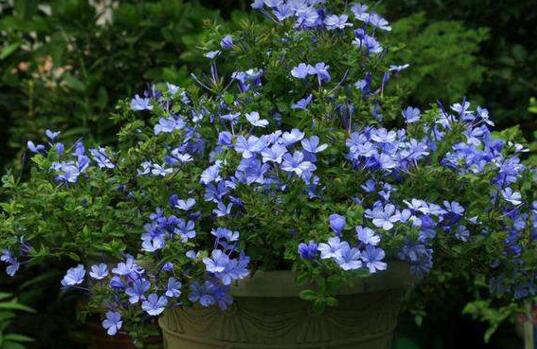
When watering Lantana camara, two important factors need to be considered: the growth stage and seasonal changes. This is because different growth stages have different water requirements, and seasonal changes determine the speed of water evaporation and air humidity, so the watering schedule is not set in stone.
1. How to water Lantana camara in spring
In early spring, as the climate begins to warm up, its water requirements gradually increase, so watering is generally done once every 3-5 days. When watering, simply keep the soil slightly moist; there is no need to pour a large amount of water at once, which would cause water to accumulate at the roots of Lantana camara.
2. Watering in summer
Lantana camara needs more water in summer, and because temperatures are relatively high at this time and water evaporates quickly, water it once every 2-3 days. If Lantana camara is placed in direct sunlight, it is also necessary to appropriately spray water on the plant to increase the air humidity around it.
3. Watering in autumn
Autumn watering is similar to spring, but the temperature changes are exactly the opposite, so watering also goes from more to less. When watering in autumn, also clean up fallen leaves in the pot to prevent rotting leaves from mixing into the soil and breeding pathogens.
4. Can Lantana camara be watered in winter
Winter is a rather special season. Plants often need reasonable measures to successfully overwinter in winter, and Lantana camara is certainly no exception. In winter, watering should be reduced or even stopped, and the soil should just be kept on the dry side.
Precautions for watering Lantana camara
1. Watering after fertilizing
In addition to the seasonal watering introduced above, after each fertilization, water should also be given promptly so that the fertilizer can quickly enter the soil and be absorbed by the roots of Lantana camara. You can also directly mix fertilizer with water and use it to drench the roots.
2. Watering during the flowering period
How should Lantana camara be watered during the flowering period? Watering is still essential, but at this time there are many particular requirements. In order to keep the flowers more vivid and promote more blooming, watering is generally best done in the morning, which allows water to be fully absorbed by the soil rather than evaporated.
3. Watering during the rainy season
For Lantana camara planted in the open ground, during the rainy season you should not only stop watering but also pay attention to drainage to prevent waterlogging. Potted Lantana camara should be moved back indoors during the rainy season or given shelter from rain to avoid excessive rainwater washing the plant.
Management methods for potted flowers in spring
Spring warms and flowers bloom, and all things revive. Sunlight shines over the earth, stretches of gentle grass appear, bright red flowers bloom, and buds have already sprouted on the branches of the trees.It is spring, and the scent of flowers can be smelled everywhere. New green, tender green, fresh green, emerald green, green fills the eyes and softens our gaze. And that star-like flickering bit of red, bit of yellow, bit of pink, bit of purple also delights our eyes.
Spring is everywhere in the air. Looking at the little flowers and small potted plants before you, you must feel delighted. We also need to give ourselves a spring. Below, let's talk about the key points for managing potted flowers in spring:
Management methods for potted flowers in spring
1.Repot at the right time
1. Selection of flower pots
For potted flowers, the material of the flower pot and the size of its volume have a great impact on flower growth, so it is very important to choose flower pots reasonably. Current flower pots can be divided into the following types according to the different materials used to make them:
(1) Unglazed clay pots
Generally, clay pots are better than porcelain pots for growing flowers. Clay pots are not only economical and practical, but also ideal in air permeability and water seepage, which is good for root respiration and growth. The disadvantages are monotonous color, unattractive shape, rough surface, limited specifications, and easy breakage.
(2) Plastic pots
Light in material, convenient to use, unbreakable, durable, and smooth inside and outside the pot wall. Not only is it easy to knock off soil when repotting, it is also easy to wash and disinfect. However, they are not breathable or water-permeable, so they are only suitable for growing moisture-tolerant flowers and trees, such as Cyperus alternifolius, Monstera deliciosa, Zantedeschia aethiopica, Aglaonema modestum, or relatively warmth-loving flowers and trees, such as ferns, Chlorophytum comosum, Tradescantia pallida, Solanum pseudocapsicum, Cestrum nocturnum, and so on.
(3) Porcelain pots and glazed pots
When glazed flower pots are used to plant flowers and trees, the outer wall of the pot is coated with colored glaze, which is not breathable or water-permeable, making it difficult to judge the dryness and moisture of the potting soil. Especially during winter dormancy, excessive watering often causes root rot and death of flowers and trees. Therefore, they are not suitable for planting flowers and trees. However, porcelain pots are attractive in appearance and diverse in shape.
2. Preparing potting soil
Commonly used materials include garden soil, leaf mold, peat soil, river sand, rice husk ash, sawdust, moss, and so on. For example, in North China, three materials - leaf mold, garden soil, and river sand - can be used to prepare potting soil. For growing general herbaceous flowers, you can use 3 parts leaf mold, 5 parts garden soil, and 2 parts river sand; for convenience, you can also choose pre-packaged nutrient soil from the flower market.
3. Repotting operation
Repotting and soil replacement are generally best done in April. The repotting time should be handled separately according to different flower species. For example, Rosa chinensis, Jasminum sambac, Hibiscus rosa-sinensis, Begonia, etc. should have their potting soil changed once every spring. Some foliage flowers can have their potting soil changed once every 2-3 years, and some ornamental coniferous and cypress flowers and trees can be repotted once every 3-4 years. Stop watering 1-2 days before repotting to let the potting soil become a bit drier, so that the soil separates from the pot wall, which makes the operation easier. When repotting, for small and medium-sized flower pots, you can gently tap around the flower pot with your hand to slightly separate the potting soil from the pot, then tip the flower pot and plant to one side. At this time, support the plant with one hand, and with the other hand use your thumb or a wooden stick to push inward several times from the drainage hole at the bottom of the pot or gently tap the bottom of the pot, and the plant can be turned out together with the root ball. If it is a perennial flower, you need to scrape off a layer of old soil from the shoulder and outer sides of the original root ball, cut off dead branches, curled roots, and some old roots, place new potting soil in a pot one size larger, and plant it in. If it is a woody flower, you can appropriately remove part of the original root ball and cut off old dead roots. Generally, it should also be planted in a pot one size larger, and attention should be paid to adding new potting soil. The planting method during repotting is basically the same as the method for initial potting. After repotting, water thoroughly and place in a cool place, then gradually move it into sunlight after 10-15 days.
Management methods for potted flowers in spring
2.Move outdoors in time
As temperatures rise, potted flowers will also gradually be moved outdoors in spring. The timing for moving them outdoors should be gradual rather than rushed, and should be staggered according to the cold resistance of the flowers. For example, Jasminum nudiflorum, Prunus mume, Rosa chinensis, Cedrus deodara, Chimonanthus praecox, etc. can be moved outdoors in early April when the average daily temperature reaches 15°C; Jasminum sambac, Hibiscus rosa-sinensis, Bougainvillea spectabilis, Michelia alba, Aglaia odorata, Fortunella margarita, Echinopsis tubiflora, etc. should preferably be moved outdoors in early to mid-May when the average daily temperature reaches about 18°C. Before moving them outdoors, it is best to first go through a period of adapting to the outdoor environment, and then move them outdoors for the whole day. After all have been moved outdoors, spray and wash the branches and leaves with clean water once every day at noon, and keep the potting soil moist. If severe weather occurs, they should still be moved indoors in time. The temperature indicators just mentioned are also suitable for moving them out to the balcony.
3.Scientific pruning
Pruning flowers can regulate the nutrition and growth vigor of existing branches and leaves, promote the sprouting and vigor of new branches, reduce pests and diseases, produce more flower buds, and increase flower size.
For Rosa chinensis, Hibiscus rosa-sinensis, Euphorbia pulcherrima, Fortunella margarita, etc., which bloom on one-year-old branches, heavy pruning can be carried out in spring to promote more new shoots, more flowers, and more fruit. For Prunus mume, Prunus persica 'Duplex', Forsythia suspensa, Syringa oblata, Jasminum nudiflorum, etc., which bloom in spring, their flower buds are mostly formed on branches grown the previous year, so heavy pruning cannot be done in spring. It is only suitable to cut off autumn shoots without flower buds; otherwise, flowering branches will be cut off and flowering will be affected. Only after flowering can pruning be done to promote the sprouting of new shoots and form flower branches for the second year. For plants that bloom in all four seasons (four-season flowering plants), plants with a long flowering period, perennial herbaceous herbs, etc., after flowering, 1/2 to 2/3 of the plant should be cut off to help the plant form a fuller shape or bloom more. Some flowers cannot bloom or bear fruit due to excessive vegetative growth, so part of the roots can be cut to inhibit excessive growth of branches and leaves and promote flowering and fruiting. Below is an introduction to pruning rhododendrons:
Management methods for potted flowers in spring
4.Reasonable watering
Watering in spring is the key to growing potted flowers well. Because the spring climate is relatively dry and air humidity is low, if the amount of watering is too small, it will cause yellow leaves and leaf drop, affecting the growth and development of flowers; too much watering will cause flower buds to drop or roots to rot, or even death.
Different types of flowers have different habits and quite different water requirements. Moisture-loving flowers such as ferns, orchids, and begonias should be watered more; drought-loving flowers such as Crassulaceae, Cactaceae, and Agavaceae should be watered less; bulbous flowers should not be watered too much. Rainwater, pond water, and river water are most suitable. Generally, tap water can also be used for flowers, but it is best to store tap water for 1-2 days before use.
The amount of watering also depends on the size and texture of the flower pot. If the flower pot is small, the potting soil dries quickly, so the frequency of watering should be increased; the opposite is true for a large flower pot. Clay pots are loose in texture and good in water seepage, and the water lost through evaporation from the pot wall is even more than the water consumed by the flowers, so more watering is needed; pottery pots, glazed pots, and purple clay pots are fine and dense in texture and poor in water seepage and air permeability, so less watering is needed; plastic pots are impermeable and non-breathable, so even less watering is needed. Several commonly used watering methods:
(1) Soaking pot method
Immerse the flower pot in a basin of water and let water seep into the potting soil along the hole at the bottom of the pot until the potting soil is completely soaked through.
(2) Watering can method
Use a watering can to pour water directly onto the pot surface. This method is commonly used for relatively large flowers and trees.
(3) Spraying can method
Use a spray can to sprinkle water on the leaf surfaces of the plant and the pot surface. This method is commonly used for newly potted seedlings, cuttings, and foliage plants. However, some flowers are particularly sensitive to water. For example, Sinningia speciosa, Calceolaria, and Begonia have relatively thick fuzz on their leaf surfaces, and after spraying, the water does not evaporate easily, making the leaves prone to rot; after the top leaf buds of Cyclamen persicum tubers and the flower buds of Gerbera jamesonii touch water, they easily rot and wither, so spraying should not be used. For fully open flowers, it is also not advisable to spray too much water; otherwise, it can easily cause petal mildew or affect fertilization, reducing the seed-setting rate.
Management methods for potted flowers in spring
5.Reasonable fertilization
Different types of flowers require fertilizers of different properties. The types of fertilizers applied should be reasonably matched; otherwise, nutrient deficiency symptoms are likely to occur. Green foliage plants, such as Monstera deliciosa, Chlorophytum comosum, Asparagus setaceus, and Cycas revoluta, generally mainly need nitrogen fertilizer; for colorful foliage plants, such as Coleus scutellarioides, Caladium bicolor, and Dieffenbachia seguine, in addition to nitrogen fertilizer, attention should also be paid to adding phosphorus and potassium fertilizer; otherwise, leaves will grow excessively and markings will disappear. For flowering and fruiting flowers, such as Viola × wittrockiana, Calendula officinalis, Petunia hybrida, and Capsicum annuum, complete fertilizer should be applied, with more nitrogen fertilizer at the seedling stage and more phosphorus fertilizer at the flower bud differentiation stage, flower bud formation stage, and early flowering stage, so as to promote both flowers and fruit. For flowers that bloom multiple times a year, such as Rosa chinensis, Jasminum sambac, and Aglaia odorata, phosphorus fertilizer should be dominant to promote repeated flowering; bulbous flowers should be given more phosphorus and potassium fertilizer to facilitate bulb development; for acid-loving flowers in the south, such as rhododendrons, Camellia japonica, Gardenia jasminoides, Bromeliaceae, and ferns, alkaline fertilizers should be avoided, and acidic fertilizers such as ammonium sulfate and superphosphate should be applied. When necessary, ferrous sulfate should also be added to adjust the soil pH value to ensure abundant flowers and lush leaves.
Management methods for potted flowers in spring
6.Propagation of flowers
1. Treatment methods for flower and tree cuttings
Spring is the best season for flower cutting propagation. Because the temperature often remains at 15°C-20°C and humidity is high, the survival rate is high. Most potted flowers can be propagated in early spring by cutting vigorous branches or stems (such as Rosa chinensis, Jasminum sambac, Monstera deliciosa, Hedera helix, Campsis grandiflora, Chaenomeles speciosa, Syringa oblata, Hibiscus rosa-sinensis, etc.), roots (such as Wisteria sinensis, Lagerstroemia indica, Paeonia lactiflora, Begonia, etc.), or leaves (such as Sinningia speciosa, Sansevieria trifasciata, Begonia rex, etc.).
When cutting flowers, in addition to treating the cuttings with rooting powder, the following methods can also be used for reference:
(1) Soaking in potassium permanganate aqueous solution
Soak the cut cuttings in a 0.1%-0.5% potassium permanganate aqueous solution to a depth of 2 cm for 12 hours. Take them out and insert them immediately, either directly into a seedbed or into various containers.
(2) Soaking in white sugar water
Soak the cuttings in a liquid made from white sugar water. The ratio is 2%-5% for herbaceous flowers and 5%-10% for woody flowers. The soaking depth is 2 cm, and the soaking time is 24 hours. After taking them out, rinse off the white sugar water with clean water, and then they can be inserted.
(3) Vitamin soaking
Dilute vitamin B12 injection with an equal amount of water, soak the base of the cuttings for 10-15 minutes, and then insert them.
(4) Soaking in willow branch liquid
Soak the base of the cuttings in willow branch infusion for 1-2 days, and then insert them.
Insert the treated cuttings into potting soil (commonly used ones include river sand, vermiculite, perlite, soft mountain soil, or garden soil). The insertion depth is 2/3 of the length of the cutting. After transplanting, place them in a semi-shaded place for care for a few days. After they grow vigorously, place them in sunlight for daily management.
2. Commonly used sowing methods and seed treatment
For some seeds that germinate slowly, artificial measures can be used before sowing to give appropriate treatment to promote earlier germination. Generally, the seed soaking method can be used, that is, soaking the seeds in cold water or warm water below 40°C before sowing. Depending on the flower species, the soaking time varies from 2-24 hours. For some seeds with hard seed coats that are impermeable to air and water, the seed coat scarification method can be used to allow water to enter the seeds and promote water absorption and germination.
(1) Broadcast sowing
Often used for smaller seeds, such as Callistephus chinensis, Symphyotrichum novi-belgii, and Antirrhinum majus. Before sowing, first break up the soil finely and level it. After watering thoroughly, wait 1-2 hours, then evenly scatter the seeds in the plot or flower pot, and cover with fine soil to the extent that the seeds cannot be seen. Before sowing, water thoroughly. Generally, no watering is needed before seedlings emerge; if necessary, use a fine-spout watering can to spray water. For pot sowing, cover with glass and newspaper to retain moisture and heat; if necessary, soak the pot to let water seep in. Do not water directly, otherwise the seeds will be washed out or silted to one side, affecting the germination rate. After young buds emerge from the soil, gradually remove the covering. For particularly tiny seeds such as Sinningia speciosa, Calceolaria, and Begonia cucullata, the seeds should be mixed with 3-4 times their amount of fine sand, scattered in the flower pot, and no additional soil cover is needed.
(2) Drilling sowing
Open shallow furrows in the plot or potting soil, sow the seeds into the furrows, and press flat. Other management is the same as for broadcast sowing. Drilling sowing is mostly used for taproot flowers that are not suitable for transplanting, such as Papaver rhoeas and Ipomoea nil.
(3) Dibbling
Large seeds can be sown one by one, such as Mirabilis jalapa and Tropaeolum majus. The soil covering thickness should be about 3 times the diameter of the seed.
After the seeds germinate, water should be appropriately reduced to harden the seedlings, and overly dense seedlings should be thinned in time to maintain ventilation and light transmission. When 2-3 true leaves have grown, transplant them separately. Those tolerant of transplanting can be moved another 1-2 times. Some herbaceous flowers are not suitable for transplanting, such as Papaver rhoeas and Quamoclit pennata, and it is best not to transplant them.
Management methods for potted flowers in spring
7.Pest and disease control
Spring is a season with a high incidence of pests and diseases, and plants are susceptible to damage from pests such as scale insects, red spider mites, aphids, and whiteflies. Diseases include leaf spot disease and branch and trunk rot. For those with no pests or diseases found, pesticide can be sprayed for prevention. Insecticides include: plant compound insecticides, 05 biological insecticide, etc. Fungicides include: carbendazim, thiophanate-methyl, etc. After pests and diseases appear, spray once every 5-7 days for 3-4 consecutive times. For pest and disease prevention, spray once every 30 days. The concentration should follow the instructions.
Spring care methods and precautions for potted flowers
1. Repot at the right time1. Selection of flower pots
For potted flowers, the material of the flower pot and the size of its volume have a great impact on flower growth, so it is very important to choose flower pots reasonably. Current flower pots can be divided into the following types according to the different materials used to make them:
(1) Unglazed clay pots: Generally, clay pots are better than porcelain pots for growing flowers. Clay pots are not only economical and practical, but also ideal in air permeability and water seepage, which is good for root respiration and growth. The disadvantages are monotonous color, unattractive shape, rough surface, limited specifications, and easy breakage.
(2) Plastic pots: Light in material, convenient to use, unbreakable, durable, and smooth inside and outside the pot wall. Not only is it easy to knock off soil when repotting, it is also easy to wash and disinfect. However, they are not breathable or water-permeable, so they are only suitable for growing moisture-tolerant flowers and trees, such as Cyperus alternifolius, Monstera deliciosa, Zantedeschia aethiopica, Aglaonema modestum, or relatively warmth-loving flowers and trees, such as ferns, Chlorophytum comosum, Tradescantia pallida, Solanum pseudocapsicum, Cestrum nocturnum, and so on.
(3) Porcelain pots and glazed pots: When glazed flower pots are used to plant flowers and trees, the outer wall of the pot is coated with colored glaze, which is not breathable or water-permeable, making it difficult to judge the dryness and moisture of the potting soil. Especially during winter dormancy, excessive watering often causes root rot and death of flowers and trees. Therefore, they are not suitable for planting flowers and trees. However, porcelain pots are attractive in appearance and diverse in shape.
2. Preparing potting soil
Commonly used materials include garden soil, leaf mold, peat soil, river sand, rice husk ash, sawdust, moss, and so on. For example, in North China, three materials - leaf mold, garden soil, and river sand - can be used to prepare potting soil. For growing general herbaceous flowers, you can use 3 parts leaf mold, 5 parts garden soil, and 2 parts river sand; for convenience, you can also choose pre-packaged nutrient soil from the flower market.
3. Repotting operation
Repotting and soil replacement are generally best done in April. The repotting time should be handled separately according to different flower species. For example, Rosa chinensis, Jasminum sambac, Hibiscus rosa-sinensis, Begonia, etc. should have their potting soil changed once every spring. Some foliage flowers can have their potting soil changed once every 2-3 years, and some ornamental coniferous and cypress flowers and trees can be repotted once every 3-4 years. Stop watering 1-2 days before repotting to let the potting soil become a bit drier, so that the soil separates from the pot wall, which makes the operation easier.
When repotting, for small and medium-sized flower pots, you can gently tap around the flower pot with your hand to slightly separate the potting soil from the pot, then tip the flower pot and plant to one side. At this time, support the plant with one hand, and with the other hand use your thumb or a wooden stick to push inward several times from the drainage hole at the bottom of the pot or gently tap the bottom of the pot, and the plant can be turned out together with the root ball. If it is a perennial flower, you need to scrape off a layer of old soil from the shoulder and outer sides of the original root ball, cut off dead branches, curled roots, and some old roots, place new potting soil in a pot one size larger, and plant it in; if it is a woody flower, you can appropriately remove part of the original root ball and cut off old dead roots. Generally, it should also be planted in a pot one size larger, and attention should be paid to adding new potting soil.
The planting method during repotting is basically the same as the method for initial potting. After repotting, water thoroughly and place in a cool place, then gradually move it into sunlight after 10-15 days.
2. Move outdoors in time
As temperatures rise, potted flowers will also gradually be moved outdoors in spring. The timing for moving them outdoors should be gradual rather than rushed, and should be staggered according to the cold resistance of the flowers. For example, Jasminum nudiflorum, Prunus mume, Rosa chinensis, Cedrus deodara, Chimonanthus praecox, etc. can be moved outdoors in early April when the average daily temperature reaches 15°C; Jasminum sambac, Hibiscus rosa-sinensis, Bougainvillea spectabilis, Michelia alba, Aglaia odorata, Fortunella margarita, Echinopsis tubiflora, etc. should preferably be moved outdoors in early to mid-May when the average daily temperature reaches about 18°C. Before moving them outdoors, it is best to first go through a period of adapting to the outdoor environment, and then move them outdoors for the whole day. After all have been moved outdoors, spray and wash the branches and leaves with clean water once every day at noon, and keep the potting soil moist. If severe weather occurs, they should still be moved indoors in time. The temperature indicators just mentioned are also suitable for moving them out to the balcony.
(Precautions: Mastering common knowledge of flower growth patterns is the key to caring well for potted flowers moved outdoors in spring.
1. Before moving outdoors, first train their adaptability.
2. The timing for moving outdoors varies, and cannot be uniform for all.
3. When first moved outdoors, protect against both intense sunlight and cold wind.
3. Scientific pruning
Pruning flowers can regulate the nutrition and growth vigor of existing branches and leaves, promote the sprouting and vigor of new branches, reduce pests and diseases, produce more flower buds, and increase flower size.
For Rosa chinensis, Hibiscus rosa-sinensis, Euphorbia pulcherrima, Fortunella margarita, etc., which bloom on one-year-old branches, heavy pruning can be carried out in spring to promote more new shoots, more flowers, and more fruit. For Prunus mume, Prunus persica 'Duplex', Forsythia suspensa, Syringa oblata, Jasminum nudiflorum, etc., which bloom in spring, their flower buds are mostly formed on branches grown the previous year, so heavy pruning cannot be done in spring. It is only suitable to cut off autumn shoots without flower buds; otherwise, flowering branches will be cut off and flowering will be affected. Only after flowering can pruning be done to promote the sprouting of new shoots and form flower branches for the second year. For plants that bloom in all four seasons (four-season flowering plants), plants with a long flowering period, perennial herbaceous herbs, etc., after flowering, 1/2 to 2/3 of the plant should be cut off to help the plant form a fuller shape or bloom more. Some flowers cannot bloom or bear fruit due to excessive vegetative growth, so part of the roots can be cut to inhibit excessive growth of branches and leaves and promote flowering and fruiting. Below is an introduction to pruning rhododendrons:
Rhododendron
Pruning of rhododendrons: After the flowers fade, cut off the faded flowers and the 2-4 leaves below them, and promptly cut off dense branches, damaged branches, dead branches, crossing branches, weak branches, excessively vigorous branches, and diseased branches. During the growth period, unnecessary small branches sprouting on the stems should be thinned out. When pruning, note that branches that need to be retained should not be shortened, because the leaves of rhododendrons are mostly clustered at the top of the branches. After flowering, a section of new branch grows and a cluster of new leaves emerges, the old leaves then fall off, and then the terminal bud begins flower bud differentiation. Therefore, leaving vigorous and healthy stems is very important, as it relates to the number of flowers next year. After new branches sprout, through pruning and tying, they can gradually be shaped into an ornamental "umbrella shape," "pagoda shape," or other plant shapes.
4. Reasonable watering
Watering in spring is the key to growing potted flowers well. Because the spring climate is relatively dry and air humidity is low, if the amount of watering is too small, it will cause yellow leaves and leaf drop, affecting the growth and development of flowers; too much watering will cause flower buds to drop or roots to rot, or even death.
Different types of flowers have different habits and quite different water requirements. Moisture-loving flowers such as ferns, orchids, and begonias should be watered more; drought-loving flowers such as Crassulaceae, Cactaceae, and Agavaceae should be watered less; bulbous flowers should not be watered too much. Rainwater, pond water, and river water are most suitable. Generally, tap water can also be used for flowers, but it is best to store tap water for 1-2 days before use.
The amount of watering also depends on the size and texture of the flower pot. If the flower pot is small, the potting soil dries quickly, so the frequency of watering should be increased; the opposite is true for a large flower pot. Clay pots are loose in texture and good in water seepage, and the water lost through evaporation from the pot wall is even more than the water consumed by the flowers, so more watering is needed; pottery pots, glazed pots, and purple clay pots are fine and dense in texture and poor in water seepage and air permeability, so less watering is needed; plastic pots are impermeable and non-breathable, so even less watering is needed. Several commonly used watering methods:
Soaking pot method: Immerse the flower pot in a basin of water and let water seep into the potting soil along the hole at the bottom of the pot until the potting soil is completely soaked through.
Watering with a watering can: Pour water directly onto the soil surface using a watering can. This method is commonly used for larger flowering shrubs and trees.
Sprinkling with a watering can: Sprinkle water onto the leaves and soil surface of the plants using a watering can. This method is commonly used for newly potted seedlings, cuttings, and foliage plants. However, some flowers are particularly sensitive to moisture. For example, Gloxinia (Sinningia speciosa), Calceolaria (Pocketbook plant), and Begonia (begonia) have thick fuzz on their leaf surfaces, and water does not evaporate easily after sprinkling, making the leaves prone to rot. On Cyclamen, the leaf buds at the top of the corm and on Gerbera (African daisy) the flower buds rot and wither when they get wet, so sprinkling should not be used on them. For flowers in full bloom, excessive sprinkling is also inadvisable, as it can easily cause the petals to mold and rot or affect fertilization, reducing the seed-setting rate.
V. Rational Fertilization
Different types of flowers require fertilizers of different properties. The types of fertilizer applied should be reasonably matched, otherwise nutrient deficiency disorders easily occur. Green foliage plants, such as Monstera (Swiss cheese plant), spider plant, asparagus fern, and sago palm, generally require mainly nitrogen fertilizer; colorful foliage plants, such as Coleus, Caladium, and Dieffenbachia, besides nitrogen fertilizer, also need additional phosphorus and potassium fertilizer, otherwise the leaves will grow leggy and the variegated patterns will disappear. Flowering and fruiting ornamental plants, such as large-flowered pansy, pot marigold, Petunia, and ornamental pepper, should be given complete fertilizer, with more nitrogen during the seedling stage, and more phosphorus during flower bud differentiation, bud formation, and the pre-flowering stage, so as to promote both abundant flowers and fruit; flowers that bloom multiple times a year, such as Chinese rose, jasmine, and Aglaia, should be given mainly phosphorus fertilizer to promote repeated blooming; bulbous flowers should be given more phosphorus and potassium fertilizer to favor bulb development; flowers from the south that prefer acidic soil, such as rhododendron, camellia, gardenia, Bromeliaceae, and ferns, should avoid alkaline fertilizers and are best given acidic fertilizers such as ammonium sulfate and superphosphate; when necessary, ferrous sulfate should also be added to adjust the soil pH value, so as to ensure abundant flowers and lush leaves.
(Note: Fertilizer and water management should be rational. Spring is precisely the season for the growth and development of flowering shrubs and trees, and they need more water and fertilizer. If the supply of water and fertilizer is insufficient, growth will not be vigorous. However, excessive fertilizing and overwatering can easily cause fertilizer burn, "burning to death," and root rot, so both fertilizing and watering must be appropriate. When fertilizing, follow the principle of "apply thin fertilizer frequently and increase appropriately," generally applying once every 10 to 15 days in the evening of a sunny day a fully decomposed liquid fertilizer such as cake fertilizer water or chicken and duck manure. For seedlings, and for flowering shrubs and trees that have just been repotted with new soil or just potted, fertilizing should be temporarily postponed until they grow normally. Watering of flowering shrubs and trees should follow the principle of "water when dry, do not water when not dry, and water thoroughly when watering," watering 2 to 3 times a week, preferably at noon on sunny days. The water temperature must not be too low, and is best close to room temperature; soft water is preferable. If tap water is used, it should be left to stand for 2 to 3 days until the chlorine has volatilized before use.
VI. Propagation of Flowers
1. Methods for Treating Cuttings of Flowering Shrubs and Trees
Spring is the best season for cutting propagation of flowers. Because the temperature often remains at 15°C-20°C and the humidity is high, the survival rate is high. Most potted flowers can be propagated in early spring by cutting vigorous branches or stems (such as Chinese rose, jasmine, Monstera, ivy, Chinese trumpet creeper, Chaenomeles speciosa, lilac, and hibiscus), roots (such as wisteria, crape myrtle, peony, and crabapple), or leaves (such as Gloxinia, snake plant, and Begonia rex).
When cutting flowers, besides treating the cuttings with rooting powder, the following methods can also be used:
(1) Soaking in potassium permanganate aqueous solution: Soak the prepared cuttings in a 0.1%-0.5% potassium permanganate aqueous solution to a depth of 2 cm for 12 hours, then remove and insert immediately, either directly into the seedbed or into various containers.
(2) Soaking in white sugar water: Soak the cuttings in a liquid made with white sugar water, with a ratio of 2%-5% for herbaceous flowers and 5%-10% for woody flowers, to a depth of 2 cm for 24 hours, then remove, rinse off the white sugar water with clean water, and insert.
(3) Soaking in vitamin solution: Dilute vitamin B12 injection with an equal amount of water, soak the base of the cuttings for 10-15 minutes, then insert.
(4) Soaking in willow branch liquid: Soak the base of the cuttings in willow branch infusion for 1-2 days, then insert.
Insert the treated cuttings into the growing medium (commonly used are river sand, vermiculite, perlite, and soft mountain soil or garden soil). The insertion depth is 2/3 of the length of the cutting. After transplanting, keep them in a semi-shaded place for a few days, and after they grow vigorously, place them in sunlight for routine management.
2. Common Sowing Methods and Seed Treatment
For some seeds that germinate slowly, artificial measures can be used before sowing to give appropriate treatment to promote earlier germination. Generally, the soaking method can be used, that is, soaking the seeds in cold water or warm water below 40°C before sowing, with the soaking time varying from 2-24 hours depending on the flower species. For some seeds with hard seed coats that are impermeable to air and water, the seed coat scarification method can be used to allow water to enter the seed and promote water absorption and germination.
(1) Broadcast sowing: Often used for smaller seeds, such as China aster, Michaelmas daisy, and snapdragon. Before sowing, first break up the soil finely and level it, water thoroughly, and after 1-2 hours, evenly scatter the seeds over the seedbed or flowerpot, covering with fine soil just until the seeds can no longer be seen. Before sowing, water thoroughly; generally no watering is needed before emergence, and if necessary, water can be applied with a fine-spouted watering can. For pot sowing, cover with glass and newspaper to retain moisture and warmth; if necessary, immerse the pot to let water seep up, and do not water directly, otherwise the seeds will be washed out or pile up on one side, affecting the germination rate. After the young shoots emerge, gradually remove the covering. For especially tiny seeds such as Gloxinia, Calceolaria, and wax begonia, the seeds should be mixed with 3-4 times their amount of fine sand and broadcast in the flowerpot without further covering with soil.
(2) Row sowing: Open shallow furrows in the seedbed or pot soil, sow the seeds into the furrows, and press level. Other management is the same as for broadcast sowing. Row sowing is mostly used for taprooted flowers that are not suitable for transplanting, such as corn poppy and morning glory.
(3) Dibble sowing: Large seeds can be sown one by one, such as four o'clock flower and nasturtium, with a soil covering thickness equivalent to about 3 times the diameter of the seed.
After the seeds germinate, water should be appropriately reduced to harden the seedlings, and overcrowded seedlings should be thinned in time to maintain ventilation and light. When 2-3 true leaves have grown, transplant; those tolerant of transplanting can be moved another 1-2 times. Some herbaceous flowers that are not suitable for transplanting, such as corn poppy and cypress vine, are best not transplanted.
VII. Pest and Disease Control
Spring is the season of high incidence of pests and diseases, and plants are easily harmed by pests such as scale insects, red spider mites, aphids, and whiteflies.
Diseases include leaf spot disease and rot disease of branches and trunks. For those in which pests and diseases have not been found, pesticides can be sprayed for prevention.
Insecticides such as: plant compound insecticide, 05 biological insecticide, etc. Fungicides include: carbendazim, thiophanate-methyl, etc. After pests and diseases appear, spray once every 5-7 days, for 3-4 consecutive times. For pest and disease prevention, spray once every 30 days. Follow the instructions for concentration.