How to grow Lantana camara and what to watch out for: it needs plenty of light
Lantana camara is known for its changeable flower colors, beautiful flower shapes and deep green leaves, and it has a great many uses and benefits, so it is very popular with flower lovers, and more and more people are growing it. So how do you grow Lantana camara correctly? Let's look at how to grow Lantana camara and what to watch out for.
How to grow Lantana camara
1. The environment Lantana camara adapts to
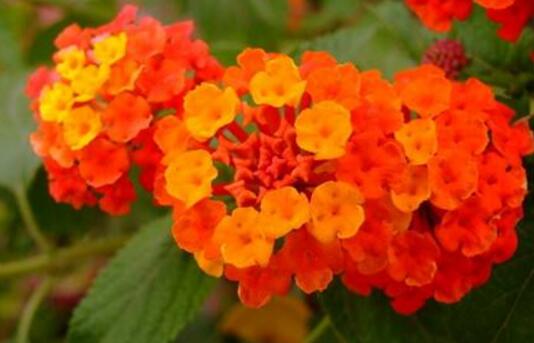
Only by giving a plant a suitable environment based on its characteristics can you grow it well, and Lantana camara is no exception. How do you grow Lantana camara? First let's look at its growth characteristics. Lantana camara is used to a warm, humid climate, and its soil requirements are fertile and loose soil, though it also tolerates poor soil.
Lantana camara is drought-tolerant and has low water requirements, but it cannot go without water for long periods; it likes a location with plenty of light and tolerates a slightly semi-shaded environment. As an invasive plant, Lantana camara likes hot climates with high temperatures and high humidity, and its cold tolerance is weak, so its temperature needs to be controlled in winter.
2. How to grow Lantana camara and what to watch out for
1. Light
Lantana camara likes light and grows vigorously in full sun, so people often grow it in the open ground; if it is in a pot, place it in a bright spot. Although it has some shade tolerance, lack of light will cause the plant to grow leggy, with thin, elongated leaves and few flowers.
Note: Lantana camara loves sunlight very much and can adapt to direct strong light, so it does not need shading even in summer. Therefore, when growing Lantana camara you must give it enough light, and never keep it in a dark place.
2. Temperature
The most suitable growing temperature for Lantana camara is 15-30 degrees. So in winter you need to make sure the temperature is not too low; it can still bloom even at 10 degrees, but to get it through the winter safely you need to keep the temperature at least above 8 degrees.
Note: Lantana camara is a tropical plant. It tolerates high temperatures very well but has weak cold tolerance, so in winter in the north it should be moved indoors to avoid temperatures below 8 degrees freezing and damaging the Lantana camara plant.
3. Soil
Among the ways to grow Lantana camara and the points to watch out for, soil requirements are the most flexible. It can grow in acidic soil, sandy soil, calcareous soil and heavy clay soil, so most soils can meet the requirements of Lantana camara.
Note: Although Lantana camara has low soil requirements, the best soil is still fertile, loose, well-drained sandy soil, which ensures that during growth, water and fertilizer can smoothly enter the soil and be absorbed by Lantana camara.
4. Watering
Lantana camara tolerates both drought and waterlogged conditions, and it has low water quality requirements; tap water, well water or river water are all fine. Watering can be done according to the soil moisture and changes in temperature. If the humidity is too low, spray the plant with water to increase humidity.
Note: Although Lantana camara can tolerate drought and waterlogging, going without water for a long time, or overwatering that causes water to accumulate, is bad for its growth, so try to avoid both situations. As for watering, how do you grow Lantana camara? The principle is to water when the soil looks dry and not let water accumulate.
5. Fertilizing
Lantana camara has a very long flowering period, but it is not demanding about fertility. Still, to make its flower colors more vivid, topdressing is sometimes needed. During the growing season, fertilize 1-2 times a month, and before and after the flowering period also apply phosphorus fertilizer to encourage Lantana camara to bloom more.
Note: When fertilizing, use mainly dilute fertilizer, meaning the fertilizer concentration should not be too high. After fertilizing, water promptly so the fertilizer can penetrate into the soil more quickly.
Pests and diseases of Lantana camara
In growing Lantana camara and the points to watch out for, pests and diseases need to be controlled promptly. Common pests include leaf-killing nematodes, and common diseases include gray mold.
Propagating Lantana camara
Lantana camara is mainly propagated by cuttings, layering and sowing, while home growers generally use cuttings.
How to grow Lantana camara, and how to grow Lantana camara and what to watch out for
Anyone who knows Lantana camara will remember it most for its rich and changeable flower colors, including red, pink, yellow, orange-yellow, white and many other colors. Lantana camara gets its name from its changeable flower colors, and growing it well takes some effort. Today the editor will introduce how to grow Lantana camara, and how to grow Lantana camara and what to watch out for.
How to grow Lantana camara and what to watch out for: 1. Soil:Lantana camara has strong adaptability and is not strict about soil; it can grow in sandy soil, heavy clay soil, acidic soil or calcareous soil, and grows best in fertile, loose sandy soil.
2. Watering:Lantana camara likes a humid environment. During the growing season, keep the potting soil moist and avoid it becoming too dry, and be sure to spray water on the leaves to increase air humidity.
3. Sunlight:Lantana camara likes a location with plenty of sunlight. During the growing season it can be kept outdoors in a sunny spot, and even in midsummer it does not need shading, but it requires good ventilation. If light is insufficient, the plant will grow leggy, with thin, long stems and branches and sparse flowering, seriously affecting its ornamental value.
4. Fertilizing:Lantana camara has a long flowering period, and in spring, summer and autumn it needs topdressing once a month. 20 days before flowering, spray 0.3% urea once every 10 days, which can make the branches and leaves lush and the flower colors vivid.
The above is the editor's introduction to how to grow Lantana camara and what to watch out for. I hope it helps you! The editor believes that as long as you put in the effort, you will surely grow better and more beautiful Lantana camara!
How should potted Lantana camara be cared for? How to grow Lantana camara and what to watch out for
Lantana camara has large, deep green leaves, soft young branches and vivid flower colors. It is not only a very good material for bonsai but also a very good ornamental potted plant, with high ornamental value. So how should potted Lantana camara be cared for? The methods for growing Lantana camara and the points to watch out for are introduced below.
Image: Lantana camara
1. How to grow Lantana camara
1. Soil:Lantana camara has strong adaptability and is not strict about soil; it can grow in sandy soil, heavy clay soil, acidic soil or calcareous soil, and grows best in fertile, loose sandy soil.
2. Watering:Lantana camara likes a humid environment. During the growing season, keep the potting soil moist and avoid it becoming too dry, and be sure to spray water on the leaves to increase air humidity.
3. Fertilizing:For potted plants, loose, fertile sandy loam is suitable, but the requirements are not strict. During the growing season, apply decomposed liquid fertilizer once every 10 days, and while watering, spray 3% urea twice every 10 days, which can make the leaves thicker and greener. When planting, apply organic fertilizer as a base fertilizer. Water initially to promote growth, and once the plant has established and is growing vigorously, reduce watering. In open-ground cultivation, bury the trailing branches into the soil, and they can gradually spread into a large clump.
4. Sunlight:Lantana camara likes a location with plenty of sunlight. During the growing season it can be kept outdoors in a sunny spot, and even in midsummer it does not need shading, but it requires good ventilation. If light is insufficient, the plant will grow leggy, with thin, long stems and branches and sparse flowering, seriously affecting its ornamental value.
5. Pruning:Lantana camara grows quickly. During cultivation, promptly cut off branches and leaves that affect its shape to keep the tree form attractive. After each flowering, cut back overly long young branches. In late autumn and early winter, before moving it indoors, give the plant a heavy pruning and shorten all the current year's branches appropriately. In winter, move it indoors to a sunny spot. If a room temperature above 15°C can be maintained, the plant can grow and bloom normally, and it should be watered, fertilized and pruned appropriately. If such a high temperature cannot be maintained, reduce watering, stop fertilizing, and let the plant go dormant; it can overwinter safely above 8°C. Repot once every spring, prune and reshape the plant again, and cut off dead branches, weak branches and other branches that affect the tree shape.
Image: Lantana camara
2. Points to watch out for when growing Lantana camara
Lantana camara gives off an irritating odor, so the best place to care for it is a balcony or flower bed, which both repels mosquitoes and flies and beautifies the scenery, while you do not have to smell the unpleasant odor. At the same time, do not touch the plant during care. When pruning is needed, you can wear rubber gloves, and the handles of the pruning tools can also be lengthened to avoid sap dripping onto your hands. If there are children and pets at home, especially if the pet is a cat, parrot or monkey, be sure to place the plant somewhere these mischievous creatures cannot reach.
[Editor's concluding remarks]Lantana camara is native to tropical America. It is a tropical plant that likes a hot, humid climate and is not cold-tolerant, so special attention is needed during care. The above introduces how to grow Lantana camara and what to watch out for, and I hope it helps everyone!