Does wax begonia need sun? Its light requirements: it loves light but cannot tolerate strong light
Wax begonia is the most common species among begonia plants. Its flowers are very graceful, and it is one of the main flowers for indoor and outdoor decoration. However, if you want it to be ornamental, then the cultivation process of wax begonia cannot be careless at all, and light is the key point. So does wax begonia need sun? What are the light requirements of wax begonia? Let me walk you through it below.
1. Does wax begonia need sun? Yes, it does
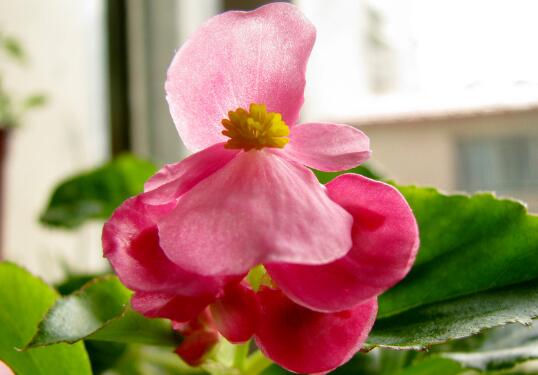
As for whether wax begonia needs sun, the answer is yes. Wax begonia is a light-loving plant, and sunlight is a kind of energy for it. If it cannot receive light for a long time, it will lead to poor growth of wax begonia and make it prone to problems such as pests and diseases, so light is still very important for wax begonia.
2. Light requirements of wax begonia
1. Indoor light requirements
If you are growing wax begonia indoors, you need to place it in a well-ventilated and sunny place, because if it is placed in a dark place, it will affect its normal growth and seriously reduce its ornamental value, making it bloom less, the flower color lighter, and the leaves also wilt.
2. Light requirements in spring and autumn
Spring and autumn are the seasons more suitable for the growth of wax begonia. The temperature and climate are both quite suitable, so we can grow wax begonia outdoors and let it receive light all day. In this way, it can also carry out photosynthesis better, thereby making the plant grow more robustly.
3. Light requirements in summer
Summer is the hottest season of the year, and the sunlight is also the strongest of the year. Especially at noon, we had best move wax begonia indoors to a semi-shaded and ventilated place for cultivation, so as to avoid too strong light burning the plant, which would cause yellowing leaves and withered flowers. Wait until the morning when the light is not strong, then place it outdoors.
4. Light requirements in winter
Winter is the coldest season of the year, and wax begonia is also most afraid of the cold, so in winter it is best to grow it indoors to avoid frost damage to the plant. When the temperature slowly rises at noon, we can move wax begonia outdoors to receive 3-4 hours of light, and that is enough.
What you should know at home: which plants are good for feng shui
Plant feng shui can also affect home feng shui. Because generally plants are very easy to buy. And they are all natural plants. So generally family members place whatever plants they like, but they do not know what the uses of the plants they grow are, nor do they know what taboos there are in placing these plants. So at home, which plants are good for feng shui? Let us take a look together!
Feng shui of growing plants at home
1. The temperament of the plant should be coordinated with the owner's personality and the indoor atmosphere
When arranging the living room, avoid scattering messy green plants or ordinary ornamental flowers on the windowsill, fireplace, TV and other positions in the living room. For rooms that are too high, hanging baskets and trailing plants can be used to make them appear lower. For lower rooms, plants with neat forms and upright stems can be used to make them look taller.
2. Four types of flowers are not suitable to keep close: night-blooming jasmine
At night it releases a large amount of strongly olfactory-stimulating particles, which is too harmful to patients with high blood pressure and heart disease. Coniferous and cypress flowers: they release an oily fragrance, which easily makes people feel nauseated. Oleander: the flowers are toxic, and the floral fragrance easily makes people drowsy and lowers intelligence. Tulip: the flowers contain toxic alkaloids, and too much contact makes hair prone to falling out.
3. The balanced proportion of plants is also very important
Plants with large and simple leaves can increase the magnificent decoration of the living room, while ornamental foliage plants with complex forms and varied colors can make a monotonous room richer. Plants with small leaves and arching branches can make a narrow room appear more spacious than it actually is.
4. The five elements song of plants
Choosing and placing flowers and trees stresses the five elements, with directions divided into east, west, south and north. Those belonging to wood benefit the liver and are suitable for the east position; those belonging to fire are placed in the south to strengthen body and mind. Those belonging to earth nourish the stomach and are placed in the center; white flowers are placed in the west and belong to metal. Metal plants can treat the lungs, so smokers' lungs remain fresh. Water plants are placed in the north to grow vigorously; blue flowers and black leaves can nourish the kidneys. If the arrangement is placed in the wrong position, the flowers and trees will decline and it will be hard to prosper the people.
5. Sun-loving plants
Characteristics: Plants that like to grow under direct sunlight and will grow poorly or fail to grow once there is insufficient sunlight or they are in a shaded environment.
Classification: Trees such as larch, Chinese pine, Chinese arborvitae, dawn redwood, poplar, willow, elm, Mongolian oak, tree of heaven, pagoda tree, black locust, Chinese tallow tree, paulownia, firecracker tree, Bhutan pine, alder, camphor, zelkova, etc.; shrubs such as rose, Rosa xanthina, forsythia, flowering almond, Caragana, Sichuan pepper, tamarisk, goji, Chinese rose, Spiraea japonica, etc.; herbaceous flowers such as carnation, dahlia, cornflower, scarlet sage, gladiolus, tuberose, four o'clock flower, purslane, etc., and lawn plants such as wild grass and zoysia.
Because these plants grow in sunny places for a long time, the light is strong, their own transpiration intensity is high, and soil evaporation is also high. Therefore, their root systems are generally large and deep, and their adaptability is relatively strong. They are the backbone tree species in garden construction.
6. Flower-growing feng shui and placement directions
Glass vases are suitable for the north of a residence. Spherical vases are suitable for the west or northwest of a residence. Tall and deep wooden vases are suitable for the east or southeast of a residence. Conical vases are suitable for the south of a residence. Ceramic bowls are suitable for the southwest or northeast of a residence.
7. Neutral plants (yin within yang, yang within yin)
Characteristics: They can grow normally under full light or semi-shade. They both like light and tolerate shade, and only grow poorly in a very shaded environment. There are many types of such plants. Their light preference is not as strong as that of sun-loving plants, and especially under drought and high temperature, their growth is inhibited; their shade tolerance is far inferior to that of shade-loving plants. Under full shade, they sprout late and shed leaves early, the leaves of evergreen trees turn yellow, and during growth the branches and vines tend toward the light and grow slanting.
Classification: The degree of light preference and shade tolerance also differs. There are those leaning to the yang side (yin within yang), such as Chinese hackberry, zelkova, cherry blossom, peach, plum, Japanese apricot, Acer truncatum, trident maple, magnolia, southern magnolia, Chinese wingnut, etc.; and those leaning to the yin side (yang within yin), such as fir genus, spruce genus, hemlock, Keteleeria, yew genus, Podocarpus genus, Evodia genus, kousa dogwood, Japanese aucuba, Chinese holly, rhododendrons, camellia, hydrangea, Viburnum genus, Lonicera genus, ivy, Acanthopanax, Tetrapanax, pittosporum, heavenly bamboo, Euonymus genus, Sorbaria, mountain ash, etc.
There are also some that are truly neutral plants, such as horse chestnut, Japanese maple, Huashan pine, lacebark pine, Chinese incense cedar, linden, ash, crabapple types, Maackia, yellow locust, etc. If they are exposed to too much sun or shade, their growth will be inhibited.
8. Shade-loving plants
Characteristics: Plants that naturally grow in shaded environments and are not suitable for full light. If planted under full light, they grow poorly or even die quickly. Most are herbaceous plants and some low shrubs.
Classification: Ginseng, American ginseng, Panax notoginseng, Coptis chinensis, saxifrage, begonia, Boea, hosta, Aspidistra, Pyrola, Monstera deliciosa, and most mosses and ferns are shade-loving plants. Woody plants such as Ardisia japonica, Ardisia crenata, Japanese fatsia, and Trachelospermum jasminoides are shade-loving plants.
There are also shade-tolerant plants with endurance, such as Euonymus fortunei, Mahonia, Lonicera chrysantha, Amur honeysuckle, Viburnum dilatatum, Elsholtzia stauntonii, Lespedeza, European elder, ivy, English ivy, Euonymus, Euonymus oxyphyllus, Hydrangea serrata, and Weigela florida.
Most shade-loving plants grow in the lower part of forests. Once the forest is destroyed and they lose cover and are exposed to strong light, they find it difficult to survive. In gardens, their light-loving and shade-tolerant habits can be used to plant them under trees, forming a multi-layered mixed landscape, making it closer to the natural ecology and also better maintaining soil and water. They can also be potted or planted directly indoors to improve the indoor environment.
Complete guide to caring for common household flowers and plants
Today Flower and Bonsai Network introduces a complete guide to caring for common household flowers and plants.
Ping'an tree: likes water, water once a week, water thoroughly, and give more sun. Ping'an tree, also known as: Lanyu cinnamon; aliases: Hongtouyu cinnamon, Hongtoushan cinnamon, Fanglanshan cinnamon, large-leaf cinnamon, Taiwan cinnamon, etc.
Ficus: likes water, water once a week, water thoroughly, and give more sun.
Camellia: likes water, water once a week, water thoroughly, and give appropriate sun.
Clivia: water once every half month, do not water thoroughly completely. After just watering, place it on a balcony with weak sunlight to cool for a few days, otherwise the roots will rot because it is too wet. It is not suitable for direct sun exposure.
Dragon's whiskers: likes water, water once a week, water thoroughly, and give appropriate sun.
Anthurium: water once every twelve days, water thoroughly, and give appropriate sun.
Bromeliad: water once every twelve days, water thoroughly, and rarely give sun.
Pothos: likes water, water once every three or four days, water thoroughly, and rarely give sun. It is also fine to place it in a place with light.
Azalea: water once a week, water thoroughly, cannot be exposed to direct sunlight, and place it in a bright place.
Begonia: water once a week, water thoroughly, rarely give sun, and place it in a bright place. Direct sunlight will make the flowers lose their true color and make them less suitable for viewing.
Kalanchoe: water once a week, water thoroughly, rarely give sun, and place it in a bright place. Direct sunlight will make the flowers shrink.
Snake plant: water once every half month, do not water thoroughly completely. After just watering, place it on a balcony with weak sunlight to cool for a few days, otherwise the roots will rot because it is too wet. It is not suitable for direct sun exposure.
Purslane (golden branch and jade leaf, jade tree): likes water, water once a week, water thoroughly, and give more sun.
Money tree: does not like water. Spray a small amount of water every 20 days, or pour a little water into the saucer. It cannot be exposed to sun. If it is often watered thoroughly all at once, it will die. Water cautiously.
ZZ plant: does not like water. Spray a small amount of water every half month, or pour a little water into the saucer. It cannot be exposed to sun.
Brazilian wood: potted cultivation should use fertile soil rich in humus and well drained, which can be made by mixing leaf mold and river sand. Brazilian wood is drought-tolerant but not waterlogging-tolerant. During the growing season, it can be watered fully. Brazilian wood fears cold and freezing, so in winter it should be placed indoors in a place with sufficient sunlight, and the temperature should be maintained at 5°C-10°C. Water once a week. Main pest: sugarcane borer - the sugarcane borer mainly bores into and feeds on the fleshy cortex of Brazilian wood as a larva.
Azalea: likes cool and ventilated conditions, avoids high temperature and intense heat; likes semi-shade, avoids blazing sun; likes moisture, avoids dryness; likes acidic soil, avoids alkaline soil; likes well-drained pine needle soil, avoids waterlogging; if drainage is good, water can be a bit more, and the leaf surface should be sprayed with water often.
Camellia: Camellia is a shade-loving flower and tree, requiring about 50% shade. It grows well under sparse shade and fears exposure to the sun. If exposed to direct blazing sun, the young leaves are easily scorched, causing weak growth and affecting flowering. In summer it likes cool and humid conditions, and in winter it likes a warm environment. The general suitable growth temperature is 15-25 degrees, and the leaves should be sprayed with water often. It fears drought and avoids waterlogging. It grows well only in fertile, loose, well-drained, slightly acidic sandy soil, and will gradually die in alkaline or waterlogged soil.
Poinsettia: likes a warm and humid environment, and is not cold-tolerant; likes sufficient light, and is not shade-tolerant; it is not strict about soil quality, but likes fertile, loose, well-drained, slightly acidic soil.
Milan: likes warmth and humidity, fears dryness, and is not cold-tolerant; likes sunlight, and is not shade-tolerant; likes fertile, loose, slightly acidic sandy soil. There is a poem praising it: "The melon-seed-like small leaves are also elegant, and the whole tree blooms rice-shaped flowers again. Who can compare with its rich fragrance? It welcomes distant guests to brew fragrant tea."
Bird of paradise: likes sunlight, and is not tolerant of the blazing sun in northern summer; likes warmth, and is not cold-tolerant; requires moderate temperature in winter and a cool, humid environment in summer; likes well-drained and breathable humus soil.
Bleeding heart vine: likes warmth and humidity, and is not cold-tolerant; likes sufficient sunlight and fears direct strong light; likes fertile, well-drained and breathable humus soil.
June snow: June snow is an evergreen or semi-evergreen small shrub. It likes a shaded, humid and warm climate, is not cold-tolerant, and is not strict about soil requirements. It likes well-drained and breathable humus soil. In summer, provide moderate shade; in winter, a room temperature above 10 degrees is enough for it to overwinter safely.
Golden vein shrimp plant: likes warmth and humidity, and is not cold-tolerant; tolerates semi-shade and fears strong light; likes fertile and loose soil.
Ivy: likes warm and humid and semi-shaded environments, and is relatively cold-tolerant; likes fertile, loose and well-drained soil.
Lucky bamboo: likes warm and humid and semi-shaded environments, likes scattered light, and avoids direct blazing sun; likes loose and fertile soil. Usually place it indoors in a bright place. In summer, avoid direct sunlight; in winter, it needs to see more sunlight.
Potted pomegranate: likes a warm environment with sufficient sunlight, and is relatively cold-tolerant; tolerates drought and fears waterlogging; likes loose and fertile soil. Only if light, water, fertilizer and pruning are all in place will it have abundant flowers and fruit.
Christmas cactus: likes warm and humid and semi-shaded environments, and fears direct strong light; is relatively drought-tolerant and fears waterlogging; is not cold-tolerant, and requires soil rich in humus, loose and well drained. In summer when the temperature is high, stop fertilizing and control watering. When budding and flowering, do not move the pot, otherwise it is easy to cause bud drop and flower drop.
Similar to Christmas cactus is the Easter cactus. The difference between the two is that the edges of the Easter cactus stems have no sharp teeth and are shallowly wavy; the edges of the Christmas cactus stems have four sharp teeth on each side and generally bear white or light-colored flowers, and three sharp teeth generally bear red flowers.
Jasmine: likes a hot and humid sunny environment, is not shade-tolerant, not cold-tolerant, and also not drought-tolerant. It grows well at a temperature of 25-30 degrees. Below 4 degrees, cold damage begins to appear, with leaves falling and even death. It likes loose, fertile, well-drained soil containing organic matter.
Haworthia fasciata: likes a warm environment with sufficient sunlight, tolerates drought, and fears waterlogging; likes sandy soil with good humus drainage.
Kalanchoe daigremontiana: likes a warm and humid environment. Although it likes sunlight, it is also relatively shade-tolerant; avoids extreme heat and tolerates drought; likes well-drained sandy soil, and watering should alternate between wet and dry; in summer, provide appropriate shading and ventilation; in winter, strictly control watering.
Aloe: likes sunlight and a warm and humid environment, and is not cold-tolerant; likes loose, fertile and well-drained soil. In summer it needs sufficient watering and frequent spraying of the leaf surface. In other seasons, control water. In spring and autumn, it likes direct light. Note: grow dragon's claw the same way as aloe.
Epiphyllum: likes warm and humid and semi-shaded environments, is relatively drought-tolerant but not cold-tolerant, fears direct strong light, avoids waterlogging, and requires well-drained, loose and fertile soil. Epiphyllum generally blooms at night when it gets dark from 19-20 o'clock, and each flower has a flowering period of about two hours. If you want Epiphyllum to bloom during the day, you can change the light, that is: in the few days before the buds are about to open, place it in a dark place during the day and expose it to lamplight at night.
Chrysanthemum: belongs to sun-loving flowers, likes cool characteristics, and likes sufficient sunlight; autumn is cool, and its cold tolerance is relatively strong, with 18-22 degrees being best; it is relatively drought-tolerant but not moisture-tolerant, especially fearing waterlogging; it can tolerate weak alkalinity, and requires sandy soil rich in humus, loose and well drained. Chrysanthemum is generally propagated by division or cuttings, namely: divide pots in April, pinch in May, fertilize in June, pinch again in July, and keep water flowing in August and September. According to the growth of the flowers, when pinching and removing the top in mid-to-late May, keep 3-5 leaves; when pinching and removing the top in mid-to-late July, keep 2-3 leaves. If the method is proper and management is good, flowering can reach three, three, nine tripods.
Guangdong evergreen, also known as Chinese evergreen: likes warmth and humidity and has strong shade tolerance, avoids dryness, fears direct strong light, and is slightly cold-tolerant; keeping the room temperature above 5 degrees in winter is enough for safe overwintering. It likes loose and fertile potting soil. Sticky pot soil will cause root rot, so it is easy to use leaf mold plus a small amount of river sand. It likes compound liquid fertilizer rich in nitrogen and potassium. In summer when the temperature is high, water more. In spring and autumn, watering should alternate between wet and dry. In winter, control watering.
Croton, also known as variegated croton: likes high temperature, high humidity and sun exposure, and is not cold-tolerant; likes loose, fertile and well-drained sandy soil. In winter, it grows well when the temperature is above 15 degrees, and below 10 degrees will cause death.
Michelia figo: likes warmth and humidity, belongs to semi-shade flowers, and requires good ventilation and appropriate shade. When air humidity is high, the leaves are dark green and smooth. It is not drought-tolerant and avoids blazing sun exposure, otherwise the leaves easily turn yellow. It likes fertilizer and water but fears waterlogging, is not very cold-tolerant, and likes fertile, loose, slightly acidic sandy soil. There is a poem praising it: "The flower opens without opening its mouth, shy and bowing its head, as if a beauty smiles, with deep feeling flowing secretly."
Echeveria: likes warmth, dryness and sufficient light, can also tolerate semi-shade, fears cold, and is suitable for fertile and well-drained sandy loam. During the growth period, maintaining 4-6 hours of light per day will make it grow robustly and have bright leaf color. Spray the leaf surface with clean water once every 7-10 days. It does not matter if Echeveria is not watered for ten days to half a month. If it is placed in a dark indoor place for a long time, it will cause leaf drop.
Gardenia: Gardenia is an evergreen shrub or small tree. There are four commonly seen types: (1) Large-flowered gardenia, also known as river-flower gardenia. The leaves are large, long elliptical, and the flowers are large, mostly double, with a strong fragrance. (2) Small-leaved gardenia, also known as sparrow-tongue flower. The plant type is short, the flowers are relatively small, double, and the fragrance is very strong. (3) Ovate-leaved gardenia, with relatively small, obovate leaves, bearing single small white flowers, with a light and elegant fragrance. (4) Walnut-pattern gardenia, with large, ovate leaves, obviously protruding veins, in a mottled pattern, large flowers, and a relatively light fragrance.
Gardenia likes a warm and humid climate and is not cold-tolerant; in areas south of the Yangtze River it can overwinter in the open ground, while in the north it is all potted and moved indoors to overwinter in winter. It likes light and also tolerates shade; in summer when the sunlight is strong, it should be kept in a semi-shaded place for care. The leaf surface should be sprayed with water often. If direct strong light, high temperature and excessive watering are combined, these three factors together are most likely to cause yellow leaves and even the death of the whole plant. Gardenia likes fertile, loose, well-drained, slightly acidic sandy soil.
Peace lily: Peace lily is a perennial herbaceous flower, divided into large-leaf and small-leaf types. It likes warmth and humidity and belongs to semi-shade flowers. It requires good ventilation and appropriate shade in summer. Watering should alternate between wet and dry. Too much water easily causes root rot. It requires sandy soil rich in humus, loose and well drained.
Golden tiger: Golden tiger is a perennial succulent flower. It likes a warm and dry environment, likes sufficient light, also tolerates semi-shade, and tolerates drought. It will not die if not watered for a long time, but too much water will cause root rot and death. It requires well-drained sandy soil. Note: succulents such as mountain shadow, tiger head, dragon bone, and night-blooming cereus have basically the same habits as golden tiger.
Calathea: also known as blue-flower banana. The plant is small and beautiful, the leaf color is gorgeous, and the markings on the leaf surface are like a lifelike peacock spreading its tail. Calathea is a perennial evergreen herbaceous plant of the Marantaceae family. It likes high temperature, high humidity and a semi-shaded environment, and has relatively strong shade tolerance. It grows well under bright scattered light indoors. The suitable growth temperature is 18-22 degrees, and it requires loose and fertile potting soil. In summer, avoid direct strong light, otherwise it easily causes scorched leaf edges. The ambient air must circulate, and spray clean water on the leaf surface often. The cultivation of other calatheas is basically the same as this.
Dendrobium: also known as cherry blossom vine or Burmese fragrance. The flowers are spherical and the color is light and elegant; at night, the whole room is fragrant. It likes high temperature and high humidity environments, and also needs frequent spraying of clean water on the leaf surface. It likes sunlight and can also tolerate semi-shade, but is not cold-tolerant. In the peak growth season, apply a dilute liquid fertilizer combining nitrogen and phosphorus once every 1-2 months. The overwintering temperature must be above 12 degrees, and the lowest must not be below 8 degrees. It likes a mixture of leaf mold or peat soil with river sand or perlite, plus a small amount of bone meal as base fertilizer. Humus soil, moss, etc. can also be mixed as base fertilizer. For plants that have already formed buds and are flowering, the pot cannot be moved at will, otherwise it easily causes bud drop and flower drop; after the flowers fade, let them wither naturally and do not cut off the flower stems, because most of next year's flower buds will still sprout in the same place, and cutting them off will affect the number of flowers the following year.
Kalanchoe: also known as longevity flower. It likes sufficient sunlight. In the hot summer in the north, the light intensity is high, which easily makes the leaves turn yellow, so around noon it should be appropriately shaded or placed indoors in a semi-light place, but attention should be paid to ventilation and cooling. For pot soil, it is better to choose a mixture of 40% leaf mold, 40% garden soil, 20% river sand plus a small amount of bone meal. This kind of soil is loose, fertile, well drained and slightly acidic. Avoid using heavy sticky soil, which will lead to poor growth and cause root rot and leaf drop. In winter, the room temperature cannot be lower than 10 degrees. If it is around 7 degrees, the leaves will turn red and the flowering period will be delayed.
Freesia: also known as fragrant snow orchid and foreign tuberose. Its leaves are like small swords inserted in the ground, and from the sword cluster several flower spikes full of golden bell-like flowers are drawn out, about 8 flowers, just like little golden funnels. The flower colors include bright yellow, pure white, greenish purple, rose red, etc., with strange and beautiful forms. It has both the delicate fragrance of orchids and the aroma of osmanthus. Placing one pot indoors, the fragrance is rich and pure, making people suddenly feel fresh and comfortable. Freesia's habit is that it fears both cold and heat. When it is hot in summer, it enters dormancy, and after the weather cools, the corms begin to sprout and grow and send up stems to bloom. The suitable growth temperature is 18-20 degrees during the day and 14-16 degrees at night, and the overwintering temperature is 6-7 degrees. Freesia is a light-loving plant, so it requires sufficient light, but under conditions of strong light and high temperature it easily becomes leggy. Its flower bud formation is completed under short-day conditions, and after the flower buds form, long-day conditions also promote its flowering. Freesia has relatively strict water requirements, that is, it fears moisture and is also not drought-tolerant. Too much soil moisture easily causes root rot; lack of soil water hinders growth and makes the leaves lose their luster. Plant it in mid-to-late September each year, about 10 per pot. The flower soil can be mixed with 20% leaf mold, 50% garden soil, 20% compost soil, and 10% sandy soil. Freesia has a dormant habit. After flowering, when the leaves turn yellow around May, the corms can be taken out of the pot, the dead leaves removed, and the corms dried and stored in a cool and ventilated place.
African violet: also known as African violet, it is a perennial herbaceous plant. It likes sufficient scattered light to grow robustly and bloom. The pot soil of African violet cannot be too dry or too wet, and when watering, do not pour it on the leaves, otherwise yellow spots will appear on the leaf surface or the leaves will rot. It likes warmth and is not cold-tolerant, nor tolerant of high temperature. In summer, avoid direct sunlight. The overwintering temperature should be kept above 12 degrees. It likes fertile, loose, well-drained, slightly acidic sandy soil.
Chinese rose: Chinese rose has strong adaptability to the environment and likes warmth. It grows best when the average temperature is 22-25 degrees. Chinese rose is not strict about soil, but grows vigorously in fertile, loose and slightly acidic soil. During the growth period, sunlight must be sufficient, otherwise the plant will be thin and weak, the leaves will turn yellow, and the flowers will be small and the color incorrect. Chinese rose must be pruned. The pruning period is generally before and after flowering in spring and autumn, cutting off diseased and weak branches, competing branches, inward-facing branches, and dead branches and spent flowers. In summer, when it is hot, the soil is very easy to dry out, so it must be watered in time to keep the soil moist. Especially in the bud and flowering stages, the water supply cannot be lacking. In the rainy season, accumulated water should be drained in time. In winter, it is best to put it in a cellar to let it hibernate, and take it out around mid-March of the following year to prune.
Bougainvillea: also known as paperflower. It likes a warm and humid climate, likes sunlight, and is not cold-tolerant. Insufficient light will cause very few flowers and leaf drop. It likes fertilizer and water, grows vigorously, and is not strict about soil requirements. Pruning is generally carried out after flowering and before new shoots grow, cutting off overly dense, inner, and leggy branches and paying attention to maintaining a beautiful tree shape. The overwintering temperature is best above 12 degrees.
Epiphyllum: belongs to tropical plants. It likes high temperature and high humidity, likes sunlight, likes a well-ventilated environment, and likes fertile soil. It is best to use pot soil made of 20% hair, 20% cinder, 30% loam, and 30% sandy soil. It is not cold-tolerant. Keep the pot soil at 40% humidity. When the temperature is low, do not water much and do not fertilize. The overwintering temperature is best above 10 degrees, and place it in a place where sunlight can shine directly.
Anthurium: belongs to perennial evergreen herbaceous plants. Also known as Anthurium andraeanum, red crane taro, fire candle flower, etc. The plant height is 30-50 cm, and the flower posture is strangely beautiful. It likes warm, humid and semi-shaded environments, avoids direct strong light, and is not cold-tolerant. In summer, give sunlight in the morning and evening, provide shade around noon, spray clean water on the leaf surface often, and pay attention to alternating dry and wet when watering. For pot soil, it is better to choose a mixed substrate of leaf mold or peat soil, moss plus a small amount of garden soil and charcoal and superphosphate.
Spider plant: Spider plant is a perennial evergreen herbaceous flower. It likes warm, semi-shaded and humid air environments, and requires loose, fertile and well-drained soil. The pot soil should preferably be on the dry side, and clean water should be sprayed on the leaf surface often. Keeping the indoor temperature not lower than 10 degrees is enough for safe overwintering.
Boston fern: is a trailing fern plant. It likes warm and humid and semi-shaded environments, and avoids extreme heat. It can be placed indoors in a bright scattered light place for cultivation, and cannot suffer direct strong light, otherwise the leaf color easily turns yellow or the leaf edges dry up. But it also cannot be placed in a dark place for cultivation, otherwise the leaves will fall off after a few weeks. Boston fern has relatively strict water requirements. It should not be too wet or too dry, and it is best to keep the pot soil moist often. In summer, pay attention to spraying water 2-3 times a day; in winter when the room temperature is low, reduce watering, and keeping the room temperature above 8 degrees is enough for safe overwintering.
Asparagus fern: its branches and leaves spread out flat, like thin clouds overlapping, and the branches and stems are like bamboo, so it is also called cloud bamboo. It likes warmth, humidity, semi-shade, fears drought, is not cold-tolerant, and likes fertilizer. It requires soil rich in humus and well drained. Asparagus fern is a shade-loving plant and grows well under scattered light. In winter, a room temperature not lower than 10 degrees is enough for safe overwintering.
Hibiscus: hibiscus flowers like light, warmth, humidity and a well-ventilated climate. They are not cold-tolerant and are suitable for loose, fertile, deep sandy loam. The lowest winter temperature should not be lower than 15 degrees, otherwise it easily causes leaf drop. If the room temperature is kept above 20 degrees, it can be expected to continue blooming in winter. Note: growing wooden chrysanthemum is basically the same as hibiscus. Hibiscus generally blooms trumpet-shaped flowers with long buds, while wooden chrysanthemum flowers are mostly double and semi-double. The color of the flowers can be judged from the color of the new branches: if the color of the new branches is green, it generally blooms red flowers; if the color of the new branches is smoky, it generally blooms pink or light-colored flowers.
Potted peach: likes light, warmth, humidity and a well-ventilated climate, fears waterlogging, and is relatively cold-tolerant. It is not strict about soil requirements, but fertile and loose soil is better. For overwintering, it is best to put it in a cellar when it is cold, or place it indoors in a shaded and cool place, water less, and use the pot soil not being dry as the standard.
Wax begonia: a perennial herbaceous plant, native to Brazil, also known as begonia, saxifrage begonia, melon-seed begonia, and glass begonia. In summer it is not tolerant of direct sunlight or rain, so it should be shaded and protected from rain. If it is exposed to rain for a long time, it easily causes the flower stems and leaves to rot. In winter it likes sufficient sunlight. If the light is insufficient, the growth will be weak, the plant will be slender, and the leaf color and flower color will fade. If the light is too strong, the leaves will shrink and scorch spots will appear. When fertilizer is insufficient, the plant will be short and the leaves will turn red. When watering potted wax begonia, water only after the pot soil is dry. If the pot soil remains moist for a long time, it easily causes root rot and leads to damping-off disease.