The correct cultivation methods and regular pinching and pruning of wax begonia
Wax begonia is a flowering plant native to India that was later introduced to China, and today it can be seen in many parts of the country. However, growing this plant well is not easy, and there are many points that need attention. So how do you grow wax begonia? What are the correct cultivation methods for wax begonia? Let us take a look below.
I. How to grow wax begonia
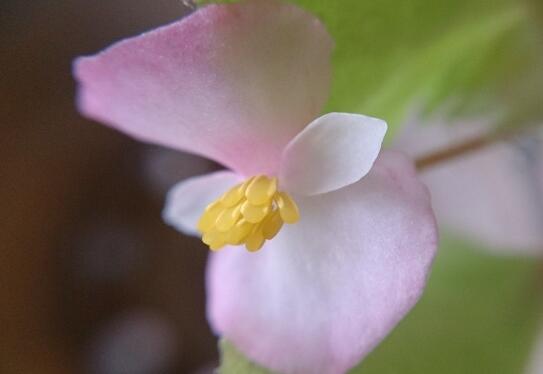
To know how to grow wax begonia, we first need to understand its growth habits. Wax begonia is a plant that likes sunlight, so during cultivation it is best to maintain sufficient light. In addition, fertilizing and watering also have their own requirements. The details are described below. Let us take a look.
II. The correct cultivation methods for wax begonia
1. Soil selection
When growing wax begonia, choosing the soil is a very important part. Generally, it is best to choose a relatively loose sandy soil. This kind of soil has good aeration and drainage, allowing wax begonia to absorb nutrients better.
2. Fertilization requirements
During its growth process, wax begonia has a high demand for fertilizer. During the growing season, it basically needs fertilizing once every 10-15 days. When fertilizing, follow the principle of light fertilizer applied more often, and it must first be diluted with water so that wax begonia can absorb it better.
3. Water requirements
There is no fixed frequency for watering wax begonia. Do not water once a day or once every few days on a fixed schedule. When the potting soil looks pale, you can water it. As much as possible, follow the principle of not watering when dry and watering thoroughly when you do water, but do not wait until it is completely dry before watering.
4. Light requirements
When growing wax begonia, it is best to keep it in sufficient light so that it can grow better, but it should not be exposed to the sun for long periods, especially in summer when the sunlight is too strong, shade still needs to be provided.
5. Pinching and pruning
During the growth of wax begonia, timely pruning and pinching are also part of care, because this can encourage more branching and more flowering. If the work of pinching and pruning is neglected, the plant easily grows thin and tall, the plant shape is not very attractive, and it blooms less, so everyone should pay attention to this point.
6. Pest and disease control
During the growth of wax begonia, if care is improper, pests and diseases are very likely to appear. Such problems are extremely harmful to the plant, so they must be dealt with promptly. For specific treatment methods, you can refer to the article on pest and disease control for wax begonia. I will not repeat them here.
How to grow wax begonia: cultivation methods and precautions for wax begonia
Everyone should be very familiar with wax begonia, because it is a relatively common flowering plant, with bright and gorgeous flowers and extremely high ornamental value. Many people like to grow wax begonia at home. But growing wax begonia also requires mastering certain cultivation skills! Let us learn about it together below!
How to grow wax begonia
1. Best propagation time
When wax begonia is sown between July of the current year and January of the following year, it can bloom from October to May of the following year. If sown in February to April, it can bloom in June to July.
2. Best growing soil
For potted wax begonia cultivation, the most suitable soil is a mixed soil prepared from river sand, leaf mold, and the like. Wax begonia likes a semi-shaded environment, so in summer it should be moved indoors to prevent wilting and yellowing caused by strong light exposure.
3. Growth humidity requirements
Wax begonia likes a warm and humid climate environment. Therefore, when growing it, the potting soil should be kept relatively moist. When watering, make sure not to water too much, otherwise it will cause root rot; if the potting soil is too dry, it will also cause the leaves to wither and yellow. The potting soil only needs to be slightly moist.
4. Best growing temperature
The suitable growing temperature for wax begonia is 15-20°C. At this temperature, wax begonia can germinate normally, and the germination period is about 2 weeks. In summer and winter, due to the influence of temperature, growth becomes slower, so fertilization and watering need to be strengthened.
In a high-temperature summer environment, certain measures need to be taken to prevent direct light exposure, lower the surrounding temperature, and create a good environment below 30°C for cultivation and care.
5. Best growing light
In the peak heat of midsummer, during the season of blazing sun, absolutely do not let wax begonia receive strong light exposure, as this will sunburn wax begonia.
Cultivation methods and precautions for wax begonia
1. Pay attention to applying fertilizer
During the growing period of wax begonia, fertilizer should not be added indiscriminately. Fertilization should be reasonable according to the color of the plant's leaves and observation of leaf growth. Do not apply too much, otherwise the leaves of wax begonia will grow excessively, becoming too dense, affecting flowering, and even causing poor growth, affecting light exposure, and leading to yellowing leaves.
Before wax begonia blooms, apply an appropriate amount of phosphorus-potassium compound fertilizer, which can help improve the flowering quality of wax begonia.
2. Key points for propagation
For potted sowing of wax begonia, it should be done in spring from April to May, or sowing in early autumn is also acceptable. The seeds should be evenly scattered on the fine soil in the pot, and no covering with soil is needed.
Use the water absorption method to let the sowing pot absorb enough water from the bottom of the pot, then cover it with a piece of glass or put on plastic film, and place it in a semi-shaded environment. After about 10 days, it can take root and germinate. Sow in spring, and it can bloom in autumn.
3. How to prune
Another thing to note in the care of wax begonia is pinching. After the flowers of wax begonia fade, it is necessary to pinch and care for the spent flowers and diseased leaves so that it can branch and bloom more. If the important pruning step is neglected, the plant easily grows thin and tall, the plant shape is unattractive, affecting its appearance, and it also blooms less.
Does wax begonia need sunlight
Like most plants, wax begonia loves light and is relatively sensitive to sunlight. Sunlight is a kind of energy for wax begonia. Wax begonia that does not receive light for a long time not only grows poorly but is also prone to pests and diseases.
However, note that for wax begonia that has just been repotted, it is best not to rush to give it sunlight. First place it in a place indoors with relatively weak light. This is because at this time the plant's root system has been damaged and cannot absorb water well. If it is exposed to sunlight at this time, it will intensify leaf evaporation, causing a large loss of water that cannot be replenished well in a short time. In severe cases, it may even cause the plant to dehydrate and die. So wait until the plant's root system has mostly recovered, then move it to a position with better light and let it get some sun.
How wax begonia overwinters
1. Before bringing indoors
Before wax begonia is brought indoors, it should properly experience the low-temperature period of autumn so that it can adapt and improve its own disease resistance and cold resistance. The amount of watering should also be gradually reduced at this time, using artificial intervention to force the plant into a dormant state.
2. After bringing indoors
After bringing indoors, frequently spray water mist on the plant's leaves to increase the humidity of the surrounding air. Also keep the indoor temperature difference within 24 hours from being too large, keeping it within a certain temperature range as much as possible, and the lowest temperature should not be lower than 5-8°C. Control watering of wax begonia well. In winter, watering once every 2-3 days is enough for it to overwinter safely and smoothly.
As mentioned above, wax begonia generally likes a moist and humid environment. Once winter comes, extra attention needs to be paid to wax begonia, because winter weather is very cold and can easily cause wax begonia to freeze to death!
Pruning methods for wax begonia: how to prune wax begonia
How to prune wax begonia? Begonia-type flowering shrubs all have long and short branches. Short branches are flowering branches, while long branches are vegetative branches. Two weeks after flowering, in addition to thinning out some inner canopy branches and crossing branches, the long branches can be appropriately shortened. Leave 3-4 buds from the base of the long branches and cut off the rest, which helps increase the short branches that form flower buds. Today, wed114 brings everyone related content on pruning methods for wax begonia. Let us take a look.
Wax begonia flower pictures
I. Introduction to wax begonia
Wax begonia, also known as four-season begonia and clam-flesh begonia, Latin name: Begonia semperflorens Link et Otto. Begoniaceae, Begonia genus, succulent herb. Roots fibrous; stems upright, succulent, hairless, mostly branched at the base, leafy. Leaves ovate or broadly ovate, base slightly oblique, margins serrate and ciliate, glossy on both sides, green, but the main veins are usually slightly red. Native to Brazil. Wax begonia is the most common and most widely cultivated species among begonia plants. It has a graceful posture, tender and glossy leaf color, clustered flowers, blooms in all four seasons, and carries a slight fragrance. It is one of the main potted flowers for indoor and outdoor decoration. People use it in flower bed arrangements with excellent results. With the appearance of some relatively heat-tolerant varieties, wax begonia is very likely to become one of the most important flower bed flowers in China, with advantages such as neat plant shape, abundant and dense flowers, easy combination with other flower bed plants, and a long ornamental period, so it is becoming more and more popular. Generally cultivated in spring and autumn.
Wax begonia flower pictures
II. Pruning methods for wax begonia
Spring pruning
It is best to prune in early spring before the tree body has begun to sprout. The pruning methods are mainly heading back and thinning.
1. Newly planted plants:
Following the principle of keeping the superior and removing the inferior, generally choose 3 to 5 healthy branches, and cut off excess weak branches, diseased and pest-infested branches, and curved branches from the base, to promote vigorous new branches sprouting from the root crown the following year, increase the number of branches in the clump, and when pruning be careful not to leave stubs. For the healthy branches already selected, usually prune strong branches lightly and weak branches heavily. Leave an outward-facing bud at the cut to expand the range of the shrub cluster, and at the same time make the inside of the clump hollow, which helps ventilation and light penetration, and forms more flower buds. In places with good fertilizer and water conditions, prune lightly and leave longer; in places with poor fertilizer and water conditions, prune heavily and leave shorter.
2. Plants after planting:
An ideal shrub shape should maintain a state of being high inside and low outside, sparse inside and dense outside. This not only allows the branches to receive sunlight evenly, but also increases the permeability of the shrub, which is more conducive to healthy plant growth. The specific pruning methods are as follows:
(1) Cut off from the base the diseased and pest-infested branches, crossing branches, overly dense branches, overlapping branches, and inward-growing branches on the plant that affect the tree shape. Choose 5 to 8 branches with suitable direction and thickness to keep, and the pruning height should be consistent at the base.
(2) Since 3- to 5-year-old flowering branches of Chaenomeles speciosa bloom the most, flowering branches should be renewed year by year so that the plant always maintains a full-bloom state. Renewal of flowering branches should be carried out year by year, generally renewing 2 to 3 branches each year, and excess new growth branches and old flowering branches can be removed.
(3) Since the flower buds of Chaenomeles speciosa are basically borne on short branches, when pruning, leave a few nodes and then cut, in order to increase short branches.
Post-bloom pruning
In order to maintain the tree shape and make the overall effect attractive, appropriate pruning is needed after flowering. Two weeks after flowering, thin out crowded branches on the plant and branches protruding from the crown outline. Appropriately shorten long branches, leaving 3 to 4 buds from the base and cutting off the rest, which helps increase the short branches that form flower buds. Fruits formed after flowering should be removed as early as possible to avoid nutrient loss and affecting flower bud formation the following year.
Wax begonia flower pictures
III. Precautions for pruning wax begonia
1. When shortening flowering branches to control plant height, it should be done lightly and must be carried out year by year, avoiding heavy heading back that affects the amount of spring flowering.
2. The number of branches retained should be determined by the amount of space. When planting a single plant, more branches can be retained; when planting in rows or patches, and space is relatively small, fewer branches can be retained appropriately.
3. During post-bloom pruning, leafy branches are removed, reducing the photosynthetic area, which will inhibit plant growth, so pruning should be light.
Wax begonia flower pictures
IV. Precautions for growing wax begonia
1. Applying fertilizer
During the growth period of wax begonia, fertilizer should be applied according to the leaf color and leaf growth conditions of the plant. Do not apply too much fertilizer, otherwise it will cause excessive leaf growth and affect flowering. Before flowering, apply an appropriate amount of phosphorus fertilizer and potassium fertilizer to improve flowering quality.
2. Key points for propagation
In East China, it is generally most suitable in spring from April to May and in autumn from August to September. The seeds should be evenly scattered on the fine soil in the pot (no soil covering needed). Then let the sowing pot absorb enough water using the bottom-watering method, then cover it with a piece of glass and place it in a semi-shaded place. After 10 days, it can germinate. Seedlings sown in spring can bloom in autumn of the same year.
3. Key points for pruning
Another characteristic of wax begonia care is pinching. Like jasmine, Chinese rose, and other flowers, after the flowers fade, the spent flowers must be pruned promptly and the tips pinched to encourage more branching and more flowering. If the work of pinching and pruning is neglected, the plant easily grows thin and tall, the plant shape is not very attractive, and it blooms less.
4. Key points for watering
In summer, water in the morning and evening; in winter, water around noon. Do not water too much, and by all means do not let the soil become waterlogged, otherwise excessive moisture will cause root rot and the leaves will turn yellow.
5. Pest and disease control
During periods of high temperature and dryness, wax begonia is prone to root rot and stem rot. When discovered in the early stage, watering should be controlled promptly, and carbendazim should be sprayed for control. Continuous use for a period of time can show results.
Wax begonia flower pictures
V. Experience in growing wax begonia
1. Selection of seedlings. When purchasing seedlings, choose seedling plants with large and complete basal leaves and buds or branches in the leaf axils. Such seedlings have characteristics such as strong growth vigor, many branches, and abundant flowers.
2. Winter cold protection and warmth. Wax begonia is afraid of cold, so cold protection and warmth work should be done early. Before Frost's Descent, move the pot indoors to a sunny place facing south. When a cold wave comes, it can be covered with a plastic bag, and the next day after the sun comes out, remove it; it cannot be placed next to a heater, otherwise the leaves will be scorched; in rooms with air conditioning, pay attention to ventilation.
3. Summer cooling and ventilation. In summer, the pot should be placed in a cool, ventilated place, with the temperature controlled below 30°C. By all means avoid direct strong light, which can cause scorching.
4. Fertilizer and water management. During the growing season, apply a dilute liquid fertilizer once about every 10 days. When flower buds form, increase the application of quick-acting phosphorus and potassium fertilizer to make the flowers vivid; watering should follow the principle of watering thoroughly when dry, and pay attention to maintaining humidity, frequently spraying water on the leaves, especially in hot summer and dry winter. The potting soil is better slightly drier in summer and winter, which helps increase resistance, but it must not be too dry. Avoid rain exposure.