How to grow flowering almond (Prunus triloba)? Cultivation methods and precautions, watering must be reasonable
Flowering almond is native to China and has a cultivation history of several hundred years, so the experience in growing it is very rich. If you want to bring out its effects and benefits to the full, you should grow it well. So how do you grow flowering almond? Let's look at the cultivation methods and precautions for flowering almond.
How to grow flowering almond
The growth habits of flowering almond
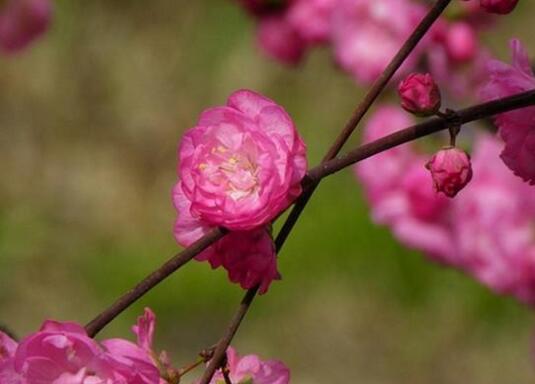
Flowering almond first originated in northern China, so it has very strong cold resistance; even in an environment of -35°C, it can overwinter smoothly. Flowering almond likes light and has average shade tolerance. It has low soil requirements and can grow in acidic and slightly alkaline soil; its drought tolerance is outstanding, it is not tolerant of waterlogging, and its disease resistance is extremely strong.
Cultivation methods and precautions for flowering almond
1. Suitable soil
Flowering almond is one of the few plants that can grow normally in saline-alkaline soil. It can even grow normally in saline-alkaline soil with a pH value of 8.8 and a salt content of 0.3%. However, in clay it shows poor growth, leading to small yellow leaves and few branches and leaves with no flowering. Therefore, the most suitable soil for it is well-drained, loose and fertile slightly acidic soil.
2. Appropriate light
Flowering almond is a light-loving plant and can grow in a semi-shaded environment, but its shade tolerance is relatively average. Therefore, when planting flowering almond, it should be placed in a place with sufficient sunlight; otherwise the plant will be thin and small and will also have few flowers.
3. Suitable temperature
Flowering almond has very strong vitality and very strong cold resistance, so what about temperature when growing flowering almond? Even if planted outdoors, it can still overwinter smoothly in the cold northern winter. Of course, if you want it to grow vigorously, you generally need to keep the temperature between 10-20°C.
4. Reasonable watering
In the cultivation methods and precautions for flowering almond, watering is very important, especially in spring, when attention should be paid to watering three times: in early spring, mid-spring and early winter. Watering in early spring has an important effect on flowering and growth, and can also help prevent frost damage in early spring, so it is generally done in early March.
5. Scientific fertilisation
Before potting, sufficient base fertiliser should be applied, mainly decomposed organic fertiliser or livestock manure. After flowering and leaf expansion, topdressing is needed to provide enough nutrients, so that flowering almond has bright leaf colour and grows well. Summer is the flower bud differentiation period, and even more attention should be paid to applying phosphorus and potassium fertiliser.
Key planting points for flowering almond
1. Water before winter
Although flowering almond has strong cold resistance, before winter begins it needs one watering, which people call the freezing water. When watering, you can also apply a ring of manure, which can raise the ground temperature and at the same time ensure the soil's air permeability.
2. Water promptly after fertilising
In the cultivation methods and precautions for flowering almond, each time you fertilise, the fertiliser should be applied shallowly rather than deeply, and it should be applied around the plant's root system. After fertilising, water promptly. A ring-shaped fertilisation method is usually adopted, which can ensure the fertiliser is fully absorbed.
3. Pay attention to drainage in the rainy season
Flowering almond is a plant that is rather afraid of waterlogging, and it is usually planted outdoors, so how do you grow flowering almond during the plum rain season? If it is planted in a low-lying place, ditches need to be dug promptly for drainage, to avoid excessive rainwater soaking and rotting the roots.
How to grow flowering almond: cultivation methods and precautions for flowering almond
Flowering almond gets its name because its leaves resemble elm leaves and its flowers resemble plum blossoms. Flowering almond is very popular and is cultivated throughout the country; it is a very good ornamental plant. Combined with forsythia, pines and cypresses and so on, the ornamental effect is even better. So how do you grow flowering almond? Next, Xiao Qi will share the cultivation methods and cultivation precautions for flowering almond.
1. Cultivation methods for flowering almond
1. Soil: It has low soil requirements, but is not tolerant of waterlogging. It likes neutral to slightly alkaline, fertile, loose sandy loam.
2. Watering: It dislikes waterlogging. If planted in spring and the weather is dry, water 2-3 times. Normally no watering is needed, and at the same time pay attention to drainage in the rainy season.
3. Sunlight: In autumn, winter and spring, sufficient sunlight can be given. When keeping it indoors, place it in a place with bright light as much as possible, such as a well-lit living room, bedroom, study or similar place.
4. Temperature: It likes a warm climate, but a hot and stuffy environment in summer is not good for its growth; it has strict requirements for winter temperature. When the ambient temperature is below 10°C it stops growing, and under frost it cannot overwinter safely.
5. Pests: The main diseases and pests of flowering almond include brown spot disease, white root rot, aphids, stinging moths, red spider mites, leaf-roller moths and so on. They generally occur in summer and autumn, and appropriate pesticides should be selected and sprayed promptly for control.
6. Pruning: During growth, pay attention to pruning the branches. After the flowers fade, the flowering branches should be moderately cut back, leaving 3-5 buds on each vigorous branch. After entering the dog days, prune once more, and pinch off the growing tips to concentrate nutrients and encourage flower buds to sprout.
2. Precautions for growing flowering almond
In the young stage, after the flowers fade each time, the flowering branches should be appropriately cut back to encourage axillary buds to sprout and form more side branches. When the plant enters middle age, the clump has already grown quite dense, so cutting back should stop and part of the overly dense branches within the clump should be thinned out. After the flowers fade, remove the young fruit promptly to avoid consuming nutrients and affecting the next year's flowering. It can also be pruned after planting into a small tree form; because the side branches on the trunk of this small tree crown are moderately dense and nutrient distribution is more reasonable, there is no need to remove the young fruit, letting strings of fruit hang all over the branches, bright red and beautiful, still with a certain ornamental value. After flowering, topdressing is needed to help flower bud differentiation, so that next year the flowers are large and abundant.
The above isthe cultivation methods and precautions for flowering almondintroduced. When flowering almond blooms in spring and autumn, both the flower shape and flower colour are extremely beautiful; it is a rare garden landscaping plant and home beautification plant.
How to grow flowering almond: 6 cultivation methods and four-season care
How to grow flowering almond 1. Soil requirementsFlowering almond has low soil requirements. Flowering almond likes neutral to slightly alkaline, fertile, loose sandy loam.
In addition, flowering almond has a certain salt-alkali tolerance and can grow normally in saline-alkaline soil with a pH value of 8.8 and a salt content of 0.3%, with no adverse reactions seen.
2. Watering requirementsFlowering almond dislikes waterlogging. If flowering almond is planted in spring and the weather is dry, growers should water 2-3 times. Normally no watering is needed, and at the same time pay attention to drainage in the rainy season. In addition, in daily care, watering should be controlled in amount to avoid water accumulation.
3. Sunlight requirementsGenerally, in autumn, winter and spring, flowering almond should be given sufficient sunlight. If it is kept indoors, place it in a place with bright light as much as possible, such as a well-lit living room, bedroom, study or similar place.
4. Temperature controlFlowering almond likes a warm climate, but a hot and stuffy environment in summer is not good for its growth. It has strict requirements for winter temperature. When the ambient temperature is below 10°C it stops growing, and under frost it cannot overwinter safely.
5. Pest preventionThe main diseases and pests of flowering almond include brown spot disease, white root rot, aphids, stinging moths, red spider mites, leaf-roller moths and so on. They generally occur in summer and autumn, and appropriate pesticides should be selected and sprayed promptly for control.
6. Pruning requirementsDuring the growth of flowering almond, pay attention to pruning the branches. Generally, after flowering almond's flowers fade, growers are advised to moderately cut back the flowering branches, leaving 3-5 buds on each vigorous branch. After entering the dog days, prune once more, and pinch off the growing tips to concentrate nutrients and encourage flower buds to sprout.
Care for flowering almond in different seasons 1. Spring careSpring is the peak growing season for flowering almond, so it must be given sufficient sunlight. After keeping it indoors for a period (about one month), move it outdoors to a shaded place for a period of care, alternating care in this way.
In spring, also pay attention to watering well in early March with the greening-up water, watering enough and thoroughly, and water once more in late April.
After the flowering period of flowering almond in spring, a large amount of nutrients has been consumed, so growers need to carry out topdressing.
2. Summer careA hot and stuffy environment in summer is not good for the growth of flowering almond, so growers should keep the ambient temperature below 35°C and the relative air humidity below 80%, preferably at 50%—70%.
3. Autumn careAutumn is also a peak growing season for flowering almond. In addition to changing the care environment as in spring, water and fertiliser management should also be carried out.
Water and fertiliser management should follow the cycle of fertiliser—clear water—fertiliser—clear water, with an interval of about 1—4 days. On sunny days or during high temperatures the interval is shorter; on rainy days or during low temperatures the interval is longer or no watering is done.
4. Winter careThe growth of flowering almond has strict requirements for winter temperature. When the ambient temperature is below 10°C, flowering almond stops growing, and under frost it cannot overwinter safely.
In winter, flowering almond enters dormancy, and the main work is to control fertiliser and water. Fertiliser and water management follows the cycle of fertiliser—clear water—clear water—fertiliser—clear water—clear water, with an interval of about 3—7 days. On sunny days or during high temperatures the interval is shorter; on rainy days or during low temperatures the interval is longer or no watering is done.