What to Do When Coleus Leaves Wilt? Four Tips to Make the Leaves Stand Upright and Vibrant
The ornamental value of coleus lies mainly in its leaves. When the leaves stand upright and are vibrantly colored, its ornamental value is high; conversely, if the leaves droop or wilt, its beauty declines considerably. So what should you do when coleus leaves wilt? Let's look at the solutions together.
What to Do When Coleus Leaves Wilt
1. Sudden Environmental Change
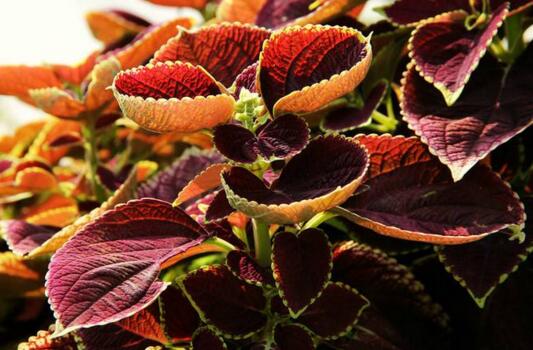
When the environment changes suddenly and the temperature drops sharply, the leaves of coleus may wilt. For example, if you move coleus from a shady corner into the sunlight, it may develop sunscald.
Solution: When leaves wilt due to environmental changes, you can control watering and make sure the environment is suitable for coleus growth, then care for it normally according to coleus cultivation methods for 1 week, and it will recover to normal.
2. Lack of Light
Coleus is a light-loving plant, especially accustomed to a sunny environment. If the environment is rather shady, it may lead to insufficient light, and the result is slow growth and listless leaves, so wilting is unavoidable.
Solution: What should you do when coleus leaves wilt due to lack of light? Avoid keeping coleus in a place with insufficient light. If conditions are limited, you can use diffused light to increase lighting. Once there is enough light, the wilting of the leaves will be alleviated.
3. Nutrient Deficiency
Nutrient deficiency includes two aspects. On one hand, too little fertilizer causes the soil to lack elements such as nitrogen, phosphorus, and potassium; on the other hand, too little watering means the coleus does not absorb enough water. Both situations will cause the leaves to wilt.
Solution: Whether fertilizing or watering, do not apply too little, and do not alternate between too much and too little. For example, sometimes fertilizing 3 times a month, and sometimes fertilizing once every few months, is not right. Instead, fertilize scientifically; for detailed methods, you can refer to the detailed introduction in "How to Fertilize Coleus."
4. Too Much Watering
If you water too much, another problem will appear: waterlogging around the plant's roots, which hinders air from entering the soil, causing the coleus roots to breathe poorly. When the coleus's metabolism goes wrong, the leaves will wilt.
Solution: Water only after the soil has dried out; there is no need to water every day, otherwise it will cause overwatering. During the rainy season, you also need to move the coleus back indoors. If it is cultivated outdoors, pay attention to drainage.
What Potted Plants Are Good to Place (Grow) on an Office Desk?
Placing a small potted green plant in a corner of the office desk can regulate a person's psychological state and relieve the monotony and fatigue brought by work. When choosing a green plant, consider size, color, and plant shape. The general principle is that the plant shape should be dignified and spreading, with warm colors as the main choice. So what plants are good to place on an office desk? Let's take a look below!
Cactus
Cactus is a type of plant in the genus Opuntia, also known as Xianbazhang, Guanyinzhang, Bawang, Huozhang, etc. It often grows in dry environments such as deserts and is called the “desert hero flower.” It is a type of succulent plant. Its respiration mostly occurs at night when it is cooler and more humid; during respiration, it takes in carbon dioxide and releases oxygen. Placing a cactus indoors, especially a hydroponic cactus (because hydroponic cacti are cleaner and more environmentally friendly), can help purify the environment.
Ball Cactus
Ball cactus is the collective name for cactus family plants with a spherical shape. It has many varieties, and its native habitat is mostly desert regions. It likes high temperatures and arid climates. It generally blooms in the early morning or evening, lasting from a few hours to one day. The stems, leaves, and flowers all have high ornamental value, and it is also an artistic masterpiece among hydroponic flowers. Ball cactus has the effect of absorbing electromagnetic radiation, is also a natural air freshener, and also has the effect of adsorbing dust and purifying the air.
Spider Plant
Spider plant is also known as Chuipencao, GuaLan, DiaoLan, Lancao, ZheHeLan, etc. It is a perennial evergreen herbaceous plant in the genus Chlorophytum of the family Liliaceae. Its branches are slender and drooping. In summer or when temperatures are high in other seasons, it produces small white flowers. The flowers are concentrated at the ends of the drooping branches, with yellow stamens, and the small tender inner leaves are sometimes purple. It can be grown in pots for ornament. It is easy to cultivate, highly adaptable, and one of the most traditional hanging plants for indoor rooms.
Aloe
Aloe is a perennial evergreen herbaceous plant in the genus Aloe of the family Liliaceae, native to the Mediterranean and Africa. Because it is easy to grow and is an ornamental plant with both flowers and leaves, it is quite popular. It is a new star among plants that combines food, medicinal, cosmetic, and ornamental uses. Its exudate (whose main active ingredients are anthraquinone substances such as aloin) has been widely used in medicine and daily chemicals. In Chinese folk tradition, it has been used as a natural medicine for beauty, hair care, and treating skin diseases. Aloe gel has a certain anti-itch effect on mosquito bites.
Aspidistra
Aspidistra is also known as ZhizhuBaodan, DayeWannianqing, Zhuyepan, Jiulongpan, Zhujieshenjin, etc. It is a perennial evergreen perennial-rooted herbaceous plant in the genus Aspidistra of the family Liliaceae. Its leaf shape is upright and neat, its leaf color is dark green and glossy, its growth is robust, its adaptability is strong, and it is extremely shade-tolerant. It is an excellent shade-loving foliage plant for indoor greenery decoration, suitable for placement in homes and offices. It can be enjoyed alone or arranged together with other flowering plants, and it is also a leaf material for modern flower arrangements.
Ti Plant
Ti plant is a shrub plant in the genus Cordyline of the family Agavaceae. Its underground part has well-developed creeping rhizomes and is prone to producing suckers. The main stem is upright, with a stem height of 1-3 m, unbranched or sparsely branched. The flowers are pale red to blue-purple, sometimes pale yellow. It is distributed in the tropical regions of southern China and is mostly cultivated in gardens as a foliage plant. The ti plant has a beautiful plant shape and gorgeous, elegant colors, with good ornamental value. It is also a medicinal plant; its flowers, leaves, and roots can all be used as medicine. In Guangxi, China, it was once used in folk medicine to treat hemoptysis, hematuria, bacillary dysentery, and other conditions.
Golden Pothos
Golden pothos is a large evergreen climbing vine in the genus Epipremnum of the family Araceae. It grows in tropical regions, often climbing on rocks and tree trunks in rainforests. It has strong twining ability and well-developed aerial roots, and can be grown hydroponically. It has an extremely strong air-purifying function and is known as a green purifier. It can convert formaldehyde into substances such as sugar or amino acids during metabolism, and can also decompose and absorb benzene emitted by copiers and printers.
Snake Plant
Snake plant is also known as Hupilan, Jinlan, Qiansuilan, Huweizhang, Huangweilan, Yuemushe, etc. It is a perennial herbaceous foliage plant in the genus Sansevieria of the family Liliaceae. It has many varieties, and the plant shape and leaf color vary greatly. It has strong adaptability to the environment. Main varieties include golden-edged snake plant, silver-striped snake plant, etc. It is suitable for decorating studies, living rooms, and office spaces, and can be enjoyed for a relatively long time.
Asparagus Fern
Asparagus fern is also called Yunpiansong, Citiandong, Yunzhu, etc. It can reach several meters in height. It is native to South Africa and distributed in central China, the northwest, the Yangtze River basin, and various places in the south. It prefers warm, humid, semi-shady, and ventilated environments. In winter it is not tolerant of severe cold, nor is it tolerant of drought, and in summer it should avoid direct sunlight. Asparagus fern is a highly ornamental plant that can be placed in living rooms and studies. While purifying the air, it also adds a literary atmosphere. Its roots are used as medicine and can treat acute bronchitis, with the function of moistening the lungs and relieving cough.
Chinese Rose
The Chinese rose is called the queen of flowers and is also known as Yueyuehong. It is a semi-evergreen low shrub in the genus Rosa of the family Rosaceae. It blooms in all four seasons, generally red, or pink, occasionally white and yellow. It can be used as an ornamental plant and also as a medicinal plant. China is one of the places of origin of the Chinese rose. Its flowers are elegant and beautiful, with diverse colors, and it blooms in all four seasons, deeply loved by people. In China, 52 cities have selected it as their city flower. In May 1985, the Chinese rose was rated fifth among China's top ten famous flowers.
Agave
Agave is also known as Longsheshezhang, Fanma, etc. It is a perennial evergreen large herbaceous plant in the genus Agave of the family Agavaceae. Its leaves are firm and upright, evergreen in all four seasons. The flowers are yellow-green. After blooming, very few bulbils form on the inflorescence. In its place of origin, it generally takes several decades to bloom. After blooming, the mother plant dies. It sets seed only through cross-pollination. It likes well-drained, fertile, and moist sandy loam. It is native to tropical America, and it is often introduced and cultivated in various provinces and regions of southern and southwestern China.
Ivy
Ivy is a perennial evergreen climbing shrub in the genus Hedera of the family Araliaceae. Its leaf shape is beautiful and it is evergreen in all four seasons. In various places in the south, it is often used for vertical greening. It is mostly planted beside rockeries and at wall bases, allowing it to naturally attach and grow vertically or as cover, achieving the effect of decorating and beautifying the environment. When potted, small and medium pots are mainly used, and various shapes can be created. It can be displayed indoors and can also be used to cover the walls of indoor gardens, making the indoor garden landscape more natural and beautiful.
Peyote
Peyote is a small, spineless cactus native from southwestern Texas in the United States to Mexico, mainly growing in the Chihuahuan Desert, Tamaulipas, and San Luis Potosi. Its flesh is soft and its form is peculiar, with very high ornamental value. Placing peyote at home is an excellent choice. It likes warmth, dryness, and sufficient sunlight, fears waterlogging, is tolerant of drought and semi-shade, and requires a relatively large day-night temperature difference. It can help you regulate the air better.
Bishop's Cap Cactus
Bishop's cap cactus is a succulent plant in the genus Astrophytum of the family Cactaceae, native to the central Mexican plateau. It has relatively high horticultural value and also relatively high ornamental value. It is a treasure eagerly collected by botanical gardens and succulent enthusiasts. Because these plants have a very low propagation rate and relatively great variability, preserving various horticultural varieties is very difficult. Tissue culture may be an effective way to solve the propagation and germplasm preservation of various horticultural varieties of Astrophytum and bishop's cap cactus, and it also has significance for protecting endangered plants.
Mimosa
Mimosa is a perennial herbaceous plant or subshrub in the family Fabaceae. Because its leaves respond to heat and light and close immediately when touched by external force, it is named mimosa. Its flowers, leaves, and pods all have good ornamental effect, and it is relatively easy to keep alive. It is suitable as a potted flower on balconies and indoors (eating it or excessive contact with mimosa can also cause hair loss), and it can also be grown in courtyards and other places.
Hong Kong Orchid Tree
Hong Kong orchid tree is also known as HonghuaZijing or HonghuaYangtijia. It is a tree in the genus Bauhinia of the family Caesalpiniaceae. Its crown is elegant, and its flowers are large and gorgeous. Its leaf shape resembles the hoof of cattle and sheep, which is extremely peculiar. It is an excellent ornamental tree species for the tropics and subtropics, suitable as a street tree or shade landscape tree. A single flower lasts 4-5 days, and the flowering period of the whole tree lasts nearly half a year. It is widely cultivated in Hong Kong, China as a street tree. It has five major characteristics: long flowering period, large flowers, beautiful flower shape, bright flower color, and strong fragrance, and has become a symbol of Hong Kong, China.
Zhuangyuan Hong
Zhuangyuan Hong is a famous osmanthus variety. It is an evergreen shrub or small tree in the genus Osmanthus of the family Oleaceae. Its crown is dense, its shape is good, its branching ability is strong, its growth volume is large, its flower diameter is large, its flower quantity is abundant, and its flower color is bright red. Its ornamental value is extremely high, making it very suitable for planting in parks, scenic spots, and residential courtyards. It is also a good material for potted cultivation in northern regions.
Chinese Azalea
Chinese azalea is also known as Huangzhizhu, Huangdujuan, Yangbushicao, Naoyanghua, Jingyanghua, Laohuhua, Yuzhi, etc. It is a deciduous shrub in the genus Rhododendron of the family Ericaceae. It grows on mountain slopes, grasslands at an altitude of 1000 m, or in shrublands in hilly areas or under mixed forests on mountain ridges. It is produced in Jiangsu, Anhui, Zhejiang, Jiangxi, Fujian, Henan, Hubei, Hunan, Guangdong, Guangxi, Sichuan, Guizhou, and Yunnan in China. One subspecies is produced in Japan. Its flowers are beautiful and brightly colored, and it also has relatively high value in Chinese herbal medicine. It is one of the famous poisonous plants.
Tulip
Tulip is also known as Yanghehua, Caoshexiang, Yuxiang, Helanhua, etc. It is an herbaceous plant in the genus Tulipa of the family Liliaceae. It is a world-famous bulb flower and also an excellent cut flower variety. The flower stem is sturdy and upright, the leaves are elegantly simple and beautiful, and the lotus-like flowers are dignified and moving, endearing. In Europe and America, it is regarded as a symbol of victory and beauty. Many countries, including the Netherlands, Iran, and Turkey, treasure it as a national flower.
Haworthia truncata
Haworthia truncata is also known as Jiexing Shierjuan. It belongs to the succulent plants in the genus Haworthia of the family Liliaceae. The plant has no stem, and the fleshy leaves are arranged in two rows in a fan shape. The leaves are upright, slightly curved inward, and slightly concave at the top. The surface is rough, green to dark green-brown, with small wart-like protrusions. The cross-section of new leaves is partly transparent and grayish-white. It is robust in habit, and its root system is relatively thick and strong. Some varieties also have grayish-white transparent patterns on the leaf cross-sections. Its horticultural variety Haworthia truncata 'Variegata' has yellow or pink markings on the leaves, making it even more beautiful.
Datura
Datura is also known as Dingxiang Mudan, Longchuanhua, etc. It is an evergreen tree in the genus Syringa of the family Oleaceae. Its leaves are green and shaped like peach leaves. Its flowers are mostly pink-white and open layer by layer, with a deep and fragrant scent. According to observations, if you smell its fragrance indoors for a long time, it can make people feel listless, short of breath, and weak. Therefore, it is not suitable to place datura indoors for viewing, and it should certainly not be placed in the bedroom at night.
Oleander
Oleander is an evergreen upright large shrub in the genus Nerium of the family Apocynaceae. It is cultivated in various provinces and regions of China, especially more in southern China. It is often cultivated in parks, scenic areas, roadsides, or around rivers and lakes. In areas north of the Yangtze River, cultivated plants must overwinter in greenhouses. It grows wild in Iran, India, and Nepal, and is now widely planted in tropical regions around the world. Its flowers are large, gorgeous, and have a long flowering period, and it is often used for ornament. The stem bark fiber is an excellent blended textile raw material. Its leaves, bark, roots, flowers, and seeds all contain various glycosides and are highly toxic; accidental ingestion by humans or livestock can be fatal.
Poinsettia
Poinsettia is also known as Xiangyahong, LaolaiJiao, Shengdanhua, Shengdanhong, Xingxingmu, etc. It is native to Central America and widely cultivated in the tropics and subtropics. It is cultivated in most provinces, regions, and municipalities in China, commonly in parks, botanical gardens, and greenhouses for ornament. Its stems and leaves can be used as medicine and have a detumescence effect, and can treat traumatic injuries.
Night-blooming Jasmine
Night-blooming jasmine is a perennial vine-like twining herbaceous plant. Its flowers are fragrant, especially stronger at night, and are extremely harmful to human health. Therefore, at night one should not linger in front of night-blooming jasmine flowers. It is often cultivated for ornament. In South China, its flowers are sometimes taken and stir-fried with meat as a dish, and the flowers can be steamed to make fragrant oil. The flowers and leaves can be used medicinally, with effects of clearing the liver, improving eyesight, and removing eye films. In South China, it is used in folk medicine to treat conjunctivitis, eye symptoms caused by malnutrition, and other conditions.
Geranium
Geranium is also known as Yangxiuqiu, ShilaHong, RulaHong, RilanHong, Yangkui, etc. It is a perennial herbaceous plant in the genus Pelargonium of the family Geraniaceae. It is native to southern Africa and widely cultivated around the world. Young plants are fleshy herbaceous, while old plants become semi-woody. In the West, it is a very good flower for decorating windowsills. On the European continent, such as in Germany and Austria, it is especially common.
Lantana
Lantana is also known as Shandadan, Ruyicao, Wucaihua, Wuleidan, WuseXiuqiu, Biansecao, DahongXiuqiu, etc. It is an evergreen shrub in the genus Lantana of the family Verbenaceae. Its general flowering period is roughly from mid-to-late April to around mid-February of the following year, though due to the influence of climate and temperature, it can be seen flowering almost all year round, so it can be called a constantly blooming plant.
Bird's Nest Fern
Bird's nest fern is also known as Chaorui, Shansuhua, WangguanRui, etc. It is a species under the genus Asplenium of the family Aspleniaceae. It is a perennial shade-loving herbaceous foliage plant, native to Southeast Asia, eastern Australia, Indonesia, India, and eastern Africa, and widely distributed in tropical regions of China. It has the effects of strengthening tendons and bones and activating blood circulation to remove stasis. It can also be used for traumatic injuries, fractures, blood stasis, headache, blood strangury, impotence, and gonorrhea.
Haworthia
Haworthia is the abbreviated name for succulent plants in the genus Haworthia of the family Liliaceae. It is also a perennial herbaceous plant, native to South Africa. It has become a relatively popular small succulent plant in recent years. It has many varieties and diverse forms, with small, exquisite, fresh, and elegant plant shapes, very suitable for individual cultivation and viewing. Among the many Haworthia varieties, there are those suitable for ordinary household cultivation, such as Haworthia fasciata and Haworthia cooperi, to decorate desks, writing tables, computer desks, windowsills, and other places, as well as varieties suitable for advanced enthusiasts to collect and cultivate, such as Haworthia truncata, Haworthia maughanii, and Haworthia cooperi var. truncata.
Maidenhair Fern
Maidenhair fern is a perennial herbaceous plant in the genus Adiantum of the family Adiantaceae, with a height of 0.1-0.6 m. Because its stems are slender and resemble iron wire in color, it is named maidenhair fern. Maidenhair fern is also an indicator of calcareous soil. Because it fears dryness and strong light, it must be placed in a place without direct sunlight for care. It is widely distributed in Taiwan, China, Fujian, Guangdong, Guangxi, Hunan, Hubei, and other places. It often grows on limestone beside flowing streams or at the bottom of limestone caves and on dripping rock walls, and is an indicator plant of calcareous soil.
How to Plant Snapdragon, How to Grow Snapdragon
Flower and Bonsai Network introduction: Today, the editor of Flower and Bonsai Network shares with you an article on how to plant snapdragon and how to grow snapdragon. Let's take a look.
Snapdragon (scientific name: Antirrhinum majus) is also known as Longkouhua, Longtouhua, Yangcaique. It is a perennial herbaceous plant in the genus Antirrhinum of the family Plantaginaceae. It originally belonged to the family Scrophulariaceae and is a model organism. It is native to the Mediterranean region, with a distribution range from Morocco and Portugal north to southern France, and east to Turkey and Syria. Snapdragon is named because its flowers resemble goldfish. Its Latin scientific name "Antirrhinum" means "nose-like," while "majus" means "flowering in May."
Snapdragon is a perennial herbaceous plant with an upright plant, plant height 0.5-1 m, and a maximum height of up to 2 m. The upper leaves are spirally alternate, lanceolate, and the basal leaves are opposite, 1-7 cm long and 2-2.5 cm wide. The flowers are in a terminal raceme, each flower 3.5-4.5 cm long, bilabiate and bilaterally symmetrical. Wild plants have flower colors from pink to purple, and the two lips are often yellow. Stem color is also correlated with flower color. The flowering period is very long, from March to June. The fruit is an ovoid capsule, 10-14 mm in diameter, containing a large number of seeds.
Because of its bright flower colors and peculiar flower shape, snapdragon is widely planted in gardens, flower beds, and flower borders, and can also be used for cut flower production. Although snapdragon is a perennial plant, it is often cultivated as an annual or biennial, especially in cold regions where it cannot overwinter. Snapdragon already has a large number of cultivated varieties. Except for blue, flower colors include purple, orange, pink, yellow, white, and compound colors. Plant types include tall, medium, and short. There are also tetraploid and F1 hybrid varieties with huge flowers. In addition, there are varieties with peloric flowers, whose inflorescences bear only one regular large flower.
Snapdragon is very easily naturalized from cultivated varieties and has been widely domesticated in temperate regions around the world.[4][3]In garden cultivation and application, sowing is mainly used, and propagation by cuttings or tissue culture is also possible.
In addition, the whole plant of snapdragon can also be used as medicine, with the effects of clearing heat and detoxifying, cooling blood, and reducing swelling.
Snapdragon is also an important model organism in plant genetics research. For example, the gene DEFICIENS it contains represents the "D" in the acronym of the MADS-box gene family, and plays an important role in studying the evolution and development of plants. In addition, snapdragon also played an important role in establishing the ABC model of floral organ development.
Complete Collection of Snapdragon Varieties
The original species of snapdragon is tall, with a tall plant height and few flowers. Later, through human breeding, dwarf varieties appeared, with abundant flowers and lush branches, very beautiful. Through repeated exploration, rich and colorful varieties have also been bred, adding much scenery.
Common Snapdragon Variety: Floral Showers Series
Tetraploid variety, plant height 15-20 cm, good branching. Among them, the bicolor variety is even more attractive, and the apricot-yellow/white bicolor variety is the newest variety.
Common Snapdragon Variety: Chimes Series
Tetraploid variety, plant height 15-20 cm, strong branching.
Common Snapdragon Variety: Tahiti
Plant height 20-25 cm, rich in colors, including 5 bicolor varieties. The famous purple/white and rose-red/white bicolor varieties are the earliest blooming varieties among dwarf varieties, blooming 10 days earlier.
Common Snapdragon Variety: Sweetheart
Plant height 15 cm, dwarf F1 hybrid, double flowers, azalea type, rich in flower colors.
Common Snapdragon Variety: Little Baby
Plant height 30 cm, strong branching, azalea type.
Common Snapdragon Variety: Bells
Plant height 20-25 cm, butterfly flower type. Among them, Red Bells is a new variety and sells very well in the international flower market. In addition, a new variety La Bella has a plant height of 45-50 cm, strong branching, beautiful flower shape, and bright colors.
Common Snapdragon Variety: Black Prince
Plant height 40-45 cm, brown leaves, deep red flowers.
Common Snapdragon Variety: Madame Butterfly
Double azalea type, with flower colors including pink, deep red, golden yellow, yellow, rose red, and other colors.
Snapdragon Cultivation Methods
Snapdragon is named because its flowers especially resemble little goldfish with pursed mouths. The flowers are very cute and the colors are very rich. If you have a cat at home and are afraid the cat will harm little goldfish so you cannot keep them, you can grow a pot of snapdragon to relieve boredom!
Snapdragon Cultivation Methods
Variety Selection
Snapdragon has varieties with relatively large plants and also low, flower-abundant varieties. For potted snapdragon, it is best to choose varieties with low plants and abundant flowers, so that the ornamental value of the potted plant is higher.
Pot and Soil Selection
For snapdragon, it is best to use a breathable clay pot or plastic pot with a pot diameter of about 15 cm. The cultivation substrate should be loose, fertile, well-drained culture soil, or evenly mixed leaf mold, peat, and plant ash. Before planting, apply some dry livestock manure or cake fertilizer powder, and add a little bone meal or superphosphate as base fertilizer.
Water and Fertilizer Management
Snapdragon is usually given 1 topdressing every 10 days. Snapdragon dislikes soil waterlogging, but insufficient watering will also affect its growth and development. The correct approach is to keep the soil moist, and it is best to let it dry slightly between two waterings. In addition, when watering, try to avoid watering from above the plant, to reduce leaf surface moisture and disease spread by splashing water droplets.
Temperature and Light
Snapdragon is a plant that likes full light. Under conditions of sufficient sunlight, snapdragon grows uniformly in height and blooms neatly and brightly. Under semi-shade conditions, it grows taller and the flower color is lighter. Supplementary lighting for 4 hours in winter can make snapdragon bloom earlier. For snapdragon cultivation, maintain a night temperature of 15°C and a day temperature of about 22-28°C. At 2-3°C, the flowering period is delayed, blind flowers increase, and cut flower quality declines.
Propagation Methods
Snapdragon is mainly propagated by sowing and tissue culture.
Notes on Growing Snapdragon at Home
Pruning
After snapdragon blooms, cut off the aboveground part level with the soil, water once thoroughly, and in about one week new branches can sprout. Then apply 1 dilute liquid fertilizer every 10 days until flower buds form.
Pest and Disease Control
Common diseases of snapdragon include: stem rot, seedling rot, snapdragon rust, leaf blight, and gray mold.
Common pests of snapdragon include: aphids, red spider mites, whiteflies, thrips, and others.
Main value of snapdragon: ornamental.
Snapdragon is actually a flower; just like its name suggests, each of its small petals is like a glistening fish scale, and its many brightly colored blooms form a large, dense cluster of snapdragons, giving it high ornamental value.
Snapdragon flowers come in many colors, including white, pink, deep red, flesh-colored, and orange. Most astonishingly, a single snapdragon flower spike can produce flowers of two different colors; the bicolor flowers are truly amazing, making it a plant of extremely high ornamental value.
Main value of snapdragon: decorative.
Because snapdragon flowers are large and beautiful, many countries place great importance on using snapdragons to beautify the environment and decorate courtyards. Snapdragons are generally planted in flower beds, outside windows, or kept indoors as potted plants, or their flower spikes are cut for use in flower arrangements and other crafts. In recent years, snapdragons have risen to fame in the cut flower and flower arrangement world, winning the affection of many floral enthusiasts.
Main value of snapdragon: edible.
An important use of snapdragon is as an oil crop; snapdragon can be pressed to extract oil for human consumption, and it is very healthy and rich in nutrients.
Main value of snapdragon: medicinal.
Snapdragon is a traditional Chinese medicine in China. Its taste is slightly bitter, and the whole plant can be used as medicine; it is a cooling-natured Chinese medicine. The medicinal properties of snapdragon include clearing deficiency heat, removing toxins, activating blood circulation, and reducing swelling and pain. It can treat summer colds with fever and symptoms of headache and restlessness, and it can also treat fractures, sprains, skin abscesses, and other conditions.
Snapdragon can be taken internally or used externally. For internal use, simply crush the snapdragon and decoct it. However, because snapdragon is somewhat toxic, it should be taken according to a doctor's instructions, following the dosage and method. For external application, simply apply the crushed snapdragon powder to the suppurating area.
Propagation methods of snapdragon.
The cultivation techniques for snapdragon in China are already quite complete; it can be propagated throughout the country and cultivated in all four seasons. Snapdragon grows quickly, so seed propagation also allows you to see snapdragons bloom very soon, extremely rapidly. What other propagation methods does snapdragon have?
Propagation method of snapdragon: sowing.
Sowing in a seedbed.
For the seedbed, it is best to choose sandy loam with loose soil structure, a low groundwater table, good drainage, and rich organic matter. The seedbed requires fine, level soil particles. To prevent pests and diseases, about 25 days before sowing, turn and sun-dry the sowing area 2-3 times, and disinfect the soil with carbofuran before sowing.
When sowing, water the seedbed thoroughly, mix the seeds with fine sand at a ratio of 1:4, and spread them evenly over the seedbed. After sowing, cover with a thin layer of plant ash. After watering, cover with a 50% shade net; never expose them to direct sunlight. Seedlings can be transplanted 5-6 weeks after emergence.
Sowing in plug trays.
Disinfection of seeds and medium is very important. Before sowing, soak the seeds in a potassium permanganate solution of about 0.5% concentration for 1-2 hours. Add 150-200 g of thiophanate-methyl powder per cubic meter of medium (about 20 bags), stir 2-3 times so the chemical and medium are fully mixed, then stir while spraying water, adjusting until the medium is "holds together when squeezed, yet crumbles when released." Cover with plastic film and pile for 8-10 hours, then fill into plug trays.
Each plug tray can sow 200 seeds, one seed per cell. After sowing, gently press with your hand so the seeds adhere to the medium, then spray thoroughly with water using a sprayer and cover with newspaper or plastic film. If the nursery can control dryness, moisture, and temperature, covering is unnecessary. Keep the newspaper moist for a long time, and uncover the newspaper after the seeds germinate.
Propagation method of snapdragon: cuttings.
Cutting season.
Cutting propagation can be carried out in both spring and autumn. With conditions such as a greenhouse or sunroom, it can also be done in winter.
Cutting method.
When taking cuttings, use a thin bamboo stick about 3 mm in diameter to pre-punch holes in the substrate. Insert the cuttings while punching the holes, and gently press the growing medium at the base of the cuttings with two fingers. After inserting the cuttings, spray water on the potting soil and cuttings twice a day, morning and evening, using a fine-nozzle watering can.
Main value of snapdragon.
Main value of snapdragon: ornamental.
Snapdragon is actually a flower; just like its name suggests, each of its small petals is like a glistening fish scale, and its many brightly colored blooms form a large, dense cluster of snapdragons, giving it high ornamental value.
Snapdragon flowers come in many colors, including white, pink, deep red, flesh-colored, and orange. Most astonishingly, a single snapdragon flower spike can produce flowers of two different colors; the bicolor flowers are truly amazing, making it a plant of extremely high ornamental value.
Main value of snapdragon: decorative.
Because snapdragon flowers are large and beautiful, many countries place great importance on using snapdragons to beautify the environment and decorate courtyards. Snapdragons are generally planted in flower beds, outside windows, or kept indoors as potted plants, or their flower spikes are cut for use in flower arrangements and other crafts. In recent years, snapdragons have risen to fame in the cut flower and flower arrangement world, winning the affection of many floral enthusiasts.
Main value of snapdragon: edible.
An important use of snapdragon is as an oil crop; snapdragon can be pressed to extract oil for human consumption, and it is very healthy and rich in nutrients.
Main value of snapdragon: medicinal.
Snapdragon is a traditional Chinese medicine in China. Its taste is slightly bitter, and the whole plant can be used as medicine; it is a cooling-natured Chinese medicine. The medicinal properties of snapdragon include clearing deficiency heat, removing toxins, activating blood circulation, and reducing swelling and pain. It can treat summer colds with fever and symptoms of headache and restlessness, and it can also treat fractures, sprains, skin abscesses, and other conditions.
Snapdragon can be taken internally or used externally. For internal use, simply crush the snapdragon and decoct it. However, because snapdragon is somewhat toxic, it should be taken according to a doctor's instructions, following the dosage and method. For external application, simply apply the crushed snapdragon powder to the suppurating area.
Common diseases of snapdragon and their control methods.
Snapdragons are most prone to disease during the seedling and flowering stages, because at these times snapdragons are relatively fragile and have poor resistance. Therefore, care during the seedling and flowering stages must be more meticulous. What common diseases does snapdragon have, and how should they be controlled?
Damping-off is the main disease occurring during the seedling stage of snapdragon, and it can be controlled by watering with captan.
Leaf blight, bacterial leaf spot, anthracnose, and others infect leaves and stems, and can be controlled with Bordeaux mixture or a 400-fold solution of iodofenphos. Sclerotinia rot can be sprayed with a 1000-fold solution of thiophanate-methyl. For aphids and cutworms, a 1000-fold solution of 40% omethoate emulsifiable concentrate can be used.
Phytophthora blight.
Phytophthora blight, also called stem rot, mainly harms stems and roots. After the pathogen invades the base of the stem, it forms light brown lesions; the lesions are water-soaked, constricted, and rotting, and in severe cases often cause the plant to die. When air humidity is high, white filamentous growth can appear on the lesions.
Control methods:
a. Strengthen cultivation management, avoid continuous cropping; promptly pull out and burn diseased plants to reduce sources of infection and lower the incidence rate. 2-3 weeks before planting, disinfect the soil with formalin: spray the soil with 30 ml of the chemical diluted 50 times with water, then cover with plastic film. Remove the covering after 5 days, and wait 1-2 weeks until the chemical odor has dissipated before use.
b. Chemical control: in the early stage of disease, spray with a 300-fold solution of 40% phosethyl-Al wettable powder; or drench the root and stem base of the plant with an 800-fold solution of 50% captafol wettable powder, using 4 L of the solution.
Seedling rot.
This is a serious disease of the seedling stage, and it can occur from seed germination through the entire seedling period. The stem or root near the soil surface of the seedling first becomes water-soaked, then gradually turns brown and constricts; in severe cases the diseased part rots, causing the whole plant to lodge or wilt and die.
Control methods:
a. During the seedling stage, control the amount of watering; the soil should not be too wet. Sow at the proper time to avoid seedlings being affected by unsuitable temperatures. Seedlings should not be planted too densely, and thin them promptly. Keep the greenhouse ventilated and well lit, lower the temperature between plants, and control the conditions for disease development. In addition, the soil can be disinfected with 70% quintozene powder at a rate of 5-8 g per sq m, mixed evenly with an appropriate amount of fine sand and broadcast.
b. Chemical control. In the early stage of disease, promptly spray the young stems of seedlings and the nearby soil with an 800-1000-fold solution of 50% carbendazim wettable powder, or spray with an 800-1000-fold solution of chlorothalonil wettable powder.
Rust.
It mainly harms the leaves, tender stems, and calyx of snapdragon. Diseased leaves show yellow-green blister-like water spots, which gradually expand; after the blister-like spots rupture, reddish-brown summer spore masses are exposed, and the leaf tissue around the lesions turns light yellow. Symptoms on tender stems and the calyx are similar to those on the leaves. Affected plants grow weakly, and in severe cases the leaves scorch and wither.
Control methods:
a. Promptly remove and burn diseased leaves when found to prevent spread; ensure ventilation and light, and plants should not be planted too densely.
b. Chemical control. In the early stage of disease, spray with a 200-fold solution of 15% triadimefon wettable powder, or a 400-fold solution of 65% zineb wettable powder.
Leaf blight.
It mainly occurs on leaves and stems. When leaves are infected, small water-soaked spots first appear at the leaf tip or leaf margin, then turn pale white and gradually expand into round or irregular brown lesions. In the center of the lesions there are brown irregular concentric rings, scattered with many small black dots. Infected tender leaves become distorted, and in severe cases the leaves shrink and die, hanging on the stem without falling off. Stem lesions are elongated or encircle the stem, water-soaked, slightly sunken, gray-white in the center with dark brown edges; the diseased part often cracks dry and bears many small black dots, which are sometimes arranged in concentric rings. When the stem is affected during the seedling stage, it often causes seedlings to lodge.
Control methods:
a. Strengthen cultivation management, promptly remove diseased leaves or pull out diseased plants and burn them to reduce the primary infection source; the greenhouse should be ventilated and aired, plants should not be too dense, and nitrogen fertilizer should not be applied alone.
b. Chemical control. In the early stage of disease, spray with Bordeaux mixture or a 600-fold solution of 65% zineb wettable powder.
Gray mold.
It can harm the stems, leaves, and flowers of the plant, mainly the flowers. The pathogen invades through weakened host tissues. When leaves are affected, it often first occurs at the leaf tip or leaf margin. In the early stage, water-soaked spots appear on the diseased part, then gradually expand, and the diseased tissue turns dark brown and rots. After the pathogen invades, it can also cause infection of flower stalks and stems, producing canker spots. When the lesions encircle the flower stalk or stem, they can cause the flower spike to wilt. Under humid conditions, the affected parts are covered with a gray-brown mold layer and often produce small black granular sclerotia.
Control methods:
a. Promptly remove diseased flowers and leaves and burn them in a centralized manner to reduce the infection source. The greenhouse should be well ventilated, watering should not be excessive, and the temperature and humidity inside should be controlled. Apply nitrogen fertilizer reasonably and appropriately increase phosphorus and potassium fertilizers to improve the plant's disease resistance. During flower management, try to avoid causing wounds to the plant and reduce opportunities for pathogen infection.
b. Chemical control. In the early stage of disease, choose an 800-1000-fold solution of 70% thiophanate-methyl wettable powder, or an 800-1000-fold solution of 50% carbendazim wettable powder for spray control. Spray once a week, for 2-3 consecutive sprays.
Aphids.
They usually gather on tender buds, tender leaves, and tender branches to pierce and suck sap, causing the affected parts of the plant to shrink and deform. Aphids also secrete honeydew that contaminates the plant and induces diseases such as sooty mold. They can be killed by spraying with a 600-800-fold solution of methomyl or an 800-fold dilution of 25% derris, or by spraying with an 800-1000-fold solution of 40% profenofos emulsifiable concentrate. Profenofos is a broad-spectrum organophosphorus scale insecticide with contact, stomach-poison, and strong penetrating effects; it can penetrate into plant tissues and has good control effects on chewing and piercing-sucking pests. Spray once a week for 2-3 consecutive times; it has especially strong effects on scale insects and aphids.
Red spider mites.
They mostly pierce and suck leaf sap on the underside of leaves, causing leaves to discolor and even curl. They can be killed by spraying with a 1000-fold aqueous solution of 40% dicofol.
Whiteflies.
Sucking plant sap causes leaves to fade, curl, and shrink, and they also often serve as vectors for various toxins. They can be killed by spraying with a 0.01% solution of deltamethrin.
Thrips.
Adults or nymphs live on plants and feed on young buds, tender leaves, flowers, and young fruits. Tender leaves curl after being fed upon, and buds and flowers wilt after being damaged. In the early stage of disease, they can be killed by spraying with a 400-500-fold solution of 25% derris or 40% dimethoate.