How does coleus get through the winter? Remember four tips: water less, stop fertilizing, increase light, control temperature
Because coleus is not a cold-tolerant plant, it needs proper care in winter to get through the winter smoothly. So how does coleus get through the winter? Besides the temperature not being too low, there are many other aspects that need attention. Let's take a look at how to grow coleus in winter.
How does coleus get through the winter
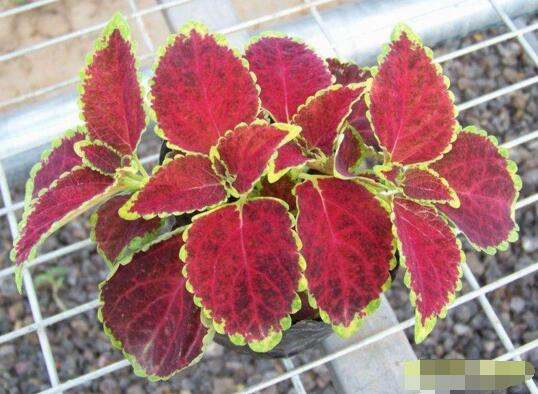
Although the methods for growing coleus are simple, in winter they need to be adjusted appropriately according to climate changes. The four aspects to pay attention to are controlling temperature, increasing light, stopping fertilization, and reducing watering. Doing these 4 things well will generally let coleus overwinter smoothly.
How to grow coleus in winter
1. Control temperature
In winter, coleus generally cannot overwinter outdoors, because in most places the winter temperature drops below 10°C, so it needs to be moved back indoors, and keeping the room temperature at 10-15°C is more suitable. Do not keep the temperature too high, otherwise it will affect its entry into dormancy.
2. Increase light
In winter, although coleus is in its dormant period and its growth rate is relatively slow, if you want to keep the leaf color rich and vivid, you need to increase light, and the usual method is to place it by a window where it can get sun.
3. Stop fertilizing
On the question of fertilizing, how does coleus get through the winter? At this time, fertilization must be stopped. Before winter begins, you can apply one topdressing of liquid fertilizer to improve its cold resistance. After that, fertilization should be stopped. After the temperature starts to rise in January, choose whether to fertilize according to climate conditions. For methods, you can refer to the detailed introduction in how to fertilize coleus.
4. Reduce watering
We know that coleus likes a humid environment, but in winter, if the soil is too moist, it is not good for keeping warm, so the soil should be kept on the dry side but not too dry. Reducing watering serves this purpose. Water a small amount before the soil is completely dry and compacted, just keeping the soil slightly moist.
Coleus leaves drooping in winter
Some gardening enthusiasts encounter the phenomenon of coleus leaves drooping in winter. The main cause is temperature being too low. The solution is to quickly move it to a warm environment, do not water immediately, and after the temperature rises, water a small amount. This can prevent the leaves from continuing to droop.
How to fertilize coleus, fertilization methods for coleus
Coleus, just like its name, has colorful leaves. Coleus leaves are gorgeous and very rich, and it does not have high demands on the environment. Coleus is a common foliage plant in our lives. So, how do you fertilize coleus? Today let's learn about the fertilization methods for coleus.
How to fertilize coleus, fertilization methods for coleus
Coleus is planted in a growing medium mixed with 2 parts leaf mold, 2 parts garden soil, and 1 part rice husk ash, with an appropriate amount of organic fertilizer and bone meal applied as base fertilizer. Coleus is best given more phosphorus fertilizer to keep the leaf surface vivid. At the same time, coleus should also avoid excessive nitrogen, otherwise the leaf surface will become dull.
Coleus likes fertilizer. After each pinching, apply once cake fertilizer water or human manure and urine. After autumn begins, when the temperature is suitable and growth speeds up, apply light fertilizer frequently. When necessary, 0.1% urea can be added for foliar spraying. Throughout the year, diluted liquid fertilizer can be applied as topdressing 3 times.
During the peak growing season, coleus needs 1 application of compound liquid fertilizer per month. If too much fertilizer and water are applied, it easily causes the plant to grow leggy, with a tall plant shape, overly long internodes, and sparse leaves, thereby reducing its ornamental value.
In addition, let's also get familiar with the growth habits of coleus.
Coleus is a warmth-loving plant with strong adaptability. In winter, the temperature for coleus should not be lower than 10°C, and in summer high temperatures it should be slightly shaded. Coleus likes sufficient sunlight, and ample light can make the leaf color of coleus vivid. Coleus is drought-tolerant, cold-tolerant, and shade-tolerant. It is often used for flower beds, venues, and theaters to arrange patterns, and can also be used as matching leaves for flower baskets and bouquets.
The above is a brief summary of how to fertilize coleus and the fertilization methods for coleus. Although coleus likes sunlight, it should avoid direct strong light. Coleus is suitable as a cultivated plant, but be careful not to let water accumulate in the potting soil, to avoid root rot. Coleus has strong vitality, and growing it at home gives a feeling of full vitality.
How to fertilize coleus well, apply suitable fertilizer at the right time/with fertilization methods
Although coleus has a relatively low demand for fertilizer, when we grow it, we cannot completely skip fertilizing, otherwise it will show phenomena such as fewer leaves, yellowing, or withering due to lack of nutrients. So how do you fertilize coleus well? The editor will tell you the answer.
How to fertilize coleus well
1. Fertilizer selection
When fertilizing coleus, we first need to know what kind of fertilizer it needs. First, it needs base fertilizer, whose role is to make the soil more fertile; second, it needs nitrogen, phosphorus, and potassium fertilizers. Nitrogen is a component of the living cells of coleus, and plant growth requires a large amount of nitrogen.
Phosphorus is one of the main nutrients that promotes coleus flowering. It also participates in photosynthesis, respiration, and cell division, and is also one of the essential elements. Potassium fertilizer is related to the metabolism of coleus, so none of the three elements can be missing.
2. Fertilization methods
1. Apply base fertilizer before potting
Base fertilizer is mainly used when potting, because it needs to be applied at the bottom of the soil or mixed into the soil. Base fertilizer is generally mainly organic fertilizer and bone meal, and can also be mixed into the soil, but note that base fertilizer is not the more the better. The amount used is generally one tenth of the soil.
2. Apply nitrogen fertilizer during the growing period
As we mentioned earlier, nitrogen is a main component of the living cells and chlorophyll of coleus, and is the nutrient element most needed by any plant during growth. So how do you fertilize coleus well during the growing period? Apply diluted nitrogen fertilizer 1-2 times per month.
3. Apply phosphorus fertilizer before the flowering period
Scientific research has found that the phosphorus content in plant seeds is very high, so phosphorus fertilizer has the effect of promoting plant flowering and fruiting. Therefore, before the flowering period of coleus, apply 1 topdressing of phosphorus fertilizer. In addition, after pruning, phosphorus fertilizer can also be applied as topdressing to promote cell division and enlargement, which can help new branches grow.
Precautions for fertilizing coleus
1. Do not apply excessive nitrogen fertilizer
During the growing period, apply nitrogen fertilizer once every 15-20 days. When fertilizing, mainly use diluted fertilizer water. Do not apply excessively, otherwise, due to too much chlorophyll content, the leaves will become thick and lack luster.
2. Water appropriately after fertilizing
If the fertilizer is directly scattered in the potting soil, water appropriately after fertilizing. The principle for watering is to water thoroughly, that is, both the upper and lower parts of the soil are moist, to reduce the situation of overly high concentration on the soil surface, and at the same time allow the fertilizer to enter the interior of the soil faster and be fully absorbed by the roots of coleus.