Can Coleus Be Grown in Water? Hydroponic Methods, Timing and Temperature Tips
It is well known that the main purpose and function of coleus lies in its ornamental value, and nothing brings out that ornamental value to the fullest like hydroponics, because it lets you enjoy not only the foliage but also the growth of the roots. So can coleus be grown in water? The answer is yes. Let us take a look below at the hydroponic method for coleus.
Can Coleus Be Grown in Water
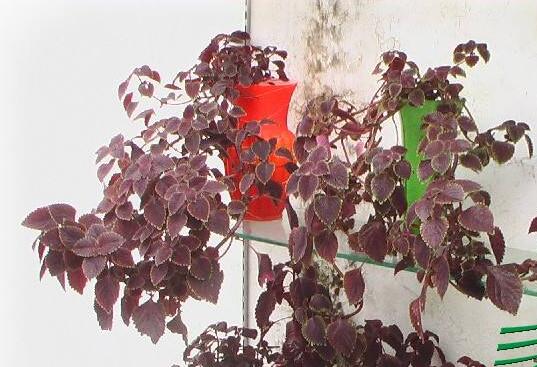
Coleus has very strong adaptability and reproductive capacity. Botanists have found through research that it can be grown hydroponically, and with the right method the survival rate is very high. Hydroponic coleus also has many advantages, such as simple care and better ornamental effect, and so on.
Hydroponic Method for Coleus
1. Choosing a Container
Since coleus grows quite vigorously during its growing period, a wide-mouthed container is better. In addition, a translucent container should be chosen so the roots can be seen more clearly and the coleus can still receive enough light. The container needs to be sterilized before hydroponic growing.
2. Selecting the Plant
For coleus used in hydroponics, the plant should ideally be a fairly robust 1-2 year old one. Never choose weak branches, dead branches or plants with diseased branches for hydroponics. After selecting the plant, take it out of the potting soil and slowly clean the soil off the roots.
During cleaning, be careful to avoid injuring the roots. Cut off weak roots and excess fibrous roots, and also prune the upper branches and leaves. Keep 1-2 pairs of opposite leaves at the base and use them as cuttings for later use. If there are many cuttings, you can tie them together with string.
3. Planting
Fix the cutting at the mouth of the bottle and make sure the lower part of the cutting is 5-6 cm below the bottle mouth, then add water to the container until it covers the cutting by 3-4 cm, and afterward place it in a ventilated, shaded spot.
4. Changing the Water and Adding Nutrient Solution
In the hydroponic method for coleus, changing the water is very important. In the early stage, change the water once every 3-4 days, mainly using clean water. While changing the water, be sure to add an appropriate amount of nutrient solution to promote rooting of the cuttings. Roots usually form in 3-4 weeks, after which you can choose soil culture or continue with hydroponics.
Precautions for Hydroponic Coleus
1. Temperature
During hydroponics, try to keep the temperature at 15-25 degrees. This lets coleus root faster. If the temperature is too low or too high, not only is rooting difficult, but the survival rate of hydroponics is also reduced, so hydroponics is often carried out indoors.
2. Timing
Hydroponics is usually chosen in spring or summer. Winter is not suitable for hydroponics, because the temperature is lower at this time, coleus usually enters its dormant period, and growth almost stops. After hydroponics it is not easy to root, and care is also relatively difficult.
Can Coleus Be Grown in Water? Hydroponic Growing Methods for Coleus
Coleus is a plant that looks very much like perilla. I believe many people, like the editor, thought at first glance that coleus was perilla. However, there are still great differences between coleus and perilla. If you do not believe it, come and take a look with the editor!
Can Coleus Be Grown in Water
Coleus can of course be grown hydroponically. Moreover, hydroponic coleus is not very difficult. At present, most of the coleus sold in many flower shops is hydroponically grown.
Hydroponic Growing Methods for Coleus
1. Prepare a Hydroponic Container
For hydroponic coleus, it is best to use a wide-mouthed bottle, or, more simply, cut off the upper part of a drink bottle and fill the lower part with water for later use. Clean the container thoroughly before use, and the water must be clean. It is best to store tap water from home in a bottle for a day before using it. Try not to use tap water that has just been drawn.
2. Cut Coleus Branches
When the main branch of the coleus, or a side branch after pinching, has 4 nodes or is about 10 cm long, choose one with a thick, sturdy stem, keep only 1 to 2 pairs of opposite leaves at the base, and cut it off. Note that the cut should be smooth, without any crushed or torn wound.
Then cut off the lowest pair of leaves on the cutting. If you have taken many cuttings, you can tie them together with white thread. After tying them, just insert them into the prepared bottle.
3. Hydroponic Care for Coleus
Generally it is best for the cutting to enter the water 3 cm to 4 cm from the bottle mouth. Afterward place it in a spot with diffused light, be careful to change the clean water once every 2~3 days, and remember to top up the water in the bottle every day to ensure the water level does not drop because of evaporation. At a coleus temperature of generally 18~25°C, white roots can grow in 7~10 days.
Differences Between Coleus and Perilla
1. Appearance
Coleus is a perennial herbaceous plant, and the shape of the plant is rather unattractive, with little ornamental value.
The branches and stems of coleus are all covered with hairs, the stem is four-angled, and the base of the plant is woody;
Leaves: the single leaves grow oppositely, are ovate, with a very long tip that gradually becomes pointed, and blunt teeth along the margin. The leaf surface is a colorful pattern mixed from green, yellow, peach red, vermilion and other colors.
Coleus flowers: terminal racemes, the flowers are very small, and light blue or light purple.
Perilla is an annual upright herbaceous plant.
Perilla stem: the stem is green or purple, bluntly four-angled, with four grooves on it, covered with soft hairs;
Perilla leaves: its leaves grow broadly ovate or round, the tip is short-pointed or abruptly pointed, the base is rounded or broadly wedge-shaped, and the leaf margins all have coarse serrations. The leaf surface is green or purple, the upper side of the leaf is also covered with sparse soft hairs, and the underside is covered with soft hairs;
Perilla flowers: its flowers are verticillasters with 2 flowers, the flowers are covered with fine hairs, the flowers are relatively large, and mostly pinkish white.
2. Growing Habits
Coleus is a warmth-loving plant. It has strong environmental adaptability. In winter the temperature must be kept no lower than 10°C. In summer, when temperatures are high, take care to provide a little shade, but still ensure sufficient sunlight, as this makes the leaf color vivid. That is why this plant is relatively common in southern China.
Perilla is a plant with very strong growth adaptability. It is not strict about the soil it grows in; any well-drained sandy loam is fine. It is mainly seen growing in front of and behind houses, along ditches and field edges, and so on. In addition, it can also be planted and grown under young fruit tree stands.
Is Coleus Toxic
It is not toxic. If you intend to put it in the bedroom, you can do so with peace of mind. In addition, it is not only non-toxic, but can actually help improve air quality. We all know that placing a potted green plant in the bedroom can absorb many harmful gases and can also reduce the impact of radiation on the human body, which is very beneficial.
Although coleus is not perilla, it has the same good looks as perilla, so quite a few people currently grow coleus. However, do remind everyone not to treat coleus as perilla and eat it as an ingredient. Coleus is a plant that, apart from its good looks and its role in beautifying the environment, is good for nothing at all!
Can Coleus Be Grown in Water?
Coleus has a very strong reproductive capacity and is also often propagated by hydroponic cuttings, with a very high survival rate. Hydroponic coleus is not only attractive but also simpler and easier to get started with than potted growing in terms of difficulty. So let us take a specific look below at how to grow coleus hydroponically.