How to prune coleus? Timing matters most for pinching
In our guide to growing coleus, we stressed the importance of pruning. It not only makes coleus more attractive but also encourages the sprouting of new shoots, so every plant lover values pruning. So how do you prune coleus? Let's take a look at the pruning methods for coleus.
How to prune coleus
I. When to prune coleus
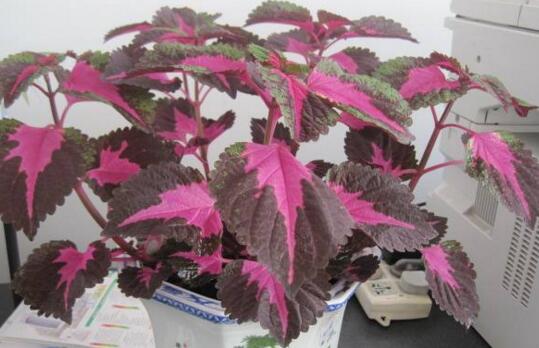
Generally speaking, there are three periods that are best for pruning. The first is during the seedling growth stage, when the young plant reaches 10 cm; the second is during the growing season when it sprouts heavily; the third is after the flowering period. In addition, diseased leaves should be cut off promptly whenever there are withered leaves.
II. Pruning methods for coleus
1. Topping
Topping is also called pinching back, and it is one of the main ways to control the height of coleus and encourage side branches to sprout. During the seedling stage, when the plant has grown 4-6 leaves, you should pinch back several times, removing the growing tip at the top, which encourages side branches to grow.
2. Thinning
During the vigorous growth period of coleus, it grows fairly quickly. If the branches and leaves become too dense, it not only affects the plant's appearance but also causes some leaves to lack light. So how should you prune coleus at this point? You need to thin it out appropriately; cutting away some weak branches reduces density and also prevents nutrients from being wasted.
3. Removing leaves
Yellowing or withered leaves are also something you will encounter when growing coleus. If you find withered yellow leaves, you should remove them promptly rather than waiting for them to drop off naturally, because yellow leaves can easily become a target for pests. Removing and burning them can prevent the spread of pests and diseases.
4. Pruning after the flowering period
After coleus blooms, you should cut off the flowering branches, keeping the vigorous 2-3 nodes of the stems, and cut away all the remaining excess branches, so as to encourage new branches and leaves to grow and keep the coleus vigorous.
Care after pruning coleus
1. Plenty of light. After pruning coleus, you should place it in a bright spot for care. If it is spring, you can let it grow in the sunlight. Do not put it in a dark place, because pruning is meant to encourage new branch growth, and a lack of light will cause new branches to grow slowly, so the effect of pruning cannot be maximized.
2. Moderate temperature. After pruning, try to keep the temperature between 18-25 degrees, which is the most favorable temperature for coleus growth. In this environment, the side branches of coleus also grow fastest.
3. Water appropriately. After pruning, you need to water appropriately. Do not water too much; just keep the soil moist. Do not spray water on the leaves, and avoid letting water touch the cut wounds.
When does coleus bloom (which month) and how to prune coleus
Coleus is a foliage plant with extremely high ornamental value. As the name suggests, its leaves come in several colors, bright and vivid, especially beautiful. It is generally used for planting in parks or courtyards, and some people also grow it as a potted plant at home. So since coleus is called a "grass", will it still bloom?
When does coleus bloom (which month)
Coleus blooms in summer and autumn, with terminal racemes, small flowers, light blue or white. It blooms once a year, and the flowering period lasts about a week. But different regions have different environments; in some areas it blooms from August to September.
How to prune coleus
1. Pinch back multiple times during the growing season
During this plant's growth period, when it has grown 4-6 leaves, you should pinch back several times to encourage it to secrete hormones. This allows it to develop quickly, become fuller in shape, and meet ornamental needs as soon as possible. To keep the leaves looking good, remove the leaf inflorescences as soon as they form. Among them, for mother plants kept for seed, reduce the number of pinchings and let them finish flowering and setting seed before winter arrives.
2. Keep branches after flowering and cut away the excess
After coleus has passed its flowering period, it should also be pruned appropriately. Keep 2-3 nodes of branches, then cut away the remaining branches, so as to encourage the plant to grow new branches again and keep growing, maintaining vigor and vitality.
3. After pruning, ensure the living environment it needs for growth
Coleus is suited to growing in light; with sunlight shining on it, the leaf color becomes bright and beautiful. The temperature suitable for coleus growth is 20-25 degrees Celsius. So in summer, to ensure the leaves are glossy, shading is needed, and strong direct sunlight must not be allowed to shine on it. Also, spray water on the leaves to lower the surrounding temperature. In winter, it should also be brought indoors and kept in a greenhouse.
How to propagate coleus by cuttings
1. Cutting time
Coleus propagation methods include sowing and cuttings, among which cutting propagation is the simplest. It can be done throughout the year. Apart from winter, when low temperatures slow rooting, spring and summer have suitable temperatures and are the best seasons for cuttings.
2. Coleus branches
Coleus is a perennial herbaceous plant, but at home it is mostly grown as an annual. It is very suitable for propagation by terminal bud cuttings.
Select stem nodes with terminal buds and 3-5 nodes, 5-10 cm long, as cuttings. After cutting the cuttings, trim some of the leaves to avoid too many leaves causing the branch to lose water and fail to root. Usually all the lower leaves on the branch should be cut off, and keeping just a few upper leaves is enough!
3. Cutting method for coleus
Coleus grows quickly, so you can directly insert a healthy single branch into a flower pot with a diameter of 7.5 cm. After the cutting succeeds, you can care for it directly in the pot. If there is more space at home and the environment is suitable, you can insert it into a larger planter.
How to grow coleus indoors
Fertilizer: This is of course an essential factor for its growth. In fact, it is a variety that greatly likes fertilizer. In addition to adding some organic fertilizer to the nutrient soil when planting, you should also apply some manure after each pinching. In addition, after autumn begins, you can also spray some urea and other fertilizers on the leaves.
Watering: Water consumption is greatest in summer, requiring about two waterings a day. However, the soil must not be too wet either, otherwise it tends to grow leggy, which will affect its overall shape.
Temperature: The suitable range is 20 to 25 degrees Celsius. In winter, the temperature just needs to stay no lower than 5 degrees, which should be relatively easy to ensure indoors. However, to ensure healthy growth, it is better to keep the temperature within the suitable range.
Light: If given full sun, its leaf color will be more vivid, so apart from appropriately shading it in summer when the light is especially strong, light must be ensured at other times.
As mentioned above, although coleus is a foliage plant whose main feature is its colorful leaves, coleus does bloom. Usually by August and September it produces small, delicate light purple flowers. Although they are not as brightly colored as its leaves, they are especially elegant and understated!
How to propagate coleus, coleus propagation methods, and good substrate selection for sowing
Coleus is famous for its unique leaf color, and since its growing method is simple, more and more people are cultivating it. When coleus grows to a certain stage, it needs to be propagated. So how do you propagate coleus? Here I will introduce several common coleus growing methods.
How to propagate coleus
At present, the more commonly used propagation methods for coleus are cuttings, sowing, and tissue culture. Among them, cuttings are suitable for plant lovers growing it in pots, sowing is suitable for large-scale propagation, and tissue culture is generally used when breeding new varieties, suitable for botanists studying coleus.
I. Coleus cutting method
1. Time selection
In theory, cuttings can be done all year round, but in most regions, because winter temperatures are lower and unfavorable for rooting after cutting, cuttings are often done in spring and summer, with March to April being the best time.
2. Selecting branches
Choose branches from healthy 1-2 year old coleus plants. Usually branches with terminal buds are best.
3. Making cuttings
Cut the selected branches into 5-10 cm long cuttings, trim the leaves at the base, keeping only 3-5 leaves, and each cutting needs 3-5 nodes. Cutting off the excess leaves is to prevent nutrient loss.
4. Cutting
After making the cuttings, how do you propagate coleus? Insert the prepared cuttings into the prepared pot soil, then firm the soil around the cuttings, and water appropriately to keep the soil moist, but do not let water accumulate in the pot.
5. Later management
After cutting, place it in a cool, ventilated spot for care, keep the temperature no lower than 18 degrees, and pay attention to soil moisture. Generally, roots will form in 7-10 days. After 2 weeks, you can apply a diluted liquid fertilizer once, and then carry out normal care according to coleus growing methods.
II. How to sow coleus
1. When to sow coleus
Generally, coleus takes 5 months from sowing to being ready for transplanting, so the sowing time depends on the market date. For example, if you want coleus to be marketed in October, then you need to sow in May. Apart from winter, which is unsuitable for sowing, the other three seasons are all fine for sowing, and the best time is March to April.
2. Substrate selection
When sowing, how do you propagate coleus? First you must choose a good substrate. The most suitable substrate is a mix of perlite and peat soil at a ratio of 3:1. Before use, the substrate needs to be disinfected. Generally, soak it in an 800-fold dilution of 75% chlorothalonil wettable powder for 30 minutes, then let it dry.
3. Sowing
Sowing is the most suitable coleus propagation method for large-scale growing, but because coleus seeds are relatively small, in order to sow them evenly, you need to mix fine soil into the seeds, then place 2-3 seeds in each hole, then cover with 2-3 mm of soil, firm it, and water.
4. Management
For sowing, the temperature needs to be controlled at around 20 degrees, and seedlings usually emerge in 10-15 days. After emergence, the temperature needs to be controlled at 16-18 degrees. Once true leaves grow out, they can be cultivated into seedlings, and after the young seedlings grow to 6-10 cm, they can be grown in soil.