How to grow a pearlbush bonsai? Growing methods and precautions, with sufficient light
Pearlbush (Sorbaria kirilowii) is a highly ornamental flowering plant that can be seen in many regions of China, and many people grow it. However, there are many points to pay attention to in the process of growing pearlbush, and improper cultivation can easily lead to some undesirable conditions. So how do you grow a pearlbush bonsai? What are the growing methods and precautions for pearlbush? Let me walk you through them below.
I. How to grow a pearlbush bonsai
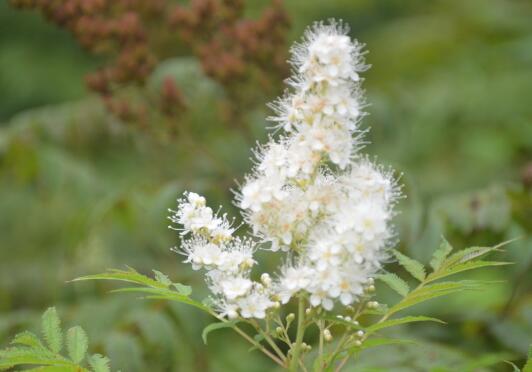
To know how to grow a pearlbush bonsai, we first need to understand its growth habits. Pearlbush is a light-loving plant, so during cultivation it is best to maintain sufficient light so that it can grow robustly. In addition, watering, fertilizing and other aspects also require careful attention. The specific details are described in the section on growing methods and precautions for pearlbush below. Let us take a look together.
II. Growing methods and precautions for pearlbush
1. Soil requirements
When growing pearlbush, we first need to choose the soil. In terms of soil, it is best to choose relatively fertile sandy soil, which has good drainage and aeration and allows pearlbush to absorb nutrients better. This shows the importance of soil among the growing methods and precautions for pearlbush.
2. Fertilization requirements
Pearlbush has a low demand for fertilizer during growth. Generally, applying sufficient base fertilizer to the soil at planting time can meet the growth needs of pearlbush. After that, combined with winter management, applying base fertilizer once every 1-2 years is sufficient.
3. Watering requirements
Pearlbush's water requirements differ from season to season. In spring, a rainy season, moderate watering is sufficient. In summer and autumn, when the climate is relatively dry, we should increase the frequency of watering. When watering, make sure to water thoroughly and keep the soil somewhat moist. Water once before winter begins, and then no watering is needed once winter arrives.
4. Light requirements
Pearlbush is a light-loving plant, so during cultivation it is best to maintain sufficient light. However, in summer when sunlight is too intense, appropriate shading is still needed to avoid scorching the plant due to excessive light.
5. Proper pruning
After the flowering period of pearlbush, the flowers gradually fade and many yellowed dead branches appear, which greatly affects the appearance. So at this time we need to prune it appropriately to beautify the plant shape, and also to promote the growth of new branches and lay a good foundation for flowering the following year.
6. Pest and disease control
During the process of growing pearlbush, improper care can easily lead to problems such as pests and diseases. These problems are extremely harmful to the plant, and if not dealt with in time they can easily cause the plant to wither and die. For specific treatment methods, you can refer to the article on pest and disease control for pearlbush. I will not go into too much detail here.
How to grow a pearlbush bonsai? Growing methods for pearlbush bonsai
[Common questions] How to grow a pearlbush bonsai? Growing methods for pearlbush bonsai
Image: Pearlbush
[Expert answer]
● Potting soil
The potting soil should be a fertile loam with good permeability and strong drainage. Apply organic fertilizer once in late autumn and early winter, and apply phosphorus-potassium fertilizer once before flowering. Water moderately at ordinary times to keep the potting soil moist; it must not be wet for a long time, and even more so must not be waterlogged. The potted plant should be placed in a spot with direct sunlight as much as possible. Low-temperature dormancy in winter is a physiological need for it, so it must not be placed in a greenhouse, to avoid affecting growth and flowering the next year. Place it in the open air in a wind-sheltered, sunny spot, or bury the pot with soil, and it can overwinter safely. Prune every year from after leaf fall to before sprouting the next year, cutting out diseased and damaged branches, dry dead branches, and the thin, weak ones among overly dense branches. Shorten overly long branches to keep a good plant shape with ventilation and light penetration, which favors flowering.
● Temperature and light
When growing pearlbush, it likes a room-temperature and sunlit environment. Mature plants can also tolerate cold and partial shade. Seedlings from autumn cuttings reach the following summer, which is exactly the period of young shoot and young leaf growth.
● Fertilization
Fertilization requirements are not high. When first planting, sufficient base fertilizer needs to be applied to meet its growth requirements, and generally no additional topdressing is done. After that, combined with winter management, applying base fertilizer once every 1-2 years is sufficient.
● Pruning
After pearlbush flowers fade, the inflorescences turn yellow and dry, affecting the appearance. Therefore, the spent inflorescences should be cut off to keep the plant clean and tidy and to prevent the spent inflorescences from competing with the plant for nutrients and water. After autumn or in early spring, diseased and pest-infested branches and old, weak branches should be cut off. First-year branches can be heavily pruned to promote branch renewal and lush flowers and foliage.
● Watering
Water promptly during spring droughts. During summer and autumn droughts, water thoroughly to keep the soil moist. Water once more before winter begins.
[Editor's summary]
Pearlbush is a shrub plant that likes sunlight, but it is also shade-tolerant, cold-tolerant and tolerant of pruning, with fast growth. It is a common flowering plant in northern China. In this article, the editor of First Farm Economics has introduced the growing methods for pearlbush bonsai, hoping it will be helpful to you.
How to grow a pearlbush bonsai - Growing methods for pearlbush
Pearlbush is native to northern Asia and is a shrub-type, deciduous broadleaf shrub plant. It likes sunlight and has strong shade tolerance, and is cold-tolerant, moisture-tolerant and drought-tolerant. Pearlbush is mostly planted as individual plants in gardens and courtyards. Below is an introduction to how to grow a pearlbush bonsai and a detailed explanation of the growing methods for pearlbush.
Introduction to pearlbush
Pearlbush is native to northern Asia, and is distributed in China in Hebei, Gansu, Shandong, Shanxi, Inner Mongolia, Jiangsu and other places. It is a shrub-type, deciduous broadleaf shrub plant that likes sunlight and has strong shade tolerance, and is cold-tolerant, moisture-tolerant and drought-tolerant. It is not strict about soil and can grow normally in ordinary soil, while growing more vigorously in moist, fertile soil. It grows relatively fast, has strong sprouting ability, and is tolerant of pruning.
Spiraea thunbergii (bridal wreath spiraea) belongs to the genus Sorbaria in the Rosaceae family. It gets this name because its flowers are dense and all white when blooming. Because its leaves resemble willow leaves and its flowers are white as snow, it is also called "snow willow". Pearlbush is mostly planted as individual plants in gardens and courtyards. Generally, no fertilization is necessary, but it must be watered frequently, especially in dry spring and summer periods, to keep the soil moist.
Before winter begins, water thoroughly with winter water. In high-cold regions, protection for overwintering should be provided; other management is relatively extensive. Pearlbush has a full plant clump and elegant branches and leaves; its value lies in producing elegant white flowers in midsummer when flowers are scarce, and its flowering period is very long. In particular, it has a killing or inhibiting effect on various harmful bacteria, making it suitable for planting in all kinds of garden green spaces. Especially because of its shade tolerance, it is a flowering shrub species for landscaping on the north side and shaded sides of high-rise buildings and various structures in northern cities.
I. Morphological characteristics
Pearlbush is a shrub up to 2 m tall, with spreading branches; branchlets cylindrical, slightly flexuous, hairless or slightly pubescent, green when young, dark reddish-brown or dark yellowish-brown when old; winter buds ovate, apex rounded and obtuse, hairless or slightly pubescent at the tip, purplish-brown, with several alternate exposed scales.
Pinnate compound leaves, with 11-17 leaflets, 13-23 cm long including the petiole, 10-13 cm wide, the leaf rachis slightly pubescent; leaflets opposite, 2-2.5 cm apart, lanceolate to ovate-lanceolate, 5-7 cm long, 1.8-2.5 cm wide, apex acuminate, rarely caudate, base nearly rounded or broadly cuneate, rarely oblique, margin with sharp double serrations, both surfaces hairless or nearly hairless, pinnate reticulate veins, with 12-16 pairs of lateral veins, obvious below; leaflets sessile or nearly sessile; stipules leaf-like, ovate-lanceolate to triangular-lanceolate, apex acuminate to acute, margin irregularly serrate or entire, 8-13 mm long, 5-8 mm wide, slightly pubescent outside.
Terminal large dense panicle, branches nearly erect, 10-20 cm long, 5-12 cm in diameter, the peduncle and pedicels covered with stellate hairs or pubescence, gradually falling off in fruiting stage, nearly hairless; bracts ovate-lanceolate to linear-lanceolate, 5-10 mm long, 3-5 mm wide, apex long acuminate, entire or with shallow teeth, both surfaces slightly pubescent, gradually falling off in fruiting stage; pedicels 5-8 mm long; flowers 10-12 mm in diameter; hypanthium campanulate, slightly pubescent at the base outside; sepals triangular-ovate, apex obtuse or acute, sepals about equal in length to the hypanthium; petals oblong or obovate, 5-7 mm long, 3-5 mm wide, white; stamens 40-50, about 1.5-2 times as long as the petals, borne on the edge of the disk; carpels 5, hairless or slightly pubescent.
Follicles oblong, with a terminal curved style, about 3 mm long, fruiting pedicel erect; sepals persistent, reflexed, rarely spreading. Flowering period July-August, fruiting period September.
II. Ecological habits
Pearlbush is cold-tolerant, tolerant of partial shade, and tolerant of pruning. It grows well in well-drained sandy loam. It grows fast and sprouts suckers easily, making it a good summer flowering plant.
Most plants in the Rosaceae family are sun-loving, and Spiraea thunbergii is no exception. It likes sunlight and tolerates certain waterlogged and moist environments, but is not suitable for prolonged waterlogging. It is not strict about soil and tolerates a certain degree of salinity and alkalinity, making it suitable for growing in the Shanghai area.
Propagation methods for pearlbush
Propagation of pearlbush is mainly by division, and it can also be grown from seed. However, because the seeds are tiny, the sowing method is mostly not used. Division propagation is generally carried out before spring sprouting or after leaf fall in autumn. Dig out the clustered sucker seedlings from the base of the plant with roots, in clumps of 3-5 plants, and plant them separately.
When planting, apply 2 shovelfuls of compost in the hole as base fertilizer, and water thoroughly after planting. After that, water about once a week until established. Clumps over 5 years old can grow to a very large crown width. In early spring before sprouting, you can dig away the soil around the old clump, then cut each surrounding root sucker seedling away from the parent plant and dig it out, and move it to a nursery for cultivation; after 1 year it can become a saleable seedling. For large-scale propagation of seedlings, the sowing method can be used. Store the seeds dry and sow in spring the following year.
1. Division propagation
During growth, pearlbush has the characteristic of easily sprouting root suckers, so division propagation can be carried out in early spring in March and April. Select robust plants with no pests or diseases and many tillers as the mother plants.
The method is: dig away the soil around the roots of a mother plant more than 5 years old, insert a knife from the middle of the gap, and separate the tillers from the mother plant; each clump can be divided into 5 to 7 plants. The separated root sucker seedlings must have complete roots. If the lateral roots of the root sucker seedlings are fine and numerous, some should be appropriately cut off when planting. This propagation method has a high survival rate, takes effect quickly in forming plants, and is relatively simple to manage, but the number propagated is limited. After division, water thoroughly, move the plants to a slightly shaded place, and after one week gradually place them in sunlight for normal care.
2. Cutting propagation
This method is suitable for mass propagation and can be carried out all year round, but cuttings root fastest and have a high survival rate when taken in March and October. For the cutting soil, generally use 5 parts garden soil, 4 parts humus soil, and 1 part sandy soil, mix them and make a raised bed with trenches for open-field cutting. For the cuttings, choose current-year or second-year mature branches from robust plants, cut them into 15-20 cm lengths, and keep 4-5 buds or leaves. When cutting, insert 2/3 of the cutting into the soil, leaving only the top one or two buds or leaves above the soil surface. The cut end of the cutting should be flat, cut into a horseshoe shape, and inserted immediately after cutting. Firm the soil at the base of the cutting and water thoroughly once. After that, spray water 1-2 times a day and always keep the soil moist. After 20 days, reduce the frequency of spraying to prevent excessive moisture from causing branch rot. After about 1 month, they can root and be transplanted.
3. Layering propagation
In March and April, bend branches from the outer part of the mother plant directly down into the soil. You can also girdle or notch the part pressed into the soil to promote rapid rooting. After new roots grow, separate them from the mother plant and transplant them in spring or autumn planting season.
Growing methods for pearlbush
Pearlbush has strong adaptability and does not require much fertilizer. Apart from newly planted plants needing a small amount of base fertilizer, no further fertilizer is needed afterward, but watering is required. Generally, water thoroughly 2-3 times from leaf bud break to the flowering period, and water 2-3 times from the start of autumn to before frost, including 1 antifreeze watering. In summer, water according to drought conditions; when there is a lot of rain, no watering is needed. After flowers fade, the inflorescences turn yellow and dry, affecting the appearance, so the spent inflorescences should be cut off to keep the plant clean and tidy and to prevent the spent inflorescences from competing with the plant for nutrients and water. After autumn or in early spring, diseased and pest-infested branches and old, weak branches should also be cut off. First-year branches can be heavily pruned to promote branch renewal and lush flowers and foliage.
① It is not strict about soil, but grows better and flowers more profusely when cultivated in deep, fertile sandy loam.
② Fertilization requirements are not high. When first planting, sufficient base fertilizer needs to be applied to meet its growth requirements, and generally no topdressing is applied afterward. After that, combined with winter management, applying base fertilizer once every 1-2 years is sufficient.
③ Water promptly during spring droughts. During summer and autumn droughts, water thoroughly to keep the soil from drying out; before winter begins, water once with antifreeze water.
④ After flowering, promptly prune off remaining flower branches, diseased and pest-infested branches, and old, weak branches to keep the plant shape tidy, avoid nutrient consumption, and promote robust growth with lush flowers and foliage.
How to grow a pearlbush bonsai
The care of a pearlbush bonsai mainly involves details such as temperature, watering and potting soil. The maintenance of a pearlbush bonsai is not as extensive as field planting; you must always pay attention to whether the potting soil needs watering, and also prune the branches and leaves regularly. Only in this way can the advantages of the pearlbush bonsai be brought out.
I. Seedling methods
1. Cuttings
Cutting propagation of pearlbush is best carried out after leaf fall in autumn. The seedbed can be chosen in a sunny, wind-sheltered place, deeply turned and then finely leveled. After the seedbed is prepared, fill the seedbed with 70 cm of disinfected plain sandy soil. When cutting, select robust branches grown in the current year, each about 12-15 cm long, and spray water after inserting.
Cover with plastic film to keep the substrate moist and maintain the seedbed temperature. Pearlbush has strong regeneration ability, a high survival rate after cutting, and rapid growth and development. It begins to sprout in early spring the following year and can be potted in autumn.
2. Division
Pearlbush plants generally must be cut and divided for replanting after 3-5 years of cultivation, and the time is best in September-October. When dividing, dig up the pearlbush with a soil ball, remove excess attached soil, and expose all the roots. Then, according to the gaps between the roots of the plant, use a sharp knife to cut them into several clumps respectively, apply sulfur powder to the cuts, and appropriately prune away excess stems, branches and long roots. And according to landscaping needs, carry out single-plant cultivation. After planting, water thoroughly, then water once a week, generally 3 times in a row, and pearlbush will be able to survive.
II. Growing methods
1. Potting soil
The potting soil should be a relatively fertile loam with good permeability and strong drainage. Apply organic fertilizer once in late autumn and early winter, and apply phosphorus-potassium fertilizer once before flowering. Water moderately at ordinary times to keep the potting soil moist; it must not be wet for a long time, and even more so must not be waterlogged. The potted plant should be placed in a spot with direct sunlight as much as possible. Low-temperature dormancy in winter is a physiological need for it, so it must not be placed in a greenhouse, to avoid affecting growth and flowering the next year. Place it in the open air in a wind-sheltered, sunny spot or bury the pot with soil, and it can overwinter safely. Prune every year from after leaf fall to before sprouting the next year, cutting out diseased and damaged branches, dry dead branches, and the thin, weak ones among overly dense branches. Shorten overly long branches to keep a good plant shape with ventilation and light penetration, which favors flowering.
2. Temperature and light
When growing pearlbush, it likes a warm, humid and sunlit environment. Mature plants can also tolerate cold and partial shade. Seedlings from autumn cuttings reach the following summer, which is exactly the period of young shoot and young leaf growth. Growers should pay attention to the position of the seedbed and build a shade frame to avoid direct strong sunlight, so that they receive scattered light. Flowering and fruiting plants should be given enhanced sunlight to make photosynthesis vigorous and promote vigorous plant growth.
The most suitable temperature for pearlbush growth is 18°C-32°C. If the temperature is suitable, light is sufficient, and reasonable water and fertilizer management is combined, pearlbush can enter a lush growth period, and on the crown, pearl-like flower buds bloom brilliantly. Pearlbush is cold-tolerant, so no cold protection measures are needed in winter, and it can generally overwinter in the open field.
3. Fertilization
Pearlbush does not require much fertilizer. When first planting, sufficient base fertilizer needs to be applied to meet its growth requirements, and generally no topdressing is applied afterward. After that, combined with winter management, applying base fertilizer once every 1-2 years is sufficient.
4. Pruning
After pearlbush flowers fade, the inflorescences turn yellow and dry, affecting the appearance. Therefore, the spent inflorescences should be cut off to keep the plant clean and tidy and to prevent the spent inflorescences from competing with the plant for nutrients and water. After autumn or in early spring, diseased and pest-infested branches and old, weak branches should also be cut off. First-year branches can be heavily pruned to promote branch renewal and lush flowers and foliage.
5. Watering
Water promptly during spring droughts. During summer and autumn droughts, water thoroughly to keep the soil from drying out. Before winter begins, water once with antifreeze water.
Disease control for pearlbush
After the plants have grown, pest and disease control work should be carried out in time, and early prevention and control should be achieved to promote healthy plant growth. The main diseases of pearlbush include: leaf spot, powdery mildew and brown spot. The main insects to prevent and control include: scarab beetles, and citrus flatid planthoppers.
1. Leaf spot
When the disease occurs, round or irregular brown spots appear on the leaves, and brown mold-like substances are sparsely produced on the spots on the back of the leaves.
Control method: spray a 500-800 times diluted solution of 50% thiophanate.
2. Powdery mildew
When the disease occurs, white or grayish-white flour-like substances appear on the leaves. In severe cases, young tips curl, leaves become uneven, and they fall off early. Flowers are small and do not open, and the flower form is deformed, curled and dry.
Control methods:
(1) In late autumn, remove diseased and residual plants to reduce the source of pathogens;
(2) Pay attention to ventilation, reduce air humidity, strengthen light, and increase application of phosphorus-potassium fertilizer to enhance resistance;
(3) After the disease occurs, promptly prune off the affected parts, or pull out diseased plants and burn them;
(4) Spray chemicals. During the dormant period, spray an equal-amount 1% Bordeaux mixture. In the early stage of the disease, spray 70% thiophanate-methyl 800 times solution or 50% amobam 800-1000 times solution.
3. Brown spot
Pearlbush brown spot mainly damages leaves. At first, brown round to irregular lesions are scattered on the leaf surface, with darker edges and an obvious boundary with healthy tissue. Later, sparse small dark brown to blackish-brown mold spots, namely the pathogen fruiting bodies, grow on the back of the leaves. The pathogen overwinters as mycelium or conidia on affected leaves, and the following year produces conidia that spread to neighboring plants by wind and rain. It generally occurs easily when tree vigor is weak or ventilation is poor.
Control methods
(1) From July to September, spray 65% zineb wettable powder 600 times solution or 70% mancozeb wettable powder 500 times solution, 25% benomyl emulsifiable concentrate, or 12% copper green emulsifiable oil 600 times solution
(2) Strengthen management and improve disease resistance.
(3) In late autumn and early winter, collect diseased leaves and burn them in a concentrated manner to reduce the source of pathogens the following year.
4. Scarab beetles
Small green flower scarab beetles and others bite and feed on leaves, flower buds and flowers, causing leaves to be incomplete.
Control methods:
(1) Taking advantage of the adults' death-feigning behavior, shake the branches in the early morning or evening to catch and kill them;
(2) During the adult occurrence period, spray 40% omethoate 1000 times solution, or 50% malathion 1000 times solution.
(3) Taking advantage of the adults' habit of entering the soil, scatter 2.5% phosmet powder around the plants, and after application loosen the surface soil so that the adults contact the chemical and die of poisoning.
5. Citrus flatid planthopper
Adults and nymphs often gather on the back of tender leaves to pierce and suck sap. Affected leaves show symptoms such as perforation, rupture, curling or thickening depending on leaf age.
Control methods:
(1) In winter, prune out overly dense branches and dead branches and burn them to reduce the source of insects;
(2) During the peak occurrence period of adults, they can be caught and killed with insect nets;
(3) During the damage period of nymphs and adults, spray 90% trichlorfon 1000 times solution, or 40% dimethoate emulsifiable concentrate 1200 times solution for control.