How to grow coleus? Detailed guide to cultivation methods, precautions and environmental requirements
We know that coleus has many uses and functions, and ornamental value is one of them. To make it more attractive, you need to master scientific planting methods. So how do you grow coleus? Let's look at the cultivation methods and precautions for coleus.
How to grow coleus
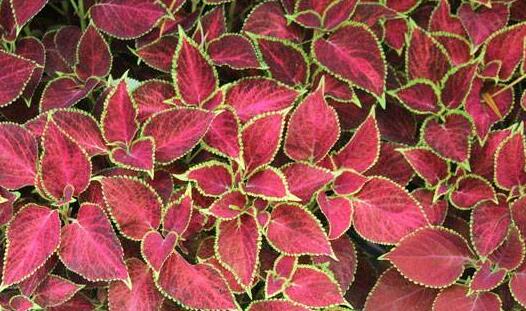
Before growing coleus, you need to understand its growth habits. Coleus is a plant that likes warm and humid environments. It is fairly adaptable, likes sufficient sunlight, but also has some shade tolerance. In winter, as long as the temperature does not drop below 10 degrees, it can overwinter successfully.
Coleus cultivation methods and precautions
1. The most suitable soil
Coleus can adapt to a variety of soil environments; for example, it can grow normally in both acidic and alkaline soils. However, its most suitable soil is fertile, loose, well-drained, humus-rich acidic soil, so garden soil, leaf mold and river sand are the best.
2. The most suitable light
Since the ornamental value of coleus mainly comes from its leaves, if the leaf color is bright, its ornamental value is high; conversely, if the leaf color is dull, it is less attractive. To make the leaf color bright, suitable light is needed, and its most suitable light condition is soft and sufficient. In summer, avoid direct sunlight, and also make sure the environment is not too shady.
3. The most suitable temperature
Coleus likes a warm environment. Its most suitable growing temperature is 18-25 degrees. In winter, the temperature should be kept above 10 degrees. Too low a temperature will cause the leaves to turn yellow, and an environment of 5 degrees will freeze the plant to death.
4. The most reasonable watering
Coleus is a plant with relatively high water requirements. Lack of water will cause slow growth, and the leaves will lose their luster. So when it comes to watering, how do you grow coleus? Watering must be done in moderation, mainly to keep the soil moist. Creating a humid environment is very important.
5. The most scientific fertilizing
Among the cultivation methods and precautions for coleus, its demand for fertilizer is not high, but ensuring the nutrients needed for growth is still fairly important. So when planting, base fertilizer should be applied at the bottom of the soil; and during the growing period, applying nitrogen fertilizer 1-2 times a month can promote leaf growth.
Precautions for growing coleus
1. Do not let the environment be too dark
Many flower lovers grow coleus indoors in pots. If this is the case, be sure not to let the environment be too dark, otherwise the leaves will lose their luster and the leaf color will not be rich enough.
2. Do not fertilize or water too much
Although coleus likes a humid environment, do not water too much. The principle is that there should be no standing water in the pot, and do not continue watering while the soil is still moist. After watering, wait 3-4 days until the soil is dry before watering a second time.
3. Pay attention to keeping warm in winter
Coleus has relatively poor cold tolerance. If the temperature is below 5 degrees, frost damage may occur. Therefore, in the cold winter, pay attention to changes in temperature and take warming measures early, such as moving it back indoors or covering it with a plastic bag, etc.
How to grow coleus well
To grow coleus well, in addition to understanding the points above, you also need timely pruning and good pest and disease control. For example, during the seedling stage, pinch off the top, and later when the branches and leaves are too dense, thin them out; for pests and diseases, carry out prevention in normal times.
When does coleus bloom (which month) How to prune coleus
Coleus is a foliage plant with extremely high ornamental value. As the name suggests, its leaves come in several colors, bright and gorgeous, especially beautiful. It is generally used for planting in parks or courtyards, and is also grown at home as a potted plant. So since coleus is called a grass, will it still bloom?
When does coleus bloom (which month)
Coleus blooms in summer and autumn, with terminal racemes, small flowers, light blue or white. It blooms once a year, and the flowering period is about one week. But different regions have different environments, and in some areas it blooms from August to September.
How to prune coleus
1. Pinch the top multiple times during the growing period
During the growth period of this plant, when it has grown 4-6 leaves, pinch the top multiple times to encourage hormone secretion. This allows rapid development, makes the shape fuller, and meets ornamental needs as soon as possible. To achieve a good leaf display effect, once leaf inflorescences form, remove them immediately. Among them, for mother plants kept for seed, reduce the number of times you pinch the top, and let them finish flowering and setting seed before winter arrives.
2. Keep branches after flowering and cut off the excess parts
After coleus has passed its flowering period, it should also be pruned appropriately. Keep 2-3 nodes of some branches, then cut off the remaining branches, to encourage the plant to grow new branches again, allowing it to continue growing and maintain vitality and vigor.
3. After pruning, ensure the living environment needed for its growth
Coleus is suitable for growing under light conditions. With the shine of sunlight, the leaf color can be made bright and beautiful. The suitable growing temperature for coleus is 20-25 degrees Celsius. Therefore, in summer, to ensure the leaves have luster, shading treatment is needed, and strong direct sunlight must not be allowed. Also spray water on the leaves to lower the surrounding temperature. In winter, it should also be brought indoors and spend time in a greenhouse.
How to propagate coleus by cuttings
1. Cutting time
The propagation methods for coleus include sowing and cuttings, among which cutting propagation is the simplest. It can be done all year round. Apart from winter, when the temperature is low and rooting is slow, spring and summer have suitable temperatures and are the best seasons for cuttings.
2. Coleus branches
Coleus is a perennial herbaceous plant, but in homes it is mostly grown as an annual. It is very suitable for propagation by terminal bud cuttings.
Select stems with terminal buds and 3-5 nodes, 5-10 cm in length, as cuttings. After cutting the cuttings, trim some of the leaves to avoid too many leaves causing the branches to lose water and fail the cutting. Usually, all the leaves on the lower part of the branch should be cut off, and keeping just a few leaves on the upper part is enough!
3. Coleus cutting method
Coleus grows quickly. Healthy branches can be directly inserted singly into flower pots with a diameter of 7.5 cm. After successful rooting, they can be maintained directly in the pot. If there is more space at home and the environment is suitable, they can be inserted into a larger flower trough.
Indoor cultivation methods for coleus
Fertilizer: This is of course an essential factor for its growth. In fact, it is a variety that greatly likes fertilizer. In addition to adding some organic fertilizer to the nutrient soil when planting, apply some manure after each pinching. In addition, after autumn begins, you can also spray some fertilizers such as urea on the leaves.
Watering: Water consumption is greatest in summer, about two waterings a day. However, the soil should not be too wet either, otherwise it tends to grow leggy, which will affect the overall shape.
Temperature: The suitable range is 20 to 25 degrees Celsius. In winter, as long as the temperature does not drop below 5 degrees, it is fine, which should be relatively easy to ensure indoors. However, to ensure healthy growth, it is still better to keep the temperature within the suitable range.
Light: If full sunlight is provided, its leaf color will be more vivid. So except in summer, when the light is especially strong and appropriate shading may be used, light must be ensured at other times.
As mentioned above, although coleus is a foliage plant whose main feature is its colorful leaves, coleus also blooms. Generally, in August and September it produces small, delicate light purple flowers. Although they are not as brightly colored as its leaves, they are still especially elegant and refined!
Phalaenopsis cultivation method video_ cultivation methods and precautions
Phalaenopsis is also known as the butterfly orchid and Taiwan flower butterfly. It is a flowering plant in the genus Phalaenopsis of the orchid family, native to subtropical rainforest regions, and is an epiphytic orchid plant. The thick white aerial roots of Phalaenopsis are exposed around the leaves. It can absorb nutrients from the air and can also grow to achieve photosynthesis. During the Spring Festival, long flower stalks emerge from the leaf axils of the Phalaenopsis plant, forming flowers like dancing butterflies, which are very popular among people. The butterfly orchid is mainly distributed in Indonesia, Taiwan, China, the Philippines, Thailand, Malaysia and other regions, and has the reputation of being the queen of orchids. Below let us enjoy the Phalaenopsis cultivation method video, as well as Phalaenopsis cultivation methods and precautions.
[Phalaenopsis cultivation method video]
The name Phalaenopsis comes from the ancient Greek for an orchid that looks like a butterfly. It can survive by helping to absorb nutrients from the air, and is mainly classified within the category of aerial orchids, belonging to a relatively large family among tropical orchids. Taiwan's white Phalaenopsis is famous throughout the world, while in Indonesia, Borneo, the Philippines and Malaysia there are fifty or sixty native species of Phalaenopsis. The flower colors of Phalaenopsis are rich and varied, including white, yellow with spots, pink and many others. Based on artificial breeding of precious varieties by botanists, Phalaenopsis has been improved into various flower shapes and colors, and great achievements have also been made in flower size. The colors of Phalaenopsis such as white, pink, yellow with red spots, red dots and red lines, pure yellow, and white flowers with red can all be seen. Phalaenopsis can be called today's queen of orchids, and is a kind of ornamental flowering plant that delights the eye.
[Growth habits of Phalaenopsis]
Phalaenopsis is native to tropical rainforest regions and likes to grow in warm environments, but it fears cold. The suitable growing temperature is 15-20 degrees Celsius. In winter, if the temperature is below 10 degrees Celsius, growth will stop, and the temperature must not be lower than 5 degrees Celsius, otherwise the plant will die. Phalaenopsis, native to the tropical regions of Malaysia and belonging to the genus Phalaenopsis in the orchid family, is a perennial herbaceous plant, and the banks of rivers and coasts with high temperature and high humidity are places where Phalaenopsis grows relatively luxuriantly. However, under conditions of high temperature and high humidity, Phalaenopsis will carry pests and diseases. The suitable humidity for its growing environment is 60-80%.
[Phalaenopsis cultivation methods and precautions]
1. Soil: The main propagation method of Phalaenopsis is sowing, and it is an epiphytic orchid. Its aerial roots attach to rocks or tree trunks, mainly absorbing water and nutrients from the air. Phalaenopsis is best grown with loose and breathable materials. It is best to use bark, broken bricks and tiles, coconut shells, tree fern roots, sphagnum moss, etc., using county materials or ceramsite as the substrate, fixing the seedlings directly among charcoal, so that Phalaenopsis naturally climbs and grows during growth, with a pH value of 6.5. It is best to mainly use mosses and aquatic plants, and choosing relatively soft soil is best.
2. Temperature: Phalaenopsis has relatively strict temperature requirements. The suitable growing temperature during the day is 15-30 degrees Celsius, and the suitable temperature at night is 23 degrees Celsius. If it is lower or higher than this temperature, it will be unfavorable to the growth of Phalaenopsis, and in serious cases it will cause the leaves to turn yellow. When the temperature is high, fans and water curtains can be used to cool it down, and when the temperature is low, a heater can be used to raise the temperature.
3. Humidity: During the vegetative growth stage of Phalaenopsis, a humidity requirement above 90% is the best state, while for promoting flowering, maintaining humidity at 70-80% is most suitable. After the flowering period, the humidity requirement is 50%. It is most suitable to regulate humidity by using water curtains, ventilation, or spraying moisture into the ground space.
4. Light: Appropriate light is best for Phalaenopsis. It is a shade-loving plant, but it also needs sufficient light to provide energy for itself. Especially during the flowering period, Phalaenopsis needs sufficient light even more, and direct sunlight should be avoided. Phalaenopsis has very high requirements for air quality. It is best to place it in a ventilated area for cultivation, which can effectively prevent and control pests.
5. Fertilizing: During the spring growing period of Phalaenopsis, you can choose to fertilize with a nutrient solution specially for Phalaenopsis. In winter, if the amount of fertilizer is reduced, it will affect flowering the following year. After flowering, remove the withered flowers, which effectively reduces nutrient consumption, and withered flowers hanging on the plant also do not look very good.
6. Water: Phalaenopsis leaves do not easily store water, so the soil must be supplied with sufficient water. When the new roots of Phalaenopsis are growing vigorously, water more. After the flowering period, during the dormant stage, reduce the amount of watering. In spring and autumn, water once a day at around five o'clock, while in summer, when the plant grows vigorously, water a little in both the morning and afternoon. In winter, when the temperature is low and the light is relatively weak, water once every other week. When a cold wave occurs, do not water too much and keep the soil dry, so that the plant is less likely to freeze to death.
[Precautions for Phalaenopsis cultivation]
When growing the butterfly orchid, water appropriately. Do not water too frequently, otherwise it will cause root rot in Phalaenopsis. Also pay attention to keeping warm. Too low a temperature will put Phalaenopsis into a dormant state, especially in winter, so be sure to keep it warm. Appropriate fertilizing is very effective for the growth of Phalaenopsis. During the growing period, fertilize about once a week, and you can choose to apply specialized fertilizer. The flower pot for growing Phalaenopsis is also very important. An appropriately larger flower pot is more conducive to the growth of Phalaenopsis.
More related information: Effects and functions of egg fruit What is cistanche Functions of clivia Pictures of cynomorium Pictures of white magnolia flowers