Five watering tips for daylilies: water only when dry for good growth
When growing many plants, proper watering is always necessary, and daylilies are certainly no exception. Too little water makes the plants weak and slow-growing, while too much water causes root rot. So how should daylilies be watered? Let me give you the answer.
How to water daylilies
1. After sprouting in spring
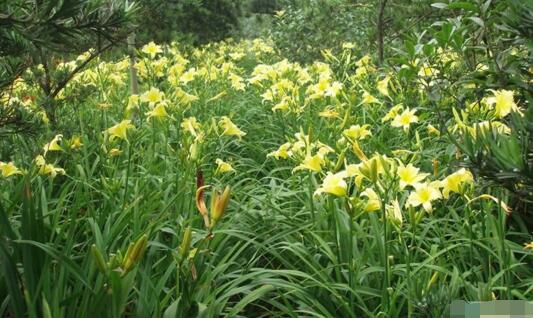
Two-year-old daylilies sprout in spring, and once the young shoots emerge, sufficient water must be ensured, otherwise flowering will be delayed or the plants will fail to bloom. So after spring, water once every 7-10 days, depending on how moist the soil is.
2. Before the flowering period
Before the flowering period arrives, watering can be reduced appropriately. If the climate is not too dry, the soil can be kept on the dry side, but to prevent the soil from becoming compacted, water about once every 10 days.
3. During flowering
Once flowering begins, watering can stop, and there is no need to spray water on the flowers or leaves. Some gardeners like to spray the plants to make the flowers more vivid, but this practice is wrong.
4. After the flowers fade
How should daylilies be watered after the flowers fade? Watering can begin 10 days after the blooms wither, the same as during the growing season, about once a week, with the principle of keeping the soil moist. In late autumn, watering can be reduced or even stopped.
5. Winter
In winter, generally no watering is needed. Temperatures are low at this time and rainfall is plentiful, so the moisture in the soil is enough for daylilies to overwinter successfully; watering would instead cause harmful effects.
Watering precautions
1. Do not overwater
Avoid using too much water when watering. If too much water is applied, the soil becomes excessively wet and waterlogging occurs around the roots, preventing outside air from entering the soil. The roots of the daylily are then affected in their breathing, which in turn affects normal development.
2. The water must be clean
The water used for daylilies must be clean. Tap water can be used, but do not use wastewater or the like to water daylilies, to avoid pathogens in the water contaminating the soil and exposing the daylilies to pests and diseases.
How to grow daylilies: cultivation methods and precautions for daylilies / suitable environment can lead to a full pot
Because daylilies have so many benefits and uses, quite a few people grow them. They are cultivated in many parts of China and can even grow wild, but if you want to grow them well, you still need certain skills and methods. So how do you grow daylilies? Let us look at the cultivation methods and precautions for daylilies.
The growing environment of daylilies
Before understanding how to grow daylilies, we need to know what kind of environment they like. Daylilies like soil rich in humus with good drainage, and they like a moist, warm environment, but they are extremely adaptable, tolerant of drought, cold and semi-shade, so they are planted in both the north and the south.
How to grow daylilies
1. Soil
Although daylilies are not demanding about soil, if you want them to grow more robustly, the soil should preferably be a sandy soil containing more humus, loose, and with good drainage and aeration. If conditions allow, you can use a mix of leaf mold, garden soil and river sand.
2. Temperature
Daylilies are relatively tolerant of cold and heat. They can be grown in the open in North China and overwinter successfully, which shows their adaptability to temperature. However, they grow fastest at 15-25 degrees, so if you want good growth, keeping the temperature at around 20 degrees is best.
3. Light
Daylilies like sunlight, and they can also grow normally in semi-shade. So if conditions allow, they can be placed in full sun, or managed in a ventilated, semi-shaded spot.
4. Fertilizing
Topdressing begins in the second year after planting. The first application is when the new shoots grow to about 10 cm, the second is when the flower scapes are pruned, and the third is before the flowering period. Liquid fertilizer is the main type used, and it can promote growth and flowering, so among the cultivation methods and precautions for daylilies, fertilizing is very important.
5. Watering
Daylilies are relatively drought-tolerant, but they prefer a moist environment, so during the growing season you can water according to climate changes. In the rainy season, watering can be reduced or stopped; in summer, water once every 3-5 days, just avoid the soil becoming too dry.
6. Pest and disease prevention
Common diseases of daylilies include leaf spot, leaf blight and rust, and common pests include red spider mites and aphids. Keeping the environment clean, tidy and well ventilated, and fertilizing in a timely manner to improve resistance to pests and diseases, can achieve a very good preventive effect.
Precautions for growing daylilies
1. When watering, never let waterlogging occur in the soil. If it does, check whether the soil drains well and remove the standing water promptly. In the rainy season, pay attention to soil moisture and avoid the roots being soaked in water for a long time.
2. Before the soil is reused, be sure to disinfect it. It can be watered with potassium permanganate, or left in the sun for a few days, to ensure it contains no pathogens or insect eggs.
3. Before the flowering period, focus on supplementing phosphorus and potassium fertilizer, and you can also spray 0.2% monopotassium phosphate. It can make the flowers more vivid in color and larger, and can also extend the flowering period.
How to grow daylilies into a full pot
In addition to doing the above points well, if you want daylilies to fill a pot, you should also prune them in time, because the root system of daylilies tends to move upward toward the soil surface year by year, so pruning should be combined with earthing up. At the same time, after the flowers fade, cut off the flower stems to avoid loss of nutrients.
Cultivation methods for large-flowered daylily
The large-flowered daylily grows under forest, in wetlands, meadows or grassland at lower altitudes. It is strongly cold-tolerant, tolerant of full light and also of semi-shade. It is not strict about soil, but a well-drained, permeable soil with high humus content is best. Fertilize regularly during the growing season. In the north, the underground tubers need to be dug up before frost and stored at a temperature of around 5 °C. Because its flowers are large and brilliantly colored with rich colors, and its plant form is good, it is easy to cultivate. The optimum temperature for open-field cultivation is 13-17°C.
Dividing the daylily clumps is the most commonly used propagation method. This method is simple to carry out, the plants survive easily, and growth is relatively uniform. For division, the entire mother clump can be dug out and replanted separately, or part of the plants can be dug out from one side of the mother clump as seedlings while the rest is left to continue growing.
Division is mostly carried out before sprouting in spring or after leaf fall in autumn. If divided and transplanted in spring, the plants can bolt and flower the same year; if divided and transplanted in autumn, they can only bolt and flower the following year. When transplanting, choose plants that are vigorous, have many flower buds, are of good quality and are free of pests and diseases.
When dividing, dig out part of the tillers from the clump as seedlings. The dug-out portion must have roots; cut it apart at the shortened stem, remove the old roots, rotten roots and diseased roots, retain as many fleshy roots as possible, shorten them appropriately (leaving about 10 cm), and then plant them. Planting should be done on a sunny day, digging seedlings, dividing seedlings and planting seedlings as you go, injuring the roots as little as possible, so that the plants recover quickly. Generally, divide once every 2 to 3 years to ensure vigorous growth of the plants.