Reasons Why Cymbidium sinense Doesn't Bloom and How to Fix It: Control Watering, 3 Hours of Light Daily
People buy a Cymbidium sinense plant and bring it home hoping it will bloom, but after a long time passes with still no sign of flowers, something must have gone wrong somewhere. What are the reasons Cymbidium sinense doesn't bloom? And how do you fix it? Let's take a look below.
Reasons Why Cymbidium sinense Doesn't Bloom and How to Fix It
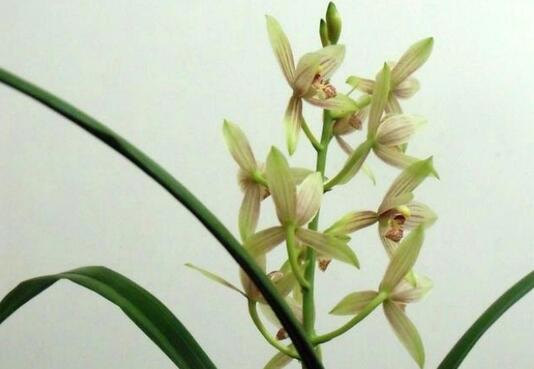
There are many reasons Cymbidium sinense doesn't bloom, such as lack of light, improper watering, improper fertilizing, pests and diseases, and so on, all of which can cause this phenomenon. So how do you fix these problems once they appear? The details are covered in detail below for those who are interested.
1. Fertilizer Problems
Fertilizing Cymbidium sinense is a very particular matter. Whether you fertilize too much or too little, or choose the wrong fertilizer, these are all reasons Cymbidium sinense doesn't bloom, so this point is very important.
Solution: During the growing period of Cymbidium sinense, its demand for fertilizer is very high, and it basically needs fertilizing once every 20 days. When choosing fertilizer, besides nitrogen fertilizer, we should also apply some potassium fertilizer and phosphorus fertilizer, so that Cymbidium sinense will bloom normally.
2. Temperature Problems
The growing temperature of Cymbidium sinense is very important for its blooming, especially the temperature difference between day and evening, which is an important factor controlling its blooming. If the temperature is too high, the flower buds tend to drop; if the temperature is too low, the flower buds will also grow poorly. Both of these are reasons Cymbidium sinense doesn't bloom.
Solution: If you want Cymbidium sinense to bloom, then we need to pay attention to temperature control and let it grow in a suitable environment. The daytime temperature is best kept between 18-21°C, and at night it is best around 7-10°C. Only at such temperatures can Cymbidium sinense bloom smoothly.
3. Watering Problems
Watering problems are also one of the reasons Cymbidium sinense doesn't bloom. If we don't control the watering and end up watering too much, it easily causes Cymbidium sinense to grow leggy, and then flower buds are also very hard to grow.
Solution: When growing Cymbidium sinense, watering should be kept reasonable, neither too much nor too little, and the potting soil should be kept in a semi-dry state. For specific watering methods, you can refer to the article on how to fertilize and water Cymbidium sinense, which has detailed instructions.
4. Light Problems
For Cymbidium sinense, light is very important. Although it is not tolerant of strong light, it also cannot have too little light. If there is insufficient light, its leaves will become rather dull in color and its blooming will also be affected. Therefore, light problems are also one of the reasons affecting whether Cymbidium sinense blooms.
Solution: During the growth process of Cymbidium sinense, it is best to let it receive 2-3 hours of light every day, so that it can carry out photosynthesis. However, remember not to grow it in direct sunlight, as this is bad for its growth. When growing it, just place it in a spot with scattered sunlight.
5. Pest and Disease Problems
When growing Cymbidium sinense, if pests and diseases appear, this is also a reason Cymbidium sinense doesn't bloom. Moreover, if this kind of problem is not handled in time, it can also cause the plant to wither and die, so the harm can be said to be extremely great.
Solution: When pest and disease problems appear on Cymbidium sinense, we must handle them in time. The specific treatment methods are introduced in detail in the article on pest and disease control for Cymbidium sinense, which you can look at when you have time.
Summary: After reading the above content, I believe everyone has gained some understanding of the reasons why Cymbidium sinense doesn't bloom and how to fix it. In fact, the appearance of this problem is mainly caused by carelessness in the process of growing Cymbidium sinense, so if you want to grow it well, being careful is very important.
When Does Cymbidium sinense Bloom, Flowering Period Management / October to March, Half a Year of Blooming
Cymbidium sinense is a relatively common flower in people's lives and is one of the Chinese orchids, very ornamental. But when it comes to its most ornamental moment, that is certainly when it blooms. So when does Cymbidium sinense bloom? And what do you need to do for Cymbidium sinense flowering period management? Let's take a look below.
I. When Does Cymbidium sinense Bloom, October to March, Half a Year of Blooming
Cymbidium sinense is a plant with a very long flowering period. As for when Cymbidium sinense blooms, it is generally around October each year. The flowering period of Cymbidium sinense is from October to March, lasting half a year, which is quite long among flowering plants. However, if you want it to maintain such a long flowering period, then care during the flowering period is very important. Let's continue reading for the details.
II. Cymbidium sinense Flowering Period Management
When it comes to Cymbidium sinense flowering period management, there are many points to pay attention to, such as fertilizing, watering, light, and so on, all of which need to be carried out strictly according to requirements. Improper operation can easily cause the flowers to wither early, so everyone must be careful when caring for them.
1. Fertilizing Management
In the process of Cymbidium sinense flowering period management, fertilizing is a very important point. It consumes most of its nutrients when blooming, so before blooming we need to apply enough fertilizer, so that it has enough nutrients to produce more flowers. After entering the flowering period, we also need to fertilize it regularly, so that it can maintain sufficient nutrients throughout the flowering period.
2. Temperature Management
The flowering period of Cymbidium sinense almost covers the entire winter, which is also the coldest period of the year, so doing a good job of temperature control is very important. We generally grow Cymbidium sinense indoors, so we should best keep the indoor temperature at 10°C, so as to ensure that Cymbidium sinense will not suffer frost damage due to too-low temperatures.
3. Watering Management
After Cymbidium sinense enters the flowering period, its water requirements are not as high as during the growing period. We generally only need to water once about every week, try to keep its soil on the drier side, and just water an appropriate amount. Remember not to water too much, otherwise water accumulation can easily cause root rot.
4. Light Management
Although Cymbidium sinense is a shade-loving plant, it still needs light after entering the flowering period. During the flowering period of Cymbidium sinense, we can grow it in a spot with scattered sunlight, so that it can also carry out photosynthesis effectively, thereby making the flowers bloom more fully.
5. Pest and Disease Management
The flowering period of Cymbidium sinense is very long. During this time, if care is neglected, Cymbidium sinense can easily be affected by pests, diseases, and other adverse problems. Such problems are extremely harmful to the plant, and if they appear, everyone must deal with them immediately. If the time drags on, it may cause the plant to die. For specific treatment methods, you can refer to the article on pest and disease control for Cymbidium sinense, which has detailed instructions.
Summary: After reading the above content, everyone should have an answer to when Cymbidium sinense blooms. That is all for the introduction on Cymbidium sinense flowering period management. As long as everyone manages the flowering period according to the above methods, its flowers will surely bloom even more delicately and beautifully.
When Do Orchids Bloom, How to Manage Orchids During the Flowering Period / Blooms All Year, Flowering Period Not Fixed
Orchids are certainly familiar to flower lovers. With their unique leaves, flowers, and fragrance, they embody the "four purities" and present an elegant and refined image. In daily life, many people grow orchids at home and look forward to them blooming. So when do orchids bloom? How long is the orchid flowering period? How do you manage orchids during the flowering period? Let's have the editor answer these questions for everyone.
I. When Do Orchids Bloom, Flowering Period Not Fixed
Orchids, that is, orchid flowers, are plain but not gaudy, gracefully upright, and together with bamboo, chrysanthemum, and plum are called the “Four Gentlemen.” They are famous Chinese flowers. In daily life, many people grow orchids, and everyone wants to know: when do orchids bloom? In fact, the answer is not fixed, because different orchids bloom at different times, as follows:
Cymbidium goeringii: flowering period is January to March;
Cymbidium faberi: flowering period is March to May;
Cymbidium kanran: flowering period is June to July, or November to February of the following year;
Four Seasons Orchid: flowering period is July to August;
Cymbidium sinense: flowering period is October to March of the following year.
II. How to Manage Orchids During the Flowering Period
The beauty of orchids lies in their unrestrained leaves and their fresh, elegant flowers. The leaves stay evergreen all year round, but the flowers have a limited time, so how to manage orchids during the flowering period is something everyone needs to pay attention to. Only with careful care will the orchid flowering time become longer and its flowers become more beautiful.
1. Light
During the orchid flowering period, light cannot be lacking, but orchids dislike strong light, so it is best to give them sufficient scattered light. In addition, if the direction in which the orchid flowers open is not quite upright, the flowerpot should be turned in time so that it receives light more evenly, and then its posture will look better.
2. Fertilizing
Orchids blooming will naturally consume a large amount of nutrients, so everyone should appropriately add fertilizer to the plant, among which elements such as phosphorus and potassium promote its fragrance. However, it should be noted that when adding fertilizer to orchids, the time should be chosen before the orchids bloom.
3. Watering
During the orchid flowering period, watering naturally cannot be lacking, but at this time the potting soil should be neither too dry nor too wet. When the soil is slightly pale, everyone can add the usual amount of water. In addition, when the air is very dry, everyone should also spray a little water mist to humidify it.
4. Protection Against Severe Heat and Frost
There are many varieties of orchids, and their flowering periods are not fixed. Some bloom in summer, and some bloom in winter. Orchids dislike high temperatures and are also afraid of cold, so flower lovers should take more thorough protective measures for them: help them shade from the sun during the severe heat, and shield them from wind during the coldest winter months.
5. Pruning
How do you manage orchids during the flowering period? Timely pruning is also very important. First, when orchids bloom abundantly, an appropriate number of flowers can be removed, otherwise nutrients will be consumed too much and affect next year's blooming; second, each pot of flowers only needs to keep two or three flower stems, and all the others should be cut off. Only in this way will the orchids be more elegant and beautiful.