What to Do When the Leaves of Goldfish Plants Turn Yellow? Do a Good Job of Water Control, Shading and Temperature Regulation
The goldfish plant, also called the goldfish flower, as the name suggests, is a plant whose flower shape resembles a goldfish, and it is very suitable for indoor pot cultivation. In daily life, many people grow goldfish plants, but during the cultivation process they often encounter one problem, namely yellowing leaves. So what should be done when the leaves of a goldfish plant turn yellow? Today the editor will solve this problem.
1. What to Do When the Leaves of a Goldfish Plant Turn Yellow: Find the Cause
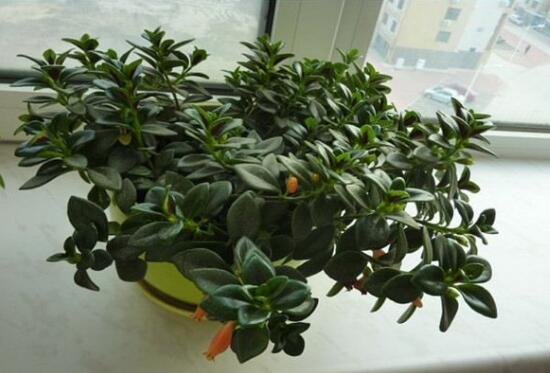
As a potted plant, the goldfish plant is not easy to grow. Once we fail to strictly follow the cultivation methods for goldfish plants, symptoms of yellowing leaves may appear. At that time, flower lovers must be very anxious. To solve this problem, the editor has summarized 5 causes of yellowing leaves in goldfish plants and attached solutions. Let us continue reading below.
2. Causes of Yellowing Leaves in Goldfish Plants and Solutions
1. Sudden environmental change
As for the causes of yellowing leaves in goldfish plants, there are actually many, but environmental factors are the first thing everyone should consider. Nowadays, many flower lovers buy their goldfish plants online, which can easily cause a large regional span. The goldfish plant cannot adapt for a while, thus showing symptoms of yellow leaves.
Solution: At this time, you can communicate with the shop to learn about the goldfish plant's previous growing environment, and then change it at home to the same environment. After the goldfish plant adapts, slowly change it until it fully adapts to the current environment. After a period of time, the goldfish plant will recover its health.
2. Unsuitable soil
Besides the environment, everyone should also consider the soil problem. It is understood that the goldfish plant does not have high requirements for soil; ordinary cultivation soil is enough. But one point is very important, namely that the soil must be loose, breathable and well-draining. Once this requirement is not met, the roots of the goldfish plant will have poor respiration, or there will be standing water in the pot, leading to root rot and thus symptoms of yellow leaves.
Solution: When the condition is mild, we can repot the goldfish plant with soil, replacing it with loose, breathable and well-draining cultivation soil. Then cut off the rotten roots of the climbing cactus and replant.
3. Too much light
The goldfish plant is shade-tolerant and likes diffused light. When growing it, do not let it receive direct sunlight. Once the light is too strong, the leaves of the goldfish plant will turn yellow, and in severe cases the plant may die.
Solution: Move the flowerpot to a ventilated and cool place, water appropriately, and after a period of careful care it will gradually recover. During normal indoor cultivation, except that there should be relatively sufficient light in winter, in spring, summer and autumn 60%-70% of sunlight should be shaded, or it can be hung in an outdoor shade shed.
4. Too much watering
The goldfish plant likes a humid environment, so we should water frequently to keep the pot soil moist; however, it is also afraid of waterlogging, so we cannot water too much. If there is standing water in the pot, the phenomenon of yellowing leaves in the goldfish plant will appear.
Solution: Move the flowerpot to a ventilated place with diffused light so that the water evaporates quickly; in severe cases, it is necessary to change the pot soil and replace it with fresh cultivation soil.
5. Improper temperature
As for the causes of yellowing leaves in goldfish plants, besides the above points, everyone should also consider the temperature factor. The most suitable temperature for the growth of the goldfish plant is between 15-20°C. Once the temperature is too low (10°C) or too high (30°C), it will cause the phenomenon of yellowing leaves in the goldfish plant.
Solution: When growing a goldfish plant indoors, the temperature cannot be too high or too low; just keep it at 20°C. In winter, keep the indoor temperature at around 5°C.
Overall, the goldfish plant is not easy to grow, and since many flower lovers are beginners, symptoms of yellow leaves are unavoidable. But after reading the whole article, I believe everyone knows not to panic, right? When the yellow leaf problem appears, just follow the methods above. The editor will introduce this much about yellowing leaves in goldfish plants, hoping to bring help to everyone.
What to Do When the Leaves of a Goldfish Plant Turn Yellow
Causes of Yellowing Leaves in Goldfish Plants
Light conditions
The goldfish plant is a plant that likes a shady and cool environment. If the light is too strong, it will instead make the leaves of the goldfish plant dull and yellow.
Watering frequency
Although the goldfish plant likes a humid environment very much, it is also very afraid of waterlogging, so do not let standing water remain in its pot, otherwise the leaves will turn yellow.
Improper temperature
The most suitable growth temperature for the goldfish plant is around 20°C. If the temperature is too high (around 30°C) or too low (around 10°C), it will cause the phenomenon of yellowing leaves in the goldfish plant.
Solutions for Yellowing Leaves in Goldfish Plants
Environment
Ensure that the growing environment of the goldfish plant is semi-shady, avoiding strong sunlight.
Water
Special attention should be paid to watering the goldfish plant. Ensure that the pot soil is moist, but do not let standing water remain in the pot. Especially in summer, frequently spray water around the flowerpot or on the leaf surface to keep it moist.
Temperature
Ensure that the growth temperature of the goldfish plant is around 20°C. In winter, keep the indoor temperature at around 5°C.
How Many Times a Year Does the Goldfish Plant Bloom? What to Do When the Leaves of a Goldfish Plant Turn Yellow
The goldfish plant is also called the goldfish flower, named because its flowers are somewhat similar to goldfish. The goldfish plant is one of the more common household flowers in our lives. Because it is easy to grow and its flowers have a unique shape and bright colors, it is deeply loved by everyone. So when does the goldfish plant generally bloom?
How Many Times a Year Does the Goldfish Plant Bloom?
Theoretically, the flowering time of the goldfish plant is in winter, but because the cultivation environments in different places differ, the flowering time of the goldfish plant is somewhat irregular. In some areas it blooms at the end of March, in some areas it blooms in early May, and in others it blooms in October or December. All of these are possible.
What to Do When the Leaves of a Goldfish Plant Turn Yellow
1. Environment. Ensure that the growing environment of the goldfish plant is semi-shady, avoiding strong sunlight.
2. Water. Special attention should be paid to watering the goldfish plant. Ensure that the pot soil is moist, but do not let standing water remain in the pot. Especially in summer, frequently spray water around the flowerpot or on the leaf surface to keep it moist.
3. Temperature. Ensure that the growth temperature of the goldfish plant is around 20°C. In winter, keep the indoor temperature at around 5°C.
Cultivation Methods for the Goldfish Plant
1. Soil: Potted goldfish plants require a substrate rich in humus, loose and well-draining. Generally, peat soil, perlite and vermiculite are commonly mixed in equal amounts, and the soil should be slightly acidic to facilitate growth.
2. Temperature: The best growth temperature for the goldfish plant is around 18-22°C. It is not cold-tolerant. If the minimum temperature is below 10°C, it will cause the leaves of the goldfish plant to turn yellow, dry up, and even drop leaves. It dislikes high temperatures; temperatures above 30°C will also cause leaf drop.
3. Light: The goldfish plant likes a shady environment and must not be exposed to the scorching sun. Before flowering in winter, sunlight exposure can be appropriately increased to improve flowering quality. But sunlight must not shine directly on the goldfish plant, otherwise the leaves will wither and even fall off and the plant will die.
4. Humidity: The growth of the goldfish plant requires sufficient water. During the peak growing season, keep the pot soil moist frequently. In winter, water again after the top surface of the pot soil, about one centimeter deep, has dried. But it cannot have too much water, otherwise root rot easily occurs.
5. Fertilizing: During the peak growing season, apply a thin organic fertilizer solution once every 1-2 weeks. Before flowering, increase phosphorus fertilizer to increase the number and quality of flowers. After the flowers fade, apply nitrogen-containing fertilizer. For those that have begun to grow small plantlets, apply a nitrogen-based topdressing once every half month.
The Role of the Goldfish Plant
1. Ornamental value
The appearance of the goldfish plant is one of the reasons it is deeply loved by people, because its flower colors are bright, and a single plant can produce hundreds of flowers. The flowers are large and beautiful. Growing it at home or in the courtyard can increase the indoor beauty. If many are planted, it will look quite spectacular.
2. Can purify the air
As a green plant, potting the goldfish plant indoors is both beautiful and elegant, and the goldfish plant can absorb indoor carbon dioxide and some toxic substances. For example, in a house that has just been renovated, you can grow several pots of goldfish plants, which can quickly help you purify the indoor air. In addition, the goldfish plant can also humidify the room. Its purifying effect is very powerful, so growing several pots indoors allows you to both enjoy it and purify the air. The goldfish plant can carry out photosynthesis under weak light and can absorb 80% of harmful and toxic gases indoors. Generally, growing 1-2 pots in a room can absorb all toxic gases, but if the room is very large, that is another matter. One pot in a room of 8-10 sq m is equivalent to an air purifier.
3. Household potted plant
Because the goldfish plant has extremely strong growth ability and its stems and vines hang and grow naturally, it is very suitable as a household potted plant. Especially for people who usually have a lot of time to grow flowers, it is relatively easy to care for. During its peak flowering period, a single plant can bloom more than a hundred flowers at the same time, and the flowers are large and brightly colored. It is truly spectacular, and it is a plant that people are very satisfied with, being shade-loving, pendulous, and having both ornamental foliage and flowers. The goldfish plant can be grown in a room with suitable temperature, or in one's own courtyard, or in a garden. This flower is not very difficult to grow, and it can also be used as a hanging household plant.
As mentioned above, goldfish plants in different places bloom at different times, and the flowering time is mainly determined by climate. The goldfish plant is very suitable as a potted plant, small and exquisite, not only beautiful in flower but also able to purify the air!