How to grow fuchsia? Cultivation methods and temperature control tips
Because fuchsia has so many benefits and uses, many people choose it as their first choice for a houseplant, and to make it produce flowers of alluring color, you also need to know the right care techniques. So, is fuchsia easy to grow? How do you grow fuchsia? Let's look at the cultivation methods and tips for fuchsia.
Is fuchsia easy to grow?
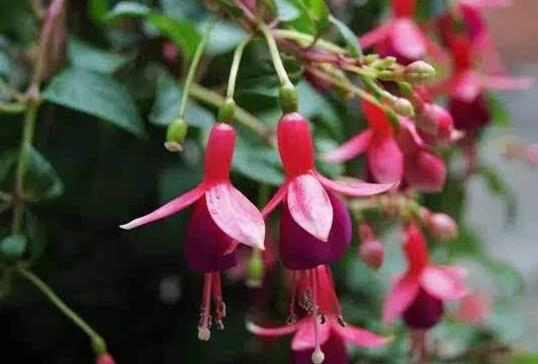
Although fuchsia is native to Mexico, it has been introduced all over the world, and it is also widely cultivated in China. So, is fuchsia easy to grow? The answer is that it is easy to plant: give it a suitable environment and combine that with the right care techniques, and you can grow beautiful, lovely fuchsias.
How to grow fuchsia
Fuchsia likes cool, humid environments the most, with an ideal temperature of 10-28°C. It fears high temperatures and strong light, likes fertile acidic soil, and dreads stuffy, hot environments and being exposed to wind and rain. When growing it, the air should not be too dry.
Cultivation methods and tips for fuchsia
1. Soil
Fuchsia likes fertile, loose acidic soil the most, and soil rich in humus is the most suitable. For pot cultivation, you can mix 5 parts leaf mold, 4 parts sandy soil, and 1 part decomposed cake fertilizer to make the plant's nutrient soil.
Tip: No matter what type of soil is used, you should note that the potting soil should be changed once every 1-2 years, which can keep the soil loose and also make the nutrients contained in the soil more ample.
2. Temperature
The most suitable temperature for growing fuchsia is 10-28°C, so in summer the temperature should not exceed 30°C, and when the temperature is higher than 35°C, the plant easily withers and dies. In winter, the temperature should be kept above 5°C to avoid cold damage to the plant.
Tip: In many places in China, summer temperatures easily exceed 30°C, so when growing fuchsia in summer, you must do a good job of cooling and dehumidifying, and at the same time avoid it being soaked by rain.
3. Light
Fuchsia likes light, but it fears strong light and high temperatures. So when it comes to light, how do you grow fuchsia? The answer is to keep it in a semi-shaded environment and avoid direct sunlight. The best positions are under the eaves, on a balcony, and other places where it can receive scattered light.
Tip: In winter and early spring, when temperatures are lower and sunlight is not strong, let it grow in full sun; at other times, you need to shade it to avoid poor growth caused by too little light.
4. Watering
Fuchsia likes humid environments, so in the cultivation methods and tips for fuchsia, watering is very important. When watering fuchsia, follow the principle of watering when dry and stopping when wet. You should avoid waterlogging and also not let the soil become too dry.
Tip: In winter, after the temperature drops below 10°C, reduce watering to prevent the soil from becoming too wet; in summer, when the temperature is higher, water frequently, and also spray water on the leaves. When watering, pay attention to waterlogging.
5. Fertilizing
Fuchsia blooms a lot and grows very fast, so it needs more nutrients. When growing it, apply thin fertilizer frequently. Generally, apply a dilute cake fertilizer once every 15-20 days, or you can use compound fertilizer. Before fertilizing, stop watering to let the soil become somewhat dry, and water promptly after fertilizing.
Tip: The fertilizer concentration is generally 0.1%-0.2% urea water plus 0.3%-0.5% superphosphate soaking liquid, or 10%-15% cake fertilizer water. Do not let the fertilizer concentration be too high, and do not go without fertilizing for a long time, otherwise fuchsia will be difficult to bring into bloom.
How does fuchsia get through summer?
Because fuchsia is rather afraid of high temperatures, once the temperature exceeds 35°C it may cause death, so in summer some measures need to be taken to let it get through safely, and there are three main points. First, in summer pay attention to keeping the environment ventilated so that the place where the fuchsia is located is relatively cool.
Second, adopt effective cooling measures, and at the same time control fertilizer and water. When the temperature exceeds 25°C in July-August, you need to stop fertilizing and moderate watering to let the soil become somewhat dry. Third, when cooling, do not let the fuchsia plant be drenched with water, because doing so easily causes root rot and leaf drop.
How to grow fuchsia_ cultivation methods and tips for fuchsia
Fuchsia is also called lantern flower and pendant begonia. It is a perennial subshrub plant. Its stems are upright, and the plant is generally 50-200 cm tall with a diameter of 6-20 mm. It is a many-branched plant. Its underside has relatively short soft hairs and glandular hairs, and older plants lose the hairs during growth. Fuchsia leaves are opposite and are ovate and narrowly ovate, with a length of 3-9 cm and a width of 2.5-5 cm. Fuchsia is native to Mexico and is now widely planted in various places around the world. It is most widely cultivated in China, especially in the north, northwest, and southwestern plateau regions as a greenhouse plant. It is suitable as a potted plant, planted on flower stands, desks, flower stands, and guest rooms as an ornamental plant. Placed in a bottle with clean water, it has very good ornamental value and can be propagated by rooting. Below, let's look at how to grow fuchsia, as well as the cultivation methods and tips for fuchsia.
[Introduction to fuchsia]
The flower shape of fuchsia is very unusual, giving people a very elegant feeling. It is suitable as a potted plant grown on windowsills, balconies, and in studies, or hung on security nets and corridors as an ornamental plant. The flower language of fuchsia is passionate heart and belief in love, and it is a plant that people greatly love. There are many varieties of fuchsia, and the more important varieties include Coral Red Fuchsia, Ball-shaped Short-tubed Fuchsia, Variegated Short-tubed Fuchsia, Ray's Short-tubed Fuchsia, White-calyx Fuchsia, Long-tubed Fuchsia, Three-leaved Fuchsia, and so on. Different varieties have different shapes and flower colors. The flowering period of fuchsia is from April to December. The flowering period is very long, and it also has very good ornamental value.
[Growth habits of fuchsia]
Fuchsia likes to grow in cool, humid environments. It fears direct strong light and is also rather afraid of high temperatures, and it dislikes severe summer heat, stuffiness, rain, and sun exposure. It likes to grow in loose, fertile, well-drained, slightly acidic soil rich in humus. In winter, it is suitable to grow in a sunny, warm, humid environment, and it needs very good air circulation. In summer, it is suitable to grow in a dry, cool, semi-shaded environment. The humidity of the environment must be ensured, and in summer when the temperature is above 30°C, its growth rate slows, and above 35°C the plant will wither. Also, in winter, the temperature must not be lower than 5°C, otherwise the plant will suffer cold damage.
[How to grow fuchsia]
There are many cutting methods for fuchsia, mainly based on stem cutting propagation. Except for the hot weather in summer, cuttings can be taken throughout the year, and roots grow very quickly from spring sowing. Generally, spring is from March to May, and autumn is from August to September. You need to select relatively robust branches for growth, and each section should have two or three stem nodes, then keep one pair of true leaves at the upper position. Cut the base at an angle, soak the front part of the plant in potassium permanganate solution for half a minute, then stand it upright and continue soaking the base for 30 minutes. Rinse it clean with clear water, put it in water and keep it in clear water for one or two days, then take cuttings. After cutting, wait until the seedlings have rooted before transplanting. The root length must not exceed 2 cm. Place the cuttings into plain soil for planting, which is more beneficial to root growth. Plain soil is less irritating to young branches, which is more beneficial for survival. After planting, water thoroughly, then place it in a shallow basin and keep it in a semi-shaded environment.
[Cultivation methods and tips for fuchsia]
1. Soil: Fuchsia is suitable for growing in loose, fertile, well-drained, slightly acidic soil rich in humus, which is more beneficial to the plant's growth.
2. Light: Fuchsia likes to grow in a semi-shaded environment, but its light needs differ in different seasons. In winter, early spring, and late autumn it needs full sun, while in early autumn and early summer it needs half-day sun. In the hot summer, appropriate shading should be done, so the plant is less likely to be scorched.
3. Humidity: You can spray more water on the plant's leaves, and you can also sprinkle water on the ground of the growing environment, thereby lowering the temperature of the growing environment and increasing humidity.
4. Temperature: The suitable growing temperature for fuchsia is 10-28°C, and in summer the temperature cannot exceed 30°C. If the temperature is higher than 35°C, the plant will wither and die. In summer, cooling measures should be done well. In winter, sufficient light should be given, and the temperature cannot be lower than 5°C, otherwise it will cause frost damage to the plant, so keep it warm.
5. Fertilizing: Fuchsia grows very fast, blooms many times, and has a very long flowering period. During the growing season, you can apply more thin fertilizer, about once every ten days with thin cake fertilizer or compound fertilizer. Before fertilizing, keep the potting soil somewhat dry. After fertilizing, use a relatively fine nozzle to spray water once. The leaves must not get fertilizer water on them, otherwise it will cause rot and scorching.
6. Preventing pests and diseases: The diseases fuchsia often encounters include wilt disease and rust disease. You can use carboxin and acetic acid for pot cultivation to prevent wilt disease. Place it in a well-ventilated environment for growth, otherwise aphids, whiteflies, and scale insects will appear. When encountering these pests, you can spray with oxidize fruit-drop.
More related information water lily flower language Dieffenbachia cultivation methods tulip flower language datura flower language water lily planting methods
How to grow fuchsia, cultivation methods and tips for fuchsia
Fuchsia is native to Mexico and is widely cultivated in China, especially in the north or in greenhouses in the northwest and southwestern plateaus. Pot cultivation is suitable for guest rooms, flower stands, and desk decoration. Placed in a bottle with clean water, it can be enjoyed and can also root and propagate. How do you grow fuchsia? This article introduces the cultivation methods and tips for fuchsia.
Growth habits of fuchsia
It likes cool, humid environments and fears high temperatures and strong light. It is suitable for fertile, loose, slightly acidic soil. In winter it requires warmth, humidity, sufficient sunlight, and air circulation; in summer it requires dry, cool, and semi-shaded conditions. It dislikes severe summer heat, stuffiness, rain, and sun exposure. The suitable growing temperature is 15-25°C. In winter the temperature should not be lower than 5°C. When the summer temperature reaches 30°C, growth is extremely slow, and at 35°C large numbers wither and die. It is suitable for fertile sandy loam rich in humus and well drained.
Cultivation methods and tips for fuchsia
1. Repotting and changing the soil. Seedlings that have survived cuttings or have been sown all need to go through several repottings from small pots to medium pots to large pots. The plant needs to be repotted once each year before sprouting in spring or autumn. The substrate should be fertile, loose, well-drained culture soil. Generally, leaf mold plus sandy loam plus decomposed organic fertilizer and phosphate fertilizer can be evenly mixed, and no base fertilizer needs to be applied, so as to avoid root rot.
2. Fertilizing. Because fuchsia grows fast and blooms many times, during the growing period you should master the practice of applying thin fertilizer frequently, about once every 10 days with thin cake fertilizer or compound fertilizer. During the flowering period, a liquid fertilizer mainly of phosphorus and potassium should also be applied once a month, but fertilizing should stop in high-temperature seasons. Before fertilizing, the potting soil should be somewhat dry; after fertilizing, spray water once with a fine nozzle, so as to avoid the leaves getting fertilizer water on them and rotting.
3. Temperature. The growing temperature of fuchsia is 10-28°C, and the summer temperature cannot exceed 30°C, so cooling work should be done well in summer; in winter sufficient sunlight is required, and the cultivation temperature cannot be lower than 5°C, otherwise it will cause cold damage, and insulation measures must be taken. In addition, whether in winter or summer, attention should be paid to ventilation.
4. Watering. Water when dry, and water thoroughly, and absolutely avoid waterlogging. In summer, the potting soil is better kept somewhat dry, but pay attention to spraying water on the leaf surfaces and the ground.
5. Pinching and pruning. The flowering branches of fuchsia are slender and drooping, so pinching and shaping are needed to promote branching, which can make fuchsia bloom abundantly and colorfully and extend the flowering period.
6. Placement. In order to keep the fuchsia plant full in shape, during the growing period its position should often be changed so that the plant receives light evenly, so as to avoid leaning to one side and ruining the plant shape. However, during the flowering period it should be moved less, otherwise it will cause bud drop and flower drop.
Above, we introduced the growth habits of fuchsia, as well as the cultivation methods and tips for fuchsia. Now you know how to grow fuchsia. For more knowledge about flower cultivation, everyone is welcome to keep following.