Goldfish plant dislikes strong light: what are the growing methods and precautions?
For the goldfish plant, those who have seen it should be deeply impressed; its flower shape resembles a goldfish, its colors are rich, and it is especially beautiful, making it an excellent ornamental plant to keep at home. In daily life, many people want to grow the goldfish plant, so how do you grow it? What should be noted during cultivation? For this, the editor has carefully compiled the growing methods and precautions for the goldfish plant, very detailed, so friends who want to grow it must take a look~
I. How to grow the goldfish plant: the method matters
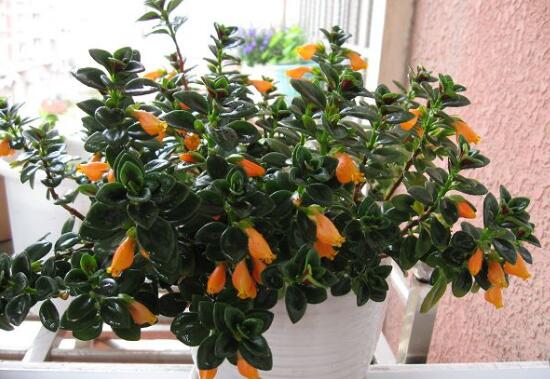
The goldfish plant is very beautiful, with dense branches and leaves, and its stems and vines hang naturally, making it very suitable for potted display at home. However, the goldfish plant is not easy to keep alive, as it has relatively high requirements for environment, soil, temperature, humidity, etc. So how do you grow the goldfish plant? This requires us to grow it skillfully; simply put, it means mastering the growing methods for the goldfish plant.
II. Growing methods and precautions for the goldfish plant
1. Soil
How to grow the goldfish plant: first, of course, is choosing the potting soil. Spread coarse particles and stones over the bottom of the flowerpot, then add a small amount of mixed culture soil. The potting soil selection is as follows:
Soil: to prevent root rot in the goldfish plant, we should choose a slightly acidic soil with good breathability and drainage for it; flowerpot: to prevent water leakage, a round and attractive flowerpot can be used for planting.
2. Light
In the growing methods for the goldfish plant, light is indispensable. However, the goldfish plant is shade-tolerant and suitable for growing in diffused light, and it dislikes direct strong light. So when growing it indoors, besides needing relatively sufficient light in winter, 60%-70% of sunlight should be blocked in spring, summer, and autumn, or it can be hung in a shaded shed outdoors.
Note: do not let the plant receive direct sunlight, otherwise symptoms such as yellowing leaves, leaf drop, and severe death may occur in the goldfish plant. In addition, before the goldfish plant blooms in winter, light should be appropriately increased so that it can produce abundant flowers with vivid colors.
3. Temperature
How to grow the goldfish plant: suitable temperature is also very important. When growing indoors, the temperature cannot be too high or too low; the most suitable temperature is between 15-20°C.
Note: the goldfish plant dislikes low temperatures and also dislikes high temperatures; temperatures that are too low or too high will cause the goldfish plant to drop leaves.
4. Watering
In the growing process of the goldfish plant, watering is a very important part. In spring, summer, and autumn, keep the potting soil moist, following the principle of watering when dry and withholding when wet; in winter, the goldfish plant enters dormancy, at which time growth is slow, so watering should be reduced accordingly, keeping it appropriately dry until flower buds first appear.
Note: the goldfish plant likes a humid environment, but we must pay attention to watering and not water too much, otherwise root rot easily occurs.
5. Humidity
Besides watering, in the growing methods for the goldfish plant, humidity also needs attention. If the air is too dry, spray a layer of water on the surface of the goldfish plant's leaves to maintain humidity, so that its leaves will be fuller and more emerald green.
Note: usually maintain environmental humidity, and it is best to frequently spray water around the flowerpot; if you do not have time to care for it, you can place the flowerpot in a shallow basin filled with clean water, which can effectively ensure humidity in a small area.
6. Fertilizing
How to grow the goldfish plant: after discussing watering, let us look at fertilizing requirements. The goldfish plant does not require much fertilizer or water; applying a dilute organic fertilizer about once every half month is enough. Fertilizing is mainly done in spring and autumn, applying a dilute liquid fertilizer once every 10-14 days.
Note: in order to produce beautiful flowers, topdressing should be done during the flowering period of the goldfish plant. In addition, in autumn apply liquid fertilizer mainly based on nitrogen fertilizer to promote lush branches and leaves; in spring apply more fertilizer containing phosphorus and potassium to promote vivid flower colors.
7. Pruning
To grow the goldfish plant well, in addition to the above points, proper pruning is also very important. After the goldfish plant fades, all weak branches, top branches, and excessively long drooping branches should be cut off; when winter begins, withered flower stems should also be cut off from the base, and dryness should be maintained, which helps new flower branches sprout and grow in the following spring.
How to grow the goldfish plant, and what is the difference from growing spider plant
The goldfish plant is also known as kangaroo flower; its leaves are dark green and relatively thick. The flowers are orange-red, with a small mouth and a big belly, resembling a goldfish in appearance, hence the name goldfish plant. From a distance it looks as if goldfish are leisurely swimming among green aquatic plants, very interesting and charming, adding a touch of lovely green to the home.
The growing methods are similar to those for spider plant, but there are slight differences that require special attention.
1. For cultivation, use a substrate soil mixed with leaf mold, manure, and sand in a 3:1:1 ratio, with a pH of 6 to 6.5. Apply dilute compound fertilizer liquid monthly; in the two months before the flowering period, apply phosphorus-potassium fertilizer liquid once every half month. Repot once every other year.
2. The suitable growth temperature is 16°C to 28°C. When above 30°C, shading and ventilation must be strengthened, otherwise leaf drop may occur; overwintering should maintain at least above 10°C.
3. Shade-tolerant, suitable for places with scattered light, and dislikes direct strong light. When the surface of the potting soil is dry, water thoroughly; frequently spray water on the leaf surface and around the plant to enhance air humidity, and reduce watering in winter.
4. After flowering, all weak branches, top branches, and excessively long drooping branches should be pruned; when winter begins, cut off withered flower stems from the base, and keep dry, which helps new flower branches sprout and grow in the following spring.
5. Mainly propagated by cuttings; cut node-bearing branches, each segment about 8 cm, cut off half of the upper leaves and remove all lower leaves, maintain a semi-shaded and humid environment, and in about 30 days they can take root and be potted. It can also be propagated by division, carried out in early spring or late autumn; each clump must have 1 to 2 terminal buds, and plant 2 to 3 plants per pot.
The goldfish plant is very easy to keep alive and is not very picky about its living environment; give it a little sunshine, and it will bloom a beautiful smiling face for you.
Growing methods for the goldfish plant: precautions for growing the goldfish plant
The goldfish plant, which is what we often call the goldfish plant, is usually used for hanging display at home. So what are its growing methods? What do we need to pay attention to during the growing process of the goldfish plant? Next, the editor of Fowo Decoration Network will briefly introduce the growing methods for the goldfish plant.
Applying fertilizer:
The goldfish plant does not require much fertilizer or water; applying a dilute organic fertilizer solution about once every half month is enough. If phosphorus fertilizer can be appropriately added before budding, it can produce more flowers and vivid flower colors. Fertilizing is mainly done in spring and autumn, applying a dilute liquid fertilizer once every 10-14 days. In autumn apply liquid fertilizer mainly based on nitrogen fertilizer to promote lush branches and leaves, while after spring more fertilizer containing phosphorus and potassium should be applied to promote vivid flower colors.
Key watering points:The goldfish plant has relatively high water requirements during the vigorous growing season. In spring, summer, and autumn, keep the potting soil moist, following "water when dry, withhold when wet." Usually maintain environmental humidity, and it is best to frequently spray water around the flowerpot, but avoid wetting the leaves. If you do not have time to care for it, you can place the flowerpot in a shallow basin filled with clean water, which can effectively ensure humidity in a small area. After entering winter, the goldfish plant enters dormancy and grows slowly; at this time watering should be reduced accordingly, keeping it appropriately dry until flower buds first appear. After seeing flower buds, watering can be appropriately increased to prepare for flowering.
Key pruning points:
After flowering, all weak branches, top branches, and excessively long drooping branches should be pruned; when winter begins, cut off withered flower stems from the base, and keep dry, which helps new flower branches sprout and grow in the following spring.
Key propagation points:
The goldfish plant can be propagated by terminal branch cuttings or stem segment cuttings. It can be done year-round, and the best time is indoors after flowering. Cut annual branches about 10-15 cm, retain 3-4 leaves, remove several pairs of small leaves at the base, and insert them into sandy soil. Cover well with glass or plastic film, control the temperature at 20°C, and maintain relatively high air humidity; roots can develop in about 3-4 weeks. Two months after survival, begin pinching to promote more branching and thus more flowers, then they can be planted in pots. Seedlings do not bloom in the first year, and only in the second or third year do red flowers emerge from the leaf axils at the tips of the drooping branches.The goldfish plant can be propagated by sowing, division, and cuttings. Because seeds are not easy to obtain, sowing propagation is mostly not used; generally the cutting method is commonly used. In spring and autumn, cut branches about 10 cm long (3-4 nodes), insert them into a cutting bed made of river sand or vermiculite, and maintain relatively high humidity. At a temperature of 20-25°C, roots can form in about one month; after rooting and surviving, strengthen management, promote the growth of new branches, and pinch to encourage branching. After 1-2 months, they can be potted.
Growing methods for the goldfish plant (basic knowledge):
Best propagation time: terminal branch cuttings or stem segment cuttings can be done year-round. The cutting method is carried out in spring and autumn.
Best growing soil: the goldfish plant generally requires a substrate rich in humus, loose, and well-drained.
Growing humidity requirements: the goldfish plant needs sufficient water during the growing period; the potting soil must be kept moist often, and efforts should be made to increase air humidity.
Best growing temperature: the suitable growth temperature for the goldfish plant is 18-22°C, and it dislikes low temperatures.
Best growing light: the goldfish plant is shade-tolerant, suitable for places with scattered light, and dislikes direct strong light.