Is Nandina (Heavenly Bamboo) Poisonous? Actually, You Can Grow It Indoors
Nandina is a highly ornamental plant with an elegant form, which has won it many admirers. Many people want to grow one at home, but since many plants carry a certain degree of toxicity, this is something you need to clarify before growing it. So, is Nandina poisonous? Can Nandina be grown indoors? Let's take a look below.
1. Is Nandina poisonous? Yes, it is poisonous
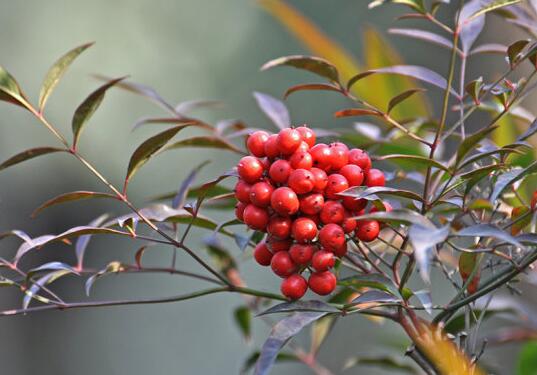
The Nandina plant itself carries a certain degree of toxicity, and the entire plant is toxic. If accidentally eaten, it can cause symptoms such as a drop in blood pressure, respiratory paralysis and coma. So when growing this plant, be sure never to eat it. If there are children at home, it is best to grow it somewhere out of their reach to prevent accidental ingestion.
2. Can Nandina be grown indoors? Yes, it can be grown indoors
As for whether Nandina can be grown indoors, it actually can. Although Nandina carries a certain toxicity, as long as we do not eat it, it poses no harm to the human body, and it offers many benefits for people's daily life. As for what those specific benefits are, let's read on.
Benefits of growing Nandina indoors
① Beautifies the indoor environment and the home
In the article on the effects and functions of Nandina, I mentioned that this plant is highly ornamental and its berries look very vivid. If you grow one at home, it greatly beautifies the indoor environment and makes your home furnishings look more harmonious and natural.
② Purifies household air and absorbs toxic gases
Nandina is a natural air purifier. It can absorb harmful gases from the air and at the same time release oxygen, making the air fresher. If grown indoors, it can improve people's living environment and make it healthier.
③ Improves household feng shui and dissolves negative energy
In feng shui, Nandina is a very good plant. It is an auspicious plant used to dissolve negative energy. If you place a Nandina in a spot in the home with heavy negative energy, it can eliminate that energy and thereby improve people's living environment. In addition, it carries the meaning of "ten thousand blessings for the household," making it a plant with very good feng shui associations.
Summary: After reading the above, I believe you now have some understanding of whether Nandina is poisonous and whether it can be grown indoors. That is all for the benefits of growing Nandina indoors. I hope this article gives you a fresh understanding of Nandina.
Is Nandina Poisonous? Is Nandina Suitable for Growing at Home?
Nandina is also an excellent ornamental plant, and its vivid berries are especially alluring. Sois Nandina poisonous? Is it suitable for growing at home? Next, Xiao Qi shares some knowledge about whether Nandina is poisonous.
Nandina berry picture
1. Is Nandina poisonous?
The entire Nandina plant is toxic. Symptoms of poisoning include excitement, a pulse that is first fast then slow and irregular, a drop in blood pressure, muscle spasms, respiratory paralysis and coma. Nandina is toxic because its sap contains nandanine and nandinine. Nandanine has a relatively strong effect on the central nervous system, capable of increasing spinal reflexes and ultimately leading to paralysis; nandinine has an inhibitory effect on the cardiovascular system and skeletal muscle, causing blood pressure to drop, and in large amounts it can cause death through cardiac paralysis.
Although Nandina has a certain toxicity, it is not a major problem for the environment or for people. Among ornamental plants, many species carry some degree of toxicity just like Nandina, such as the common daffodil, azalea, oleander and tulip. Moreover, Nandina's toxicity is not great; symptoms such as dizziness, vomiting and coma can occur only if it is accidentally eaten.
Nandina picture
2. How to grow Nandina
Nandina prefers a warm, humid climate and likes to grow in partial shade with good ventilation. Its optimum growing temperature is 15-30°C. It is fairly cold-hardy; low winter temperatures will slow the plant's growth, so it is best to move it indoors to overwinter.
When growing Nandina, avoid strong light, and provide appropriate shade in summer. Under strong light, the stems of Nandina become thick and short and dark red, the young leaves get scorched, and the leaves turn red and rough with burnt edges, which affects fruiting. In autumn and winter, appropriate light can turn the leaves from green to red, increasing the ornamental effect.
Nandina prefers slightly acidic, fertile, humus-rich, well-drained sandy loam, but it is not demanding about soil and can also grow well in poor soil and slightly alkaline soil.
Nandina likes moisture and is also fairly drought-tolerant, so watering it is fairly flexible. Still, try to keep the soil moist; reducing watering appropriately during the flowering period is beneficial for flowering and fruiting.
Nandina is mainly propagated by sowing and division, and can also be propagated by cuttings. For seed propagation, sow the seeds as soon as the berries are harvested, or sow in spring. The seeds can be stratified in sand. Nandina produces many suckers, so you can cut off 2-3 sucker shoots and plant them as divisions with roots attached. Division of Nandina is best done in spring before budding or in autumn. For potted division seedlings, provide shade after planting to help them recover, then return to normal care after 15 days.
Nandina picture
The above isis Nandina poisonousan introduction to that. Never be tempted by Nandina's vivid berries, and take special care if there are children at home.
Is Nandina poisonous?
Is Nandina poisonous?
Nandina is poisonous, and the entire plant is toxic. If we humans accidentally eat Nandina, we become very excited and the pulse becomes very irregular, generally first fast and then slow. After poisoning, blood pressure also suddenly drops, muscles spasm, breathing gradually becomes difficult, the body becomes paralyzed, and finally the person falls into a coma.
In fact, Nandina can be used medicinally, and as a medicine it can treat many diseases. Nandina contains many kinds of alkaloids, among which nandanine and nandinine have a paralyzing effect on the heart. In scientific experiments, injecting nandanine and nandinine into test frogs and rabbits caused the frogs and rabbits to die from cardiac paralysis and failure. The various alkaloids contained in Nandina also have varying degrees of effect on organisms' physiological systems, such as effects on the nervous system and a paralyzing effect on the respiratory center, and so on.
Nandina can be used to treat diseases when professionally extracted and utilized in medicine, but in daily life we should not accidentally eat it. In particular, Nandina's berries are bright red and very alluring, so never taste them out of mere curiosity.
Can Nandina be grown at home?
Nandina is an evergreen shrub with very small white flowers. Its berries are bright red, and it is highly ornamental. The entire plant is toxic, so can we grow Nandina at home? In fact, growing Nandina at home is very safe, and Nandina can also purify the air. As long as we do not accidentally eat its berries or plant parts, we will not be poisoned. Grown normally as a potted plant, it will not harm us.