How to grow potted cherry blossoms? Management methods and pest and disease control techniques
Cherry blossoms can be grown in pots. In most regions of our country, cherry blossoms are suitable for ground planting and are rarely potted. Cherry blossom varieties suitable for potting include ‘Xuri’, ‘Douying’ (Fuji cherry), ‘Yujin’, ‘Yuyihuang’, and others. The following measures must be taken when growing potted cherry blossoms to achieve abundant flowers and lush foliage.
Soil: For potted cherry blossoms, the first step is to prepare the soil. Generally, homemade leaf mold can be used (made by composting collected leaves and acidic soil, chicken manure, charcoal powder, and microorganisms). Homemade leaf mold has good drainage and aeration, making it suitable for the growth of potted cherry blossoms.
Pruning: Special attention must be paid to pruning potted cherry blossoms. Before and after flowering, appropriately thin out overly dense branches, cutting away inner branches, dead branches, thin and weak branches, and diseased or pest-infested branches. Throughout the entire growing season, promptly remove root suckers and water sprouts to avoid consuming nutrients. After pruning, an antiseptic must be applied to prevent wound rot, because cherry blossom wounds heal relatively slowly.
Watering: Cherry blossoms dislike waterlogging. Water reasonably according to the season and the size of the plant, following the principle of "dry then wet" - the soil must not be too wet or waterlogged, otherwise it will cause root rot, ranging from leaf drop and affected flowering to the death of the entire plant in severe cases.
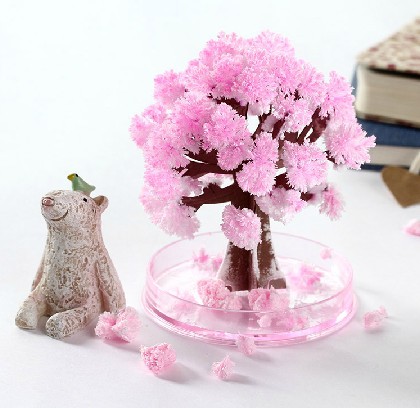
Fertilizing: Potted cherry blossom management requires care, striving to water frequently and fertilize adequately to ensure the water and nutrients needed for growth and development, so that the plant has lush branches and leaves and vivid flower colors. Newly potted cherry blossom branches should be cut back to encourage more new branches and more flower bud differentiation. Generally, apply decomposed liquid fertilizer once a week, mainly nitrogen fertilizer in the early stage to promote vegetative growth, and pay attention to applying phosphorus fertilizer in the later stage to prevent excessive vegetative growth from affecting flower bud differentiation. In May-June, foliar spray with 0.1%-0.2% potassium dihydrogen phosphate. Apply base fertilizer once before flowering and once after flowering to lay the foundation for flowering the following year.
How to sow potted cherry blossom seeds? Cultivation methods for potted cherry blossoms
Cherry blossoms are a common ornamental flower in landscaping, with gorgeous blooms, very suitable for ground planting. However, many cherry blossom varieties are also very suitable for potting, such as Xuri, Douying, Yujin, Yuyihuang, and others. In the process of growing potted cherry blossoms, seed propagation is often used. So, how do you sow potted cherry blossom seeds? The seed propagation methods and cultivation methods for potted cherry blossoms are introduced below.
Image: Potted cherry blossoms
I. Seed propagation methods for potted cherry blossoms
Prepare cherry blossom seeds. In fact, there is no need to specifically buy them - if you see some planted in a nearby flower bed or at a friend's home, just pick some seeds. They are relatively fresh and convenient. Before sowing, it is best to avoid light and soak them in warm water for 24 hours. The sowing time is generally spring or autumn, and the best germination temperature is around 20 degrees. Its growth temperature is 16 degrees. Prepare a flower pot and soil. For the soil, it is best to use peat soil mixed with coarse sand, leaf mold, etc. After sowing the seeds, do not cover with too much soil.
II. Cultivation methods for potted cherry blossoms
1. Applying fertilizer:Cherry blossoms are fertilized twice a year, with acidic fertilizer being preferable. One is winter fertilizer, applied in winter or early spring using organic fertilizers such as bean cake, chicken manure, and decomposed fertilizer; the other is applied after flowers fall, using quick-acting fertilizers such as ammonium sulfate, ferrous sulfate, and superphosphate.
2. Key watering points:After planting, cherry blossom saplings are prone to drought damage. In addition to thorough watering at planting, water once every 8-10 days thereafter, keeping the soil moist but not waterlogged. After watering, loosen the soil promptly, and it is best to spread a thin layer of grass on the surface to reduce water evaporation. Within 2-3 years after planting, to prevent the trunk from drying out, it can be wrapped with straw. But after 2 to 3 years, when the sapling grows new roots and its adaptability to the environment gradually increases, there is no need to wrap with straw anymore.
Image: Potted cherry blossoms
3. Key pruning points:Cherry blossom pruning mainly involves cutting away withered branches, water sprouts, overlapping branches, and diseased or pest-infested branches. In addition, when many branches grow from the trunk of a large cherry blossom tree, several robust branches should be retained, and the rest should all be cut off from the base to facilitate ventilation and light penetration. After pruning, promptly disinfect the wounds with medication to prevent pathogens from entering after rain, which could cause rot. After long periods of exposure to the sun, cherry blossom bark is prone to aging and damage, causing rot. It should be removed promptly and disinfected. Afterwards, wrap the rotted area with leaf mold and charcoal powder to promote the restoration of normal physiological functions.
4. Repotting:Stop watering 3 to 4 days before repotting cherry blossoms, so that the potting soil is slightly dry. When repotting, hold the flower pot upside down with the left hand, then pat the flower pot with the right palm, or push the drainage hole of the flower pot with a wooden stick, and the cherry blossom will come out of the pot together with the soil. The root system of the cherry blossom that has come out of the pot has dense white roots distributed along the edge of the potting soil. Use a bamboo stick to loosen the fibrous roots, and remove most of the old soil, retaining one-third, then transplant with soil into a new pot.
5. Pest and disease control:Cherry blossoms mainly suffer from gummosis and root rot. Both should be treated promptly by improving the soil, strengthening water and fertilizer management, and pruning reasonably. During the annual growth process, cherry blossoms can be harmed by aphids, red spider mites, and scale insects. Generally, spray 3 to 4 times: the first time before flowering, the second time after flowering, and the third time in July-August. Careful observation and timely control are necessary to achieve good results.
[Editor's concluding remarks]Although cherry blossoms are mainly grown in the ground, they also have a unique ornamental value when potted. The above has introduced the seed propagation methods and cultivation methods for potted cherry blossoms, hoping to help everyone!
Spring pest and disease control methods for flowers
Common pests and diseases of spring flowers include powdery mildew, rust, black spot, leaf curl, chlorosis, etc., as well as pests such as longhorn beetles, aphids, scale insects, and scarab beetles. Control methods<1> Powdery mildew: Commonly seen on flowers such as impatiens, cineraria, dahlia, Chinese rose, and weeping crabapple. It mainly occurs on leaves, but also harms tender stems, flowers, and fruits. When initially infected, multiple faded spots first appear on the leaves, but without obvious edges around them, and later the small spots merge into large spots. As the disease progresses, the spots become covered with white powder, the leaves shrink, affected flowers cannot bloom normally, and affected fruits stop developing. This disease can occur from early spring, extending through summer, until autumn. Its control methods include: when initially infected, promptly remove diseased leaves to prevent spread; when the disease is severe, spray 0.2 to 0.3 degrees lime sulfur mixture, or 1000 times 70% thiophanate-methyl solution.
<2> Rust: Flowers and trees prone to this disease are mostly Rosaceae plants such as Chaenomeles speciosa, including roses and weeping crabapple. In addition, peonies and dianthus are also susceptible. The disease occurs in early spring. Initially, spots of chlorosis appear on young leaves, then dense small black dots form on them. Initially, yellow round patches appear on young leaves, and grayish-white woolly substances emerge from the underside. From August to September, yellow-brown powdery substances are produced, spreading with the wind to juniper trees. In early spring of the following year, they spread again with rain, harming the aforementioned flowers and trees. Therefore, this disease can only persist through parasitic damage on these two types of plants. In pest and disease theory, it is called a "heteroecious disease." When the damage is severe, it causes leaf drop; when milder, it causes spots, affecting appearance and photosynthesis. Its control methods are: try to avoid planting heteroecious plants such as juniper nearby; in early spring, around mid-March, begin spraying 400 times 20% carboxin emulsifiable concentrate or 50% Tuzet wettable powder, and spray again after about half a month, until early April. If spring has little rain or is dry, one fewer spray can be applied.
<3> Leaf curl: Mainly occurs on the leaves of Rosaceae plants such as plum and peach. When leaves first unfold in early spring, affected leaves are deformed and swollen, with a reddened color. As the leaves grow, they curl toward the underside, and the spots gradually turn white, with powdery substances appearing on them. Due to leaf damage, tender shoots cannot grow normally and may even die. If leaf damage is severe, they drop, affecting tree vigor and reducing flower quantity. Its control methods include: in the early stage of disease, promptly remove diseased leaves showing initial symptoms to reduce the spread of the pathogen; before budding in early spring, spray 3 to 5 degrees lime sulfur mixture to eliminate the pathogen overwintering inside and outside the bud scales and on diseased shoots. If this is done for two or three consecutive years, this disease can be relatively thoroughly controlled. For severely affected potted flowers, increase fertilizer application and strengthen management to restore tree vigor so that they can bloom more.
<4> Aphids: Also known as honey bugs. Many potted flowers are harmed by aphids, such as peach, Chinese rose, elm-leaved spirea, plum blossom, cherry blossom, etc. Aphids mostly gather on the underside of leaves, feeding on leaf sap. Because of their rapid reproduction rate, as early spring temperatures rise, affected leaves cannot unfold normally, new shoots cannot grow, and in severe cases, leaves drop, affecting flowering. In summer when temperatures are high, some aphids fly to other plants such as vegetables, and only in early winter do they fly back to trees to lay eggs and overwinter. Its control methods include: after budding and before leaf unfolding, spray 1000 times 40% dimethoate emulsifiable concentrate to kill newly hatched young aphids; alternatively, do not spray pesticide first, to protect natural enemies such as ladybugs and let them eliminate aphids, until the population balance is disrupted and natural enemies cannot control the aphids, then consider using pesticides. When using this method, it must still be supplemented by manually pinching aphids to death.
<5> Scale insects: Scale insects have the most species and harm the most flowers and trees among pests. Tortoise shell scale: white waxy, round. White peach scale: white, pointed. Oyster shell scale: dark brown, males elongated, females round. Helmet scale: dark brown, round, shaped like a helmet. Plants susceptible to scale insect damage include camellia, pomegranate, oleander, azalea, hibiscus, cherry blossom, plum, peach, crabapple, Chinese rose, etc. The larvae first feed on sap on the leaves, causing chlorosis. As adults, they mostly feed on sap on branches and trunks, severely weakening tree vigor and affecting flowering. Its control methods include: pinch to death by hand or scrape off pests on leaves and branches with a small knife, and spray 1000 times 40% dimethoate emulsifiable concentrate once or twice during the larval stage, with an interval of 7 to 10 days between sprays.
<6> Red spider mites: Mite category. The body is small, almost indistinguishable with the naked eye. They mostly cluster together, and their reproduction rate is extremely fast. Many plants are susceptible, such as Chinese rose, rose, flowering peach, cherry blossom, azalea, etc. The mites cluster on the underside of leaves to feed on sap, initially causing chlorosis, ultimately causing leaf drop and new shoot death. In severe cases, small trees weaken in growth and may even die. Its control methods include: in the early stage of infestation, spray 1000 times 40% dimethoate emulsifiable concentrate, or 1000 to 1500 times 40% tetradifon emulsifiable concentrate, spraying thoroughly and densely. In summer when temperatures are high, these mites reproduce very quickly, and control is often too late, so pesticides should be sprayed early, and continuously 3 to 4 times with an interval of about 7 days, and a single pesticide should not be used repeatedly to avoid developing resistance.
<7> Nematodes: Nematodes harm plant roots, causing abnormal development. Affected plants include orchids, carnations, narcissus, peonies, etc. When the pest damage is mild, it is often hard to detect. When severe, plants grow poorly and bloom sparsely. Since there are many species of nematodes in soil and the bodies are small, almost invisible to the naked eye, prevention should be the priority. Add 20 to 30 granules of 3% carbofuran granules per kilogram of planting soil, which slowly release through soil dissolution to eliminate nematodes.
<8> Caterpillars: Including tent caterpillars, walnut caterpillars, etc. They have very diverse feeding habits, harming almost all plants, and occur in outbreaks. Control should be done early. Mainly use manual capture methods, and when necessary, spray 1000 times 40% dimethoate emulsifiable concentrate.
<9> Carpenter moths: Larvae bore and feed inside branches and trunks. Common on peach, plum, and cherry blossom. In severe cases, they can bore through 2 to 3-year-old large branches, affecting the tree's form. Its control methods are: observe regularly. When there are bore holes on branches or trunks and small granular frass is excreted from the bore holes, use an iron wire to dig out from the bore hole along the insect tunnel, or cut off the branch to kill the pest. The insect itself is reddish-brown, with hairs on the head and each segment of the body, clearly different from the milky white of longhorn beetles. This method is also used for controlling longhorn beetles. Alternatively, use 150 times 80% dichlorvos emulsifiable concentrate, inject it into the insect tunnel through the frass excretion opening with a syringe, then plug the tunnel with wet mud to kill the pest.
<10> Scarab beetles or beetles: Omnivorous pests that feed on leaves or flowers. Roses and others are susceptible. Manual capture is the main control method.
<11> Underground pests: White grubs, which are scarab beetle larvae, white in color. Cutworms, green-black in color. They live in the soil feeding on plant roots or root crowns, often causing plant death. The control method is to promptly dig them out from the holes where they enter the soil.