What to do when Dendrobium leaves turn yellow? Shade in summer, water less, adjust temperature, repot the soil
As a plant that combines ornamental, medicinal and culinary value, Dendrobium is an ideal potted plant in many people's minds. In daily life, many people grow Dendrobium, but it is not easy to grow. So during cultivation, many flower lovers often run into one problem, namely yellowing leaves. So what should be done when Dendrobium leaves turn yellow? Today the editor will solve this problem.
I. What to do when Dendrobium leaves turn yellow: find the cause
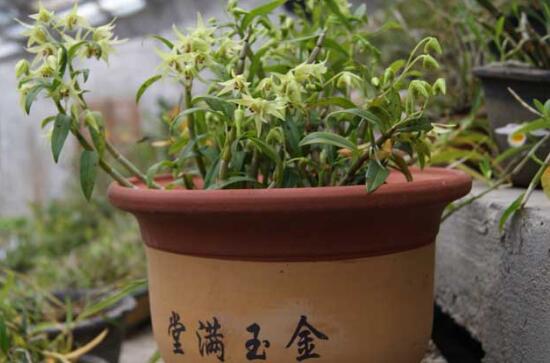
As a potted plant, Dendrobium is not easy to grow. Once we fail to strictly follow Dendrobium cultivation methods, it may show symptoms of yellowing leaves. By then, flower lovers must be very anxious, right? To solve this problem, the editor has summarized 5 causes of yellowing Dendrobium leaves and attached solutions. Let us read on.
II. Causes of yellowing Dendrobium leaves and solutions
1. Sudden environmental change
There are actually many causes of yellowing Dendrobium leaves, but environmental factors are the ones people easily overlook. Nowadays, many flower lovers buy their Dendrobium online, which easily creates a large regional gap. The Dendrobium cannot adapt for a while, and yellowing leaves appear.
Solution: Everyone should communicate with the seller to learn about the Dendrobium's previous growing environment, then change the home environment to match it. After the Dendrobium adapts, slowly change it until it fully adapts to the current environment. After a period of time, the Dendrobium will return to health.
2. Light too strong
Dendrobium likes a semi-shaded environment and does not like overly strong sunlight. Once it receives light for a long time, or the light is too strong, Dendrobium leaves easily turn yellow.
Solution: Move it to a ventilated shady place and water appropriately. Usually, it is best to place Dendrobium in cooler places such as the living room. In winter, when the sunlight is not strong, it can be moved outside to bask in the sun.
3. Too much watering
Dendrobium likes a moist environment, so we should water frequently to keep the potting soil moist. But many flower lovers growing Dendrobium are beginners, and it is hard for them to control watering, resulting in overwatering. Once overwatered, root rot occurs, and symptoms of yellowing Dendrobium leaves appear.
Solution: Move it to a ventilated place with bright indirect light so the moisture in the potting soil evaporates quickly. In severe cases, we need to repot the soil. Usually watering once about every 3 days is enough, and 3 times a day in summer. Look at the potting soil conditions specifically, and just keep it moist.
4. Temperature too high
Dendrobium likes a warm environment and dislikes high temperatures. In summer, if no cooling measures are taken and Dendrobium grows in a high-temperature environment for a long time, it is very likely to develop yellow leaves.
Solution: At this time, everyone should place Dendrobium in a ventilated, cool place, and appropriately increase watering frequency or promptly spray water on its leaves.
5. Unsuitable soil
Besides the above points, yellowing Dendrobium leaves may also be caused by poor soil quality. Dendrobium has especially strict soil requirements and needs loose, drainage- and air-permeable, pathogen-free soil. Not even a little carelessness is allowed, otherwise yellow leaves easily appear.
Solution: Very simple, replace the potting soil. If leaf mold or pine needle soil dug from the wild is used, it should also be placed in the sun to sterilize.
Overall, Dendrobium is not easy to grow, and many flower lovers are beginners, so symptoms of yellow leaves are unavoidable. But after reading the whole article, I believe everyone knows not to panic. When yellow leaf problems appear, just follow the methods above. The editor's introduction on yellowing Dendrobium leaves ends here, hoping to bring everyone help.
What to do when potted Dendrobium officinale leaves turn yellow: replace the potting soil, control watering, shade appropriately
As the most useful among Dendrobium varieties, Dendrobium officinale has strong effects. It not only has beautiful flowers, but also inherits the medicinal value of Dendrobium and can treat various human diseases. But during cultivation, many flower lovers often run into one problem, namely yellowing leaves. So what should be done when potted Dendrobium officinale leaves turn yellow? Today the editor will solve this problem.
I. What to do when potted Dendrobium leaves turn yellow: find the cause
As a potted plant, Dendrobium officinale is not easy to grow. Once we are even slightly negligent, for example failing to care for it according to Dendrobium officinale cultivation methods, its leaves may show signs of yellowing. By then, flower lovers must be very anxious, right? To solve this problem, the editor has summarized 5 causes of yellowing Dendrobium officinale leaves and attached solutions. Let us read on.
II. Causes of yellowing Dendrobium officinale leaves and solutions
1. Unsuitable soil
There are actually many causes of yellowing Dendrobium officinale leaves, but the first thing everyone should consider is the soil problem. As for soil problems, they can be divided into two situations, as follows:
① Soil unsuitable
Dendrobium officinale has high soil requirements. If the soil is unsuitable, the root system loses activity, causing aerial roots to be exposed in the air. Over time problems arise, showing as yellowing Dendrobium officinale leaves.
Solution: Replace the potting soil. Place large stones at the bottom of the flowerpot, spread a layer of water-permeable gravel on top, then spread a mixture of fermented pine bark and sawdust on the gravel. Note that the mixture needs to be crushed, sterilized and fermented.
② Too many miscellaneous microbes in the soil
Even if the soil is well chosen, if it is not disinfected and there are too many miscellaneous microbes in the soil, the symbiotic fungi of the Dendrobium officinale root system will be insufficiently competitive, and the result may be symptoms of yellow leaves.
Solution: Dry the soil, that is, the mixture, in the sun, then use phoxim for insecticidal treatment to kill residual pests and eggs in the soil. After a period of time, Dendrobium officinale will return to health.
2. Improper watering
Besides soil, improper watering is also one of the causes of yellowing Dendrobium officinale leaves. Watering problems also fall into two situations: one is too much watering, and the other is too little watering, as follows:
① Too much watering
Dendrobium officinale likes a moist environment, so we should water frequently to keep the potting soil moist. But once overwatered and the soil becomes too wet, the Dendrobium officinale root system will rot, and the result may be yellowing leaves.
Solution: If the Dendrobium officinale stems and rhizomes have not died, they can sprout again after spring warms up, but watering should be controlled: water once every one or two weeks. After watering thoroughly, spray normally at other times.
② Too little watering
Too much watering is no good, and too little is no good either. It can also cause yellowing Dendrobium officinale leaves. Once watering is too little or not thorough, the potting soil dries out, and the leaves show yellowing symptoms because they do not absorb enough water.
Solution: Water with suitable slightly acidic to neutral water. In spring, summer and early autumn, sufficient water is required. After mid-autumn, it gradually enters dormancy, and the amount of watering should be reduced accordingly until watering stops completely. You can begin reducing watering before the Dendrobium officinale leaves turn yellow, reduce it further as the leaves yellow and fall, and stop watering when the leaves have all fallen. In North China, after stopping watering, keep indoor air humidity relatively high to prevent the pseudobulbs from shrinking. If the room is too dry, water the pot once every 1 to 2 weeks.
3. Fertilizer problems
Having discussed watering, let us talk about fertilizing. It is also one of the causes of yellowing Dendrobium officinale leaves. Dendrobium officinale needs fertilizer, but once fertilizing is improper or too little, this symptom appears: the leaves first turn yellow starting from the leaf tips, then the whole leaf turns yellow and then falls off.
Solution: In the above situation, this may be caused by a lack of potassium, so it is also easy to solve. Just spray an appropriate amount of potassium fertilizer.
4. Light too strong
Dendrobium officinale likes moist, semi-shaded places. Although it needs light, it should be indirect light. Once the light is too strong, the Dendrobium feels dry, which is not good for its aerial root respiration, and the result may be yellowing leaves.
Solution: While keeping sufficient light for Dendrobium officinale, it should be shaded appropriately. For example, in spring, summer and autumn, control the shading amount between 30% and 50%. In winter, when light is weak, the pot can be moved outside to bask in the sun.
5. Temperature too high
Dendrobium officinale is very sensitive to problems. It is neither cold-resistant nor heat-resistant. Once the temperature is too high, the leaves may turn yellow and even the flower buds may fall off.
Solution: Dendrobium officinale does not like too-high temperatures, so in hot summer it should be placed in a well-ventilated place. If the temperature is too high, cooling measures should be taken.
Overall, Dendrobium officinale is not easy to grow, and many flower lovers are beginners, so symptoms of yellow leaves inevitably appear. But after reading the whole article, I believe everyone has a clearer idea. When yellow leaf problems appear, just follow the methods above. The editor's introduction on yellowing Dendrobium officinale leaves ends here, hoping to bring everyone help.
Why do Dendrobium officinale leaves turn yellow? Causes and solutions introduced
Dendrobium officinale has very high medicinal value, and many people are developing Dendrobium officinale cultivation. I believe many bases growing Dendrobium officinale have encountered this problem: during cultivation, the leaves turn yellow and some are dry. Do you know what causes this? Do you know how to handle and solve it? Let us take a look together below!
Unsuitable substrate
[Cause] Dendrobium officinale aerial roots are exposed in the air, absorbing air and rainwater.
[Solution] The preferred substrate material is tree bark, followed by sawdust. Both need crushing, sterilization and fermentation treatment. Usually several materials and substrates of different coarseness are mixed.
Substrate too wet
[Cause] Too much watering causes the substrate to be too wet, and the root system rots.
[Solution] For potted Dendrobium officinale, water once every one or two weeks. After watering thoroughly, spray normally at other times, and control factors such as balcony air circulation. If the Dendrobium officinale stems and rhizomes have not died, they can sprout again after spring warms up, but watering should be controlled to prevent root rot.
Lack of water and drought
[Cause] Lack of water causes yellow leaves. Some growers control water too much, and combined with the current relatively low humidity, yellow leaf symptoms occur. Although it is winter now, water control should not be excessive, especially for bed-planted Dendrobium officinale. In winter, yellow leaves caused by lack of water are quite common.
[Solution] Water with suitable slightly acidic to neutral water. Avoid water with too many minerals such as calcium and magnesium. In spring, summer and early autumn, sufficient water is required. After mid-autumn, it gradually enters dormancy, and the amount of watering should be reduced accordingly until watering stops completely. You can begin reducing watering before the leaves turn yellow, reduce it further as the leaves yellow and fall, and stop watering when the leaves have all fallen. In North China, after stopping watering, keep indoor air humidity relatively high to prevent the pseudobulbs from shrinking. If the room is too dry, water the pot once every 1 to 2 weeks.
Too many miscellaneous microbes
[Cause] The substrate has too many miscellaneous microbes, and the symbiotic fungi of the root system are insufficiently competitive, causing leaves to turn yellow.
[Solution] Use fermented tree bark or wood chips, coconut shell, bagasse, decomposed fallen leaves or moss as the cultivation substrate. It must be fully dried in the sun and treated with phoxim for insecticidal treatment to kill residual pests and eggs in the soil.
Light too strong
[Cause] The growing environment of Dendrobium officinale needs to be controlled to a moist, semi-shaded place. If the sunlight is too strong, the Dendrobium feels dry, which is not good for its aerial root respiration, so controlling its growing environment is very important.
[Solution] With sufficient light, in spring, summer and autumn, control the shading amount between 30% and 50%. Only with sufficient light can a large number of flower buds form.
Temperature too high
[Cause] Too-high, too-hot cultivation temperatures cause Dendrobium officinale leaves to turn yellow.
[Solution] Dendrobium does not like too-high temperatures in summer. In hot summer it often stops growing and should be placed in a well-ventilated place. After flower buds emerge, keep the greenhouse temperature at about 20°C to 25°C during the day and about 15°C at night. It must not be too high or too low, otherwise the flower buds easily fall off.
Lack of potassium fertilizer
[Cause] Dendrobium officinale leaves first turn yellow starting from the leaf tips, then the whole leaf turns yellow and then falls off. This phenomenon may be potassium deficiency, which makes the leaf tips turn yellow first and then the whole leaf fall off.
[Solution] Spray potassium fertilizer.
Physiological yellowing
[Cause] In winter, yellow leaves appearing on the middle and lower parts of old plants (mature plants grown from last year's autumn shoots or this year's spring shoots) are normal. No need to worry.
[Method] No need to worry.