How to prune and pinch back fuchsia? With diagrams and timing tips
Fuchsia is known for its emerald green leaves and varied flower colors. To grow robust plants that bloom abundantly, mastering fuchsia care methods is essential, and one of the key steps is pruning, such as pinching back and thinning, which can control plant growth and the amount of blooming. So how do you prune fuchsia? Let's look at the diagram guide for how to pinch back fuchsia.
Diagram guide for how to pinch back fuchsia
I. Timing of pinching back
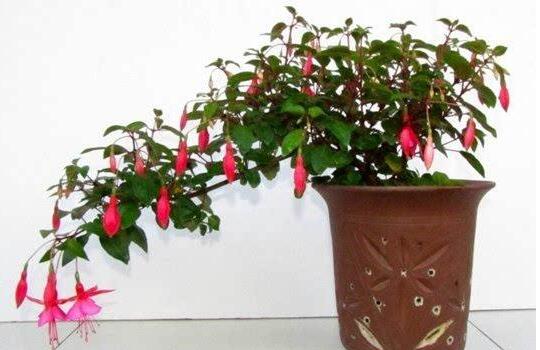
Under normal circumstances, pinching back fuchsia should be done in spring and autumn, because this is when it grows most vigorously. Pinching back can promote more branching, making the plant shape fuller, and more flower branches also help it bloom more.
II. Methods of pinching back
1. Pinching back at the seedling stage
Pinching back is crucial for fuchsia. Generally, pinching back begins at the seedling stage. When the small seedling grows to 8-10 cm, cut off the top branches with buds, which can prevent it from growing too tall upward and promote the sprouting of side branches.
2. Pinching back during the growing season
After pinching back, fuchsia will still maintain vigorous growth. When the new branches grow 8-10 leaves, a second pinching back is needed. Keep 5-6 of the side branches, then cut off all excess buds, and be careful to keep the cut smooth.
How to prune fuchsia
1. Thinning
Besides pinching back, pruning fuchsia also includes thinning and shortening. Thinning means cutting off branches that are growing densely and crossing each other, to prevent branches from affecting each other's growth. It can also increase the plant's light penetration, allowing more branches to enjoy sufficient light.
2. Shortening
Because each branch absorbs different amounts of nutrients and light, some branches grow longer while others grow shorter, which affects the beauty of the plant shape. So after the autumn cools, cut overly long branches shorter, which can promote more robust growth of new branches.
3. Care management after pruning
After pruning, watering needs to be controlled, and normal watering should resume only after new branches grow out. Also note that the temperature should not be too high or too low. Generally, 15-20 days after pinching back, the new shoots will bloom, so pinching back often also serves to extend the flowering period.
How to prune fuchsia, fuchsia pruning methods
In daily life, fuchsia is also called lantern flower. When fuchsia blooms, the flowers hang down and the colors are gorgeous, making it deeply loved by people. Because of its unique flower shape, fuchsia is often used as a decoration for living rooms, flower stands and desks. But pruning fuchsia has certain particularities. How do you prune fuchsia? Today let's learn the pruning methods for fuchsia.
How to prune fuchsia, fuchsia pruning methods
Pruning fuchsia is very necessary for fuchsia. Only through pruning can it branch more, bloom more, and have a good plant shape. If it is allowed to grow naturally, branches will become leggy and too long, and there will be few flowers. In fact, pruning fuchsia is not that difficult, as long as you dare to make the cuts.
For some shaping-type pruning, this article will not say much, because each plant's form is different. This article only talks about how to prune. As for the shape, flower lovers can freely use their creativity.
1. Shaping and pruning fuchsia at the seedling stage: The purpose of shaping at the seedling stage is to cultivate a beautiful plant shape. When the small seedling grows to 30 cm to 40 cm, remove the top of the main stem, remove adjacent overlapping branches, shorten long branches to encourage branching, and at any time remove side branches growing inward to maintain a beautiful plant shape.
2. Shaping and pruning fuchsia during the flowering period: In the natural environment of the north, the full bloom period of fuchsia is from April to July. In late March of spring, the last pinching back should be stopped. It blooms in mid-to-late April. Because the branch tips keep blooming and extending, when the flower branches grow to a certain length, the tips should be removed, and the new branches produced can continue to bloom. During the flowering period, the small branches and leaves growing from the central part of the plant can be removed at any time to avoid nutrient consumption and help ventilation and light penetration.
3. Shaping and pruning fuchsia after flowering: In July, when the temperature reaches above 30°C, the plant enters a semi-dormant state. The leaves appear weak, and at this time heavy pruning should be carried out to reduce nutrient consumption and help it safely pass the summer. All long branches should be shortened, leaving only the skeletal branches, and some old leaves should be removed, then place it in a cool place to pass the summer. During the summer period, if flower buds appear, they should also be removed. In September of autumn, new branches will grow, and the plant shape will be more compact and beautiful.
The above is a brief summary of how to prune fuchsia and the pruning methods for fuchsia. Fuchsia likes a cool and humid environment, and during cultivation, care should be taken to avoid high summer temperatures and direct strong light. The suitable growth temperature for fuchsia is 15-25°C, and the winter temperature cannot be lower than 5°C. Besides being ornamental, fuchsia is also a traditional Chinese medicinal material, with the functions of promoting blood circulation and removing blood stasis, cooling blood and dispelling wind. Friends who like it can grow it at home.
How to prune fuchsia, pruning techniques at the seedling and flowering stages
If you want to grow fuchsia with a perfect plant shape, you must prune fuchsia, and prune it at different stages. Below is a summary of the pruning methods and matters at 3 different periods for fuchsia.
How to prune fuchsiaIn order to make fuchsia's plant shape perfect and make it bloom more, it needs to be pruned, and it will be pruned at different stages, as follows
1. Pruning method at the seedling stagePruning and shaping fuchsia at the seedling stage is mainly to cultivate a beautiful plant shape. Generally, when the small fuchsia seedling grows to 30 cm to 40 cm, the top of the main stem needs to be removed, and adjacent overlapping branches should be removed. Long branches should be shortened to encourage branching, and side branches growing inward should be removed at any time to maintain a beautiful plant shape.
2. Pruning method during the flowering periodIn the north, the full bloom period of fuchsia is from April to July, so generally the last pinching back should be stopped in late March of spring. Fuchsia blooms in mid-to-late April, but because the branch tips keep blooming and extending, when the flower branches grow to a certain length, the tips should be removed, and the new branches produced can continue to bloom. So during the flowering period of fuchsia, the small branches and leaves growing from the central part of the plant can be removed at any time to avoid nutrient consumption and help ventilation and light penetration.
3. Pruning method after floweringEvery year in July, when the temperature reaches above 30°C, the fuchsia plant will enter a semi-dormant state, and the leaves will appear weak. Generally, heavy pruning is chosen at this time to reduce nutrient consumption and at the same time help fuchsia get through the summer. During the pruning process, shorten all long branches of the fuchsia, leaving only the skeletal branches, and remove some old leaves, then place it in a cool place to pass the summer. During the summer period, if flower buds appear, they should also be removed. In September of autumn, new branches will grow, and the plant shape will be more compact and beautiful.